Home Blog Page 4

Prisoners, Fishermen in Custody: India and Pakistan Carry Out Routine List Exchange

0
India and Pakistan
India and Pakistan

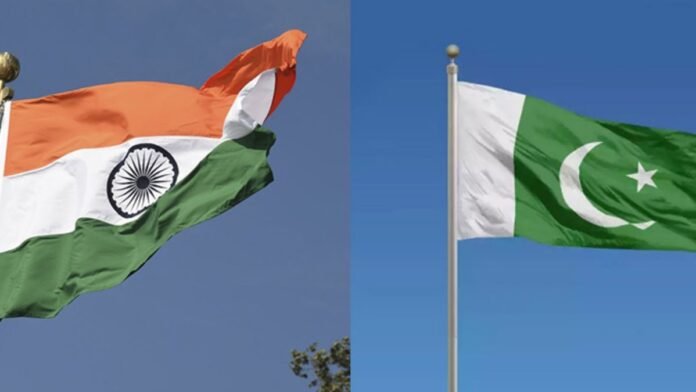
India on Wednesday called on Pakistan to grant immediate consular access to 13 civilian prisoners believed to be Indian nationals, as the two countries exchanged lists of prisoners and fishermen held in each other’s custody under the 2008 Agreement on Consular Access.

Despite strained bilateral relations, the exchange of prisoner lists twice every year, along with the annual exchange of lists of nuclear installations that cannot be targeted during hostilities on January 1, remains one of the few diplomatic mechanisms that continues between India and Pakistan.

The two sides simultaneously exchanged the lists through diplomatic channels in New Delhi and Islamabad. According to the Ministry of External Affairs (MEA), India shared details of 386 civilian prisoners and 53 fishermen in its custody who are either Pakistani nationals or are believed to be Pakistani.

The MEA said India had urged Pakistan to “provide immediate consular access to the 13 civilian prisoners in Pakistan’s custody who are believed to be Indian nationals and have not yet been granted such access.”

New Delhi also asked Islamabad to expedite the release and repatriation of 188 Indian fishermen and civilian prisoners who have already completed their sentences.

Pakistan, in turn, shared lists of 52 civilian prisoners and 198 fishermen in its custody who are either Indian nationals or are believed to be Indian. In a statement, Pakistan’s Foreign Ministry said it had requested India to release and repatriate 97 Pakistani nationals, including 64 civilian prisoners and 33 fishermen, whose sentences have been completed and whose nationality has been verified.

Under the Agreement on Consular Access signed in 2008, both countries exchange lists of civilian prisoners and fishermen every year on January 1 and July 1.

The MEA reiterated that India has consistently sought the early release and repatriation of civilian prisoners, fishermen and their boats, as well as missing Indian defence personnel believed to be in Pakistan’s custody.

The ministry also urged Pakistan to ensure the safety, security and welfare of all Indian nationals and those believed to be Indian until they are released and repatriated.

According to the MEA, sustained diplomatic efforts have resulted in the repatriation of 2,661 Indian fishermen and 78 civilian prisoners from Pakistan since 2014. This includes 500 fishermen and 20 civilian prisoners who have returned to India since 2023.

June GST Collections Surge to ₹1.95 Lakh Crore Amid Healthy Consumer Demand

0
GST
GST

India’s gross Goods and Services Tax (GST) collections rose nearly 14% year on year in June to around ₹1.95 lakh crore, compared with ₹1.71 lakh crore in the same month last year, highlighting strong domestic demand and healthy external trade.

According to monthly revenue data released by the Finance Ministry on Wednesday, gross GST collections stood at ₹1,94,812 crore in June, up from ₹1,71,105 crore a year earlier.

GST collections from domestic transactions reached ₹1,34,774 crore during the month, marking a 6.5% increase over the ₹1,26,506 crore collected in June 2025.

Revenue from GST on imports recorded a sharp 34.6% year on year jump to ₹60,038 crore, compared with ₹44,600 crore in the corresponding month last year. Experts attributed the surge to India’s strong export performance during the opening months of the current financial year.

Net GST collections also registered double digit growth despite a sharp rise in refunds, particularly for domestic transactions. After accounting for refunds, net GST revenue stood at ₹1,62,377 crore in June 2026, an increase of 11.2% from ₹1,45,984 crore in June 2025.

Total refunds, including both domestic and import-related claims, climbed 29.1% to ₹32,436 crore this June from ₹25,121 crore in the same period last year.

Industry experts said the latest GST figures underline the resilience of the Indian economy despite ongoing global economic uncertainties.

MS Mani, Partner at Deloitte India, said GST collections moving close to the ₹2 lakh crore mark in the second month of the financial year, especially during a period affected by geopolitical tensions in West Asia, reflected the economy’s underlying strength. He noted that June’s collections correspond to business activity undertaken in May.

He added that last year’s GST rate reductions have been more than offset by higher transaction values, making the current growth trend sustainable. According to Mani, easing tensions in West Asia could further strengthen collections in the coming months, making monthly GST revenues of ₹2 lakh crore the new benchmark.

Saurabh Agarwal, Tax Partner at EY India, said the sustained growth in GST collections serves as a strong indicator of the Indian economy’s resilience, demonstrating that domestic consumer demand remains healthy despite persistent geopolitical challenges worldwide.

He also highlighted the faster pace of GST refunds, saying it reflects the government’s continued efforts to improve business liquidity and ensure that working capital constraints do not hinder economic growth.

According to Vivek Jalan, Partner at Tax Connect Advisory Services LLP, June’s GST numbers reflect the strength of both domestic consumption and India’s external trade.

He noted that net GST collections increased by 11.2%, while domestic revenues grew despite the GST 2.0 rate reductions and the continued impact of accumulated input tax credit on inventories, an adjustment expected to continue for another nine to twelve months.

Jalan added that the figures demonstrate the resilience of consumer demand despite ongoing structural changes. He also pointed to challenges arising from the accumulation of input tax credit on input services under the inverted duty structure, an issue he expects the GST Council to address during its meeting in Kolkata in July 2026.

Meta Asked to Explain WhatsApp Username Feature as Govt Issues Fresh Notice

0
Meta
Meta

The Ministry of Electronics and Information Technology (MeitY) has issued a notice to Meta over WhatsApp’s proposed usernames feature in India, asking the company to submit a detailed explanation within three days, government sources told HT.

The Center has also directed Meta to refrain from rolling out the feature in India until consultations with the government are completed.

The move follows concerns raised by authorities over the feature’s potential misuse, including the risks of impersonation, online fraud and challenges it could pose to law enforcement investigations.

WhatsApp issues clarification

A WhatsApp spokesperson responded after the Ministry of Electronics and Information Technology raised concerns regarding the planned rollout of the usernames feature.

“We’ve announced the option for people to reserve their preferred username on WhatsApp. The ability to use a username is not yet live and will roll out gradually later this year.

To prevent impersonation, we’ve reserved high-profile names, including those of public figures, government entities, celebrities and verified Meta accounts, so they can only be claimed by their legitimate owners. We have also blocked lookalike variations of well-known names.

Users will still need a phone number to access WhatsApp, and we’ve built several safeguards into the usernames feature to prevent scams. Other users will need to know your exact username before they can message you. We will also limit the number of new people an account can contact, restrict repeated attempts to guess usernames, and use systems designed to detect and remove impersonation and other abusive behavior.

When the feature becomes available, if someone contacts you through your username for the first time, WhatsApp will indicate whether the sender is using a new account, whether they are already in your contacts, whether you share any groups, and whether they are located in another country, allowing users to decide whether to respond.”

Concerns over fraud and impersonation

Officials from the Department of Telecommunications (DoT) and the Delhi Police have expressed concerns that the usernames feature could make it easier for users to conceal their identities, complicating efforts by law enforcement agencies to identify and trace suspects. Authorities have also raised concerns about WhatsApp’s response time when handling official requests for user data during investigations.

A senior Department of Telecommunications official said the feature could potentially be misused by fraudsters impersonating government officials to carry out scams.

“The bigger concern is that it may become significantly more difficult for law enforcement agencies to establish whether a suspect is operating from within India or abroad. Someone could create a WhatsApp account using a +1 US number, use the National Investigation Agency chief’s photograph, adopt a similar username and begin making fraudulent calls. Earlier, if the number started with +91, there was at least a clear starting point for action. If phone numbers are no longer visible, tracing such accounts becomes considerably more difficult,” the official said on condition of anonymity.

Four Indian Firms Win Relief as US Lifts Russia-Related Sanctions

0
US
US

The United States Department of the Treasury has removed four Indian companies from its Specially Designated Nationals (SDN) List in its latest round of sanctions updates.

The four entities taken off the sanctions list are Hyderabad-based RRG Engineering Technologies Private Limited and Lokesh Machines Limited, Ahmedabad-based Galaxy Bearings Ltd, and Delhi-based Shaurya Aeronautics Private Limited.

The decision comes nearly two years after the companies were added to the sanctions list maintained by the US Office of Foreign Assets Control (OFAC). In 2024, OFAC imposed sanctions on 21 Indian entities, comprising 19 companies and two individuals, under Executive Order 14024, alleging they had provided financial, technological, material or other forms of support to the Russian government.

The sanctions formed part of Washington’s broader effort to prevent the circumvention of restrictions imposed on Russia following its 2022 invasion of Ukraine.

Following the sanctions, the Indian government said it had taken up the matter with US authorities.

The Ministry of External Affairs had stated that India is a responsible member of the international community and participates in key multilateral export control regimes. It also noted that the government regularly conducts outreach programs to ensure Indian companies comply with export control regulations and domestic laws.

The removal of the four Indian companies was announced as part of a wider update to the SDN List, which also included fresh sanctions against several individuals and organisations allegedly linked to drug trafficking networks in Mexico.

In a statement, the Treasury Department’s Office of Foreign Assets Control (OFAC) said it had also released its quarterly report covering licensing activities conducted under the Trade Sanctions Reform and Export Enhancement Act (TSRA) for the period between January and March 2026.

Two firms are publicly listed

Among the four Indian companies removed from the sanctions list, Galaxy Bearings Limited and Lokesh Machines Limited are publicly traded firms.

Lokesh Machines supplies components to several leading global manufacturers, including US companies John Deere and Cummins, Sweden’s Volvo, and Japanese automakers Honda and Suzuki.

Another company removed from the sanctions list, RRG Engineering Technologies, has significant ties to India’s aviation sector. Its Chairperson and Managing Director, GM Ganga Rao, served as an industry expert on the Ministry of Civil Aviation’s 2018 task force established to accelerate the development of unmanned aerial vehicle (UAV) technology.

End of an Era: LeBron James Moves On from the Lakers After Eight Seasons

0
lebron
lebron

LeBron James, the NBA’s all-time leading scorer, will return for a record 24th season, but it will not be with the Los Angeles Lakers.

Lakers owner Jeanie Buss confirmed the departure in a statement, thanking James for his eight seasons with the franchise after multiple reports revealed that the 41-year-old had informed the team of his decision to move on.

“LeBron James is one of the greatest athletes in history,” Buss said in a statement shared on the Lakers’ official X account.

“We will always be thankful for his eight years with the Lakers, including the championship he led us to in 2020 under the toughest imaginable circumstances, along with the countless records he set wearing purple and gold.”

James’ longtime agent and close friend Rich Paul told ESPN that the NBA legend informed the Lakers of his plans before free agency negotiations officially opened on Tuesday night.

After the Lakers’ second-round playoff exit, James became a free agent, although he had not publicly confirmed whether he would continue playing. The four-time NBA champion remains one of basketball’s most accomplished players, holding numerous league records alongside his championship success.

As free agency approached, speculation linked James with potential moves to the Cleveland Cavaliers and Miami Heat, franchises he previously guided to NBA titles. Reports also suggested he could reunite with close friend Stephen Curry at the Golden State Warriors.

James’ 23rd NBA season began on a difficult note after he missed the opening month due to sciatica. Once he returned, however, he once again delivered elite performances, averaging 20.9 points, 6.1 rebounds and 7.2 assists per game while shooting 51.5% from the field during the regular season.

He elevated his game further in the playoffs, averaging 23.2 points, 6.7 rebounds and 7.3 assists while leading the Lakers past the Houston Rockets in the opening round despite the absence of star teammate Luka Dončić, who missed the series with a hamstring injury.

James also helped guide the Lakers to the fourth seed in the Western Conference despite late-season injuries to Dončić and key contributor Austin Reaves.

Following their first-round triumph, the Lakers were eliminated by the defending champion Oklahoma City Thunder in the Western Conference semifinals.

Reflecting on the season after the playoff exit, James said he was proud of adapting to unfamiliar responsibilities late in his career.

“I was put into positions I had never played in throughout my career,” James said.

He explained that he initially adjusted to a reduced role alongside Dončić before stepping back into a leadership role following the Slovenian’s injury.

“To be able to thrive in that role for that period of time and then step back into the role I’ve been accustomed to throughout my career, while my teammates trusted me to lead them under extreme circumstances, was really special at this stage of my career,” James said.

James’ eight-year stint with the Lakers included the franchise’s 2020 NBA championship, won inside the COVID-19 bubble, as well as victory in the inaugural NBA In-Season Tournament.

He also etched his name further into basketball history by surpassing Kareem Abdul-Jabbar’s long-standing scoring record of 38,387 career points on February 7, 2023.

Another memorable milestone came when James fulfilled his dream of sharing an NBA court with his son, Bronny James, after the Lakers selected him in the second round of the 2024 NBA Draft.

“We wish him nothing but the very best, both on and off the court,” Buss said. “He will always remain a cherished member of the Lakers family.”

Birthright Citizenship Stands After Top US Court Ruling, Trump Signals Next Move

0
trump
trump

The US Supreme Court on Tuesday rejected President Donald Trump’s attempt to end birthright citizenship, dealing a major setback to one of his signature immigration policies and preserving a constitutional right that has existed in the United States for more than a century.

In a 6-3 decision, the court upheld a lower court ruling that blocked Trump’s executive order directing federal agencies not to recognize the citizenship of children born in the United States if neither parent is an American citizen or a lawful permanent resident, commonly known as a green card holder.

Trump signed the executive order on his first day back in office last year as part of a broader immigration crackdown. The move drew widespread criticism, with opponents accusing the Republican president of pursuing discriminatory immigration policies targeting racial and religious minorities.

Even before the Supreme Court announced its ruling, Trump had hinted that the fight over birthright citizenship was far from over. In a post on Truth Social, he shared a news report highlighting efforts by Republican lawmakers in Congress to introduce legislation that would effectively end birthright citizenship if passed.

Whether the Trump administration and Republicans have enough political support to push such legislation through Congress remains uncertain.

The ruling marks the second major setback for Trump at the Supreme Court this year, following its February decision to strike down his sweeping global tariff policy.

Trump vows to continue the fight

Shortly after the verdict, Trump made it clear that he intends to continue pursuing changes to birthright citizenship through Congress, describing the court’s decision as a disappointment.

“The Supreme Court upheld Birthright Citizenship, which is too bad for our Country, but we can easily make it up in Congress through Legislation, with the support of the President, that has now been determined during this process. No long and unwieldy Constitutional Amendment is necessary! Congress should start TODAY to work on ending expensive and unfair to our Country, Birthright Citizenship. They will have my Complete and Total Support!” Trump wrote on Truth Social.

Constitutional challenge centred on the 14th Amendment

Opponents of Trump’s executive order argued that it directly violated the Citizenship Clause of the 14th Amendment to the US Constitution, which grants citizenship to people born in the United States who are “subject to the jurisdiction thereof.”

The legal challenge was brought through a class-action lawsuit filed in New Hampshire by parents and children whose citizenship status would have been affected by the executive order.

For decades, the 14th Amendment has been widely interpreted as guaranteeing automatic citizenship to nearly everyone born on US soil, with only limited exceptions, including children of foreign diplomats and enemy forces occupying American territory.

The Citizenship Clause states: “All persons born or naturalised in the United States, and subject to the jurisdiction thereof, are citizens of the United States and of the state wherein they reside.”

The Trump administration argued that the phrase “subject to the jurisdiction thereof” should not automatically apply to children born to parents who are in the country illegally or who are residing in the United States temporarily, including international students and foreign workers on temporary visas.

According to the administration, citizenship should be reserved for children whose parents owe their primary allegiance to the United States, such as American citizens and lawful permanent residents. Government lawyers argued that such allegiance is established through lawful, permanent residence with the intention of remaining in the country.

When the Supreme Court heard arguments in the case on April 1, Trump became the first sitting US president to attend oral arguments before the nation’s highest court. However, he left the courtroom before the proceedings concluded, shortly after the attorney challenging his administration began presenting arguments.

All Aboard India’s First Green Hydrogen Train: Here’s How It Works

0
hydrogen train india
hydrogen

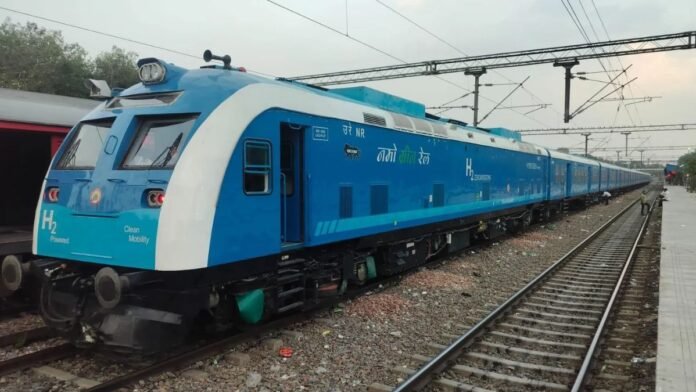
India’s first hydrogen-powered train underwent another round of trials between New Delhi and Jind on Friday, as engineers evaluated key performance parameters, including emergency braking distance and oscillation, ahead of its commercial rollout.

During the latest test run on the Jind-Sonipat section, the train reached a top speed of 120 kmph. However, its operational speed has been fixed at 75 kmph. Earlier trial runs had already been successfully conducted on the Sonipat-Jind route.

The Railway Board approved the introduction of the 10-coach hydrogen-powered train in a letter dated May 22. The Ministry of Railways officially announced the clearance on May 27, although a launch date for passenger operations has not yet been announced.

How the project works

The train is a modified diesel electric multiple unit (DEMU), a type of train commonly used on short and medium-distance routes across India. Instead of running on diesel, it has been retrofitted to operate using hydrogen fuel cell technology.

The conversion work was carried out by Hyderabad-based Medha Servo Drives in collaboration with Canada’s Ballard Power Systems, which supplied the hydrogen fuel cell technology.

The train comprises two 1,200 kW driving power cars and eight passenger coaches. With a combined power output of 2,400 kW, Indian Railways says it will become the world’s most powerful and longest hydrogen-powered train operating on a broad-gauge network.

Since Indian Railways plans to electrify most of its network, hydrogen-powered trains are primarily being developed for routes where electrification is difficult or for heritage railway lines. At present, around 35 routes have been identified under the Railways’ “Hydrogen for Heritage” initiative.

Hydrogen for the train will be supplied from a dedicated facility in Jind. The plant features a 1 MW polymer electrolyte membrane (PEM) electrolyser capable of producing around 420 to 430 kilograms of hydrogen every day.

The facility, built by GreenH Electrolysis, a joint venture between Spain’s H2B2 Electrolysis Technologies and the GR Promoter Group under a 2023 contract with Medha Servo Drives, also includes storage capacity for 3,000 kilograms of hydrogen along with two dispensing units to enable quicker refuelling.

On a full tank, the train is expected to cover nearly 250 kilometres.

The pilot project currently carries an estimated cost of ₹80 crore per train, while the supporting route infrastructure has been pegged at around ₹70 crore, excluding other associated development costs.

In a written reply in the Lok Sabha in December 2025, Railway Minister Ashwini Vaishnaw said it was too early to compare the costs of hydrogen-powered trains with conventional traction systems, as the project was still being implemented on a pilot basis.

Why the project is significant

The biggest advantage of hydrogen-powered trains is their environmental impact. Hydrogen fuel cells generate electricity through a chemical reaction between hydrogen and oxygen, producing only water vapour as the by-product and eliminating carbon emissions during operation.

With the project, India joins a select group of countries including Germany, Japan, China and the United States that have developed or are testing hydrogen-powered passenger trains. Germany’s Alstom Coradia iLint, which entered commercial service in 2018, was the world’s first hydrogen-powered passenger train.

For Indian Railways, hydrogen technology complements its broader goal of achieving net-zero carbon emissions. While electrification remains the primary strategy, hydrogen-powered trains are expected to serve routes where overhead electrification is either impractical or uneconomical, including difficult terrain and heritage railways such as the Nilgiri Mountain Railway, Darjeeling Himalayan Railway and the Kangra Valley Railway.

How hydrogen-powered trains work

Hydrogen fuel cells generate electricity through a process that is essentially the reverse of electrolysis. While electrolysis uses electricity to split water into hydrogen and oxygen, a fuel cell combines hydrogen stored onboard with oxygen from the air to produce electricity. The only by-products of this reaction are water vapour and heat, making the technology emission-free at the point of use.

The electricity generated by the fuel cells powers the train’s traction motors in much the same way as a conventional electric train. The key difference is that instead of drawing electricity from overhead power lines, a hydrogen-powered train produces its own electricity onboard.

The placement of hydrogen tanks and fuel cells differs depending on the train’s design. Germany’s Coradia iLint, for example, stores both the hydrogen tanks and fuel cells on the roof of two coaches. According to a 2024 peer-reviewed study published in ScienceDirect, the design takes advantage of hydrogen’s low density, allowing the gas to disperse quickly into the atmosphere in the event of a leak, thereby reducing explosion risks.

Switzerland’s Stadler FLIRT H2 follows a different approach by dedicating an entire coach exclusively to hydrogen storage and fuel cell systems, keeping the equipment completely separated from passenger compartments.

Battery systems also play a crucial role in almost every hydrogen-powered train, including India’s. They store surplus electricity produced by the fuel cells, along with energy recovered through regenerative braking. During periods of high power demand, such as acceleration, the batteries supplement the fuel cells to ensure a steady power supply.

Challenges facing hydrogen rail technology

Hydrogen-powered trains are not an experimental technology. Germany’s Alstom has operated hydrogen trains commercially since 2018, while Stadler’s FLIRT H2 set a Guinness World Record after traveling 2,803 kilometers over more than 46 hours without refueling.

However, several challenges continue to limit wider adoption.

One of the biggest hurdles is the production of green hydrogen. While hydrogen can be produced in different ways, only green hydrogen, generated by splitting water using renewable electricity, aligns with long-term decarbonization goals. Most of the hydrogen produced today is still grey hydrogen, which is derived from natural gas or other fossil fuels. Producing green hydrogen at scale remains expensive because of the high costs associated with electrolyzers and renewable energy.

Storage presents another major challenge. Hydrogen has a very low energy density by volume, requiring it to be compressed to pressures ranging between 350 and 700 bar before it can be stored efficiently onboard. The compression process itself consumes approximately 6 to 10 percent of the hydrogen’s energy content, according to the US Department of Energy.

Hydrogen’s molecular properties also create engineering challenges. Its extremely small molecules can gradually penetrate metals through a process known as hydrogen embrittlement, weakening storage tanks and other components over repeated use. Studies published in the International Journal of Hydrogen Energy and PubMed Central have identified this as a recognised concern for industries that store and transport compressed hydrogen.

Long-term exposure to hydrogen can also accelerate corrosion in metallic storage and refuelling infrastructure. As a result, manufacturers are increasingly adopting advanced composite materials instead of relying solely on metal pressure vessels.

Operational reliability is another area that remains under evaluation. India’s extreme weather conditions, ranging from intense summer heat to heavy monsoon rainfall, could place additional stress on hydrogen fuel cells in ways that have not yet been extensively tested in countries with more moderate climates, such as Germany.

Cost and scalability also remain significant barriers. Although hydrogen-powered rail technology has been commercially available for several years, its widespread deployment continues to lag behind conventional diesel, electric and battery-powered rail systems due to higher infrastructure costs and the challenges of producing and distributing hydrogen economically.

‘I Would Do It the Same Way Again’: Koeman Stands by Tactics After Netherlands Crash Out to Morocco

0
koeman
koeman

Netherlands head coach Ronald Koeman defended his tactical decisions after his side’s FIFA World Cup 2026 campaign came to an end, insisting that deploying a five-man defense against Morocco was a calculated decision based on analysis rather than a sign of caution.

The Dutch were knocked out in the Round of 32 after suffering a 3-2 penalty shootout defeat following a 1-1 draw after extra time. The result marked another disappointing World Cup exit for the Netherlands, who had been on course for victory before Morocco forced the match to penalties and emerged victorious.

Following the defeat, much of the discussion centered around Koeman’s decision to abandon the Netherlands’ traditional attacking setup in favor of a back five. Critics questioned whether the defensive formation restricted the team’s attacking play and allowed Morocco to dictate large periods of the match.

Koeman, however, dismissed those suggestions, arguing that the tactical switch achieved exactly what it was designed to do.

“With this defensive approach, we gave away much less than we did during the group matches,” Koeman told reporters after the game, according to Reuters.

“That was positive, but also we were less offensive.”

Koeman defends tactical switch

The Dutch manager stressed that Morocco presented a much tougher challenge than the Netherlands’ earlier opponents and said the decision to alter the formation came after carefully analysing the opposition.

“You can think of the tactics whatever you like, but we gave away much less against a team much stronger than Sweden and Tunisia. And if I had to do it again, I would do it the same way again,” he said.

Koeman added that the reaction to his tactics would likely have been very different had Morocco not scored a late equaliser.

“I also know that if Morocco hadn’t equalised with that late goal, there would be all sorts of compliments for me as the Dutch coach. But now, probably, I’m going to be scolded for the fact that I chose five defenders.”

The discussion grew more heated when Koeman was asked whether the formation reflected an overly defensive mindset. The Netherlands boss responded by defending his decision-making process and contrasting it with outside opinions.

“You will criticise me, and that’s your right, but you watch football from the sidelines,” Koeman said.

“I’m with the team. I knew what needed to be improved. This is how I improved it. And once again, if I had to do it again, I would have done exactly the same.”

Koeman also rejected any suggestion that his side approached the match with fear, pointing out that the Netherlands still started with three forwards despite switching to a back five.

“It was not about being afraid. That’s not what it was about at all. Why afraid? I mean, we had three strikers on the field,” he said.

“This is about a better defensive position, not out of fear, but based on an analysis of the opposition, and we can keep discussing this until tomorrow evening.”

“You have your opinion, with all due respect, that’s fine. But I have a different view.”

The defeat leaves Koeman facing renewed scrutiny over his tactical approach as questions grow over his future with the national team. Morocco, meanwhile, booked their place in the Round of 16, where they will take on Canada in Houston on Saturday.

Oil Nears 20% Monthly Fall as Investors Await Signals from Doha

0
oil shipping
oil shipping

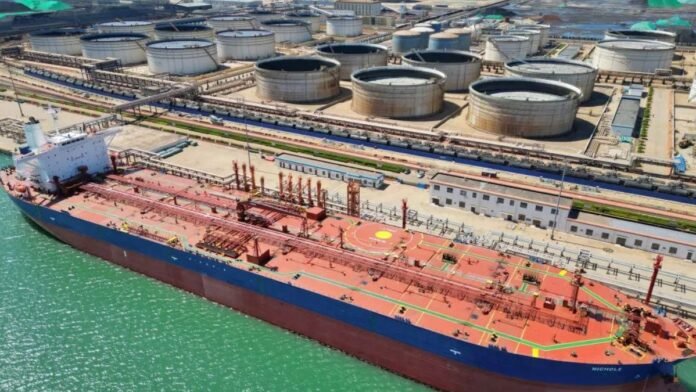
Oil prices fell by around 1% on Tuesday, giving up gains from the previous session, as investors monitored the possibility of fresh US-Iran talks in Doha while an uneasy ceasefire continued to hold after four months of conflict.

Brent crude futures for August delivery, which expire on Tuesday, declined 1%, or 75 cents, to $72.40 a barrel as of 0653 GMT. The contract has now fallen roughly $20, or 22%, from its closing level last month. The more actively traded September Brent contract slipped 0.6%, or 45 cents, to $73.46 a barrel.

US West Texas Intermediate (WTI) crude for August delivery dropped 0.8%, or 57 cents, to $70.18 a barrel. The benchmark is on track to end the month nearly $17, or 19%, below its May 29 close.

Both Brent and WTI have now retreated close to the levels seen before the conflict in West Asia erupted.

Markets await clarity on possible Doha talks

Investors remain focused on whether Washington and Tehran will resume negotiations in Doha, although uncertainty continues to surround the proposed meeting.

“Investors are pricing in hopes of a positive outcome from the Doha talks, even though real normalisation of flows through the Strait of Hormuz is not yet visible,” said Tim Waterer, Chief Market Analyst at KCM Trade.

“The market is cautiously hopeful but still hedging its bets until we see more tangible signs of de-escalation,” he added.

Iranian Deputy Foreign Minister Kazem Gharibabadi said on Monday that Iranian and Omani officials would soon begin discussions on redefining shipping routes through the Strait of Hormuz. He also warned that Iran would seek to block vessels traveling outside designated transit corridors.

However, Iran’s Foreign Ministry spokesperson Esmaeil Baghaei later said there were no negotiations with the United States scheduled at any level in the coming days.

Speaking at the White House, US President Donald Trump also offered little clarity about the proposed talks.

“The meeting in Doha is going to be perhaps important, perhaps not. We’re going to find out,” Trump told reporters in the Oval Office.

The uncertainty has highlighted the fragile nature of the June 17 ceasefire agreement, which paused fighting after months of conflict that disrupted global oil shipments through the Strait of Hormuz and created political challenges for Trump ahead of November’s congressional elections.

China demand and Hormuz risks remain in focus

Oil prices also came under pressure amid concerns about demand from China, the world’s largest crude importer.

“We wait for more evidence of a rise in Chinese buying but cannot yet bet on a big return to the market from the world’s largest crude importer,” said Neil Crosby, Head of Research at Sparta Commodities.

Despite renewed attacks on commercial vessels in the Strait of Hormuz and fresh exchanges between US and Iranian forces in recent days, oil and liquefied natural gas exports from the Middle East have continued largely uninterrupted, according to shipping data.

Traffic through the strategic waterway reached its highest level last week since the conflict began in late February.

Shiv Sena Gets Boost as Sachin Ahir Leaves Sena (UBT) Ahead of Key Vote

0
Sachin Ahir
Sachin Ahir

Shiv Sena (UBT) suffered another setback on Tuesday after former MLA Sachin Ahir joined the Eknath Shinde-led Shiv Sena ahead of the Maharashtra Legislative Council deputy chairman election.

Ahir, a former Worli MLA and one of Aaditya Thackeray’s close associates, also filed his nomination for the post of deputy chairman of the Maharashtra Legislative Council shortly after joining the Shinde camp.

Confirming the development, Shrikant Shinde said Ahir had officially joined the Shiv Sena and was handed the party’s nomination papers for the election.

Ahir started his political career with the Congress before switching to the Nationalist Congress Party (NCP). He later joined the undivided Shiv Sena after Aaditya Thackeray entered electoral politics from the Worli constituency, a move that was widely seen as strengthening the party’s prospects in the seat.

Fresh blow to the Uddhav Thackeray camp

Ahir’s defection marks yet another setback for the Uddhav Thackeray-led faction, which has continued to face political challenges since the Shiv Sena split in 2022. That rebellion saw Eknath Shinde walk away with the majority of the party’s MLAs before eventually securing the Shiv Sena’s name and election symbol.

The latest development comes just days after six Lok Sabha MPs from Shiv Sena (UBT) crossed over to the Shinde-led faction, further consolidating Shinde’s position within the ruling Mahayuti alliance.

The MPs formally merged with the Shinde camp after days of speculation. Describing the development at the time, Deputy Chief Minister Eknath Shinde had called it the “second phase” of the 2022 Shiv Sena rebellion.