Home Blog Page 3

US Visa Holder from India Turned Away at Atlanta Airport, Raising Questions Over Digital Privacy

0
Student
Student

A viral social media post has sparked fresh concerns among international students by claiming that an Indian student was denied entry into the United States after US authorities allegedly examined his mobile phone at an airport. However, HT.com could not independently verify the authenticity of the claims made in the post.

The post, which has been widely shared online, alleges that the student had travelled to India during the summer break and was returning to the US to continue his studies. According to the claims, a US Customs and Border Protection (CBP) officer asked to inspect the student’s phone during immigration checks.

The post further alleges that officers discovered the student was part of a WhatsApp group where members shared ride-sharing information and discussed academic assignments. It claims the student was subsequently denied entry into the US and deported back to India.

“Yesterday, I spoke with a student who said he was denied entry and sent back to India after arriving at Atlanta Airport. According to him, the officers checked his phone, including his WhatsApp conversations. He told me he hadn’t done anything wrong, but he was a member of a WhatsApp group that was sharing ride-related information and assignment-related content. I cannot verify whether that was the actual reason for the decision, and only the immigration officers know the complete facts,” the post stated.

“The student is on an F-1 visa and still has about six months left to complete his studies. He had gone to India for a one-month summer vacation and was returning to the US when this happened,” it added.

The post does not identify the student, provide independent evidence supporting the claims, or explain the official reason for the reported denial of entry.

Has CBP confirmed the claims?

So far, US Customs and Border Protection has not issued any statement confirming that the student’s alleged participation in a WhatsApp group was the reason for denying entry into the country.

As a result, the claims remain unverified despite triggering widespread discussion among international students on social media.

Concerns over digital privacy at US borders

The reported incident has renewed concerns over digital privacy during immigration inspections in the United States.

Under US law, CBP officers have broad authority to inspect electronic devices belonging to travellers entering the country. Depending on the circumstances, these inspections may include reviewing messages, photographs, contacts and other digital content if officers believe further examination is necessary.

Immigration attorneys have long maintained that possessing a valid visa does not automatically guarantee entry into the United States. CBP officers retain the final authority to determine whether a traveller is admissible after reviewing documents, travel history and responses during immigration screening.

Immigration experts urge caution

Following the viral post, several immigration advisers and student organisations have encouraged international students to be mindful of the information stored on their electronic devices while also educating them about the legal powers available to border officials during inspections.

Some advisers have suggested separating personal and academic communications where possible, although there is no evidence that participation in ordinary student discussion groups violates US immigration rules.

The reported incident comes amid heightened scrutiny at US ports of entry involving foreign nationals. In recent months, several reports and social media posts have highlighted cases in which travellers underwent secondary inspections, faced temporary detention or were denied entry under varying circumstances.

Students travelling on F-1 visas are generally advised to carry all valid immigration documents, maintain accurate academic records and be prepared to answer questions regarding their studies and travel plans when entering the United States.

While the viral post has raised concerns among students preparing to return for the upcoming academic session, experts caution against drawing broad conclusions from an unverified account. Immigration decisions are typically based on multiple factors, and without an official explanation from US authorities, it remains unclear whether the student’s alleged WhatsApp activity played any role in the reported denial of entry.

For now, the incident serves as a reminder that electronic devices may be subject to inspection during border checks and that international travellers should familiarise themselves with US immigration procedures before travelling.

Three E-Rickshaw Battery Apps Ordered Removed by Govt, Say Sources

0
rickshaws
rickshaws

The government has ordered the removal of three mobile applications that were allegedly being misused to remotely switch off e-rickshaws and other battery-operated vehicles while they were on the road, sources told HT.

According to the sources, the three applications identified are BAT-BMS, Lossigy, and Epoch-i-ion. Authorities have also indicated that any similar applications found to be facilitating such misuse will be blocked.

The move follows growing concerns after videos surfaced online showing people approaching e-rickshaws and remotely cutting off their power supply in the middle of journeys.

One of the applications, Lossigy, reportedly allows users to detect nearby electric vehicles and disable them with a single tap. HT tested the application with the consent of an e-rickshaw driver and was able to remotely switch off the vehicle.

Drivers say the vulnerability has existed for years but has gained widespread attention in recent weeks after videos of people using the apps to stop e-rickshaws went viral on social media.

How do these apps work?

The apps function in a manner similar to Bluetooth-enabled devices but, in many cases, do not require passwords or authentication to establish a connection. This means anyone within Bluetooth range can download the application, connect to a nearby vehicle and cut its power supply with a single tap.

According to the Google Play Store listing for BAT-BMS, the application offers several battery management features, including:

  • Connecting to compatible Bluetooth-enabled lithium batteries.
  • Displaying real-time battery information such as charge level, voltage, current, temperature, cycle count and cell health.
  • Monitoring battery charging and discharging history.
  • Compatibility with Bluetooth 5.0 (BLE) smartphones.
  • A wireless operating range of up to 15 metres.
  • Support for monitoring multiple batteries, although only one phone can control a battery at any given time.

While applications such as BAT-BMS and Lossigy are primarily designed to monitor the health and performance of EV batteries, experts say the absence of authentication in some lithium-ion battery management systems has created a major security loophole.

The flaw effectively allows smartphones to function as remote “kill switches”, potentially putting e-rickshaw drivers, passengers and other road users at risk.

Government examining security concerns

Before sources confirmed the takedown order, officials familiar with the matter had said that the Union Ministry of Electronics and Information Technology (MeitY) was examining the issue.

A senior Delhi government official also said that many e-rickshaws use battery management systems manufactured in China that offer limited security protections, making them vulnerable to misuse through such applications.

Experts say the incident highlights the cybersecurity risks associated with low-cost connected technologies and underscores the need for stronger security standards in battery management systems used in electric vehicles.

Investors Lift Meta Shares Despite Layoffs, but AI Spending Raises Questions

0
Meta
Meta

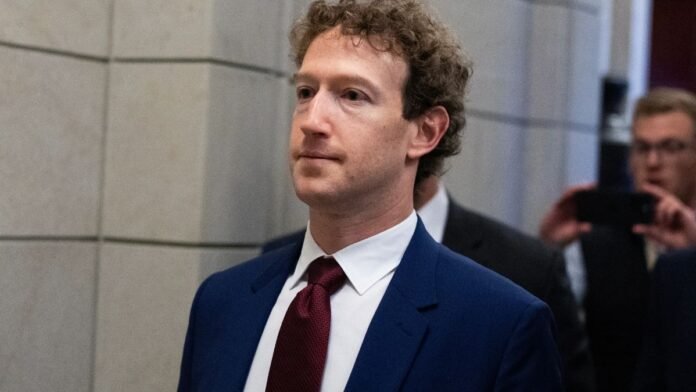
Meta is doubling down on artificial intelligence (AI), committing billions of dollars to the technology even as it trims thousands of jobs across the company. CEO Mark Zuckerberg has argued that AI is not meant to replace workers but to make them more productive, saying greater efficiency could ultimately lead to the creation of more jobs.

Speaking on Complex’s Idea Generation podcast, Zuckerberg said AI should be viewed as a tool that enhances employee productivity rather than one that eliminates roles.

His remarks come shortly after Meta announced one of its largest rounds of layoffs, cutting around 8,000 jobs, or nearly 10% of its global workforce, as part of a broad restructuring effort, according to Firstpost. The job cuts affected multiple divisions, including Integrity, cybersecurity and content design teams.

Meta restructures around AI

Employees in the United States who were laid off received severance packages, while roughly 7,000 existing employees are being reassigned to AI-focused roles. The company is also eliminating about 6,000 unfilled positions as part of its organisational overhaul.

During Meta’s latest earnings call, Zuckerberg said advances in AI have reduced the need for larger teams to perform certain tasks, prompting the company to rethink the size of several departments.

Meta now expects to spend between $125 billion and $145 billion in capital expenditure this year, nearly double last year’s investment. The bulk of the spending will go towards expanding AI data centres, purchasing advanced AI chips and training next-generation AI models through its Meta Superintelligence Labs.

According to CNBC, Meta is also planning to monetise its AI infrastructure by selling unused computing capacity to businesses. Bloomberg reported that the company is evaluating whether to offer customers access to its AI models or simply provide raw computing power through cloud services. The announcement was well received by investors.

Stock rallies on AI infrastructure plans

Meta’s shares surged 9% in a single trading session, marking their biggest one-day gain in more than five months, as investors welcomed the prospect of revenue streams beyond digital advertising.

Investors have increasingly urged Meta to generate returns from the massive investments it is making in AI infrastructure and data centres.

Earlier this year, Meta raised the upper end of its 2026 capital expenditure guidance by another $10 billion, taking the total planned investment to $145 billion. To help finance those plans, the company also raised $25 billion through a bond offering.

Advertising continues to account for roughly 98% of Meta’s revenue, and most of the company’s AI investments so far have focused on improving its advertising business.

Concerns over cloud expansion

Despite the market’s positive reaction, analysts have cautioned that expanding into cloud services could weigh on Meta’s profitability.

Cloud businesses typically require extensive enterprise sales teams and customer support operations, making them significantly more expensive to run than advertising platforms. As a result, they generally operate with lower profit margins.

Meta currently enjoys some of the strongest margins in the technology sector, reporting a gross margin of 82% and an operating margin of 41%, according to CNBC.

Google’s cloud business offers a cautionary example

Analysts point to Google’s financial performance as an example of the challenges involved. While Google’s advertising business generates operating margins of around 42%, its cloud division operates at roughly 18%.

Investment strategist Paul Meeks said Meta already has one of the strongest business models in the technology industry because of its advertising business. He argued that moving deeper into cloud computing could dilute the company’s overall profitability.

According to Meeks, Meta may generate stronger long-term returns by continuing to use AI to improve its own products and services rather than competing directly in the highly competitive cloud infrastructure market.

For now, Meta is attempting to balance three major priorities simultaneously: reducing costs through workforce restructuring, investing heavily to establish itself as an AI leader, and building new revenue streams beyond advertising. While investors are optimistic about the company’s AI ambitions, many also expect profit margins to come under pressure if Meta significantly expands its cloud computing business.

PowerStore Elite Debuts in India as Dell Expands Enterprise AI Portfolio

0
PowerStore
PowerStore

As Indian enterprises shift from experimenting with artificial intelligence to deploying it at scale, Dell Technologies is betting that the future of enterprise AI will be built inside private data centres rather than relying heavily on the public cloud.

On June 30, Dell unveiled its new PowerStore Elite storage platform in India, positioning it as an enterprise-grade solution for organisations looking to run AI workloads on-premises while keeping sensitive data within their own infrastructure.

The launch comes as businesses increasingly focus on data sovereignty, lower latency, predictable operating costs and long-term infrastructure investments. Dell says PowerStore Elite is designed not just as a storage platform but as the backbone of a modern data centre capable of supporting evolving AI workloads without requiring major hardware overhauls.

Venkat Sitaram, Senior Director and Country Head of Dell Technologies’ Infrastructure Solutions Group in India, said the platform integrates AI ecosystems from companies such as NVIDIA, OpenAI and Google into a single, centrally managed infrastructure.

New hardware, greater storage capacity

The new 3U storage appliance replaces proprietary storage modules with industry-standard E3 NVMe flash memory. According to Dell, the shift improves storage density while reducing vendor dependency and minimising supply chain risks. The company has also adopted a modular hardware design that makes future upgrades easier.

Customers can replace controllers, networking components and other hardware without shutting down systems, eliminating the need for large-scale data migrations during upgrades. PowerStore Elite also supports mixed-generation clustering, allowing organisations to integrate newer systems alongside existing deployments without disrupting operations.

Dell says the platform delivers up to three times the performance, throughput and storage density of its previous-generation storage systems. It also offers an effective storage capacity of up to 5.8 petabytes through a guaranteed 6:1 data reduction ratio.

The company says the increased storage density allows AI models to operate closer to primary datasets, helping reduce latency and improve workload performance.

PowerStore Elite is powered by next-generation Intel Xeon processors, DDR5 memory, PCIe Gen 5 connectivity and an upgraded node interconnect. Dell says software enhancements, including an AI-optimised data path and intelligent workload balancing, further improve read performance while lowering CPU usage and reducing the need for manual storage management.

Cutting cloud costs

Dell is positioning PowerStore Elite as an alternative to recurring cloud expenses for enterprise AI deployments.

According to the company, businesses running locally hosted AI models on its Deskside Agentic AI system can reduce software costs by as much as 87 per cent over two years. The estimate applies to AI models ranging from 30 billion to one trillion parameters.

For larger enterprise deployments, Dell also introduced PowerRack, an integrated platform that combines compute, networking and storage into a unified infrastructure.

Built on NVIDIA’s Vera Rubin architecture, PowerRack can reportedly be deployed in less than six and a half hours. Dell says the platform is designed to reduce the cost per token for large-scale AI inference workloads.

Focus on security and enterprise adoption

Alongside the new storage platform, Dell announced Cyber Detect, an AI-powered security solution expected to launch in the third quarter of 2026. The software scans storage systems at the byte level to identify ransomware attacks, with Dell claiming a detection accuracy of 99.99 per cent.

If malicious activity is detected, the platform automatically isolates the most recent clean copy of affected data, which Dell says can reduce manual recovery efforts by up to 95 per cent.

Dell also highlighted growing enterprise adoption of its private cloud infrastructure in India. Among its customers is Omega Healthcare, which uses the platform across its delivery centres in India to support administrative and clinical operations for hospital networks in the United States, where uninterrupted access to critical data is essential.

Dominant Displays Send Iga Świątek and Alexander Zverev into Wimbledon Last 32

0
Superb Iga Swiatek
Swiatek

Iga Swiatek bounced back in emphatic fashion after a nervy opening-round win, cruising past Karolina Pliskova to reach the third round of Wimbledon, while Alexander Zverev also advanced comfortably on Thursday.

Defending champion Swiatek, who was visibly emotional after surviving a tough first-round battle against Taylor Townsend, looked back to her dominant best as she swept aside former world number one Pliskova 6-1, 6-3 in just 70 minutes.

“The first round was obviously very emotional, but today felt like another day at work. I just had to be ready and stay sharp,” Swiatek said after the match.

The Polish star, who has experienced an inconsistent run since lifting her sixth Grand Slam title at Wimbledon a year ago, will next face the Philippines’ Alexandra Eala. Eala booked her place in the third round after defeating Maya Joint, who had earlier knocked out Serena Williams.

Pliskova, making her return this season following a lengthy injury layoff, struggled to cope with Swiatek’s relentless baseline game.

With the victory, the 25-year-old extended her remarkable Grand Slam consistency, reaching at least the third round in each of her last 26 major appearances since her second-round exit at the 2019 US Open.

Eala, seeded 29th, created history by becoming the first Filipina to reach the third round of a Grand Slam after rallying past Joint 3-6, 6-2, 6-0 on a lively Court Three.

“The atmosphere was incredible today. It was electric, respectful and everything I could have hoped for,” the 21-year-old said.

Last year’s runner-up Amanda Anisimova recovered from a break down in the deciding set to defeat Sofia Kenin in a tense final-set tiebreak.

Former Australian Open champion Madison Keys ended British hopes in the women’s singles with a straight-sets victory over Katie Swan.

Later on Centre Court, 2022 Wimbledon champion Elena Rybakina was set to face American Caty McNally as she continued her bid to overtake Aryna Sabalenka for the world number one ranking next week.

Princess Catherine, the future Queen of Britain, also attended the championships on Thursday, greeting spectators before watching matches on Court 18.

Zverev cruises into third round

Alexander Zverev produced another commanding display, defeating Valentin Royer 6-1, 6-3, 7-6 (7-3) to continue his strong start at the tournament.

Fresh from finally winning his maiden Grand Slam title at the French Open, Zverev is hoping to improve on his modest Wimbledon record, having never progressed beyond the fourth round in nine previous appearances at the All England Club.

The German second seed finds himself in a favourable section of the draw, with Jannik Sinner and Novak Djokovic placed in the opposite half and fourth seed Ben Shelton already eliminated.

“If I keep playing like this, I definitely believe it can happen this year,” Zverev said. “In tennis, you need to have a short memory, whether things go well or badly.”

The 28-year-old made light work of Royer, putting behind him memories of last year’s shock first-round defeat to fellow Frenchman Arthur Rinderknech.

American sixth seed Taylor Fritz also progressed with ease, defeating compatriot Patrick Kypson 6-2, 6-2, 7-5 to reach the third round.

Fritz has now reached at least the quarter-finals at Wimbledon in three of the last four years and was a semi-finalist last season before losing to Carlos Alcaraz.

Australian fifth seed Alex de Minaur also advanced comfortably, beating experienced Frenchman Adrian Mannarino in straight sets.

Spain’s Rafael Jodar completed a comeback victory over Pablo Carreno Busta after their first-round match resumed following Wednesday’s suspension due to darkness. The young Spaniard won the final two sets to seal his place in the next round.

Playing in his first Wimbledon main draw, Jodar had never featured in a Tour-level grass-court match before this week but has enjoyed a breakthrough season after reaching the French Open quarter-finals.

Britain’s Arthur Fery also kept home hopes alive, defeating Finland’s Otto Virtanen in four sets to move into the third round.

Pakistan-Backed Terror in Focus as Modi, Japan PM Seek Action Against LeT and JeM

0
Modi
Modi

Prime Minister Narendra Modi and his Japanese counterpart Sanae Takaichi on Thursday strongly condemned Pakistan-backed terrorism and called for coordinated global action against terror groups such as Lashkar-e-Taiba (LeT) and Jaish-e-Mohammad (JeM), both of which have been linked to multiple terror attacks in India.

The two leaders condemned last year’s terrorist attack in Pahalgam and took note of the United Nations Security Council Monitoring Team Report dated July 29, 2025, which mentioned The Resistance Front (TRF).

They also denounced the November 2025 Red Fort blast in New Delhi, with the joint statement stressing the need to ensure accountability.

“They called for the perpetrators, organisers, and financiers of this reprehensible act to be brought to justice without any delay,” the 16th India-Japan Annual Summit Joint Statement said.

“The two Prime Ministers unequivocally and strongly condemned terrorism and violent extremism in all its forms and manifestations, including cross-border terrorism from Pakistan,” the statement added.

The leaders further urged the international community to take concerted action against all UN-designated terrorist groups and entities, including Al Qaeda, ISIS/Daesh, Lashkar-e-Taiba (LeT), Jaish-e-Mohammad (JeM), and their affiliated organisations.

India-Japan ties deepen with strategic focus

Takaichi is on her first official visit to India as New Delhi and Tokyo seek to strengthen their strategic and economic partnership. During a joint press conference, Prime Minister Modi warmly referred to her as his “younger sister” and described her as a “visionary and popular leader.”

Following delegation-level talks at Hyderabad House in New Delhi, the two leaders unveiled several initiatives aimed at expanding cooperation across multiple sectors.

“Your Excellency, and ‘meri chhoti behen’ (my younger sister) Prime Minister Takaichi, delegates of the two countries, members of the media, Namaskar! Konnichiwa,” Modi said while opening his address, using the Japanese greeting.

“I am delighted to welcome Prime Minister Takaichi on her first visit to India for the India-Japan Annual Summit. She is also Japan’s first female Prime Minister and a visionary and popular leader. She also comes from Japan’s Nara Prefecture, which holds deep significance in the shared Buddhist heritage of India and Japan,” Modi said.

The Prime Minister concluded his remarks by thanking the audience in both Hindi and Japanese, saying “bahut bahut dhanyawad” and “arigatou gozaimasu.”

Takaichi is visiting India from July 1 to July 3 at Prime Minister Modi’s invitation for the 16th India-Japan Annual Summit.

Responding to Modi’s remarks, Takaichi acknowledged the reference to her as his “younger sister.”

“The discussions we had, both privately and officially, reaffirmed that we are on the same page in taking this relationship forward like brother and sister,” she said through an English translation of her remarks delivered in Japanese.

Ali Khamenei’s Funeral Draws Global Leaders: Here’s Who Is Attending

0
Ali Khamenei

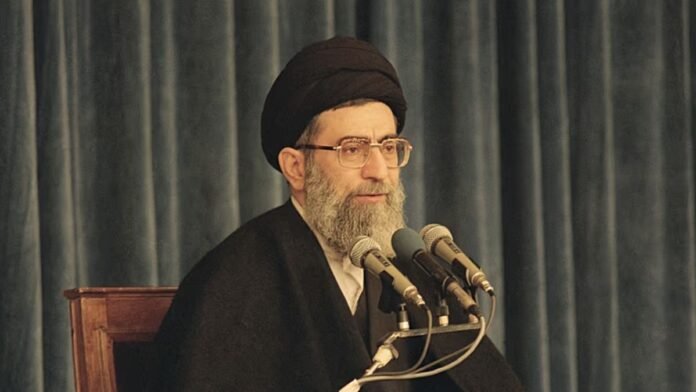
Following the death of Ayatollah Ali Khamenei, Iran has announced a six-day funeral procession for the late Supreme Leader, with ceremonies set to begin on July 4. The funeral is expected to draw foreign dignitaries and officials from more than 30 countries.

Khamenei, who served as Iran’s Supreme Leader, was killed during the joint US and Israeli strikes carried out on February 28. The attack triggered the ongoing conflict between the United States and Iran.

From Pakistan, which has played a key role in mediating between Washington and Tehran, to political leaders from India and several other nations, numerous foreign representatives are expected to attend the funeral procession.

Who is expected to attend?

While several countries are yet to officially announce their delegations, Pakistan has confirmed that Prime Minister Shehbaz Sharif will travel to Iran to attend the funeral.

India’s Ministry of External Affairs has announced that Bihar Governor Syed Ata Hasnain and Minister of State for External Affairs Pabitra Margherita will represent the country during the ceremonies.

“The high-level representation at the ceremony underscores the importance of the civilisational relationship, including people-to-people ties, between the two countries, which continues to provide a strong foundation for political and economic engagement,” the MEA said in a statement.

Apart from the official delegation, several Indian political leaders, including Congress leader Salman Khurshid and PDP chief Mehbooba Mufti, are also expected to travel to Iran for the funeral.

Russia, one of Iran’s closest allies, will be represented by Deputy Chairman of the Russian Security Council Dmitry Medvedev, the Kremlin confirmed.

From Bangladesh, Parliament Speaker Hafiz Uddin Ahmad is expected to attend the funeral after receiving an invitation from Iran, according to local news outlet bdnews24.com, citing Parliament Secretariat Public Relations Director Md Monir Hossain.

China will send senior lawmaker He Wei to represent Beijing at the funeral in Tehran, according to an announcement by the Chinese Foreign Ministry.

Representatives from over 30 countries expected

According to Iran’s Tasnim News Agency, Ali Akbar Poorjamshidian, secretary of Iran’s National Headquarters for the Farewell and Funeral of the Martyred Leader of the Islamic Revolution, said that more than 30 countries have formally requested to participate in the funeral and pay tribute to Khamenei.

Speaking at a press conference, he also said that numerous religious leaders, senior clerics and prominent personalities from different faiths and schools of thought had expressed their desire to attend the ceremonies.

Poorjamshidian added that representatives and dignitaries from more than 90 countries have indicated their readiness to participate in the funeral procession.

Six-day funeral programme

The funeral and burial ceremonies for Ayatollah Ali Khamenei will be held between July 4 and July 9 across Iran and Iraq.

According to Tasnim, the ceremonies will begin at 6 am on July 4. Public farewell events and Quran recitations will continue in Tehran until July 6.

On July 7, a major funeral procession will be held in the holy city of Qom.

Memorial services are scheduled to take place in Iraq on July 8, while the final burial will be conducted on July 9 at the Imam Reza Shrine in Mashhad, Khamenei’s hometown.

Uttarakhand Land Row: BJP Accuses Priyanka Gandhi, Robert Vadra of Illegal Land Grab Attempt

0
vaDRA
Vadra

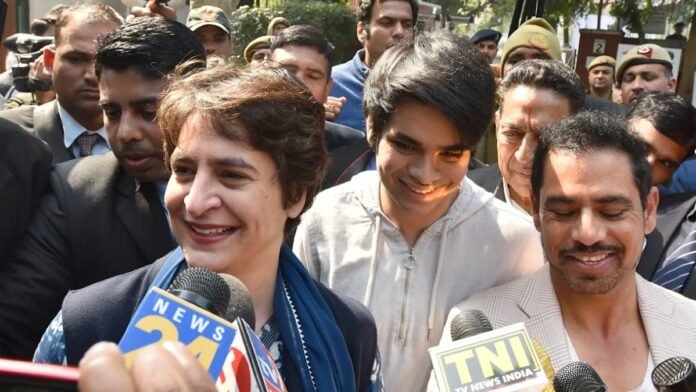
The BJP on Thursday alleged that Congress leader Priyanka Gandhi Vadra and her husband, Robert Vadra, were linked to an attempt to take possession of a four-acre land parcel in Uttarakhand, claiming that a 90-year-old woman was being pressured to vacate the property.

There was no immediate response from the Congress, Priyanka Gandhi Vadra or Robert Vadra to the allegations.

Addressing a press conference, BJP national spokesperson Pradeep Bhandari claimed that the Gandhi-Vadra family’s real business was not politics but “grabbing people’s land.”

Bhandari alleged that Robert Vadra’s sister, Saira Vadra, was attempting to acquire a four-acre plot in Kichha, located in Uttarakhand’s Udham Singh Nagar district. According to him, the original lease for the land was issued in the name of the late Kulsum Khan, while the property is currently occupied by her 90-year-old sister, Nasreen Khan.

He further alleged that Kichha Congress MLA Tilak Raj Behar arrived at the property late on Wednesday night with nearly 100 supporters and threatened Nasreen Khan with serious consequences if she refused to vacate the land.

Bhandari claimed that Congress leaders resort to intimidation when legal avenues fail.

“When they realise that Saira Vadra cannot obtain possession of the land through legal means, they begin intimidating the occupant. Saira Vadra is merely the face, while Priyanka Vadra and Robert Vadra are behind the entire exercise,” he alleged.

The BJP leader said his allegations were based on statements made by Nasreen Khan herself, who, according to him, accused Congress workers of attempting to hand over the property to the Vadra family.

“The responsibility does not end with the Congress MLA. It ultimately rests with Priyanka Gandhi Vadra,” Bhandari alleged.

Questioning the Congress leader’s role in the matter, he asked, “Did Priyanka Gandhi Vadra instruct the Congress MLA to ensure that her sister-in-law takes possession of the land by intimidating a 90-year-old Muslim woman?”

Bhandari further alleged that the incident reflected what he described as the “Gandhi-Vadra model” of land acquisition, while referring to previous cases involving Robert Vadra to claim there was a recurring pattern in such transactions.

“Congress claims to stand with Muslims and the poor. Yet, according to the allegations before us, a 90-year-old Muslim woman is being threatened to vacate her land,” he said.

“The people of this country should understand that whenever the Gandhi-Vadra family sets its sights on a piece of land, people are allegedly sent repeatedly to intimidate the occupant until the property is vacated,” Bhandari claimed.

Supreme Court Issues Strong Warning on AI in Courts, Labels Improper Use as Misconduct

0
intelligence
intelligence

The debate surrounding the use of Artificial Intelligence (AI) in the legal system reached the Supreme Court on Thursday after it found that the National Company Law Tribunal (NCLT) had relied on fake judicial precedents and AI-generated case citations while deciding an insolvency matter.

The Supreme Court set aside the NCLT’s judgment in the Essel Infraprojects insolvency case after observing that the tribunal had cited “non-existent, fake and hallucinated” judgments generated through AI, news agency PTI reported.

A bench comprising Justices PS Narasimha and Alok Aradhe strongly criticised the practice, saying, “The production of fake, non-existent, and hallucinated material and its utilisation as precedents in law is like the release of methyl isocyanate into the province of law and justice. It is invisible, insidious and catastrophic by the time anyone notices. It not only contaminates but takes away the very lifeblood of judicial determination.”

The court emphasised that there must be zero tolerance towards the use of AI-generated legal precedents without proper verification.

“It is necessary for courts to adopt a zero tolerance approach towards producing, citing or relying upon AI-generated precedents without verification. It amounts to professional misconduct on the part of an advocate to cite such judgments without verifying their authenticity,” the bench observed.

The judges further held that it would be an equally serious lapse if a judge relied upon fake or hallucinated AI-generated material while delivering a verdict.

“We have no hesitation in declaring that such a decision is no decision in the eyes of law, irrespective of whether such material directly or indirectly influenced the outcome. Any judgment that is even minimally tainted by fake or hallucinated material must be set aside, as it compromises the sanctity of the adjudicatory process,” the bench said.

The court stressed that preserving the integrity of judicial decision-making remains paramount.

At the same time, the Supreme Court acknowledged the growing role of artificial intelligence in the legal ecosystem, clarifying that while AI can assist judges, the ultimate responsibility for adjudication must always rest with humans.

“What is significant for our decision making is our resolve to adopt artificial intelligence technology in aid of adjudication while simultaneously ensuring that complete and absolute control over every stage of the adjudicatory process remains with the human in the loop,” the judgment stated.

The bench further observed that merely condemning such practices would not be enough and called for concrete accountability measures.

Addressing the legal fraternity, the court directed the Bar Council of India (BCI) to constitute a committee to examine the issue of advocates submitting fake or AI-generated precedents before courts as though they were genuine judicial authorities.

The Supreme Court said the apex statutory body should treat the matter with utmost seriousness, formulate appropriate guidelines to prevent such incidents, and prescribe disciplinary action for advocates found violating the proposed norms.

‘Life-Changing Experience’: Kerala Expats React After Winning ₹9.5 Crore Each in Dubai

0
dubai
dubai

Two Indian expats from Kerala have become the latest winners of the Dubai Duty Free Millennium Millionaire promotion, with each taking home the $1 million (approximately ₹9.5 crore) grand prize in the latest draw held on Wednesday.

According to a report by Khaleej Times, 48-year-old Kabir Poovathingal and 30-year-old Mohammed Shibil Thayyil were declared the newest millionaires, taking the total number of Indian winners in the Millennium Millionaire promotion to 279 since its launch in 1999.

Kabir, who has been living in Dubai for the past 22 years, purchased his winning ticket online on June 13. He has been participating in Dubai Duty Free promotions for more than a decade.

The father of five works as an aviation operator in Abu Dhabi. Speaking after the win, he described it as “a wonderful and life-changing experience” and encouraged others to participate in the promotion.

Mohammed Shibil Thayyil, another Kerala native, moved to Dubai in October 2023 and bought his winning ticket online on June 18.

The 30-year-old, who works in sales at the Sharjah Airport International Free Zone, got married only last month. Remarkably, he won the $1 million prize with just his second-ever ticket in the Dubai Duty Free draw.

“You have changed my life! This is the greatest news ever! Thank you so much, Dubai Duty Free,” Thayyil said after being informed of his win.

According to Khaleej Times, Kabir and Thayyil became the 278th and 279th Indian nationals to win the Dubai Duty Free Millennium Millionaire promotion.

Another Indian drives home a luxury Mercedes

The celebrations continued in the Finest Surprise draw, where another Indian expat won a luxury Mercedes-Benz.

Kaushal Ved, a 39-year-old Indian residing in Muscat, Oman, won a Mercedes-Benz S500 after purchasing his ticket online on June 25.

Ved, who works as an insurance sales agent, has been participating in Dubai Duty Free promotions for the past five years.

“Amazing! I have been buying tickets every month, usually a combination of Millennium Millionaire and Finest Surprise tickets. I never expected to win, but now it has happened. I will continue buying tickets and hope to win the $1 million next time,” he said.

The Finest Surprise draw also saw Kuwait-based Canadian national Mahmoud Harissi win an Aprilia RSV4 1100 motorcycle.

Kerala woman earlier won a free apartment

Earlier this month, another Kerala native made headlines after 27-year-old Aysha Ameer, an Indian expat living in Dubai, became the first winner of a free apartment under Dubai’s newly launched “Win Your Home in Dubai” campaign.

She won a studio apartment developed by Binghatti through a citywide lucky draw organised by the Dubai Festivals and Retail Establishment (DFRE) and Dubai Chambers.