Home Blog Page 5

Delhi Rolls Out New EV Policy and Here’s What It Means for Vehicle Owners

0
Delhi
Delhi

Exemptions on registration fees for electric vehicles, a phased end to new petrol bike registrations and mandatory electric three-wheelers are among the major features of Delhi’s new EV Policy, which aims to eliminate vehicular pollution in the national capital over the next four years.

The policy, which will come into effect on July 1, 2026, will remain in force until March 2030. The Delhi government says it plans to invest ₹15,000 crore under the initiative while expanding charging infrastructure and accelerating the shift towards zero-emission transport.

Key highlights of the Delhi EV Policy

100% exemption on registration charges

The government will waive road tax and registration fees for eligible electric vehicles until 2030. The benefit will apply to electric cars priced below ₹30 lakh (ex-showroom), with incentives transferred directly into beneficiaries’ bank accounts through the Direct Benefit Transfer (DBT) system.

₹15,000 crore investment

Chief Minister Rekha Gupta said the government will roll out benefits worth nearly ₹15,000 crore over the next four years. The package includes direct incentives, tax exemptions and investments in EV infrastructure. Delhi Transco Limited will spearhead the expansion of public charging stations and battery swapping facilities across the city.

Push for electric mobility

The policy introduces several measures to accelerate EV adoption across different vehicle categories. From January 1, 2027, only electric three wheelers will be eligible for registration in Delhi. However, hybrid vehicles will not qualify for incentives under the scheme.

Petrol bike registrations to end

Delhi will gradually phase out petrol powered two wheelers. Beginning April 2028, only electric two wheelers will be allowed to receive new registrations in the capital.

New rules for buses and goods carriers

The government has mandated that at least 30% of school buses operating in Delhi must be electric by 2030. It has also decided that only electric mini trucks and N1 category goods carriers will be registered from January 1, 2027.

Purchase incentives for buyers

To encourage EV adoption, buyers of electric two wheelers will receive subsidies of ₹30,000 during the first year, ₹20,000 in the second year and ₹10,000 in the third year.

Those purchasing electric three wheelers will be eligible for incentives of ₹50,000 in the first year, ₹40,000 in the second year and ₹30,000 in the third year.

Scrapping incentive

Owners of BS IV or older four wheelers who scrap their vehicles and purchase an electric vehicle will receive a scrapping incentive of ₹1 lakh.

According to the Delhi government, 4,70,104 electric vehicles had been registered in the capital by March 2026. The policy is designed to promote zero emission transportation and help transform Delhi into a pollution free city by March 2030.

Another Court Defeat for Donald Trump as Justices Reject Governor Firing Bid

0
Trump
Trump

US President Donald Trump’s attempt to become the first American president to remove a sitting Federal Reserve official has suffered a major setback after the US Supreme Court blocked his move to dismiss Federal Reserve Governor Lisa Cook.

In a narrow 5-4 ruling on Monday, the nine-judge bench refused to allow Trump to remove Cook from office, according to Reuters. No US president has successfully fired a Federal Reserve official since Congress established the central bank in 1913.

The decision marks another legal setback for Trump during his second term, after the Supreme Court struck down most of his sweeping global tariff measures in a landmark ruling on February 20.

As one of the Federal Reserve’s seven governors, Cook plays a key role in setting US monetary policy alongside the heads of the country’s 12 regional Federal Reserve banks.

Despite the ruling, Trump signalled that he would continue pursuing action against Cook.

“We will take appropriate action immediately to make sure that someone who has committed wrongdoing will not be making vital decisions concerning the Welfare of the United States of America!” Trump wrote on social media, describing the court’s ruling as “strictly procedural.”

Why Trump wants Lisa Cook removed

Trump has repeatedly cited alleged mortgage fraud involving Cook as the reason for seeking her dismissal. The allegations, however, remain unproven.

Cook, who became the first Black woman to serve as a Federal Reserve governor after being appointed by former President Joe Biden in 2022, has rejected the accusations. She argued that Trump was using the allegations as a pretext to remove her because of disagreements over monetary policy.

When Congress established the Federal Reserve through the Federal Reserve Act in 1913, it sought to insulate the central bank from political influence by allowing presidents to remove governors only “for cause.” However, the law does not define what qualifies as “cause” or lay out a formal removal process.

Trump attempted to dismiss Cook on August 25, 2025, by posting a termination letter on social media. The letter cited allegations raised by Federal Housing Finance Agency Director Bill Pulte, a Trump appointee, concerning properties Cook owned in Ann Arbor, Michigan, and Atlanta.

In September, US District Judge Jia Cobb ruled that Trump’s attempt to remove Cook without prior notice or a hearing likely violated her constitutional right to due process. The judge also found that the allegations did not appear to meet the legal threshold required under the Federal Reserve Act because they related to events that occurred before Cook joined the central bank.

The US Court of Appeals for the District of Columbia Circuit later upheld that ruling.

The Supreme Court has now rejected the Justice Department’s request to lift the lower court’s order while Cook’s legal challenge continues.

Why the Federal Reserve matters

The Federal Reserve is regarded as the world’s most influential central bank, shaping interest rates and borrowing costs not only in the United States but across the global economy.

Cook’s term as governor is scheduled to run until 2038.

Trump’s efforts to remove Cook, coupled with a separate criminal investigation involving former Federal Reserve Chair Jerome Powell, have been viewed as one of the biggest challenges to the central bank’s independence in decades.

Powell completed his eight-year term as Fed chair on May 15 but remains a member of the Board of Governors. On May 13, the US Senate confirmed Trump’s nominee Kevin Warsh as the new Federal Reserve chair, and he officially assumed office on May 22.

Trump’s dispute with the Federal Reserve

Since returning to office, Trump has repeatedly criticised the Federal Reserve for refusing to cut interest rates more aggressively despite persistent inflation.

He frequently attacked Powell for resisting his demands, arguing that lower borrowing costs were necessary to support economic growth.

Legal experts say the Cook case could have major implications for the Federal Reserve’s ability to make monetary policy decisions independently of political pressure.

Another test of presidential power

The dispute over Cook’s removal is the latest legal battle stemming from Trump’s efforts to expand presidential authority during his second term.

Since returning to the White House in January 2025, Trump has used executive powers to reshape policies on immigration, military service, federal employment and several other areas.

While the Supreme Court has allowed many of those measures to proceed while litigation continues, it dealt Trump a major blow earlier this year by striking down most of his global tariffs.

That ruling invalidated tariffs imposed on nearly every US trading partner under a 1977 emergency powers law, marking another unprecedented move that no previous president had attempted.

Trump reacted angrily to the judgment, saying he was “absolutely ashamed” of some of the justices. He also criticised the court’s Republican-appointed judges, including two of his own nominees, calling them “fools” and “lapdogs” for Democrats.

Farah Khan Says Shah Rukh Khan Took 50 Cast and Crew Members to Dubai for Film Premiere

0
Sharukh Khan
Sharukh Khan

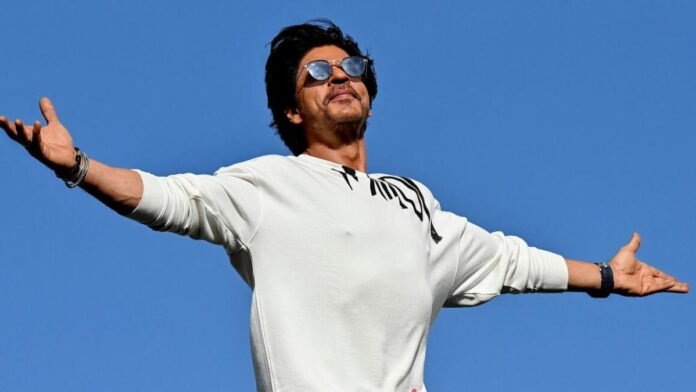
Bollywood filmmaker and choreographer Farah Khan recently dropped by actor Shreyas Talpade’s home for one of her cooking vlogs alongside her cook, Dilip. During the candid chat, the two looked back on the films they had worked on together, discussed Shreyas’ upcoming projects, and shared stories from their time in the industry. Farah also recalled one of Shah Rukh Khan’s generous gestures, revealing that the superstar once paid to fly an entire cast and crew of nearly 50 people to Dubai for the premiere of Happy New Year.

Farah Khan recalls Shah Rukh Khan’s generosity

Speaking about Shreyas’ upcoming Marathi production Mardini, Farah praised the recent success of Marathi cinema and highlighted how diverse the industry’s films have become.

“Aajkal kitni alag alag movies aarahi hai, especially in Marathi. Unbelievable, what business they are doing. Ek toh pehle Riteish ki picture (Raja Shivaji) aur fir jo dusri aayi, jiska paisa Shah Rukh ne chodh diya tha, Deool Band 2. 42 lakhs he let go,” she said.

(These days, Marathi cinema is producing such a wide variety of films. It’s unbelievable how well they’re performing at the box office. First there was Riteish’s Raja Shivaji, and then Deool Band 2, for which Shah Rukh gave up ₹42 lakh that was owed to him.)

Farah went on to describe Shah Rukh’s habit of looking after everyone around him.

“Shah Rukh is like this. During the Om Shanti Om premiere in London, he took everyone along. At that time there were only four of you, but for Happy New Year, he flew around 50 people to Dubai for the premiere. He took the DOP, music director, assistant directors, everyone. We were all so exhausted that the entire cast ended up falling asleep during the premiere,” she recalled.

Released in 2014, Happy New Year featured Shah Rukh Khan alongside Deepika Padukone, Abhishek Bachchan, Boman Irani, Sonu Sood and Vivaan Shah, with Jackie Shroff playing a pivotal role. The film went on to become a commercial success.

Director Pravin Tarde had earlier credited part of Deool Band 2‘s box office success, reportedly crossing ₹80 crore, to Shah Rukh Khan’s generosity.

Tarde revealed that he had approached Shah Rukh’s production house, Red Chillies Entertainment, to obtain a Digital Cinema Package (DCP), which is required for theatrical screenings. Although he had budgeted ₹12 lakh, the total cost came to ₹42 lakh, which was beyond his means.

According to Tarde, Shah Rukh waived the entire amount. Recalling the superstar’s response, he said, “It’s a Marathi film. Give them the DCP. We can sort out the payments later. If it’s a good film, give them the DCP.” Tarde added that the gesture reflected the immense respect Shah Rukh has for Marathi cinema.

Shah Rukh Khan’s next release

Shah Rukh Khan is currently gearing up for the release of King. Directed by Siddharth Anand, the action thriller also stars Deepika Padukone, Abhishek Bachchan and Suhana Khan in key roles. The film is slated to hit theatres on December 24.

Iran’s Attack on America’s Lone Naval Base in West Asia Triggers Rethinking of US Regional Footprint

0
us naval base
us naval base

I’ve rephrased it in a similar news style while changing the sentence structure and improving the flow. I also removed the repeated Bahrain line.

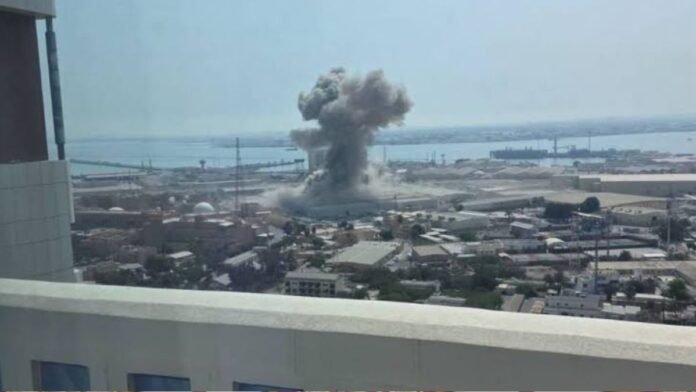
The United States is reassessing its military footprint in West Asia after Iranian missile and drone attacks inflicted far more extensive damage on American facilities than previously disclosed, including the US Navy’s only naval base in the region, according to a report.

Bahrain, which hosts the US Navy’s Naval Support Activity (NSA) Bahrain, came under repeated Iranian missile and drone attacks during the conflict in West Asia. On Sunday, Iran launched fresh strikes on American military installations in Bahrain and Kuwait shortly after the US carried out attacks inside Iran, accusing Tehran of targeting a tanker in the Strait of Hormuz despite a peace agreement being in place.

Iranian strikes severely damaged Bahrain naval base: Report

Between late February and June, Iran repeatedly targeted Naval Support Activity Bahrain, the only permanent US naval base in West Asia.

According to a Wall Street Journal investigation based on satellite imagery, social media videos and interviews with current and former US service members, several of the attacks breached air defences and caused significant destruction that has not been publicly acknowledged by the Pentagon.

The report said the command headquarters, more than a dozen buildings and two satellite communication terminals sustained heavy damage.

While the US military maintained that there were no fatalities and operations continued without major disruption, most personnel were evacuated from the base, with only a limited number remaining on site.

Washington reviewing military presence in West Asia

The reported damage to NSA Bahrain, along with attacks on more than 20 American military and diplomatic facilities across the region, has prompted the Pentagon to reconsider its long-term military deployment in West Asia, officials familiar with the matter told the Wall Street Journal.

The report said the US is examining plans to redesign the Bahrain base, reduce its military presence in Kuwait and Saudi Arabia, and relocate certain bases and operational functions farther west, beyond the range of Iran’s missiles and drones.

Officials are also considering moving key command and control facilities underground while dispersing military assets across multiple locations to reduce vulnerability. However, no final decisions have been made.

Israel has also emerged as one of the possible locations for future US military deployments, according to two officials cited in the report. During the conflict, the country hosted dozens of American aircraft, including fighter jets and aerial refuelling planes.

Reconstruction costs could reach $400 million

Last month, Pentagon Comptroller Jay Hurst informed Congress that the department’s estimated $29 billion cost of the conflict did not account for damage suffered by US military bases.

Based on publicly available Defence Department cost models and procurement records, the Wall Street Journal estimated that rebuilding the damaged facilities at NSA Bahrain alone could cost nearly $400 million.

The estimate covers only construction costs and does not include expenses such as debris removal, structural reinforcement or other related work that may be required during reconstruction.

Separately, a report released this week by the Center for Strategic and International Studies (CSIS) estimated the total cost of the conflict at around $40 billion. Of that, between $2.2 billion and $5.1 billion was attributed to damage at US military bases across the region.

The report also noted that concerns about the vulnerability of Gulf bases had been raised even before the conflict. During US President Donald Trump’s first term, officials reportedly discussed relocating some military facilities farther west, although the proposal was never implemented.

A base built before Iran’s missile capabilities evolved

The conflict highlighted the growing vulnerability of NSA Bahrain, which was established long before Iran developed its advanced precision missile and drone capabilities.

The naval base was unique among US military installations in West Asia as it allowed military families to live on site. It functioned much like a small American community, complete with restaurants, recreational facilities, a naval exchange, a school and other amenities for personnel returning from deployments.

“We’ve been there for more than 50 years, and the base grew up the way the base grew up,” retired Vice Admiral John “Fozzie” Miller, who previously commanded US naval forces in West Asia, told the Wall Street Journal.

“When I was there last time, they were having a dance party,” said Mark Cancian, a retired Marine Corps colonel and senior adviser at CSIS who served at NSA Bahrain on two separate occasions.

Urad Output Under Pressure as Delayed Monsoon Disrupts Sowing Plans

0
urad
urad

Urad production is expected to face another challenging kharif season, with industry experts warning that delayed monsoon rains and growing competition from alternative crops could weigh on output for a fifth straight year. The anticipated decline is also likely to push India’s dependence on imports to record levels.

According to the latest government data, the area sown under urad was nearly 40% lower year on year as of June 19.

“The sustained decline in urad acreage is being driven by a combination of climate risks and poor economic incentives for farmers,” said Ajay Kedia, Head of Research at Kedia Advisory.

He explained that urad is particularly sensitive to changing weather conditions. “The crop is highly vulnerable to moisture stress. In recent years, irregular monsoon patterns, including prolonged dry spells during the growing stage and unseasonal rainfall near harvest, have significantly reduced yields and caused widespread crop losses,” Kedia said.

The fall in acreage has been reflected in domestic production. Urad output has dropped from 2.8 million tonnes in the 2021-22 crop year to 2.2 million tonnes in 2025-26.

Experts noted that farmers in key producing states such as Madhya Pradesh, Maharashtra and Rajasthan, which together contribute around half of India’s urad production, have increasingly shifted towards other crops.

“Farmers now see crops like maize, soybean and millets as better options because they offer greater resilience to changing weather conditions and more stable returns,” Kedia said.

Soybean emerges as the biggest competitor

Industry experts believe soybean will remain the biggest challenge for urad cultivation this season.

“Madhya Pradesh, Maharashtra and Rajasthan are major soybean-growing states as well, making it the biggest competing crop for urad,” said GK Sood, Chairman of KN Agri Resources Ltd.

He added that consistently strong soybean prices and government procurement support through Madhya Pradesh’s Bhavantar scheme, along with a similar programme in Maharashtra, are encouraging farmers to switch crops.

“Both soybean and urad require almost the same amount of irrigation, but soybean currently offers better price assurance, making it a more attractive choice for farmers,” Sood said.

India’s agriculture sector continues to rely heavily on monsoon rainfall, with nearly 52% of cultivated land dependent on rains and around one-fourth lacking irrigation facilities altogether.

The delayed monsoon has already raised concerns for the ongoing kharif season. As of June 26, the country was facing a rainfall deficit of 42%, increasing worries over sowing across several states.

Import dependence likely to reach record levels

Declining domestic production has increasingly been compensated through higher imports.

India’s urad imports have risen by nearly 72% over the past four years, increasing from 611,000 tonnes in 2022-23 to 1.05 million tonnes in 2025-26.

Rahul Chauhan, founder of agri commodity research firm IGrain India, said import dependence is expected to climb even further.

“Imports are likely to remain at historic highs, with volumes expected to stay around or even exceed 1.1 to 1.2 million tonnes during FY2026-27,” Chauhan said.

₹5 Lakh Fine Proposed by Ayodhya Lawyers’ Body for Taking Up Ram Temple Donation Case

0
ayodhya temple
ayodhya

The Faizabad Bar Association in Uttar Pradesh has resolved not to represent any of the accused in the alleged Ram Temple donation embezzlement case. During a general body meeting held on Monday, the association also announced that any lawyer who chooses to defend the accused will be fined ₹5 lakh.

The association further demanded that Champat Rai, Anil Mishra and Gopal Rao, all linked to the controversy, leave Ayodhya within three days. It warned that if they failed to do so, lawyers would launch an agitation and blockade the city. Rai, the former general secretary of the Shri Ram Janmabhoomi Teerth Kshetra Trust, recently resigned from his post along with fellow trustee Anil Mishra.

The decision mirrors the Bar Association’s stand in 2005, when it had refused to represent those accused in the Ram Janmabhoomi terror attack case.

“The theft of temple donations has deeply hurt our sentiments,” Bar Association secretary Shailendra Jaiswal said. “All lawyers in Faizabad have unanimously decided not to appear for the arrested accused.”

A video of Bar Association president Kalika Prasad Mishra announcing the resolution has since gone viral on social media.

“No lawyer will represent the accused in this case. If anyone does, a fine of ₹5 lakh will be imposed,” Mishra is heard saying in the video, drawing applause from those present.

The association said the resolution has been formally approved by its president and general body, with further action likely to be announced in the coming days.

It also plans to move the court under Section 156(3) seeking the registration of an FIR against Champat Rai, Anil Mishra and Gopal Rao, while demanding that the case be handed over to the CBI for investigation.

The development comes as a Special Investigation Team continues to probe allegations of financial irregularities involving donations made to the Ram Temple in Ayodhya. Eight people have been arrested so far, while police have also recorded Champat Rai’s statement following his resignation from the temple trust.

What are the donation embezzlement allegations?

The controversy began earlier this month after a Samajwadi Party MLA alleged that donations worth between ₹7 crore and ₹7.5 crore had either been stolen or embezzled. Several Opposition leaders later raised similar allegations, with some claiming the scale of the irregularities was much larger.

Former Delhi chief minister Arvind Kejriwal alleged during a visit to Ayodhya that valuables donated by devotees had also gone missing.

“Diamonds and precious stones offered to Lord Ram have been stolen, ₹200 crore in cash has disappeared, and even 200 kilograms of silver have been stolen,” Kejriwal claimed.

Other Opposition leaders also alleged that around 70 kilograms of silver, 1,250 kilograms of gold and ₹200 crore in cash had gone missing, demanding accountability from the government over the alleged donation scam.

The Shri Ram Janmabhoomi Teerth Kshetra Trust, however, rejected the allegations over the weekend, maintaining that all donations remain safe and properly accounted for.

In a statement, the Trust said it was “shocked, hurt and deeply saddened” by the controversy surrounding the temple over the past several days.

Meanwhile, the Supreme Court on Monday declined to urgently hear a petition seeking an independent probe into the allegations, stating that the matter would be listed after the summer vacation.

Apple Passes on Rising Chip Costs with Major MacBook, iPad Price Hike

0
apple
apple

Apple has raised the prices of several MacBook and iPad models worldwide, including in India, with some devices now costing between 20% and 42% more than their original launch prices.

According to the latest pricing on Apple’s India website, the company’s M5-powered MacBook Pro lineup has become nearly 20% more expensive. The base 14-inch MacBook Pro with the M5 Pro chip is now priced at ₹2,99,900, up from its launch price of ₹2,49,900, news agency PTI reported.

The biggest increase has come for the iPad Air. The entry-level 13-inch model now starts at ₹1,19,900, representing a 41.22% jump over its original launch price of ₹84,900.

Neil Shah, Co-founder and Vice President of Research at Counterpoint Research, said the price hikes across products such as the MacBook Air, MacBook Pro, iPad Air, and Wi Fi versions of the iPad Pro are being driven by rapidly rising semiconductor costs, including memory chips and processors.

Explaining the decision, Apple said it had absorbed higher component costs for as long as possible, but rising demand created by the expansion of AI data centers has made further price increases unavoidable.

“The rapid expansion of AI data centers has created an extraordinary surge in demand for memory and storage. We have never seen component prices rise this much in such a short period. We have shielded our customers from these increases so far, but we have now reached a point where we need to begin raising prices on a number of products, including today’s increases for iPad and Mac.”

The company added that it understands customers will be disappointed and said it is continuing to look for ways to ease future cost pressures.

For now, Apple has left prices unchanged for the iPhone, Apple Watch and AirPods. However, according to Bloomberg, the company has indicated that additional products could also see price revisions in the future.

Apple shares fall after price hike announcement

Following the announcement, Apple’s shares dropped as much as 6.2% to $274.86, marking the company’s steepest intraday decline since April 2025, according to Bloomberg.

During its second quarter earnings call, Apple had already warned investors that memory shortages were expected to worsen through the rest of the year.

Earlier this year, CEO Tim Cook said supply constraints had begun affecting the availability of several Mac models, leading to longer shipping times. Although iPhones have largely avoided memory related shortages, Cook noted that processor supply issues have continued to impact production.

“We’re not at the point where we’re saying this is going to end anytime soon,” Cook said in April, adding that shortages could continue for several more months.

Apple is expected to unveil its next generation iPhone lineup in September, including a foldable iPhone reportedly priced above $2,000, alongside the iPhone 18 Pro and iPhone 18 Pro Max, both of which are expected to feature more expensive camera hardware.

Bloomberg Intelligence has projected that Apple could raise iPhone prices, particularly for its Pro models, where consumer demand is less sensitive to price increases. Analysts estimate that a $100 increase would offset nearly 78% of the company’s higher production costs.

On Completing Two Years as LoP, Rahul Gandhi Says ‘Long Way to Go’

0
Gandhi
Gandhi

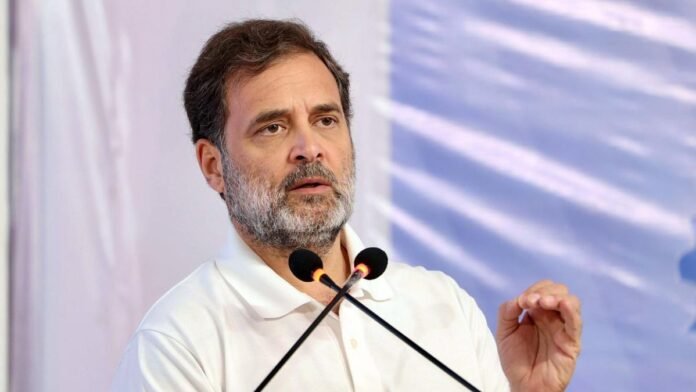
Congress MP Rahul Gandhi on Friday completed two years as the Leader of the Opposition in the Lok Sabha, marking the occasion with a message reaffirming his commitment to fight for people both inside Parliament and on the streets.

Gandhi assumed the post in June 2024 after the Congress formally informed the Pro tem Speaker of its decision during the first session of the 18th Lok Sabha. His appointment came a day after the INDIA bloc unanimously backed his candidature. It also marked the first constitutional or statutory position he has held since entering active politics in 2004.

To mark the milestone, Rahul Gandhi shared a video on X along with a newsletter reflecting on his journey as Leader of the Opposition.

“Every single day of these two years has been dedicated to one task, to carry the voice of every Indian to the corridors of power,” Gandhi said.

The video featured highlights from his tenure, including speeches in Parliament, 297 public visits across the country, references to three policy reversals, and his pledge to continue fulfilling his responsibilities.

“Whether it’s the fight for NEET aspirants, exposing electoral fraud, or defending the Constitution, I have stood with you on every front. I stand with you today, and I always will,” Gandhi wrote while sharing the video.

He added that the support of the people remained his greatest source of strength.

“From the streets to Parliament, your trust is my greatest strength. The journey is long, but my resolve remains the same. I will keep fighting every battle for you,” he said.

Rahul Gandhi highlights education campaign

In the accompanying newsletter, Gandhi focused on the nationwide student campaign launched from Kota in Rajasthan, describing it as an effort to address the challenges facing India’s education system and protect the future of young people.

He stressed that the initiative was not politically motivated and pointed to issues such as limited employment opportunities, intense competition, mounting academic pressure and the financial burden on families. According to Gandhi, parents collectively spend nearly ₹1.3 lakh crore on NEET coaching, an amount he said was equivalent to the Union government’s annual education budget.

The newsletter recalled his statement made while assuming office, where he had said that the role of the Leader of the Opposition was to amplify the voice of the people and safeguard the Constitution.

According to the publication, Gandhi has spent the past two years advocating for democracy, social justice, economic opportunities and India’s national interests. It also highlighted his campaign for a caste census, his allegations regarding “vote theft”, and his support for students, farmers, workers and Bahujan communities.

The newsletter further stated that Gandhi would continue promoting what he described as the “politics of love” while defending the Constitution during the remainder of his tenure.

Four commitments outlined

Rahul Gandhi also listed four key commitments in the newsletter: fighting for social justice, exposing what he called “vote theft”, listening to the people, and standing with India.

Towards the conclusion, the newsletter revisited one of Gandhi’s speeches in Parliament, where he accused Prime Minister Narendra Modi of compromising India’s interests in a trade agreement with the United States, claiming it had weakened the country’s energy security and hurt farmers.

The publication also warned that India was heading towards an economic crisis while alleging that the government remained unprepared. It criticised the Prime Minister for prioritising publicity over addressing the concerns of ordinary citizens.

Small Plane Incident at Beijing’s Tallest Building Leaves Casualties Feared

0
Beijing
Beijing

A small aircraft apparently crashed into Beijing’s tallest skyscraper on Friday afternoon, triggering a major emergency response in the Chinese capital. There were no immediate reports of casualties.

According to CNN, people inside the building were evacuated as fire engines, police vehicles, and ambulances rushed to the scene.

Videos circulating on social media showed debris falling from the 109-story CITIC Tower, popularly known as China Zun. Footage also appeared to show the tail section of the aircraft on the ground alongside a shattered taxi windshield.

The CITIC Tower, a 108-story landmark in eastern Beijing, serves as the headquarters of the state-owned CITIC Group and is the tallest building in the city. Images from the scene indicated that two glass panels on one of the upper floors had been damaged. Chinese authorities have not yet issued an official statement on the incident.

A large police presence was deployed around the area, with several roads leading to the skyscraper sealed off. Reuters reported that officers prevented bystanders from taking photographs and directed people away from the site.

CNN reported that the aircraft’s registration number appeared to identify it as a domestically built Sunward SA60L Aurora light sport aircraft operated by a local general aviation company.

Flight tracking information shared online from Flightradar24, though unverified, appeared to show the aircraft deviating significantly from its expected flight path before the crash.

Eyewitnesses recount the incident

A courier who spoke to Reuters said he rushed to the CITIC Tower at around 6 pm local time after hearing what he described as an extremely loud impact.

“It was so loud, louder than fireworks,” he said.

The witness added that he had recorded a video showing part of the aircraft lodged in the building but later deleted it out of fear that police might question him.

Another eyewitness said he arrived at the location after seeing unverified images on social media showing the wreckage of a small aircraft lying on a road beside the skyscraper.

Posts related to the incident were swiftly removed from Chinese social media platforms. Searches for the CITIC Tower on the Xiaohongshu app only displayed posts published before Friday, with no visible content related to the crash.

Iran Raises the Stakes: Ali Khamenei Warns West and ‘Minor Players’ Ahead of Deal

0
Iran
Iran

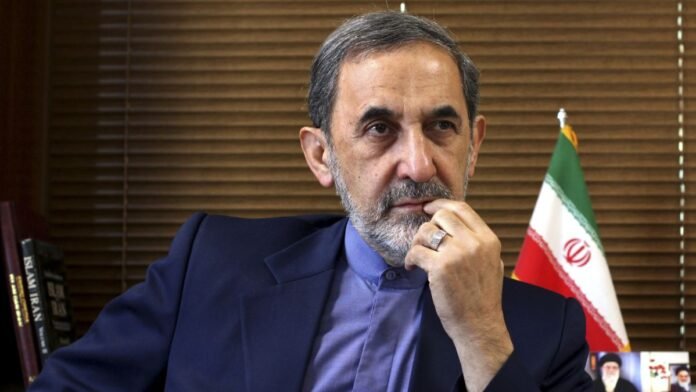
Ali Akbar Velayati, an adviser to Iranian Supreme Leader Ayatollah Mojtaba Khamenei, on Friday launched a sharp attack on Western nations, accusing them of bringing “nothing but plunder and violence” to West Asia while asserting that the stability of Gulf countries has long depended on Iran’s stewardship of the Strait of Hormuz.

His remarks came shortly after US Secretary of State Marco Rubio concluded a visit to the Gulf, where he discussed the interim US-Iran agreement with regional allies.

In a post on X, Velayati claimed that Iran’s role in managing the strategic waterway had ensured stability across the region.

“The stability of Persian Gulf Arab states is indebted to Iran’s century-long management of the Strait of Hormuz. The West has brought nothing to the region but plunder and violence,” he wrote.

He also criticized several Gulf nations, describing them as “political minors of the periphery” and warning that their future depended on Tehran’s goodwill.

“These political minorities of the periphery should not be comforted by commissioned statements. Know this, your survival feeds off the scraps of this table. In the great realignment, peripheral minor players have no seat at the table. They are eliminated, and their strategic survival is at the mercy of Tehran’s tolerance,” Velayati added.

Iranian remarks follow Rubio’s warning

Velayati’s comments came a day after Rubio cautioned that any Iranian attempt to obstruct shipping through the Strait of Hormuz would have serious consequences for Tehran.

Wrapping up his Gulf tour, Rubio told reporters that if Iran threatened or blocked maritime traffic in the strategic waterway, “we’re going to have a problem.”

In a joint statement, Rubio and the Gulf Cooperation Council (GCC) reaffirmed their support for “free, unconditional, and unrestricted navigation” through the Strait of Hormuz, opposing any attempt to impose tolls or assert unilateral control. The statement also stressed that any lasting peace agreement must address Iran’s ballistic missile programme, drone capabilities and support for proxy groups.

Iran reasserts control over Hormuz

Tehran doubled down on its position on Friday, insisting that it retains an important role in overseeing navigation through the Strait of Hormuz while warning Gulf nations against aligning with the United States.

The statement came a day after an incident involving a vessel near Oman once again highlighted tensions despite the preliminary agreement aimed at ending the conflict.

Iranian officials described the US GCC statement as “interventionist, irresponsible and provocative.”

“Safe passage through the Strait of Hormuz cannot be guaranteed under ambiguous arrangements, parallel routes or decision making that does not take Iran’s role as a coastal state into account,” Deputy Foreign Minister Kazem Gharibabadi wrote on X.

Iranian state television later reported that the Islamic Revolutionary Guard Corps had warned and turned back three foreign tankers attempting what it described as an “unauthorized passage” through the strait. No additional details were provided.

Meanwhile, oil prices fell by more than three per cent on Friday, heading for steep weekly losses despite continued uncertainty over the US Iran agreement and slower shipping activity through the Strait of Hormuz, a key route that normally handles around one fifth of the world’s oil and liquefied natural gas supplies.

Shipping data also showed that Saudi Aramco resumed crude loadings at its Ras Tanura terminal, the world’s largest oil export port, after operations had been suspended for nearly four months.