Home Blog Page 9

Hat Trick Hero Lionel Messi Equals Legendary World Cup Record Held by Miroslav Klose

0
lionel messi
messi

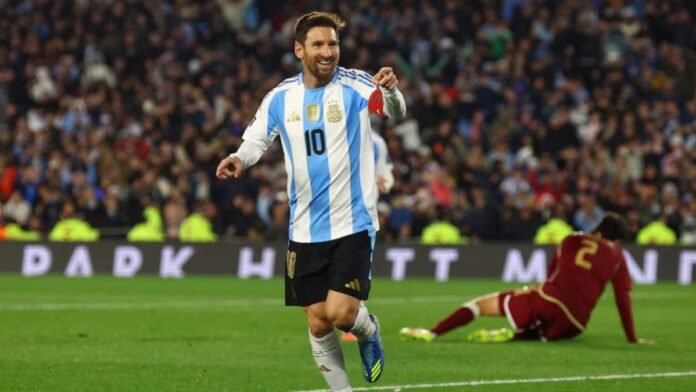
Lionel Messi delivered yet another unforgettable performance on the World Cup stage, scoring a sensational hat-trick against Algeria as Argentina kicked off their FIFA World Cup 2026 campaign in style. The Argentine captain, who became the first footballer ever to feature in six World Cups, once again proved that age has done little to diminish his impact on the game.

The three-goal display carried historic significance. Messi’s tally of 16 World Cup goals now equals the record set by German legend Miroslav Klose, making them joint-highest scorers in tournament history. It was also the first World Cup hat-trick of Messi’s illustrious career, adding another remarkable achievement to an already legendary résumé.

Despite turning 39 later this month, Messi showed no signs of slowing down. He controlled the tempo of the game, found pockets of space with ease and constantly troubled Algeria’s backline. His influence was evident from the opening stages, and each of his three goals highlighted the quality that has defined his career for nearly two decades.

The result provided Argentina with the perfect start to their title defence and served as a warning to the rest of the tournament contenders. Once again, Messi demonstrated that he remains the driving force behind Argentina’s ambitions on football’s biggest stage.

A masterclass from Messi

Messi opened the scoring in the 17th minute with a brilliant strike from outside the penalty area, giving Argentina an early advantage and electrifying the crowd. The goal set the tone for the evening and reinforced his reputation for producing moments of magic when it matters most.

Argentina carried a 1-0 lead into halftime, but Messi had much more to offer after the break.

He doubled the advantage in the 60th minute, calmly finishing from close range following a well-crafted team move. Sixteen minutes later, he completed his hat-trick with another outstanding effort, effectively ending any hopes of an Algerian comeback.

The feat also saw Messi become the oldest player to score a World Cup hat-trick at 38 years and 357 days, surpassing the previous record held by Cristiano Ronaldo.

With the match firmly under control, Argentina coach Lionel Scaloni withdrew Messi in the 80th minute. The substitution was greeted with a standing ovation from the crowd in Kansas City, who rose to acknowledge another historic display from one of the greatest players the sport has ever seen.

Having already secured the result and with a long tournament ahead, Argentina opted to manage their captain’s workload carefully. Yet by the time he left the field, Messi had already delivered a performance that will be remembered as one of the standout moments of the World Cup.

NEET Re-Exam Security Measures Lead to Temporary Restrictions on Telegram

0
telegram
telegram

The National Testing Agency (NTA) on Tuesday backed the Centre’s decision to temporarily restrict access to Telegram ahead of the NEET-UG 2026 re-examination on June 21, saying the move was intended to curb misinformation and prevent candidates from being targeted by fraudsters.

In a statement, the agency said the Ministry of Electronics and Information Technology (MeitY) had ordered a temporary restriction on Telegram services in India until June 22, covering the examination period and the days immediately following it. The ministry has also directed the platform to disable its message-editing feature in the country until June 30.

According to the NTA, the action followed reports that several organised groups were allegedly using Telegram to mislead students by claiming they had access to the NEET-UG re-examination paper. These groups were reportedly demanding money from candidates and their families in exchange for what the agency described as fake and fraudulent material.

The agency said the restriction on message editing was introduced to prevent the creation of fabricated evidence of paper leaks. It explained that edited messages could be altered while retaining their original timestamps, making it easier to falsely claim that examination content had been shared before the test.

While acknowledging that the temporary curbs may affect genuine users of the platform, the NTA said the measures were necessary to safeguard the integrity of the examination process and would remain in place only for a limited period.

The agency reiterated that the NEET-UG 2026 re-examination will be conducted as scheduled on June 21 and advised candidates to rely exclusively on official NTA communication channels for updates and information.

The NTA also expressed its gratitude to MeitY, the Ministry of Home Affairs, the Indian Cyber Crime Coordination Centre (I4C), the Central Bureau of Investigation and various state police departments for their support in tackling examination-related fraud and misinformation.

Sources Say India Is Exploring Russian Coking Coal Opportunities and Nickel Deals

0

India’s push to secure critical mineral supplies has led state-run steel giants Steel Authority of India Limited (SAIL) and NMDC Ltd to explore potential acquisitions of coking coal assets in Russia, according to sources familiar with the matter.

As part of these efforts, India, the world’s second-largest crude steel producer after China, dispatched a delegation to Russia last month for preliminary discussions with government officials and industry representatives. The talks focused on strengthening access to key raw materials required for the country’s expanding industrial and energy needs.

Sources said both SAIL and NMDC are assessing opportunities in Russia, with SAIL reportedly constituting an internal committee to evaluate potential options related to raw material sourcing.

Alongside coking coal, India is also examining opportunities to increase imports of nickel from Russia. Sources from both India and Russia indicated that initial discussions on the subject took place in New Delhi in April.

Neither India’s steel ministry, SAIL nor NMDC responded to requests for comment regarding the reported discussions. Russia’s energy ministry also did not immediately comment on the matter.

Nickel is considered a strategically important mineral for India’s electric vehicle ambitions, particularly for battery manufacturing. At present, India imports most of its nickel requirements from countries including China, Japan, Norway and the United States, with only limited quantities sourced from Russia.

The metal is also widely used in the production of stainless steel, making it an important input for multiple industries.

India has been actively working to secure long-term supplies of critical raw materials as it seeks to expand steel production and accelerate its transition towards cleaner energy technologies.

In January, the government classified coking coal as a critical and strategic mineral, citing the country’s heavy reliance on imports. Authorities have also identified minerals such as lithium, cobalt and rare earth elements as key resources requiring supply security.

Currently, more than half of India’s coking coal imports come from Australia, while additional supplies are sourced from countries including Russia and the United States.

NMDC has been evaluating overseas coking coal opportunities for some time. Last year, the company’s chairman indicated that the miner was also exploring potential investments in Australia and Indonesia as part of its broader strategy to secure raw material resources.

India Achieves Successful Tomahawk Missile Firing During Odisha Trial

0
tomahawk
tomahawk

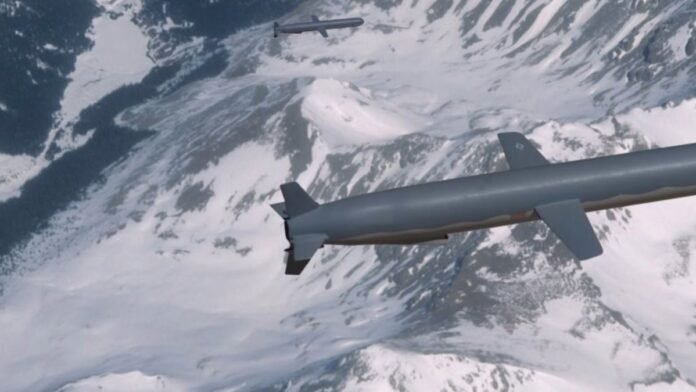
India’s indigenous cruise missile programme achieved a major milestone on June 15 as the Defence Research and Development Organisation (DRDO) successfully flight-tested the Long Range Land Attack Cruise Missile (LRLACM), marking a significant advancement in the country’s long-range precision strike capabilities. The test met all mission objectives and validated the missile’s performance during flight.

Defence officials described the LRLACM as a next-generation cruise missile that builds upon technologies developed under the Nirbhay programme while incorporating improvements in range, guidance systems and operational flexibility. The missile is designed for launch from multiple platforms and is expected to undergo additional developmental and user trials before induction into the armed forces.

The successful trial was conducted from Dr APJ Abdul Kalam Island off the Odisha coast, with tracking systems deployed by the Integrated Test Range monitoring the flight and confirming that all objectives were achieved. The missile has been developed indigenously, with contributions from several DRDO laboratories and Indian industry partners under the leadership of the Aeronautical Development Establishment in Bengaluru.

Designed as a long-range precision strike weapon, the LRLACM is intended to strengthen India’s ability to engage high-value targets deep inside hostile territory. Defence experts view such stand-off weapons as increasingly important in modern warfare, where the ability to strike from extended distances while reducing exposure to enemy defences is becoming a key operational requirement.

The successful test also comes at a time when several countries in the region continue to expand their missile capabilities. Analysts believe that enhancing India’s inventory of long-range cruise and ballistic missiles will play an important role in strengthening deterrence and improving conventional strike options in future conflict scenarios.

Defence Minister Rajnath Singh congratulated DRDO scientists and industry partners involved in the programme, describing the successful flight test as an important achievement for India’s indigenous defence capabilities.

Sensex Records Massive Single Day Gain of Nearly 1,700 Points: What Happened?

0
sensex
sensex

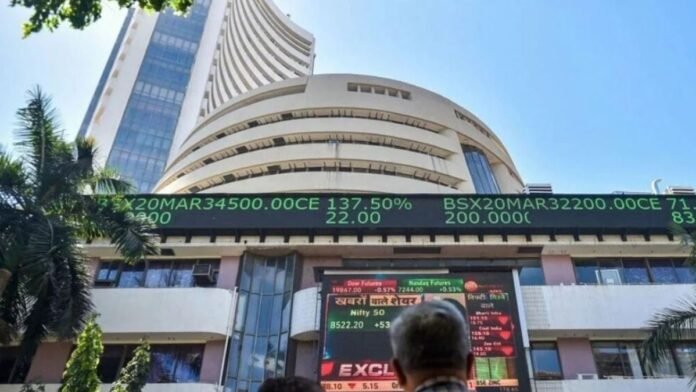
Indian equity markets ended the week on a high, with the Sensex and Nifty posting strong gains on Friday after optimism grew around a possible peace agreement between the United States and Iran. The prospect of easing geopolitical tensions sparked a sharp fall in crude oil prices and boosted investor confidence.

The BSE Sensex climbed 1,695.40 points, or 2.3 per cent, to finish at 75,527.95, while the NSE Nifty 50 rose 461.30 points, or 1.99 per cent, to close at 23,622.90.

The rally began at the opening bell, with the Sensex surging more than 900 points and the Nifty gaining over 250 points before extending its upward momentum throughout the trading session.

Optimism grows around US-Iran negotiations

Market sentiment received a lift after US President Donald Trump indicated that negotiations aimed at ending the conflict with Iran were moving forward.

According to Iran’s semi-official Mehr news agency, a draft agreement includes 14 provisions, such as reopening the Strait of Hormuz within 30 days, releasing $24 billion in frozen Iranian assets, and beginning a 60-day framework for discussions on nuclear issues. A G7 official suggested that a formal agreement could be signed as early as Sunday.

The potential breakthrough has raised hopes of an end to the conflict that began on February 28 and has disrupted global energy markets for more than three months.

Crude oil prices decline sharply

Oil prices registered significant losses amid expectations that the Strait of Hormuz, one of the world’s most important energy corridors, could soon reopen.

Brent crude futures fell 4.5 per cent to $86.31 per barrel, while US crude dropped 4.3 per cent to $83.90 per barrel. Meanwhile, spot gold edged up 0.2 per cent to $4,221.46 an ounce, according to Bloomberg.

What drove the rally?

The primary catalyst behind the market surge was the sharp correction in crude oil prices.

Since the closure of the Strait of Hormuz earlier this year, oil prices had remained elevated, fuelling inflation concerns and increasing pressure on economies dependent on energy imports. Any indication that the route could reopen has been welcomed by investors because it reduces fears of supply disruptions.

For India, which relies heavily on imported crude oil, lower energy prices can significantly reduce import costs, help contain inflation and improve the outlook for corporate earnings. These factors combined to fuel buying across sectors and drive the benchmarks higher.

Noida International Airport Opens for Commercial Flights as First Aircraft Arrives

0
noida international airport

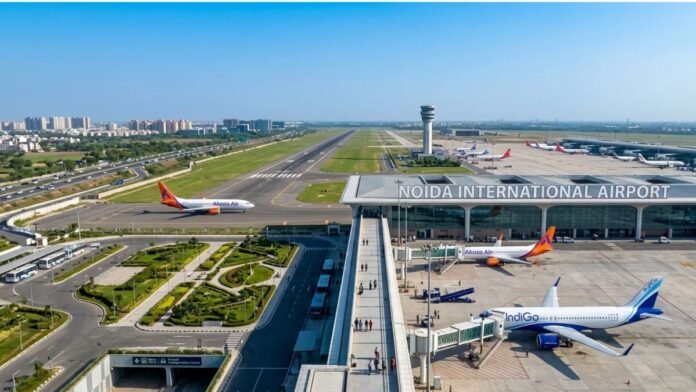
Commercial operations officially commenced at Noida International Airport on Monday, with the first passenger flight arriving from Lucknow at 7:55 am. The airport was inaugurated by Prime Minister Narendra Modi on March 28.

IndiGo flight 6E-2278 took off from Chaudhary Charan Singh International Airport in Lucknow and became the first commercial service to land at the new airport. The return flight, 6E-2279, is scheduled to depart Noida at 6:55 pm and reach Lucknow at 8 pm.

The historic landing was met with applause from passengers onboard, while the aircraft received a traditional water cannon salute upon arrival.

Akasa Air to join operations

Akasa Air is set to become the second airline operating from Noida International Airport, with daily flights to Bengaluru and Navi Mumbai beginning on June 16.

While passenger services have now started, the airport’s first cargo operation is expected to begin on June 17. According to Noida International Airport Limited (NIAL), the inaugural cargo service will operate on a domestic route.

A boost for Uttar Pradesh connectivity

The launch of commercial flights is expected to significantly improve air connectivity between Noida and Lucknow. Until now, many travellers relied on services operating through Delhi’s Indira Gandhi International Airport or opted for road travel between the two cities.

Officials believe the new route will strengthen links between Uttar Pradesh’s major administrative and economic centres while providing a boost to the state’s growing aviation network.

Modern infrastructure and security systems

Developed under a public-private partnership model, the airport has been built by Yamuna International Airport Private Limited, a subsidiary of Zurich Airport International AG.

The facility features a 3,900-metre runway capable of handling wide-body aircraft and is equipped with advanced navigation and operational infrastructure, including an Instrument Landing System (ILS) and modern airfield lighting.

Authorities have also implemented a comprehensive security framework at the airport. The system includes AI-powered surveillance technology, while nearly 1,030 personnel from the Central Industrial Security Force (CISF) have been deployed. Uttar Pradesh Police has additionally established a dedicated police station within the airport premises.

Narendra Modi Welcomes New Chapter in India-Slovakia Ties During Visit to Bratislava

0
Modi
Modi

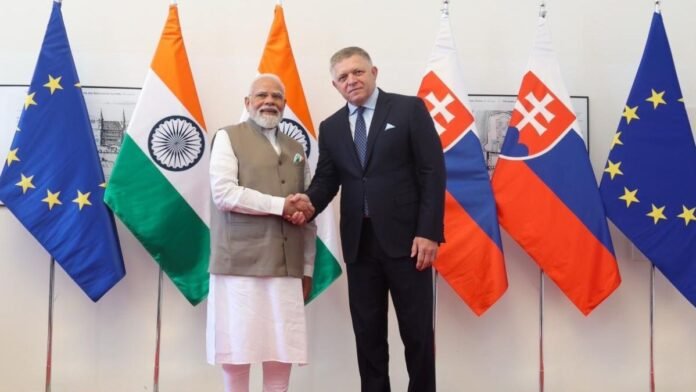
Prime Minister Narendra Modi is currently on an official visit to Slovakia, marking the first trip by an Indian Prime Minister to the Central European nation since it gained independence in 1993.

During the visit, Modi extended an invitation to Slovak Prime Minister Robert Fico to visit India and expressed happiness that Fico had publicly accepted it.

The two leaders held bilateral talks on Monday focused on expanding cooperation across key sectors and elevating India-Slovakia ties to the level of a Comprehensive Partnership, ANI reported.

Addressing a joint press statement with Fico in Bratislava, Modi described the occasion as a landmark moment in bilateral relations.

“I am pleased to have had the opportunity to meet Prime Minister Fico today and witness a historic chapter in our relationship. This is the first visit by an Indian Prime Minister to Slovakia, and I am delighted that we have decided to upgrade our relationship to a Comprehensive Partnership on this significant occasion,” Modi said.

Earlier in the day, Prime Minister Narendra Modi received a ceremonial welcome from Slovak Prime Minister Robert Fico against the backdrop of the iconic Bratislava Castle. Before arriving in Slovakia, Modi was in Nice, France, where he held bilateral talks with French President Emmanuel Macron and jointly inaugurated the ‘Bharat Innovates’ initiative. The Prime Minister is scheduled to return to France on Tuesday to attend the G7 Summit in Evian on June 16 and 17.

Modi and Fico explore new areas of partnership

During their discussions, the two leaders reviewed the full spectrum of India-Slovakia relations and explored opportunities to deepen cooperation across sectors such as trade and investment, defence and security, technology and innovation, space, nuclear energy, education, culture, talent mobility and people-to-people exchanges.

Sharing details of the talks, the Ministry of External Affairs outlined a range of outcomes from the meeting. Modi described the strengthening of ties as a “win-win” for both nations.

“A win-win for India-Slovakia friendship!” the Prime Minister said.

The two leaders also exchanged views on regional and global developments, including the need for reforms at the United Nations. Speaking after the talks, Modi said India and Slovakia are working closely on international issues and share the view that disputes and tensions should be resolved through peaceful means.

The meeting resulted in several agreements and understandings covering digital technologies, defence cooperation, cybersecurity, post-quantum technologies, audio-visual production, mobility and scientific collaboration, including in the field of nuclear energy.

Modi highlighted the signing of a Memorandum of Understanding on labour migration, saying it would boost the movement of professionals and skilled workers between the two countries. He added that both sides are also close to finalising an agreement on social security.

Meanwhile, Fico expressed strong support for the recently concluded India-European Free Trade Agreement, describing it as one of the most ambitious trade deals ever negotiated.

“It is one of the most ambitious free trade agreements ever signed, and Slovakia not only welcomes this agreement but will take all necessary practical steps to ensure its implementation at the earliest,” Fico said.

Israel’s Objections to a Potential US-Iran Agreement Explained

0
netanyahu
netanyahu

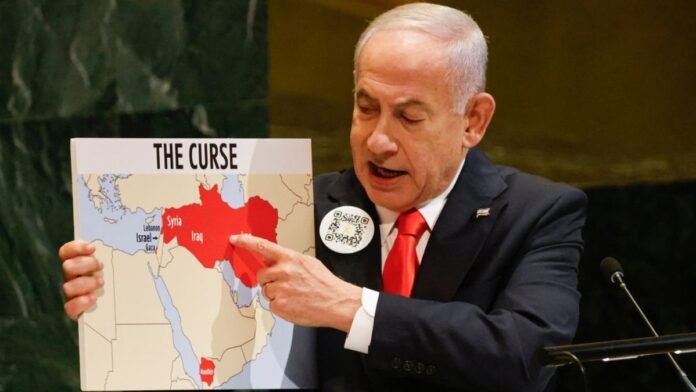
The recently announced peace agreement between the United States and Iran has been welcomed by many countries, raising hopes of stability in West Asia and the reopening of vital trade routes through the Strait of Hormuz. Israel, however, has reacted with strong reservations, with several political leaders openly criticising the deal.

The conflict in West Asia began on February 28 when the United States and Israel launched joint strikes on Iran. In the months that followed, the fighting expanded beyond Iran and Israel, drawing in several Gulf nations after Tehran targeted US military installations in the region.

At the same time, hostilities between Israel and Hezbollah intensified once again, extending the conflict into Lebanon. As the United States and Iran prepare to sign a memorandum of understanding in Switzerland on Friday, Israeli leaders have increasingly voiced their opposition to the agreement.

One of the strongest reactions came from Israeli Defence Minister Israel Katz, who warned that Israel would respond with full force if Iran launched attacks against the country over its ongoing military operations in Lebanon.

Israeli leaders reject deal

Several members of Prime Minister Benjamin Netanyahu’s coalition government have argued that the agreement does not apply to Israel and will not influence its military decisions.

National Security Minister Itamar Ben-Gvir stated on X that Israel is a sovereign nation and is not bound by an agreement reached between Washington and Tehran.

While thanking US President Donald Trump and the United States for their support, Ben-Gvir stressed that Israel would not accept any arrangement that it believes compromises its security interests.

He maintained that Israel must continue pursuing the dismantling of Hezbollah, retain control of areas captured during military operations, and prevent armed groups from re-establishing positions near northern Israeli communities.

Finance Minister Bezalel Smotrich also criticised the agreement, describing it as harmful to both Israel and the wider democratic world.

According to Smotrich, Israel may have to continue efforts independently to ensure Iran never acquires nuclear weapons.

Katz also reaffirmed that Israel has no intention of withdrawing from Lebanon, Syria or Gaza, saying security zones established by the Israeli military remain a critical achievement. He added that Netanyahu had already communicated this position to the US administration.

Opposition voices concern

Criticism of the agreement has not been limited to the ruling coalition.

Yair Golan, leader of the Israeli Democratic Party, described the development as a difficult moment for Israel. He argued that military gains achieved during recent conflicts had been undermined while Netanyahu failed to effectively influence the diplomatic outcome.

Opposition leader Yair Lapid also expressed concern before the official announcement, saying that if reports about the agreement were accurate, it would represent a major failure of Israel’s foreign and security policy.

Why Israel opposes the agreement

A major point of concern for Israel is that the proposed framework reportedly calls for an end to hostilities across multiple fronts, including Lebanon. Israeli officials have repeatedly stated that military operations against Hezbollah will continue regardless of any broader agreement involving Washington and Tehran.

Israeli concerns also extend to Iran’s nuclear programme. According to reports citing Israeli officials familiar with the discussions, questions surrounding uranium enrichment and long-term nuclear restrictions remain among the most contentious aspects of the deal.

Another source of unease is the possibility of sanctions relief and the release of frozen Iranian assets. Israeli leaders have long argued that additional financial resources could strengthen Tehran’s support for allied groups operating in Lebanon, Yemen and Gaza.

Prime Minister Netanyahu has yet to formally comment on the latest agreement. His most recent public position remains unchanged: Israel will continue pursuing its objective of ensuring that Iran never develops nuclear weapons.

The debate comes after several years of regional conflict involving Israel, including the war with Hamas in Gaza in 2023, fighting with Hezbollah in Lebanon in 2024, the 12-day conflict with Iran in 2025, and the broader US-Iran confrontation that has once again heightened tensions across the region.

‘We Have Grown Stronger’: Amitabh Bachchan Reflects on India’s Progress

0
amitabh bachchan

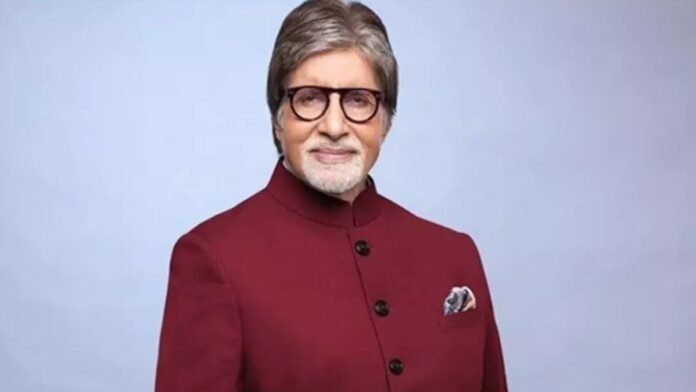
Amitabh Bachchan recently shared a heartfelt message celebrating India’s rise on the global stage, using his personal blog to express admiration for the country’s growing strength and resilience.

The veteran actor, who regularly interacts with fans through social media and his blog, revealed that a particular phrase had caught his attention and left a lasting impression on him: “India anti-fragile.” Reflecting on its meaning, Bachchan said the term perfectly captures how the nation is viewed today.

Writing on his blog on Thursday night, he noted that India can no longer be described as weak, vulnerable or easily intimidated. According to him, the country has evolved into a confident and resilient force that commands respect around the world.

Alongside images of the Indian Tricolour, Bachchan expressed his pride in the nation’s progress, saying India now stands tall as a strong and determined country. He ended his message on an upbeat note, encouraging fellow Indians to celebrate that transformation with pride and confidence.

This is not the first time Bachchan has spoken passionately about the country. Over the years, he has frequently used his blog to celebrate India’s achievements, particularly memorable victories by the national cricket team. His posts often cover a wide range of subjects, from professional experiences and personal reflections to social observations and current events.

Meanwhile, on the work front, Bachchan is currently filming the sequel to the blockbuster sci-fi epic Kalki 2898 AD. Directed by Nag Ashwin, the project also features Prabhas and Kamal Haasan in major roles.

The first film, released in 2024, saw Bachchan portray Ashwatthama, a performance that earned widespread praise from both critics and audiences. The film went on to become a massive box office success, grossing more than ₹1,000 crore globally.

There has been speculation surrounding the sequel’s cast, with reports suggesting that Deepika Padukone may not return for the next chapter. Sai Pallavi’s name has also been linked to the project, although the makers have yet to make any official announcement.

Earlier, Bachchan shared glimpses from the film’s set and expressed his excitement about reuniting with Kamal Haasan after many years. The two screen legends last worked together in Giraftaar, and Bachchan described the reunion as a special moment.

Kalki 2 is expected to continue the story from where the first film ended, with the narrative focusing on the growing resistance against Supreme Yaskin, played by Kamal Haasan. The sequel is likely to introduce new characters, expand the futuristic universe and feature even bigger action sequences, particularly involving Prabhas’ character.

Latest Injury Update Raises Questions Over Neymar’s Availability for World Cup Opener

0
neymar
neymar

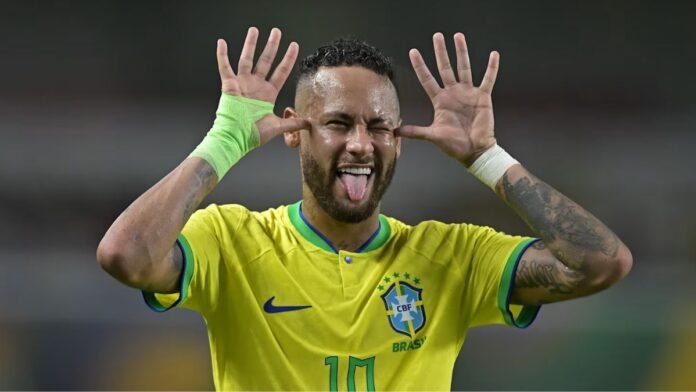
Brazil will begin its FIFA World Cup 2026 campaign against Morocco on Sunday, with much of the attention centred on whether Neymar will feature in Carlo Ancelotti’s starting lineup.

The Santos forward was included in Brazil’s World Cup squad despite criticism directed at Ancelotti from sections of fans and former players. Given Neymar’s recent injury record, many had expected the veteran attacker to miss out on selection altogether.

However, shortly after being named in the squad, Neymar was reported to be dealing with a calf injury, forcing him to sit out Brazil’s warm-up matches against Panama and Egypt. His availability for the World Cup opener now remains uncertain.

Even with the fitness concerns, Ancelotti opted to retain Neymar in the squad and has indicated that the forward will be considered for selection once he is fully fit.

Neymar faces race against time for Morocco clash

Questions over Neymar’s condition have also sparked criticism of Santos, with some observers accusing the club of not being sufficiently transparent about the player’s recovery process. The Brazilian star suffered the injury during Santos’ loss to Coritiba on May 17, just a day before Brazil’s World Cup squad was announced.

Providing an update on his condition, Santos said in a statement: “The two-week recovery period began on May 17 and concludes on Sunday (May 31), by which time the player is expected to resume training.”

The club added that recovery timelines can vary depending on the individual, the importance of upcoming matches and the team’s requirements.

Santos also highlighted the close coordination between its medical staff and the Brazilian national team. According to the club, members of Brazil’s physiotherapy department have worked with Neymar for more than a decade and have been involved throughout his rehabilitation.

“The club’s medical department is aligned with and supports the treatment programme established by the CBF medical team. Our professionals understand Neymar’s recovery capabilities and are confident he will be ready to participate in the World Cup,” the statement said.

Neymar remains Brazil’s all-time leading scorer with 79 international goals. The 33-year-old has not represented his country since suffering a serious ACL injury in October 2023, making his potential return one of the biggest storylines heading into Brazil’s World Cup campaign.