Home Blog Page 10

Pakistan Imposes Airspace Restrictions for Military Training Involving Jets

0
Pakistan
Pakistan

Pakistan has temporarily closed certain routes within the Karachi and Lahore Flight Information Regions at designated times due to military exercises involving Pakistan Air Force fighter jets, according to a spokesperson for the Pakistan Airports Authority.

The spokesperson said that the authority issued a Notice to Airmen on Monday announcing the closure of specific routes within the Karachi and Lahore Flight Information Regions during scheduled hours.

He explained that the decision was taken in light of anticipated military drills by the Pakistan Air Force, during which several sectors within the two Flight Information Regions will remain closed to commercial air traffic.

As per the notification, the affected air routes will not be available for commercial operations from March 3 to March 31, between 9 am and 3 pm each day. During these hours, civilian flight operations will not be permitted in the designated airspace.

Pakistan has been engaged in conflict with Afghanistan since February 27.

Federal Information Minister Attaullah Tarar said that Pakistan launched Operation Ghazab lil Haq against the Afghan Taliban following what he described as unprovoked firing from across the border last week.

He stated on Monday that Pakistan’s armed forces have destroyed 182 Afghan Taliban posts, captured 31 positions, and that 415 Afghan Taliban personnel have been killed while more than 580 have been injured since the start of the operation.

Amid Middle East Conflict, PM Modi Engages Oman and Kuwait, Highlights Indian Nationals’ Safety

0

Prime Minister Narendra Modi on Tuesday spoke with Sultan Haitham bin Tarik of Oman and Kuwait Crown Prince Sheikh Sabah Al Khaled Al Hamad Al Mubarak Al Sabah, a day after holding discussions with the leaders of Saudi Arabia, Bahrain and Jordan.

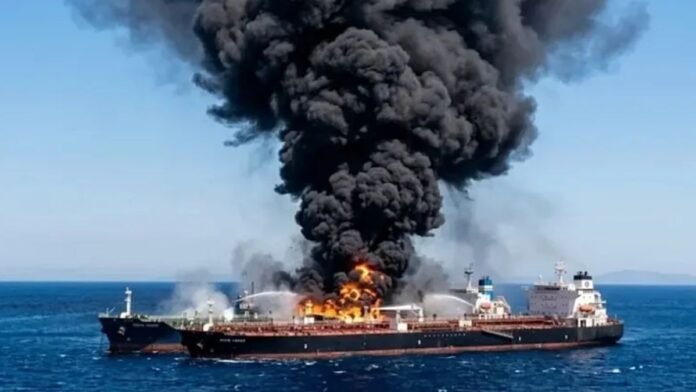
The calls with the Middle East leaders come as the conflict between Iran and the United States expands across the region, leading to airspace closures and raising concerns over oil supplies and critical energy infrastructure.

During his telephonic conversations with the two leaders, PM Modi conveyed his concern over the attacks in the Gulf countries and discussed the evolving security situation.

Earlier in the day, the Ministry of External Affairs expressed grave concern about the rapidly worsening situation in Iran and the Gulf region following the outbreak of hostilities. The MEA stated that the safety and well being of nearly one crore Indian nationals living in the Middle East remains a top priority.

On Monday, PM Modi spoke with Saudi Crown Prince Mohammed bin Salman and Bahrain’s King Hamad Bin Isa Al Khalifa, supporting efforts to restore peace and stability in the region and condemning the attacks on the two countries. He said that he and the Saudi Crown Prince agreed that the earliest possible restoration of regional peace and stability is of utmost importance. He also thanked Prince Mohammed bin Salman for ensuring the well being of the Indian community during these difficult times.

External Affairs Minister S Jaishankar also reached out to the foreign ministers of Saudi Arabia, Kuwait, Bahrain and Qatar, as well as the UAE Deputy Prime Minister Sheikh Abdullah bin Zayed. He additionally held talks with Iran’s Seyed Abbas Araghchi and Israel’s Gideon Sa’ar.

After Hegseth Says ‘This Is Not Iraq,’ Trump Says Boots on Ground in Iran Remain Possible

0
Trump
Trump

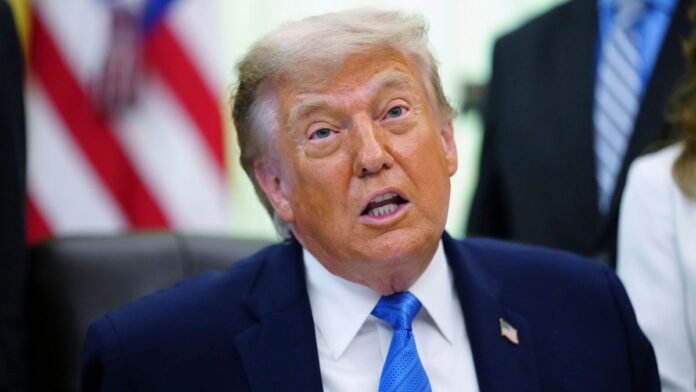
US President Donald Trump said Monday that he is not ruling out sending ground troops into Iran if it becomes necessary. Speaking to the New York Post in one of several brief interviews, he said that while many presidents promise there will be no boots on the ground, he does not make that commitment. He added that troops probably would not be needed, but they could be used if required, AFP reported.

He also spoke to CNN about what he described as a big wave, saying the United States had not yet begun hitting Iran hard and that a major escalation could be coming soon. Trump said Washington does not know who Iran’s next leader would be after the killing of Ayatollah Ali Khamenei and that officials are unsure who might be chosen.

Reuters reported that many senior US officials remain skeptical that military action against Iran would lead to regime change anytime soon. They reportedly noted that Iran is not comparable to Venezuela, where President Nicolas Maduro was removed by the US military and replaced by an interim leader from within the regime with apparent American backing.

Trump’s comments came hours after US Defense Secretary Pete Hegseth addressed concerns that US Israeli strikes could expand into a prolonged regional conflict. He said this is not Iraq and would not become an endless war, referring to the 2003 US invasion that toppled Saddam Hussein.

Hegseth, alongside US Air Force General Dan Caine, chairman of the Joint Chiefs of Staff, delivered the administration’s first news briefing since Saturday’s strikes. Trump himself has only given a few phone interviews and released two videos since the operation began, without taking questions on camera.

Hegseth said the mission was clear, devastating and decisive, aimed at destroying Iran’s missile threat, dismantling its navy and ensuring it has no nuclear weapons. He added that there would be no restrictive rules of engagement, no nation building effort, no democracy building campaign and no politically correct wars, saying the United States fights to win without wasting time or lives.

When asked whether there are currently American troops on the ground in Iran, Hegseth said there are not, but declined to discuss what actions might or might not be taken, calling it foolish to expect officials to reveal such details publicly.

He also suggested the United States is not pursuing regime change despite Khamenei’s killing, saying this is not a regime change war but that the regime itself has changed and the world is better off for it.

The briefing came as the conflict widened across the region, with Iran and allied armed groups launching missiles at Israel, Arab states and US military targets in the Middle East. Four American troops have been killed and more than 500 people in Iran have died, according to the Red Crescent. Trump said Sunday that more US casualties are likely.

Meanwhile, US ally Kuwait mistakenly shot down three American fighter jets during a combat mission as Iranian aircraft, ballistic missiles and drones were attacking Monday. US Central Command said all six pilots ejected safely from the F 15E Strike Eagles and are in stable condition.

US officials have not outlined any exit plan or indicated when the conflict might end. Khamenei’s death has also raised uncertainty about the future leadership of the Islamic Republic and increased fears of broader regional instability.

Hegseth did not point to any imminent nuclear threat from Iran and repeated that last June’s US and Israeli strikes destroyed its nuclear program. Instead, he warned that Iran had been developing powerful missiles and drones to create a conventional shield for what he described as nuclear blackmail ambitions, and said Iranian officials had been stalling during negotiations before the attack.

He declined to give a timetable for the conflict, saying Trump has full latitude to decide how long it could take and that the timeline could shift forward or backward, whether weeks or longer.

India Responds to Iran Strikes, Calls for Dialogue Over Conflict

0
Iran
Iran

India on Saturday urged all stakeholders in West Asia to exercise restraint and prevent further escalation following United States and Israeli attacks on Iran. It called for dialogue and diplomacy to resolve underlying issues while stressing the importance of respecting the sovereignty and territorial integrity of all states.

New Delhi’s response came hours after American and Israeli forces targeted Tehran and other Iranian cities, prompting retaliation from the Islamic Revolutionary Guard Corps, which launched missiles and drones at Israel and at military facilities used by the United States in Bahrain, Jordan, Kuwait, Qatar and the United Arab Emirates.

The Ministry of External Affairs expressed deep concern over recent developments in Iran and the Gulf region and said in a statement that all sides should exercise restraint, avoid escalation and prioritise civilian safety. It added that dialogue and diplomacy should be pursued to reduce tensions and address underlying concerns.

The statement also emphasised that the sovereignty and territorial integrity of all states must be respected.

Indian missions across the region are in contact with Indian nationals and have issued advisories asking them to remain vigilant, stay connected with embassies and follow local security guidance.

The attacks took place two days after Prime Minister Narendra Modi completed a visit to Israel, where he held talks with his counterpart Benjamin Netanyahu. During a joint media interaction on Thursday, Modi said that peace and stability in West Asia are directly linked to India’s security interests.

He noted that India has supported dialogue and peaceful resolution of disputes from the beginning and said this reflects the position of the Global South and the broader interests of humanity. Modi also reiterated India’s backing for the Gaza Peace Plan, which he said has opened a pathway toward peace.

India has sought to maintain a balance between its expanding strategic and security ties with Israel, where around 40,000 Indian workers live, and its long standing reliance on West Asian nations for energy and trade. More than 10 million Indians live and work across West Asia and send home billions of dollars in remittances. Iran itself hosts nearly 10,000 Indians, including students and professionals.

Indian missions in Bahrain, Israel, Jordan, Kuwait, Qatar, Saudi Arabia and the United Arab Emirates issued advisories urging citizens to remain cautious and avoid unnecessary travel. The embassy in Jordan also advised Indian tourists to leave the country immediately before commercial flights are disrupted.

People familiar with the matter said India is closely monitoring the situation and will take appropriate steps to safeguard its nationals. There are currently no immediate plans to evacuate Indians from the region, though authorities remain prepared for all contingencies.

Middle East Airspace Turmoil Prompts Air India, IndiGo Flight Suspensions

0
IndiGo Air India

Air India announced that all flights to the Middle East have been suspended due to the ongoing strikes in the region. IndiGo also confirmed cancellations for flights to and from the Middle East, citing passenger safety and security.

Major Indian carriers IndiGo and Air India cancelled their services to the Middle East as the conflict between Israel and Iran intensified with attacks across the region, including in the United Arab Emirates, Bahrain, parts of Saudi Arabia, Iraq and Jordan.

In an advisory, Air India said that in view of the developing situation in parts of the Middle East, all its flights to destinations in the region have been suspended and that it remains committed to maintaining the highest standards of safety for passengers and crew.

Earlier in the day, the United States and Iran conducted joint strikes in Iran, with the first reported strike occurring near the offices of Supreme Leader Ayatollah Ali Khamenei.

The airline added that it will continue assessing the safety and security environment for flight operations and will adjust services proactively as required, while its teams will extend all necessary support to passengers.

The cancellations come as airlines across Europe, Asia and the Middle East announced suspensions, cancellations and route changes while dealing with airspace closures, bombings and diversions.

IndiGo stated that flights to and from the Middle East have been cancelled until midnight.

In its statement, the airline said that due to evolving airspace restrictions around Iran and the Middle East, all such flights are cancelled until 0000 hours, adding that these measures have been taken because the safety and security of customers and crew remain its highest priority. It also said teams are continuously monitoring the situation and recalibrating operations to minimise disruption as much as possible.

Several international carriers including Air France, Wizz Air, Lufthansa, Polish Airlines, Turkish Airlines, Qatar Airways and Japan Airlines have also cancelled flights to the conflict affected region.

Another Indian airline, SpiceJet, said some of its Dubai flights will be affected because of airspace closures across parts of the Middle East.

Consecutive Derby Glory In Sight For Arsenal While City Stay Within Reach

0
Arsenal
Arsenal

Arsenal have not completed a season sweep over Chelsea since the 2003 04 campaign, which also marked their last Premier League triumph. While history does not guarantee a repeat, the stakes feel significant as Mikel Arteta’s side head into Sunday’s meeting knowing a victory is vital to maintain their cushion over Manchester City.

After finishing runners up in each of the past three seasons, Arsenal have again felt the strain of a title chase. Recent draws against Brentford and Wolverhampton Wanderers threatened to stall their momentum before they responded emphatically with a 4 1 victory over Tottenham Hotspur in the North London derby. Even so, with City trailing by five points and holding a game in hand, any slip against Chelsea could quickly tighten the race at the summit.

Pep Guardiola’s side face their own challenge away at Leeds United, a team that has frustrated several top sides this season. Meanwhile Aston Villa remain within striking distance, sitting five points behind City ahead of their trip to Wolves, keeping the title picture alive with ten matches remaining after this weekend.

Arsenal will hope their derby triumph sparks a strong finish. Chelsea, currently fifth, have not beaten Arsenal since 2021 and were eliminated by them in the League Cup semi finals earlier this year. However, they managed a draw in November despite playing much of the match with ten men. Arsenal’s recent home form against fellow top six sides has been inconsistent, including a draw with Liverpool and a defeat to Manchester United, something they will be keen to correct.

Chelsea manager Liam Rosenior will also be motivated to avoid a third loss to Arsenal this season. Since his appointment last month, his team have remained unbeaten against every opponent except the league leaders.

City’s visit to Leeds could prove equally demanding. Since January, most of the league’s top six have struggled at Elland Road, with only Arsenal taking maximum points. Leeds, who sit 15th and six points clear of the relegation zone, have shown resilience with draws against Liverpool, Manchester United, Chelsea and Aston Villa in recent weeks.

City arrive on a five match winning streak across all competitions and are determined to sustain pressure on Arsenal. They needed a late Phil Foden goal to overcome Leeds in November after nearly surrendering a two goal lead, a reminder of how competitive Daniel Farke’s promoted side can be. Leeds will look to stretch their unbeaten run to five games when they host the champions.

Elsewhere, Tottenham Hotspur are in urgent need of a revival. They are the only side without a league win in 2026 and hover just four points above the relegation zone. New manager Igor Tudor has endured a difficult start, including a home defeat to Arsenal that prompted sharp criticism of his squad’s mentality.

“Where is the goal? What is the level? So today, totally different worlds. I need to be honest. Two totally different psychological and physical worlds,” Tudor said after that loss.

Spurs have collected just two points from their last five league outings, while several teams below them have gained ground. With a visit to tenth placed Fulham on Sunday, Tudor has stressed the need for a change in mindset.

“What is the goal of this team? What is this goal of this coach, these players, this staff? To become serious. Serious, not just a group of 20 players,” he said.

Delhi Court Discharges Kejriwal, Sisodia and 21 Others in Liquor Policy Case

0

A Delhi court on Friday discharged all 23 individuals named in the CBI’s excise policy case, often referred to as the alleged liquor scam, including Aam Aadmi Party leaders and former Delhi chief minister Arvind Kejriwal as well as former deputy chief minister Manish Sisodia.

The Central Bureau of Investigation said it will promptly challenge the trial court’s ruling in the high court, arguing that key findings and elements of its probe were overlooked or not sufficiently evaluated.

Following the verdict, Kejriwal became emotional while addressing reporters. “I am not corrupt. The court has said that Kejriwal and Manish Sisodia are honest,” he said before breaking down. He also described the excise case as the biggest political conspiracy in the history of independent India.

The decision was delivered by Special Judge Jitendra Singh, who stated that no material evidence had been found to support the prosecution’s claims against the accused. The court also declined to take cognisance of the CBI chargesheet linked to the excise policy allegations.

Kejriwal and Sisodia had been arrested during the investigation while they were serving as chief minister and deputy chief minister of Delhi respectively. The CBI had accused officials of corruption in framing and implementing the now scrapped excise policy introduced by the former AAP government.

Reacting to the order, Kejriwal said, “Court order proves Kejriwal and Aam Aadmi Party are ‘Kattar Imaandar’.”

Earlier in January, another Delhi court had acquitted Kejriwal in two Enforcement Directorate cases that accused him of skipping summons during its probe related to the same policy matter.

The CBI first filed a chargesheet in 2022 and later submitted multiple supplementary filings. Investigators alleged that ₹100 crore had been paid by a so called south lobby to influence the excise policy in its favour.

Altogether, 23 people were named in the case, including Arvind Kejriwal, Manish Sisodia, K Kavitha, Kuldeep Singh, Narender Singh, Vijay Nair, Abhishek Boinpally, Arun Ramchandra Pillai, Mootha Goutam, Sameer Mahendru, Amandeep Singh Dhall, Arjun Pandey, Butchibabu Gornatla, Rakesh Joshi, Damodar Prasad Sharma, Prince Kumar, Chanpreet Singh Rayat, Arvind Kumar Singh, Durgesh Pathak, Amit Arora, Vinod Chauhan, Ashish Mathur and P Sarath Chadra Reddy.

Special Strategic Partnership Announced as PM Modi Visits Israel; UPI to Be Adopted

0

India and Israel on Thursday upgraded their long-standing relationship to a Special Strategic Partnership and committed to advancing negotiations on a mutually beneficial free trade agreement during Prime Minister Narendra Modi’s second state visit to the country.

During his two day trip, Modi expressed strong backing for the Gaza peace initiative and stressed that humanity should never be allowed to suffer because of conflict. After delegation-level talks with Israeli Prime Minister Benjamin Netanyahu, both sides signed a broad range of agreements aimed at strengthening cooperation across sectors such as trade, agriculture, energy, cybersecurity, and digital payments.

The prime minister also announced a new India-Israel collaboration focused on critical and emerging technologies, designed to deepen joint work in areas including artificial intelligence, quantum innovation, and critical minerals. “I am pleased that an agreement has been reached for the use of UPI in Israel,” Modi said at a joint press briefing.

The visit produced several key outcomes, including a renewed commitment to expand defence ties with an emphasis on joint development and production of military equipment under technology transfer arrangements.

In his statement, Modi highlighted that India’s security is closely linked to stability in the Middle East and reiterated support for the Gaza Peace Initiative. “India’s stance is clear: humanity must never become a victim of conflict. A path to peace has been created through the Gaza Peace Plan. India has fully supported these efforts,” he said, adding, “In the future as well, we will continue dialogue and cooperation with all countries.”

Arriving in Israel on Wednesday for his second visit in nine years, Modi emphasised that both nations share a firm position against terrorism. “Our relationship is founded on the strong bedrock of deep trust, shared democratic values, and human sensitivities. Our bond has stood the test of every trial of time,” he said. “Today, we have taken the historic decision to elevate our time-tested partnership to the status of a ‘Special Strategic Partnership’.”

He underscored that India and Israel remain united in confronting terrorism in all forms. “India and Israel are completely clear that there is no place for terrorism in the world. In any form, in any expression, terrorism cannot be accepted,” he stated, adding, “We have stood shoulder-to-shoulder in opposing terrorism and its supporters, and we will continue to do so.”

The two leaders also reviewed progress related to the India Middle East Europe Economic Corridor and cooperation within the I2U2 grouping that brings together India, Israel, the UAE and the United States.

Iranians Get Phone Warnings Amid Trump Threats: ‘US President is a man of action. Wait and see’

0
Trump
Trump

Washington is intensifying pressure on Tehran ahead of fresh nuclear negotiations, pairing diplomatic outreach with a major military buildup in the region.

Iranian state media reported that student protests took place over the weekend at five universities in Tehran and another in Mashhad, with additional demonstrations surfacing Monday. A widely shared video verified by NBC News showed large crowds gathered outside Amir Kabir University of Technology in the capital. Although the footage began circulating only on Sunday, its exact recording date could not be confirmed.

These demonstrations are the first reported since last month’s nationwide unrest, which rights groups say left thousands dead after a harsh crackdown. The protests marked the most significant wave of domestic dissent in Iran since the 1979 Islamic Revolution.

Following those events, the United States kept the possibility of military action on the table even while pursuing negotiations over Tehran’s nuclear programme. President Donald Trump has continued to signal openness to diplomacy while simultaneously deploying a formidable concentration of military assets across the Middle East.

Trump’s special envoy Steve Witkoff said Saturday that the president was puzzled by Iran’s response to the buildup. “He’s curious as to why they haven’t — I don’t want to use the word ‘capitulated’ — but why they haven’t capitulated,” Witkoff said during an appearance on Fox News’ My View with Lara Trump. He added, “Why under this sort of pressure, with the amount of sea power, naval power that we have over there, why they haven’t come to us and said, ‘We profess that we don’t want a weapon’?”

The aircraft carrier USS Gerald R. Ford is currently heading to the region and will become the second American carrier stationed there, joining a growing deployment that includes air defence systems, warships and submarines. A senior administration official told NBC News that officials indicated last week all necessary US forces for potential action could be in place by mid March, though Trump has suggested action could come sooner.

New negotiations are scheduled for Thursday, according to the country mediating earlier rounds of indirect talks. Oman’s foreign minister Badr Albusaidi confirmed on X that discussions would be held in Geneva “with a positive push to go the extra mile towards finalizing the deal.”

Iranian President Masoud Pezeshkian struck a cautiously hopeful tone Sunday, saying the latest discussions had “yielded encouraging signals.” He wrote on X that “Iran is committed to peace and stability in the region,” while warning that Tehran continues to “closely monitor U.S. actions and have made all necessary preparations for any potential scenario.”

At a press conference Monday, Iranian Foreign Minister Abbas Araghchi insisted the country would not bow to threats and would remain firm in defending its interests. He stressed that there is “no such thing as a limited attack,” after Trump indicated he was weighing a narrower strike to pressure Tehran into concessions. Any “act of aggression” would draw a strong response, Araghchi said, adding that even as talks continue, Iran’s military forces will remain on heightened alert.

In a separate interview aired Sunday on CBS’ Face The Nation, Araghchi said another meeting would “probably” take place Thursday and expressed hope that negotiators could reach a “fast deal.”

White House Urges Iran to Deal With Trump, Calls Diplomacy His Top Option

0

White House Press Secretary Karoline Leavitt said on Wednesday that US President Donald Trump continues to prioritise diplomacy with Iran and views it as the preferred path before any consideration of military action related to the nuclear issue.

Leavitt cautioned that Tehran would benefit from reaching an agreement with Washington. “There are arguments one can make for a strike against Iran. The President had a successful operation as commander-in-chief with Operation Midnight Hammer, completely obliterated Iran’s nuclear facilities. The President has always been clear that with Iran or any other country, diplomacy is the first option, and Iran would be wise to make a deal with President Trump”, she said.

She added that Trump is actively consulting his advisers while weighing possible responses. “He is talking to many people, firstly, his national security team. This is something the President takes seriously, thinking about what is in the best interest of America and its people. That is how he will decide on a military action,” she stated.

Leavitt also indicated that American officials remain in contact with Israel, though she stopped short of confirming any planned military steps. She noted that discussions with Iranian representatives in Geneva had produced limited movement but that key disagreements remain unresolved. “There was a little bit of progress made, but we are still far apart on some issues. We expect the Iranians to come back with the details in the next couple of weeks. The president will continue to watch how this plays out,” she said.

Earlier in the week, US envoys Steve Witkoff and Jared Kushner held talks with Iranian officials in Geneva. According to a US official, Tehran is expected to return within two weeks with detailed proposals following the high-stakes negotiations. “Progress was made, but there are still a lot of details to discuss. The Iranians said they would come back in the next two weeks with detailed proposals to address some of the open gaps in our positions,” the official said.

Speculation about possible American military action had intensified worldwide as both sides adopted firm public stances before the negotiations. Trump had warned of the “consequences of not making a deal” and urged Iran to act “reasonable” in the next round, while referencing the June 2025 B-2 bomber strike.

Iran’s Supreme Leader Ayatollah Ali Khamenei responded with a pointed message challenging Trump’s claims about US military strength. In posts on X, he wrote, “The US President keeps saying that they have the strongest military force in the world. The strongest military force in the world may at times be struck so hard that it cannot get up again.”