Home Blog Page 6

Yogi Adityanath Fires Back at Opposition as Ram Mandir Donation Debate Intensifies

0
yogi adityanath

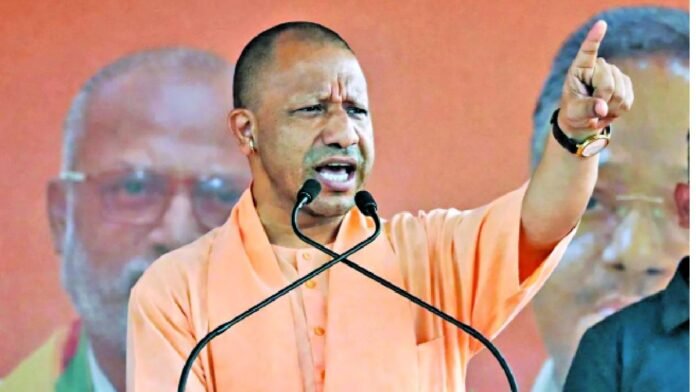
Uttar Pradesh Chief Minister Yogi Adityanath on Friday hit back at the Opposition over allegations of embezzlement of donations meant for the Ram Temple, asserting that the government acted swiftly after receiving the Special Investigation Team (SIT) report.

The Chief Minister urged political parties not to use the issue to malign Ayodhya or hurt the sentiments of Lord Ram’s devotees.

“Do not cast an evil eye on Ayodhya. Do not test the faith of Ram devotees. If you have evidence, place it before the SIT,” Adityanath said while addressing a public gathering in Deoria, according to news agency PTI.

Emphasising the government’s commitment to accountability, he said action began immediately after the SIT submitted its findings.

“The SIT submitted its report and the government initiated action without delay. As I had promised earlier, we will separate truth from falsehood,” he said.

‘No one will be spared’

Adityanath said the alleged irregularities were being treated with utmost seriousness because they involved the faith of millions of devotees across the country.

He warned that strict action would be taken against anyone found guilty, regardless of their position.

“Playing with public faith is unacceptable. Anyone found tampering with the sentiments of Sanatan Dharma will face the consequences. There will be no exemption for anyone,” he said.

The remarks come amid a political confrontation over allegations of financial irregularities involving donations received at the Ram Temple, with Opposition parties demanding greater transparency and accountability.

Eight arrested in donation embezzlement case

Meanwhile, Uttar Pradesh Police on Friday arrested eight people named in the FIR registered in connection with the alleged misappropriation of Ram Temple donations.

The arrests came a day after an FIR was lodged following allegations of financial irregularities in donations collected at the Ayodhya temple.

The complaint was filed by the Shri Ram Janmabhoomi Teerth Kshetra Trust, which oversees the temple’s management. Among those named in the FIR is Ramashankar Yadav, also known as Tinnu, who is considered a close aide of the trust’s general secretary, Champat Rai.

Investigators are examining Yadav’s alleged role in the collection and handling of donations. The other accused arrested include Anukalp Mishra, Avinash Shukla, Karunesh Pandey, Manish Yadav, Lavkush Mishra, Ramashankar Mishra and retired bank employee Subhash Srivastava, who was responsible for counting the donations.

The FIR was registered after a three-member SIT submitted its preliminary findings recommending criminal proceedings. The allegations were originally raised by Samajwadi Party leader Tej Narayan Pandey.

Those named in the case have been booked under various provisions of the Bharatiya Nyaya Sanhita related to criminal breach of trust, cheating, theft and criminal conspiracy.

The Uttar Pradesh government constituted the SIT on June 13 after receiving a request from the temple trust. The panel conducted its preliminary inquiry in Ayodhya between June 15 and June 20 before submitting its report to the state government.


Bill Gates Testifies Jeffrey Epstein Explored Blackmail Over Personal Relationships

0
bill gates
bill gates

Microsoft co founder Bill Gates told members of the US Congress that late financier and convicted sex offender Jeffrey Epstein appeared to be moving towards blackmailing him by exploiting knowledge of his extramarital affairs, according to a transcript of a closed door congressional hearing.

While Gates maintained that he was never blackmailed, he said emails released as part of the Epstein case suggested the disgraced financier was considering that course of action.

“I was not blackmailed, but as you look at these emails, it looks like Mr Epstein’s brainstorming was going in that direction,” Gates said, referring to documents released by the US Department of Justice in January.

Gates told lawmakers that Epstein used what he described as “veiled” language in an apparent attempt to pressure him into restoring contact.

“There was the veiled type of language, ‘Hey, we should all want to be friends,'” Gates recalled.

He said he made it clear to Epstein that any attempt to extract money or influence him through personal information would fail.

“I took that on very explicitly and said, look, if you think you’re going to get more money out of this, it’s not going to happen. And if that means you go out and talk to people about things, I will just bear the pain of that and deal with it,” Gates said.

The Microsoft co founder has previously acknowledged having multiple extramarital affairs during his marriage to Melinda French Gates, saying those relationships contributed to the couple’s divorce after 27 years together.

However, Gates stressed before Congress that those affairs were unrelated to his interactions with Epstein.

“These affairs had nothing to do with my interactions with Epstein, but they were painful for my family. As the public can now see, based on what has been released in the files, Epstein was working to use information about my infidelities, in addition to many lies that he layered on top, to pressure me to re engage with him,” the transcript quoted Gates as saying.

Gates says he met Epstein 12 to 14 times

During his testimony, Gates said he met Epstein between 12 and 14 times over a four year period and also had two Skype calls with him.

According to Gates, their relationship began in 2011, three years after Epstein pleaded guilty to charges related to soliciting prostitution involving minors.

Gates’ name has appeared thousands of times in documents linked to the Epstein investigation. He has not been accused of any criminal wrongdoing and has repeatedly said he never witnessed any crimes, though he acknowledged he “may have been in the presence of victims.”

Adani Group Aims to Become Key Nuclear Energy Player with 10 GW Target

0
Adani Group
Adani Group

Here’s a rephrased version in the same news feature style with improved flow and readability:

Adani Group chairman Gautam Adani on Wednesday announced the conglomerate’s entry into the nuclear energy sector, unveiling plans to develop 10 gigawatts (GW) of nuclear power capacity by 2035 as part of its long-term clean energy roadmap.

Speaking at the group’s annual general meeting in Ahmedabad, Adani said the venture would be spearheaded through Adani Atomic Energy and marked a significant step towards strengthening India’s future energy security.

“Our entry into nuclear energy through Adani Atomic Energy is another confident step towards securing India’s long-term energy future. With land identified and a 10 GW targeted capacity by 2035, we are positioning ourselves early to serve the growing national demand for clean, round-the-clock power,” Adani said.

The nuclear energy push forms part of a wider expansion across the group’s energy portfolio. Adani said the company is executing a ₹2 lakh crore capital expenditure programme in thermal power, with plans to increase its installed capacity to 45 GW over the next five years. The group has also partnered with Bhutan’s Druk Green Power Corporation to jointly develop 5,000 MW of hydropower projects.

Highlighting the group’s investment plans, Adani said it invested more than ₹1.5 lakh crore in infrastructure during the 2025-26 financial year, accounting for over 30 per cent of India’s total private sector capital expenditure during the period.

The conglomerate is also ramping up its presence in digital infrastructure. It plans to build a 3 GW data centre platform by 2030 and has signed a binding agreement with Google to develop a large-scale data centre project in Visakhapatnam.

On the logistics front, Adani said the group’s ports business handled more than 500 million tonnes of cargo during 2025-26 and is aiming to double that figure to 1 billion tonnes by 2030. In aviation, he noted that Navi Mumbai International Airport became operational in December 2025 and is expected to eventually handle up to 90 million passengers annually.

The group reported consolidated revenue of ₹2.92 lakh crore for 2025-26, a 7.4 per cent increase compared to the previous year, while profit after tax rose 13.9 per cent to ₹46,376 crore.

Adani also announced an internal restructuring aimed at improving operational efficiency. The group will adopt a three-tier organisational structure designed to reduce bureaucracy, accelerate execution and strengthen support for its workforce of nearly four lakh employees and contract workers.

He said the group’s long-term strategy is focused on combining physical infrastructure with digital intelligence, with investments spanning energy, transport, logistics and data infrastructure to help drive India’s economic growth.

Dinesh Trivedi Gets Cabinet Status After Appointment as Bangladesh Envoy

0
Trivedi
Trivedi

Sure! Here’s a rephrased version in a similar news feature style, with smoother flow and no unnecessary repetition:

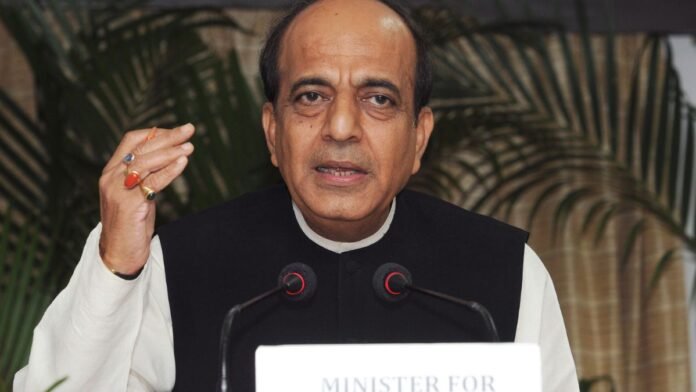
India has accorded cabinet minister status to its new High Commissioner to Bangladesh, Dinesh Trivedi, underlining the importance New Delhi places on rebuilding ties with Dhaka as both countries seek to stabilise their relationship, people familiar with the matter said.

Trivedi is the first political appointee to serve as India’s envoy to Bangladesh in nearly five decades. A notification issued by the Union Home Ministry on Wednesday stated that he “has been assigned the equivalent status of Union Cabinet Minister in the Table of Precedence.”

Although political appointees serving as ambassadors have occasionally been granted cabinet minister status in the past, such instances have been rare in recent decades. Former Congress leader Siddhartha Shankar Ray, for example, held cabinet rank while serving as India’s ambassador to the United States between 1992 and 1996. A few former Union ministers have also received the same distinction after being appointed as envoys.

Officials clarified that the status granted to Trivedi is a personal distinction that applies only to ceremonial and protocol matters. It does not alter the official Table of Precedence, which determines the order of dignitaries at state functions.

However, the move is expected to elevate Trivedi’s stature, signalling that he enjoys direct access to India’s top leadership. It is also intended to enable him to engage more effectively with Bangladesh’s senior political leadership, rather than primarily dealing with officials in the country’s foreign ministry.

The appointment comes at a delicate moment in India-Bangladesh relations. Bilateral ties reached their lowest point after the collapse of Sheikh Hasina’s government following student-led protests in August 2024, paving the way for an interim administration led by Muhammad Yunus.

Relations appeared to improve after the Bangladesh Nationalist Party (BNP) secured victory in the February general election. India made a series of diplomatic outreach efforts, including sending Lok Sabha Speaker Om Birla to attend the swearing-in ceremony of Prime Minister Tarique Rahman.

Further progress followed Bangladesh Foreign Minister Khalilur Rahman’s visit to India in April, during which he met National Security Adviser Ajit Doval, External Affairs Minister S. Jaishankar and Petroleum Minister Hardeep Singh Puri. The two sides agreed to revive existing dialogue mechanisms while expanding cooperation in trade and energy.

Despite those efforts, recent developments have once again strained the relationship. The ongoing election campaigns in Assam and West Bengal, political rhetoric surrounding illegal migration from Bangladesh, comments made by Assam Chief Minister Himanta Biswa Sarma, and interviews by former Prime Minister Sheikh Hasina from India criticising the BNP-led government have all complicated attempts to restore normalcy, the people said.

Trivedi, who entered Bangladesh through a land border crossing on June 12, is expected to begin his diplomatic outreach in earnest after presenting his credentials to Bangladesh President Mohammed Shahabuddin in Dhaka on Thursday.

One of his first major decisions after taking charge was to announce the resumption of normal visa services in Bangladesh, which had been suspended during the violent protests in 2024. Tourist visa applications will once again be accepted from June 28.

Why Venezuela Was Hit by Two Quakes Just 39 Seconds Apart

0
Venezuela
Venezuela

At least 164 people were killed and around 1,000 others injured after two powerful earthquakes, described as a “doublet”, struck Venezuela within seconds of each other on Wednesday evening.

Experts fear the death toll could rise significantly as rescue operations continue across the affected regions.

The 7.2 and 7.5 magnitude earthquakes were among the strongest to hit Venezuela in more than a century. The last earthquake of comparable strength struck the capital, Caracas, in 1990, registering a magnitude of 7.7.

According to the US Geological Survey (USGS), the first earthquake struck west of Moron on the Caribbean coast, roughly 170 kilometres west of Caracas, at a depth of 22 kilometres. Just 39 seconds later, a second and even stronger earthquake measuring 7.5 magnitude hit at a depth of 10 kilometres, with its epicentre located 16 kilometres southwest of Moron.

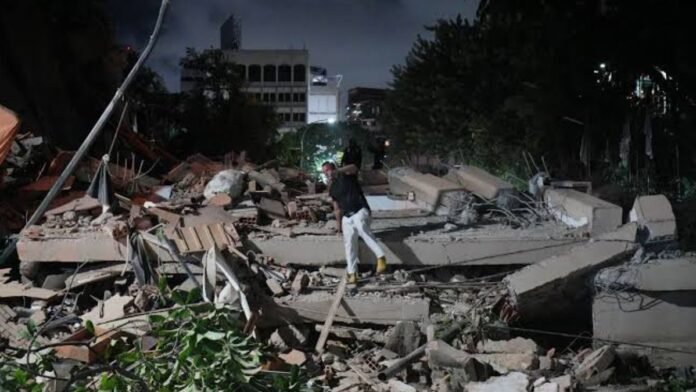
The back to back earthquakes caused widespread destruction, with several buildings collapsing. Authorities also warned residents about the risk of landslides and soil liquefaction in the worst affected areas. The USGS issued a red level PAGER alert, indicating a high likelihood of severe damage and significant loss of life.

What is an earthquake doublet?

An earthquake doublet refers to two major earthquakes that occur close together in both time and location. Unlike the more common sequence of a mainshock followed by smaller aftershocks, both earthquakes in a doublet are typically similar in strength and intensity, according to a study published in the journal Nature.

Writing for The Conversation, Mark Quigley, an associate professor of earthquake science at the University of Melbourne, explained that earthquake doublets are usually similar in magnitude and may be “causally linked, but seismologically distinct.”

“This means the seismic waves from each quake are separated by a gap in time, and/or originate from distinct sources. Although the Venezuelan earthquake epicentres were within mere kilometres of each other, seismic wave information from the USGS suggests they likely originated from different faults with different rupture styles,” he wrote.

Quigley added that the first earthquake likely triggered the second.

“This could have happened because Earth’s crust displacement in the first earthquake fault increased stress on the second earthquake’s source fault. Additionally, the passage of seismic waves from the first earthquake could have rattled nearby faults already prone to rupture, causing them to fail,” he explained.

Venezuela lies along the boundary between the South American and Caribbean tectonic plates, placing it close to several active fault lines.

According to the USGS, the two tectonic plates slide past one another at a rate of about 20 millimetres per year. Quigley said this constant movement gradually builds stress along fault zones in northern Venezuela, making the region vulnerable to frequent shallow earthquakes.

How common are earthquake doublets?

Earthquake doublets are relatively rare, although there have been notable examples in the past.

In 2023, Turkey experienced a devastating 7.8 magnitude earthquake, followed nine hours later by another measuring 7.6 magnitude. The epicentres of the two quakes were approximately 100 kilometres apart.

A 2025 study published in Nature examined the Turkey earthquakes and found that the composition of the Earth’s crust can influence how such paired earthquakes unfold. Researchers noted that when a powerful earthquake strikes a region with certain geological characteristics, it not only releases energy but also redistributes stress across nearby fault lines.

This transfer of stress can push neighbouring fault segments that are already close to their breaking point beyond their limit, increasing the likelihood of another major earthquake occurring soon afterward.

Easing Conditions in Iran Yet India Continues to Recommend Travel Caution

0
india iran travel
india

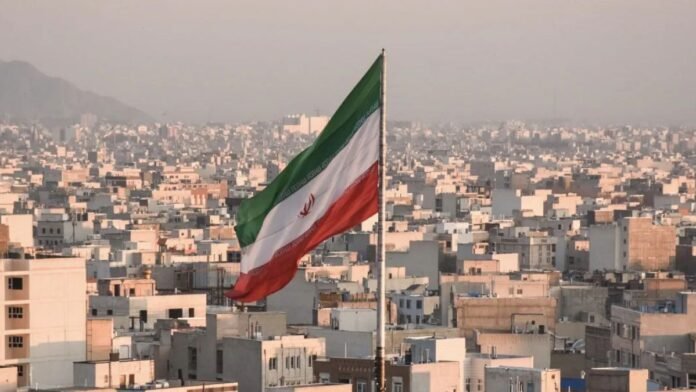
India on Wednesday urged its citizens to continue refraining from non-essential travel to Iran, stating that caution remains necessary despite signs of improvement in the country’s security environment.

In an updated advisory, the Indian Embassy in Tehran said it had been closely assessing developments on the ground and decided to revise its guidance following recent positive changes in the overall situation.

However, the mission stressed that the circumstances remain sensitive and advised Indian nationals to avoid unnecessary travel to Iran until further notice.

“Despite recent improvements, Indian citizens are advised to continue avoiding all non-essential travel to Iran,” the embassy said in the advisory, which was also shared on its social media platforms.

The mission further advised Indians currently living in Iran, as well as those who must travel there for unavoidable reasons, to remain extremely cautious and vigilant. It urged them to stay informed about local developments through reliable sources and strictly follow directions issued by Iranian authorities.

The embassy once again encouraged all Indian nationals residing in or arriving in Iran to register with the mission at the earliest opportunity. It also asked citizens to regularly check the embassy’s website and social media channels for the latest updates and advisories.

For emergency assistance, the mission shared several contact numbers and its official email address, asking Indian nationals to reach out whenever required.

India has issued multiple travel advisories related to Iran since the conflict in West Asia escalated on February 28 following joint military strikes by the United States and Israel, which triggered retaliatory action from Tehran.

The latest advisory is the first to be released after technical-level negotiations commenced following the signing of a Memorandum of Understanding between US President Donald Trump and Iranian President Masoud Pezeshkian last week, a development that has raised hopes of a reduction in regional tensions.

WhatsApp Leadership Goes Indian as Kunal Shah Lands Top Role and Fresh Meta Funding

0
Kunal Shah
Kunal Shah

Here’s a rewritten version in a similar news style, with a different flow and no dashes:

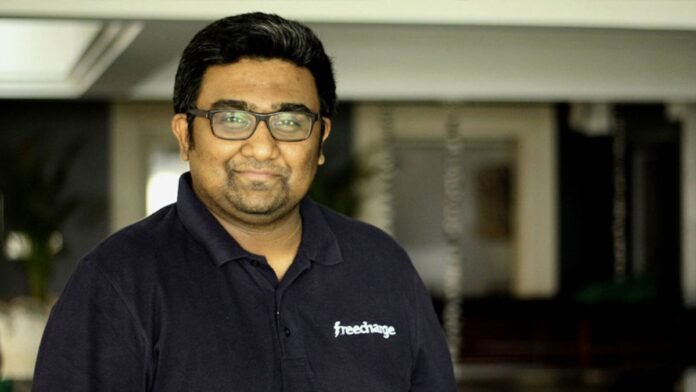
Meta Platforms Inc has announced a major leadership change at WhatsApp, naming Cred founder Kunal Shah as the new head of the messaging platform while simultaneously investing $900 million in the Indian fintech company.

The move will see Shah take over from Will Cathcart, who has led WhatsApp for nearly seven years. Cathcart will remain at Meta and transition to a new role focused on building consumer products powered by artificial intelligence, according to a Bloomberg report.

Shah, one of India’s best-known startup founders, was personally recruited by Meta Chief Product Officer Chris Cox, who was looking for an entrepreneur with deep insight into markets where WhatsApp has become an integral part of daily life.

In a statement, Cox described Shah as “one of India’s most respected entrepreneurs, a serious thinker, and a deeply good person.” Shah, who is currently based in Bengaluru, will relocate to California and work from Meta’s headquarters in Menlo Park.

Meta said Shah’s experience as a founder and product builder made him a strong fit to lead WhatsApp through its next phase of growth.

“Kunal brings a deep understanding of how WhatsApp fits into people’s everyday lives, along with a founder’s mindset and a fresh perspective from outside Meta,” the company said. It added that he has a proven track record of creating products that resonate with users at scale.

Cathcart reflected on his time leading WhatsApp, saying he was proud of helping grow the platform to more than three billion users while expanding end-to-end encrypted messaging across multiple products and devices.

The appointment comes alongside Meta’s $900 million investment in Cred, which values the Bengaluru-based fintech firm at approximately $4.5 billion. The investment gives Meta a stake of around 20% in the company.

Founded in 2018, Cred built its reputation by rewarding users for timely credit card payments and has since expanded into a broader financial services platform. The company currently serves around 17 million monthly users and generated nearly ₹3,200 crore in revenue.

With Shah moving to Meta full-time, the responsibility of leading Cred will temporarily fall to Miten Sampat, who currently oversees company strategy. He will serve as interim CEO while the board evaluates the firm’s long-term leadership plans and prepares for a potential public listing.

Meta said its investment will include both primary and secondary capital, allowing it to inject fresh funds into the company while also purchasing shares from some existing investors. The company clarified that it will not take a board seat at Cred and will not have access to customer data.

The leadership shift reflects Meta’s growing focus on WhatsApp’s future business opportunities. While the platform has become one of the world’s largest messaging services, it is still in the early stages of expanding revenue streams such as advertising, subscriptions and AI-powered services.

Mark Zuckerberg welcomed Shah’s appointment, describing him as a founder with a strong product vision and a global outlook.

“Kunal built Cred into one of India’s most influential technology companies. He brings the builder mentality and international perspective needed to lead the world’s largest messaging platform,” Zuckerberg said.

Commenting on his new role, Shah said WhatsApp still has enormous untapped potential despite its massive scale.

“WhatsApp has already come a long way, but the gap between what it is today and what it can become is still huge. I’m excited to work with Mark, Chris and the wider Meta team as we shape the next chapter of its journey,” he said.

Reflecting on his departure from Cred, Shah said the company had evolved from a simple idea into a profitable and scalable business.

“I started Cred with the belief that creditworthy individuals deserve to be rewarded. In less than eight years, that idea has grown into a completely new category. With a strong team, fresh capital and a solid foundation, I believe Cred is positioned to become a lasting institution for decades to come,” he said.

Meta has steadily expanded its presence in India in recent years. The company invested $5.7 billion in Jio Platforms in 2020 and recently announced plans to lease its first artificial intelligence data centre in the country.

For Cred, the transition marks the beginning of a new phase. Interim CEO Miten Sampat said the company now has an opportunity to build on Shah’s vision and continue its journey toward becoming a publicly listed firm.

“More than 1.7 crore creditworthy Indians trust Cred. We have a generational opportunity ahead of us, and this next chapter is only the beginning,” Sampat said.

Growing Divide? Israeli Minister’s Comments Put Spotlight on US-Iran Deal Talks

0
Miki Zohar
Miki Zohar

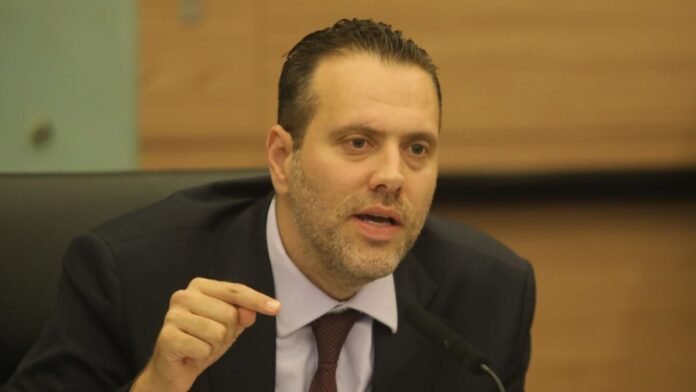
An Israeli minister has reportedly hinted at a possible clash with the United States over Washington’s peace agreement with Iran, warning that the two allies could soon find themselves at odds over the issue.

The remarks were made by Israeli Culture and Sports Minister Miki Zohar, who criticized the US approach towards negotiations with Tehran and questioned the effectiveness of the recently announced agreement.

“The conduct of the US at this moment regarding the Iranian issue is not good. They do not understand who they are dealing with. The US will find itself on a collision course with Israel in the near future, and our response to the US will not be automatic. Our security interests will determine our military actions,” Zohar was quoted as saying by an Israeli news outlet, according to Al Jazeera.

The comments come as rare public differences emerge between Israel and the United States over Washington’s memorandum of understanding with Iran, aimed at ending the West Asia conflict that began on February 28 and disrupted regional stability and global markets. The two allies have also disagreed over Israel’s military posture in southern Lebanon.

Zohar further cast doubt on the long-term success of the agreement, arguing that it would not resolve concerns surrounding Iran’s nuclear ambitions.

“In my view, a US agreement will not solve the nuclear weapons issue, and the military phase of the conflict will return much sooner than many expect,” he said.

Disagreement over Lebanon remains a key issue

One of the most contentious elements of the 14-point US-Iran memorandum concerns Lebanon. The agreement calls for an immediate and permanent end to military operations across all fronts, including Lebanon, and reaffirms support for Lebanon’s sovereignty and territorial integrity.

However, several questions remain unresolved. Israel is not a party to the agreement, which was negotiated directly between Washington and Tehran, while the conflict in Lebanon primarily involves Israeli forces and Hezbollah.

Israeli Defence Minister Israel Katz has made it clear that Israel has no intention of withdrawing its troops from southern Lebanon, regardless of potential pressure from the United States.

According to reports carried by The Times of Israel, Katz said Israeli forces would remain deployed in the area even if Washington demanded a withdrawal.

Discussing the future of the security zone, Katz also ruled out the immediate return of displaced Lebanese residents, stating that around 200,000 people would not be allowed back for now. He argued that previous experiences in security zones had exposed Israeli troops to roadside bombs and other attacks, making continued military control necessary.

“What happened in the past in security zones, where civilian populations remained present, was a series of attacks against our soldiers. We will not allow that situation to repeat itself,” Katz said.

Israeli leadership reiterates military position

Katz’s remarks followed a high-level discussion involving Prime Minister Benjamin Netanyahu, the Defence Minister, IDF Chief of Staff Lieutenant General Eyal Zamir and Northern Command chief Major General Rafi Milo.

Following the meeting, the leaders issued a joint statement reaffirming Israel’s commitment to maintaining military operations against perceived threats in Lebanon.

“The IDF will continue acting decisively against threats to our soldiers and civilians, destroy terror infrastructure, and maintain the security zone in southern Lebanon,” Netanyahu, Katz and Zamir said.

Israeli forces seized portions of southern Lebanon after hostilities escalated when Hezbollah launched attacks in support of Iran following joint US-Israeli strikes on Iranian targets.

Although a ceasefire has largely held since Sunday, marking the longest pause in fighting so far, Israeli troops remain stationed deep inside southern Lebanon. Israeli officials maintain that the deployment is necessary to protect communities in northern Israel from future Hezbollah attacks.

Ministry of External Affairs Issues Clarification on Passport and Citizenship Status

0
indian passport
passport

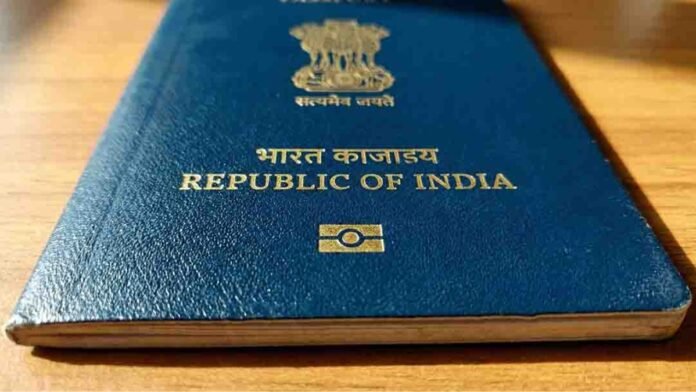
The Ministry of External Affairs (MEA) on Wednesday clarified that a passport should be viewed as a travel document rather than proof of citizenship, while also highlighting the enhanced security features introduced in India’s new chip-enabled e-passports, including biometric data integration aimed at improving global acceptance and preventing fraud.

The remarks were made ahead of Passport Seva Divas, observed annually on June 24 to mark the enactment of the Passports Act, 1967. Officials also announced that the MEA will host a two-day Human Resource Mobility Forum next week to promote legal migration opportunities and connect Indian job seekers with overseas employers.

Passport is a travel document, says MEA

Officials emphasised that a passport serves primarily as a document that certifies an individual’s nationality while travelling abroad and should not be considered a standalone proof of citizenship.

“A passport is issued only after extensive verification and scrutiny based on documents obtained from multiple government agencies,” an MEA official said.

Over 14 million e-passports issued

The ministry revealed that around 14.7 million e-passports have been issued since the rollout of chip-based passports last year under the upgraded Passport Seva Programme.

These e-passports currently account for nearly 10 per cent of all passports in circulation, while all newly issued passports are now chip-enabled.

The documents contain an embedded RFID chip and antenna that store personal information along with biometric details, providing an additional layer of security.

Officials said the technology significantly reduces the possibility of data tampering, unauthorised access and fraudulent passport issuance.

“It is far more difficult to create counterfeit passports now. The additional security features also improve confidence among immigration authorities overseas and help speed up clearance procedures,” an official said.

The chips used in the e-passports are supplied through the India Security Press in Nashik, which sources them internationally. Officials said global best practices were studied while developing the system and efforts are continuing to further strengthen security standards.

They also clarified that while Tata Consultancy Services (TCS) provides technological and operational support for the Passport Seva Project, all passport-related data remains stored on MEA servers.

Human Resource Mobility Forum next week

The MEA will organise the Human Resource Mobility Forum on June 30 and July 1 in collaboration with the labour and education ministries.

Denmark, Germany, Italy, Japan and Russia have been identified as focus countries for the event, which aims to bring together foreign employers, recruitment agencies and Indian professionals seeking opportunities abroad.

Officials stressed the importance of proper training, awareness and structured recruitment systems, particularly in light of incidents involving Indian nationals being misled into joining foreign conflicts, including the Russian military.

“Ethical employers need to be connected with aspiring workers, while candidates must also be educated about potential risks and fraudulent recruitment practices,” an official said.

More visa-free access and faster passport services

The ministry said efforts are underway to expand visa-free and visa-on-arrival access for Indian citizens while further improving passport services nationwide.

Currently, 27 countries offer visa-free entry to Indian travellers, compared to 16 in 2019. The number of countries providing visa-on-arrival facilities has increased from 38 to 47, while 66 countries now offer e-visa services to Indians.

India has also signed migration and mobility agreements with 25 countries, primarily in Europe, creating more legal migration pathways and facilitating the return of undocumented migrants.

Officials noted that passport application processing times have now been reduced to an average of five to six days. Measures have also been introduced to ensure applicants spend less than 45 minutes at Passport Seva Kendras.

The number of Passport Seva Kendras and Post Office Passport Seva Kendras across the country has grown to 544, up significantly from just 77 centres a decade ago.

The ministry is also working with state governments to speed up police verification processes, aiming to replicate the performance of states where verification is completed within two to three days.

Bangladesh Awami League Founding Anniversary Marred by Arrests of Party Supporters

0
Sheikh Hasina
Sheikh Hasina

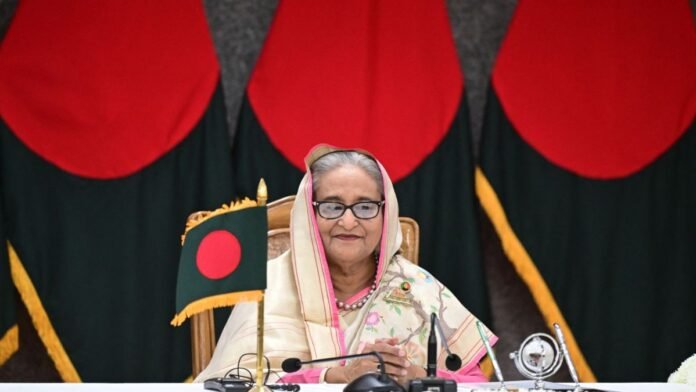
Authorities in Bangladesh arrested dozens of activists linked to former prime minister Sheikh Hasina’s banned Awami League overnight after supporters attempted to mark the party’s 77th foundation day with processions and public gatherings despite a nationwide security crackdown.

Awami League anniversary sparks arrests

The Awami League, founded on June 23, 1949, when Bangladesh was still part of East Pakistan, is the country’s oldest political party and played a central role in the 1971 Liberation War.

The party was outlawed by the interim administration led by Muhammad Yunus after Hasina’s government was removed from power on August 5, 2024, following the student-led July Uprising. The decision was later backed by Parliament under Prime Minister Tarique Rahman’s government.

Ahead of the anniversary, the Awami League called on supporters through social media to participate in online discussions, display party flags, organise rallies and launch poster campaigns.

However, security agencies moved swiftly to prevent any public mobilisation. A police headquarters spokesperson said 26 Awami League activists were arrested in Dhaka alone, while several others were detained across the country for allegedly attempting to violate the ban.

“We have successfully thwarted their plans so far, and we expect they will not be able to organise rallies, processions or gatherings during the remainder of the day,” Dhaka Metropolitan Police Commissioner Mosleh Uddin Ahmed told reporters.

The Dhaka Metropolitan Police later said legal action had been initiated against those arrested and that operations would continue to ensure law and order.

Supporters continue activities despite restrictions

Despite the clampdown, Awami League-affiliated social media accounts shared videos showing supporters marching with party flags and banners while raising slogans in different parts of the country.

A day before the anniversary, Hasina posted a message on social media declaring, “We were not born to be defeated.”

Hasina has been living in India since her removal from office in 2024. She was later sentenced to death in absentia by Bangladesh’s International Crimes Tribunal over allegations linked to attempts to suppress the student-led protests.

In another social media post, the Awami League claimed it would return to politics with greater public support and renewed strength.

Bangladesh’s mainstream media outlets and digital news platforms remain prohibited from publishing or broadcasting Hasina’s statements or activities related to the Awami League.

Nevertheless, in comments carried by regional media, Hasina has accused successive governments of politicising the judiciary, enabling mob violence and undermining democratic processes.

Security tightened across Bangladesh

Reports indicated that Awami League supporters staged brief unauthorised marches in Barishal district, prompting authorities to deploy additional riot police.

Security was also heightened in Gopalganj, considered a traditional Awami League stronghold and Hasina’s hometown. The district witnessed violent unrest in 2024 when five protesters were killed during a march organised by leaders of the July Uprising, who later went on to establish the National Citizen Party (NCP).

Home Minister Salahuddin Ahmed reiterated on Monday that the Awami League no longer exists as a recognised political organisation.

“There is no organisation by the name of Awami League,” he told reporters when asked about the anniversary.

The government also deployed army personnel and members of the Border Guard Bangladesh (BGB) to assist civil authorities in Dhaka and five other districts until June 30 as tensions escalated around the anniversary observances.

The move came just a week after troops had been withdrawn from law enforcement duties following nearly two years of deployment after the fall of Hasina’s administration.

Deaths of activists add to tensions

Authorities had already issued a nationwide alert after intelligence agencies warned of possible unrest surrounding the June 23 anniversary.

Tensions further intensified following the deaths of two Awami League activists. One died while in police custody in Faridpur on June 20, while another succumbed to injuries after a police chase in Barishal on June 21.

The incidents sparked protests in several areas, including a temporary blockade of a major highway connecting Dhaka with Khulna.

In a notable development, senior leaders of the ruling Bangladesh Nationalist Party (BNP) in Faridpur attended funeral prayers for one of the deceased activists and publicly criticised the custodial death.

At the same time, authorities deployed additional security personnel in the area to prevent any escalation of tensions.