Home Blog Page 203

Top US General Slams Venezuelan President

0

On Wednesday, a senior U.S. general accused Venezuelan President Nicolas Maduro of undermining Venezuela’s democratic will following the disputed presidential election in July, describing it as a sign that democracy is under threat globally.

Venezuela’s electoral council declared Maduro, who has been in power since 2013, the winner of the July 28 election but has not released the complete vote counts. The opposition, however, published its own tallies showing a significant victory for its candidate.

Several Western democracies and international organizations, including a United Nations panel, have called for Venezuela to release the full results, with some accusing the socialist leader’s party of outright fraud. The U.S. government claims there is “overwhelming evidence” that opposition candidate Edmundo Gonzalez won the majority of votes.

“Democracy and its fundamental values are under attack worldwide, and we need look no further than Venezuela, where Nicolas Maduro continues to undermine the democratic will of the Venezuelan people,” stated Army General Laura Richardson, commander of the U.S. Southern Command.

Speaking at a military leaders’ meeting in Santiago, Chile, Richardson blamed Maduro for the exodus of millions of Venezuelans and discussed broader global threats to democracy, including disinformation campaigns aimed at “undermining the fabric of democratic societies.”

Maduro and his administration have dismissed international criticism, pointing to election controversies in the United States and Brazil as evidence of what they see as Western hypocrisy toward Venezuela.

Both the opposition and the ruling party have urged their supporters to attend rallies on Wednesday to mark the one-month anniversary of the election.

Chilean Defense Minister Maya Fernandez, the granddaughter of former socialist President Salvador Allende who was ousted in a 1970s coup, also spoke at the conference. She emphasized the importance of “respecting the self-determination and sovereignty of each country,” although she did not mention Venezuela directly. Chile’s leftist government has been critical of Venezuela, with President Gabriel Boric recently describing Maduro’s regime as “a dictatorship that falsifies elections.”

U.S. Air Force General C.Q. Brown, chairman of the Joint Chiefs of Staff, also addressed the gathering, emphasizing the importance of preserving democracy in the region. “This group is committed to upholding an international system that respects democracy and national sovereignty,” Brown said, without specifically mentioning Venezuela.

Venezuelan officials did not attend the event.

Sunita William’s Husband and Mother Talk about Her Extended Stay at ISS

0

Sunita Williams and Barry Wilmore, two NASA astronauts, arrived at the International Space Station (ISS) on June 5 aboard Boeing’s Starliner spacecraft. They are expected to remain on the ISS until February 2025, when SpaceX is scheduled to bring them back to Earth.

Originally, both astronauts were supposed to return to Earth in the Starliner spacecraft within 8-10 days. However, their departure was delayed due to helium leaks and thruster issues, which left them stuck on the ISS.

NASA administrator Bill Nelson announced that while the Starliner will return without a crew, Williams and Wilmore will come back to Earth in February aboard a SpaceX capsule. Nelson emphasized that “space flight is risky even at its safest and most routine.”

When asked about the decision to keep the astronauts on the ISS, Nelson explained that returning the Starliner without Williams and Wilmore “is the result of our commitment to safety,” stating, “our core value is safety.”

As Williams and Wilmore prepare for an extended stay, Williams’ family has shared their thoughts on her delayed return to Earth. Her husband, Michael J. Williams, and her mother, Bonnie Pandya, seem unconcerned about her situation in space.

“That’s her happy place,” Michael said in an interview with the Wall Street Journal in August 2024. Similarly, Bonnie Pandya expressed that she isn’t worried about the extended duration, noting that both astronauts are diligently working on the ISS.

In an interview with NewsNation’s Andrew Cuomo on CUOMO, Pandya described her daughter as a “seasoned astronaut.” “I don’t give her any advice. She knows what to do. She is a seasoned astronaut. She’s been up for over 400 days in space,” Pandya proudly shared.

Pandya, who spoke with her daughter two days ago, mentioned that Sunita reassured her, saying, “don’t worry about me,” and that “everything’s going to be fine.”

SC Decides to File Complaint Against Fake CJI

0

The Supreme Court of India has contacted the Delhi Police following an incident in which a social media scammer impersonated Chief Justice of India DY Chandrachud to solicit money for a cab fare, as reported by Hindustan Times. The Delhi Police registered a cybercrime complaint on Tuesday.

The issue was highlighted when a screenshot of a message went viral on social media on Sunday. Chief Justice Chandrachud brought the matter to attention, prompting the Supreme Court’s security department to file a complaint with the Delhi Police’s cybercrime division on his instructions.

The scammer, posing as Chief Justice Chandrachud on a social media account, requested ₹500 from a user on X (formerly Twitter), claiming he needed the money for a cab to attend a Collegium meeting. The request was made to a user named Kailash Meghwal, with the scammer assuring repayment once he reached the Supreme Court.

The fraudulent message suggested that the impersonator was “stranded” at Connaught Place in Delhi. The text read: “Hello, I am CJI and we have urgent meeting of the collegium and I am stuck at Connaught Place can you send me 500rs for cab?” according to the Hindustan Times report. To lend authenticity to the request, the scammer followed up with another message, “Sent from iPad.”

This incident follows a similar case earlier this year, where a 42-year-old man was arrested in March for duping two individuals out of ₹4 lakh by impersonating a Delhi Police crime branch inspector. He pretended to be selling luxury cars and expensive cell phones, allegedly auctioned by Delhi courts at discounted rates. He was subsequently arrested for the fraud at the Subzi Mandi police station in January.

Brij Bhushan Moves to HC to Squash FIR

0

Former Wrestling Federation of India (WFI) chief and BJP leader Brij Bhushan Sharan Singh has filed a petition in the Delhi High Court, seeking to dismiss the FIR and charges against him in a sexual harassment case filed by six female wrestlers, as reported by news agency PTI. Prominent wrestlers Vinesh Phogat and Sakshi Malik are among the complainants, accusing Brij Bhushan of sexual harassment during his tenure as WFI chief.

Phogat, Malik, and fellow wrestler Bajrang Punia organized a protest in Delhi against Singh, who was then the head of the WFI, amid allegations of sexual abuse from several female wrestlers, including minors.

Last week, the Rouse Avenue Court in Delhi recorded the statement of one of the complainants, a female wrestler involved in the case against Brij Bhushan Sharan Singh. Her testimony was taken in a vulnerable witness room, with Additional Chief Judicial Magistrate (ACJM) Priyanka Rajpoot recording her statement. The continuation of her testimony has been rescheduled for September 10.

What is the case against Brij Bhushan?

In January 2023, several female wrestlers accused Brij Bhushan Sharan Singh of sexual exploitation and intimidation, leading to protests. On June 15, 2023, Delhi Police filed a chargesheet against Singh and Vinod Tomar, former WFI assistant secretary and co-accused, based on the wrestlers’ complaints. The Rouse Avenue Court charged Tomar with criminal intimidation in the case.

Singh faces charges under IPC sections 354 (assault or use of criminal force to outrage modesty) and 354A (sexual harassment), following allegations from five complainants. Two FIRs were registered against Singh, including one under the Protection of Children from Sexual Offences (POCSO) Act, involving a minor wrestler. However, the POCSO case was later dropped.

Additionally, the court framed charges against Brij Bhushan Sharan Singh under Section 506 Part 1 (criminal intimidation) of the IPC based on accusations from two complainants, while he was acquitted of charges related to the sixth complainant.

In May, the court decided to frame charges against Singh, citing ‘sufficient material’ to proceed with sexual harassment allegations against the Uttar Pradesh strongman.

Due to the sexual harassment allegations, Singh, the former BJP MP from Kaiserganj, Uttar Pradesh, was not given a ticket to contest in the Lok Sabha elections. Instead, the BJP fielded his son, Karan Bhushan Singh, to run for the seat.

Indians Always on the Risk of Losing 3.4 Years of Life Due to Pollution

0

New Delhi: Indians may lose over three years of life expectancy due to continuous air pollution, according to the Air Quality Life Index (AQLI) report by the University of Chicago.

“Despite a 19.3% reduction in particulate matter levels in 2022 compared to 2021, the average resident in India is projected to lose 3.4 years of life expectancy if current pollution levels persist,” stated the report from the university’s Energy Policy Institute.

“While Bangladesh is the most polluted country overall, India bears the greatest health burden from air pollution due to its large population exposed to these conditions,” the report highlighted.

The northern plains of India, which are home to over half a billion people or nearly 40% of the country’s population, are the most polluted region. Even though particulate levels in this area fell by 17.2% in 2022, the average resident is still expected to lose about 5.4 years of life expectancy if pollution levels do not improve. However, if current trends of improvement continue, life expectancy could increase by 1.2 years, underscoring the need for further mitigation efforts.

Outside the northern plains, states like Maharashtra, Madhya Pradesh, and Rajasthan face the highest pollution levels in the country. On average, the 292.3 million people living in these states are currently losing 2.9 years of life expectancy.

In 2022, South Asia experienced an 18% decline in air pollution after two decades of worsening conditions, mainly due to meteorological factors such as above-average monsoon rainfall linked to La Niña, according to the report.

This weather pattern amplified the effects of modest reductions in emissions from India’s residential and transportation sectors. Nationwide efforts like the Pradhan Mantri Ujjwala Yojana, which encourages clean cooking, and initiatives to reduce diesel usage in transportation have contributed to these improvements.

“While it is difficult to pinpoint the exact reasons for the improvement in South Asia’s air quality in 2022, favorable weather conditions such as above-normal rainfall and fewer thermal inversions likely enhanced the effects of modest emission reductions in India’s residential and transportation sectors,” the report noted.

India’s National Clean Air Programme (NCAP), launched in 2019, aims to cut particulate pollution levels by 40% by 2026 in 131 non-attainment cities. Meeting this target could extend life expectancy by two years in these cities and add 7.8 months to the national average.

By 2022, pollution levels in these cities had decreased by 18.8% since 2017, resulting in an additional 10.8 months of life expectancy for 446.7 million residents and a four-month gain for the national average.

Since the early 2000s, the number of vehicles on the road in India and Pakistan has quadrupled. From 1998 to 2017, electricity generation from fossil fuels in Bangladesh, India, Nepal, and Pakistan combined has tripled. Additionally, crop burning, brick kilns, and other industrial activities have further contributed to the rise in particulate emissions in the region.

Global pollution levels decreased in 2022, primarily due to a reversal of trends in South Asia. Despite this decline, the region remains the most polluted in the world, accounting for 45% of the total life years lost due to high pollution levels.

SC Gives Bail to Kavitha in Excise Case

0

NEW DELHI: The Supreme Court on Tuesday granted bail to Bharat Rashtra Samithi (BRS) leader K Kavitha in the Delhi excise policy case and delivered a stern rebuke to the Central Bureau of Investigation (CBI) and the Enforcement Directorate (ED) regarding the fairness of their investigation, criticizing the agencies for relying on inferences rather than concrete, incriminating evidence.

A bench comprising Justices Bhushan R Gavai and KV Viswanathan granted Kavitha bail, citing that the investigation was complete, the trial was expected to be delayed due to the extensive number of witnesses and documents, and that as a woman, she was entitled to special consideration under Section 45(1) of the Prevention of Money Laundering Act (PMLA).

“The investigation is complete and a charge sheet has been filed. The custody of the appellant (Kavitha) is not necessary. She has been incarcerated for five months. It is impossible for the trial to conclude in the near future. As stated in various rulings of this court, under-trial custody should not become a form of punishment,” the bench stated in its order.

Kavitha, an MLC and daughter of former Telangana Chief Minister K Chandrashekar Rao, was arrested by the ED on March 15 and by the CBI nearly a month later in connection with alleged irregularities in the now-scrapped Delhi liquor policy of 2021-22. The case has garnered significant political attention, with Kavitha accused of playing a key role in allegedly paying a ₹100 crore bribe to the Aam Aadmi Party (AAP) and its leaders, including Delhi Chief Minister Arvind Kejriwal and former Deputy Chief Minister Manish Sisodia, in exchange for benefits to private liquor businessmen from southern India—a group termed the “South Group.”

Kavitha’s bail came two weeks after the same bench granted bail to Sisodia, arguing that his prolonged incarceration of 17 months and the lack of any likelihood of the trial concluding soon violated his fundamental rights to liberty and a speedy trial under Article 21 of the Constitution.

In her plea, Kavitha referenced the judgment in Sisodia’s case. Notably, a different bench of the top court is currently hearing petitions from Kejriwal seeking to invalidate his arrest by the CBI on June 26 and to grant him bail. Kejriwal’s petition, who has been granted interim bail by the Supreme Court in the ED case but remains detained in the CBI case, also heavily relies on the reasoning used in Sisodia’s case.

BRS working president KT Rama Rao thanked the Supreme Court for granting bail to his sister and party MLC, Kavitha, posting on X: “Thank You Supreme Court. Relieved. Justice prevailed.”

The bench also criticized the selective approach of the agencies in treating some accused as approvers to build a prosecutable case. “The prosecution has to be fair. Someone who incriminates themselves has been made a witness, while others are prosecuted based on their statements…Can you randomly choose anyone? You cannot selectively pick and choose accused…This isn’t fair,” the court said, referring to Sharat Chandra Reddy, initially arrested as an accused but later made an approver, who claimed he participated in the Delhi liquor business on Kavitha’s assurances.

Regarding Arun Pillai, a key witness who later retracted his statement, the bench noted that the agencies were relying on his earlier, self-incriminating statement while ignoring his retraction. “You cannot selectively choose statements that suit your case,” the court added.

The bench also questioned the prosecution’s reliance on negative inferences, particularly regarding allegations that Kavitha had destroyed evidence by erasing her mobile phones. “You are drawing a negative inference without any substantive proof. People do delete messages; it is normal human behavior,” the bench remarked, emphasizing that the agencies needed to provide solid evidence rather than speculative conclusions.

While Additional Solicitor General (ASG) SV Raju, representing the agencies, read out statements from witnesses and other evidence to argue against granting bail to Kavitha, the court’s criticism intensified, warning the ASG that continuing his arguments could prompt the court to formally question the impartiality of the investigation.

“If you continue to argue, we will be forced to comment on the unfair conduct of your investigating agency,” the bench warned, prompting Raju to retreat.

The Delhi High Court had previously denied her bail on July 1, citing certain incriminating statements from other witnesses, including Reddy. The court also argued that Kavitha, being well-educated and of significant political standing, did not qualify for the exemption from rigorous bail standards under the PMLA that are typically afforded to “vulnerable” women.

On Tuesday, the Supreme Court decisively rejected the High Court’s reasoning, describing it as “perverse” and cautioning that allowing it to stand could set a dangerous precedent that could misguide future cases.

“If this Delhi High Court order remains, these perverse observations would imply that no educated woman can ever get bail. This would apply at least to all courts within the jurisdiction of Delhi. What is this? On the contrary, we say courts should not differentiate between an MP and a common citizen, but here the High Court is creating an artificial distinction not present in the statute,” the bench stated.

The hearing before the bench involved intense scrutiny of the prosecution’s case. Senior counsel Mukul Rohatgi, representing Kavitha, argued that she had been unjustly held in custody for over five months despite a lack of direct evidence linking her to the alleged crime. He highlighted the vastness of the case files, which include 493 witnesses and 50,000 pages of documents, making it evident that the trial would not conclude anytime soon.

In response, ASG Raju contended that there was sufficient documentary evidence to deny bail to Kavitha due to her central role in a conspiracy to manipulate the now-scrapped Delhi liquor policy of 2021-22 to benefit private liquor retailers. He also argued that she was a person of influence, prompting the High Court to deny her the benefit under Section 45(1) of the PMLA.

However, the bench questioned the rationale behind denying bail to Kavitha, particularly given that the investigation had been completed in both the CBI and ED cases and charge sheets had been filed. The bench further noted that the Delhi High Court had denied her bail by distinguishing between “vulnerable women” and women of higher status—a distinction not found in the statute. “A woman is a woman. The law does not differentiate between vulnerable women and others,” it observed.

During the proceedings, the bench expressed concern over the prosecution’s approach, particularly the selective treatment of individuals based on their statements and the absence of independent evidence to substantiate the allegations. “You cannot base your case on inferences alone. There must be independent evidence to connect your inferences with criminality,” the court said, rejecting the agencies’ plea to deny her bail.

Quashing the High Court order, the bench ordered Kavitha’s immediate release on bail, subject to conditions including submitting a ₹10 lakh bail bond in the two cases, surrendering her passport, and committing not to tamper with evidence or influence witnesses. The court emphasized that its observations were limited to the bail proceedings and would not affect the merits of the trial.

The Supreme Court’s strong remarks against the CBI and ED are likely to have significant implications, not only for the ongoing prosecution in the excise policy case but also for the broader conduct of the agencies in high-profile cases, particularly in relation to the selective treatment of witnesses and reliance on inferences rather than direct evidence.

Additionally, the Supreme Court’s stance on the interpretation of Section 45(1) of the PMLA, regarding the rights of women accused, could serve as a corrective measure to ensure statutory protections for women are upheld without arbitrary distinctions.

Abhishek Banerjee Puts Deadline For Centre to Implement Anti-Rape Law

0

Amid the ongoing ‘Bangla Bandh’ called by the BJP in West Bengal, Trinamool Congress (TMC) national general secretary Abhishek Banerjee on Tuesday issued a “deadline” to the Centre for enacting a law on crimes against women. Banerjee stated that if the central government fails to implement such legislation within the next three to four months, the TMC would initiate a “major movement” in Delhi.

“If a time-bound law addressing crimes against women is not passed by the Centre within the next three to four months, the Trinamool Congress will stage a significant protest in Delhi,” Banerjee declared during a rally commemorating the 27th foundation day of the West Bengal Trinamool Chhatra Parishad, the TMC’s student wing.

Banerjee also voiced his opposition to the BJP’s ‘Bangla Bandh’ in the city.

“We oppose the 12-hour ‘Bangla Bandh’ called by the BJP,” he said.

This statement comes a day after Banerjee demanded a stringent anti-rape law that mandates trials and convictions within 50 days of the crime. He also shared a chart on X highlighting the number of rapes and atrocities against women over the past 15 days, following an incident at RG Kar Hospital.

“This collage serves as a stark reminder of the state of affairs in India over the last 15 days as the nation demands justice against rape. The solution is clear: a stringent anti-rape law that mandates trials and convictions within 50 days, followed by swift and severe punishment. The disturbing reality is that the conviction rate for rape cases in India is a mere 26 percent. This means that out of every 100 reported cases, only 26 result in convictions, while 74 offenders go unpunished,” he wrote.

Banerjee further emphasized that anything short of a strict law is “futile” and “merely symbolic and ultimately ineffective.”

On Wednesday, the BJP called for a 12-hour ‘Bangla Bandh’ to protest what it described as “brutal” police action against “peaceful” protesters during the ‘Nabanna Abhijan’ rally. The bandh, which began at 6 am, disrupted life in various parts of the state.

Numerous BJP supporters staged demonstrations in support of the bandh at Bongaon station in North 24 Parganas, Gocharan station in South 24 Parganas, and Murshidabad station.

During these demonstrations, clashes occurred between BJP workers and the police at multiple locations across the state. BJP leaders, including former Rajya Sabha MP Roopa Ganguly and MLA Agnimitra Paul, were detained for obstructing roads and railway tracks in the city.

The bandh was called a day after members of the newly formed, unauthorized student group ‘Paschimbanga Chhatra Samaj’ and other organizations organized a ‘Nabanna Abhijan’ rally in Kolkata to protest the rape and murder of a 31-year-old trainee doctor at RG Kar Medical College and Hospital. The rally proceeded despite being declared “illegal” and “unauthorized” by state police, who cited concerns about potential violence and public disorder.

During the rally, clashes broke out between police and protesters, prompting the police to use lathi charges and tear gas to disperse the crowd.”

Kangana Ranaut Faces Backlash As Himachal Pradesh Assembly Adopts Resolution

0

The Himachal Pradesh assembly has passed a resolution, supported by the Congress, condemning remarks made by Bharatiya Janata Party MP from Mandi, Kangana Ranaut, regarding the farmers’ protests.

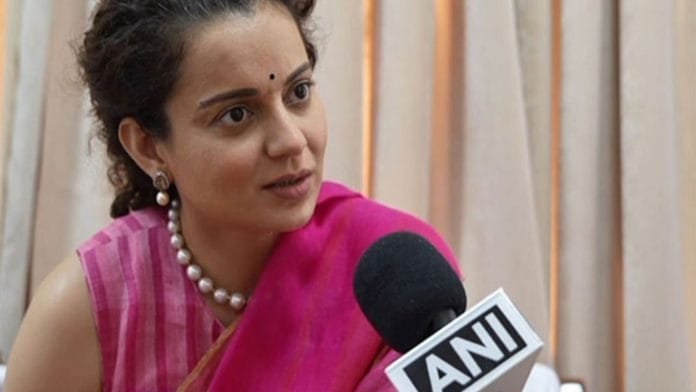
Kangana Ranaut had shared a clip of her interview with the Hindi newspaper Dainik Bhaskar, in which she suggested that a “Bangladesh-like situation” could have arisen in India if not for the country’s strong leadership. She also alleged that bodies were hanging and rapes occurred during the farmers’ protest against the now-repealed three farm laws. Furthermore, she accused China and the US of being involved in the “conspiracy.”

Her remarks sparked heated debates in the assembly of her Congress-ruled home state, leading the House to adopt a resolution condemning her statements.

Thousands of farmers from Haryana, Punjab, Uttar Pradesh, and other regions had staged a prolonged protest at Delhi’s borders over the now-repealed farm laws.

As Haryana prepares for elections on October 1, the opposition criticized the BJP MP over the issue. AAP’s Haryana president, Sushil Gupta, claimed that this incident highlighted the BJP’s “mindset” towards farmers, with AAP organizing several protests in Haryana as well.

Shiv Sena (UBT) MP Priyanka Chaturvedi also criticized Kangana Ranaut, demanding an apology. She posted on X (formerly Twitter), stating, “Kangana Ranaut has not apologized for her statement against farmers. BJP’s statement expresses no regret about the charges made by her against farmers. She is a BJP member & MP; if no action is taken against her, it’s fair to say that BJP is only paying lip service to the farmers.”

In the Himachal Assembly, Parliamentary Affairs Minister Harshwardhan Chauhan described Kangana Ranaut’s remarks as an insult to the entire farming community of India. After BJP members returned to the House following a walkout, he challenged them to clarify their position on the issue. Members from both sides of the House began raising slogans, while Leader of Opposition Jai Ram Thakur stated that Kangana’s remarks were personal and did not represent the party’s views.

The BJP had already distanced itself from the actor-turned-politician’s remarks, expressing disagreement with her views and clarifying that she was neither permitted nor authorized to speak on the party’s policy matters.

Chief Minister Sukhvinder Singh Sukhu endorsed the resolution and suggested that the BJP should address the issue within the House. Deputy Chief Minister Mukesh Agnihotri added that farmers were angered by Kangana Ranaut’s remarks and urged the BJP to seriously reconsider its stance. Revenue Minister Jagat Singh Negi even proposed filing an FIR against the Mandi MP, as her comments could potentially disrupt law and order.

Samajwadi Party chief Akhilesh Yadav labeled Kangana Ranaut’s remarks as “deliberate,” suggesting they might be used as a “shield” by the BJP to deflect blame in the event of a future defeat in the Haryana Assembly elections.

Airtel All Set to Shutdown Wynk For Exclusive Access to Apple Music

0

Bharti Airtel has announced plans to shut down its music streaming service, Wynk Music, and migrate its users to Apple Music, as reported by Mint.

“We can confirm that Wynk Music will be sunset. Airtel customers will gain access to Apple Music, and Wynk Premium users will be offered exclusive deals from Airtel for Apple Music,” an Airtel spokesperson said on Tuesday. The company also stated that all Wynk Music employees would be integrated into the Airtel workforce.

This move will transition millions of Wynk users to Apple Music, enhancing the U.S.-based streaming service’s competitive edge against rivals such as Spotify, JioSaavn, and Amazon Music. In India, Spotify led the market with a 26% share of all streams as of March 2023, according to a report by Redseer Strategy Consultants.

Wynk Music had achieved over 100 million downloads on Google’s Play Store.

While music streaming in India attracts around 185 million users, only about 7.5 million have paid subscriptions, according to a 2024 Ficci-EY report on the entertainment sector.

The decision to discontinue Wynk comes after a strategic partnership between Bharti Airtel and Apple Inc., allowing Airtel customers to access Apple TV+ and Apple Music through premium Wi-Fi and postpaid plans in the coming months. Sources familiar with the deal mentioned that Airtel plans to eventually extend this partnership to prepaid customers as well, starting with postpaid and Wi-Fi or fiber broadband users.

“Airtel provides a comprehensive platform for all content and entertainment needs through Airtel Xstream,” said Amit Tripathi, Chief Marketing Officer and Executive Vice President for Customer Experience at Bharti Airtel. “This partnership with Apple offers tremendous value to our customers by giving them access to world-class content and entertainment.”

The demand for high-quality video content on large screens is growing rapidly in India. While Apple TV+ is currently free for iPhone, iPad, and Mac users, Android users need a subscription. Although Apple TV+ isn’t yet available on Android smartphones as an app, users can access it through a web browser or on Android-powered smart TVs, streaming devices, and gaming consoles.

Macron Fails to Open Up Conversations On French Government

0

President Emmanuel Macron faced a challenging situation on Tuesday as he attempted to initiate fresh talks about forming a new government in France. The political left, however, refused to participate after he dismissed their candidate for prime minister.

More than seven weeks have passed since a parliamentary election that left Macron’s allies without a clear majority, and he has yet to appoint a new prime minister to replace the current caretaker government.

The left-wing coalition, known as the New Popular Front (NFP), emerged from the election as the largest bloc but fell short of an absolute majority. In the 577-seat National Assembly, the NFP holds over 190 seats, followed by Macron’s centrist alliance with around 160 seats, and Marine Le Pen’s far-right National Rally with 140 seats.

Despite not having a majority, the NFP has insisted that Macron appoint their candidate, Lucie Castets, a 37-year-old economist with a background in left-wing activism, as prime minister. However, late Monday, Macron ruled out appointing a left-wing government, arguing that it would pose a “threat to institutional stability.”

Instead, Macron called on “all political leaders to rise to the occasion by demonstrating a spirit of responsibility.” His office stated that appointing an NFP-led government would be futile, as it would likely face an immediate no-confidence vote in parliament.

Macron urged the socialists, ecologists, and communists within the left-wing alliance to “cooperate with other political forces,” seemingly attempting to sway the more moderate members away from the more radical elements.

On Tuesday, Socialist Party leader Olivier Faure rejected Macron’s overtures, stating that he would “not be an accomplice to a parody of democracy.” Faure warned that Socialist deputies would support a no-confidence vote against any government not proposed by the NFP and accused Macron of trying to “prolong Macronism” despite losing the National Assembly election.

Faure cautioned that “French people will start to get annoyed, to say the least,” and he pledged to join street protests, echoing Communist Party leader Fabien Roussel, who also dismissed further talks with Macron and called for a “grand popular mobilization.”

Green Party leader Marine Tondelier accused Macron of “robbing the left of this election” and declared, “We won’t be part of this mess anymore.”

Lucie Castets criticized Macron, saying he was attempting to be “president, prime minister, and party leader all at once,” which she argued was “disrespectful to French voters and democracy.”

Jean-Luc Mélenchon, the founder of the left-wing LFI, even threatened to initiate impeachment proceedings against Macron.

The far-right National Rally was not invited to the talks on Tuesday.

Meanwhile, François Bayrou, a respected veteran centrist, criticized Macron for becoming entangled in negotiations with political parties, which he called “the wrong method.” He suggested that Macron should seek a candidate with experience in high office, noting, “There are people who have held the office of president, others who have held high government positions, or who have represented political movements and currents.”

Macron’s office has not provided a timeline for appointing a new prime minister, but the deadline is approaching: by October 1, a government must present a draft budget law for 2025. Macron is also scheduled to open the Paris Paralympic Games on Wednesday and is expected to visit Serbia on Thursday for an official engagement.