Home Blog Page 98

Tariff Pressure from US Forces Indian Shrimp Producers to Explore New Options

0
Shrimp
Indian Shrimp Farmers.

For over 20 years, V. Srinivas built a stable livelihood farming shrimp along India’s southern coastline, benefiting from the country’s rise as the top exporter of shrimp to the United States. But that stability is now under threat, with former US President Donald Trump pushing for a steep 50 percent tariff that has left many shrimp farmers exploring alternative ways to make a living.

Andhra Pradesh, India’s largest shrimp-producing state, has long been the backbone of these exports, with farmers investing heavily to raise premium-quality shrimp in saltwater ponds. The sudden tariff hike has shaken the market, prompting Indian exporters to reduce the rates they pay farmers by nearly 20 percent, cutting deeply into already slim margins.

Srinivas, 46, from Veeravasaram village, is now weighing a shift to fish farming. Already burdened with loans and having mortgaged his property, he says the current shrimp prices will not allow him to break even, let alone repay his debt of over 45,000 US dollars.

The United States remains the biggest buyer of Indian shrimp, with large chains like Walmart and Kroger among the key customers. India exported 7.4 billion US dollars worth of seafood last year, with shrimp accounting for nearly 40 percent of that figure. But the landscape is rapidly changing. Washington has already imposed a 25 percent tariff on Indian shrimp, with another 25 percent due to take effect on August 27, citing India’s continued purchase of Russian oil.

In comparison, Ecuador, India’s primary competitor in the US shrimp market, faces just a 15 percent tariff, making its products more attractive to American buyers.

Roughly 300,000 farmers in Andhra Pradesh are engaged in shrimp cultivation, supplying dozens of exporters who cater to US demand. But now, orders from American clients have stalled, said Pawan Kumar, head of the Seafood Exporters Association of India. With neither buyers nor exporters willing to shoulder the tariff burden, the fallout is being passed on to farmers through lowered purchase rates.

Although India also exports shrimp to markets like China, the UK, and Japan, expanding trade in those regions will take time, Kumar said.

The sudden disruption has left many farmers grappling with uncertainty. Of 12 farmers Reuters spoke to in Andhra, six are considering exiting shrimp cultivation altogether in favor of fish farming, vegetable vending, or small local businesses. The rest are adopting a wait-and-watch approach. Each shrimp farming cycle takes roughly two months, with operating costs such as feed, power, and land rent continuing to climb.

Even during good times, we barely earn a 20 to 25 percent margin, said Gopinath Duggineni, a union leader from Ongole. With prices falling and costs remaining high, it is just not sustainable. He added that farmers plan to seek government intervention for support.

Meanwhile, Ecuador is closely monitoring India’s tariff troubles. Its producers are cautious about expanding operations but are poised to capitalize if India is forced to scale back its US exports. Jose Antonio Camposano, president of Ecuador’s National Chamber of Aquaculture, noted that if India pulls out of the US market, Ecuador stands to gain just as China is a key buyer for their exports.

Supreme Court Permits Assistant Professors to Remain in Service Until New Hiring, Confirms Punjab Minister

0
Harjot Bains
Harjot Bains

The Supreme Court on Monday permitted 1,158 assistant professors and librarians to remain in their roles at government colleges in Punjab until new appointments are made.

Reacting to the development, Higher Education Minister Harjot Singh Bains said the decision offers significant relief and will help maintain continuity in education across the state’s government institutions.

The ruling came after the state government approached the apex court, requesting a revision of its earlier judgment dated July 14, which had annulled the recruitment of the same number of teaching and library staff in government colleges.

The court had previously voided the appointments, citing serious flaws and a lack of transparency in the selection process, which did not comply with University Grants Commission (UGC) regulations. Justices Sudhanshu Dhulia and K Vinod Chandran had overturned a September 2024 verdict by the Punjab and Haryana High Court that had upheld the appointments.

The Punjab government sought temporary relief, asking the court to let the personnel continue in service for the benefit of students.

Bains added that the state, under Chief Minister Bhagwant Mann, is determined to defend the recruitment and will soon file a review petition in the Supreme Court.

Flat ₹100 Fee Introduced for Preliminary Exams in Bihar’s Recruitment Process

0
Bihar
Bihar Govt new policy.

The Bihar government on Tuesday gave its approval to a proposal that sets a fixed ₹100 fee for the preliminary stage of all recruitment exams conducted across the state, a senior official confirmed.

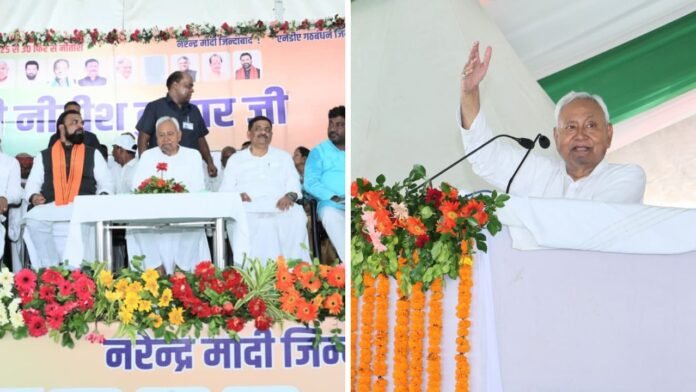
The decision, brought forward by the General Administration Department, was cleared during a cabinet meeting chaired by Chief Minister Nitish Kumar. This move carries political weight as it comes in the run-up to the assembly elections scheduled for later this year.

Officials also stated that candidates who qualify in the prelims and move on to the mains will not be required to pay any additional examination fee.

The Chief Minister had shared the government’s intention to introduce this change in a recent social media post. In addition to this, the cabinet also gave the nod to the development of two five-star hotels in Rajgir, located in Nalanda district, along with a five-star resort planned for Vaishali. These projects will be undertaken through the public-private partnership model.

Opposition Set to Push for Impeachment of Election Commission Head Over Alleged Voting Irregularities

0
Election Commission head

The INDIA opposition alliance is preparing to initiate impeachment proceedings against Chief Election Commissioner Gyanesh Kumar, intensifying its clash with the Election Commission following Rahul Gandhi’s allegations of mass voter fraud.

The Congress leader and Lok Sabha’s Leader of the Opposition recently claimed that voter manipulation took place in key states like Maharashtra, Karnataka, and Haryana, alleging that the Commission tampered with electoral data to favor the ruling BJP. On August 7, Gandhi specifically pointed to the Mahadevapura constituency in Bangalore Central, where he said over 1 lakh “stolen” votes swung the Lok Sabha seat to the BJP, accusing the EC of being complicit.

As per Article 324(5) of the Constitution, the removal of a Chief Election Commissioner requires a process equivalent to impeaching a Supreme Court judge, involving a vote in Parliament.

CEC dismisses allegations, demands proof or apology

In response, Gyanesh Kumar strongly denied Gandhi’s accusations, labeling them unfounded and disrespectful to the Constitution. Speaking at a press conference in Delhi, Kumar called on Gandhi to submit a sworn affidavit backing his claims or issue a formal apology to the nation.

There are only two options: submit a signed affidavit or apologise. If no affidavit is received within seven days, it will be clear that the allegations are without merit, Kumar stated.

Gandhi, however, countered with accusations of bias. The Election Commission demands an affidavit from me. But when BJP leaders make similar claims, no such demand is made, he said, pointing to Union Minister Anurag Thakur as an example.

Opposition rallies behind Gandhi, criticises EC’s response

Several opposition leaders voiced support for Gandhi while questioning the EC’s neutrality. Congress spokesperson Pawan Khera said the CEC’s tone resembled that of a BJP leader, not that of an impartial official. He sounded like he was defending the ruling party. What about the one lakh voters we highlighted in Mahadevapura? No answers were given, Khera remarked.

RJD’s Manoj Jha accused the EC of sidestepping critical questions, while JMM MP Mahua Maji called on the Commission to verify the documents Gandhi presented at his press event.

What are the allegations

During his August 7 press conference, Gandhi shared what he described as Congress’ research into the Mahadevapura voter rolls, pointing to duplicate entries, fake addresses, and suspicious mass registrations, including claims of 80 voters registered at a single location. He also accused the EC of limiting access to polling booth footage to cover up evidence, saying the webcasting and CCTV data was being wiped after just 45 days.

CEC Kumar defended the Commission’s stance, saying releasing such footage could compromise voter privacy. Should we expose images of women—our mothers, daughters—just to satisfy political allegations? he asked, asserting that only registered voters had cast their ballots.

He also rejected claims of bloated voter lists in Maharashtra, noting that no formal objections were filed during the draft roll period and that no proof had been submitted even months after polling.

Repeating a falsehood doesn’t make it true. The sun doesn’t rise in the west no matter how many times someone says it does, Kumar added, reaffirming the EC’s commitment to fairness and transparency.

Kumar concluded by saying preparations for the Special Intensive Revision of Bihar’s electoral rolls were being conducted openly, supported by the trust of 70 million voters

₹21,406-crore rural roads & bridges push in Bihar aims to connect “every hamlet” with all-weather access

0

Bihar Chief Minister Nitish Kumar has launched a major rural-connectivity drive—₹21,406.36 crore worth of works under the Rural Works Department—designed to push all-weather access deeper into the countryside. The package, unveiled on July 17, 2025, covers 11,346 roads and 730 small bridges, and was kicked off at the CM’s residence with top officials in attendance.

The rollout stitches together multiple state schemes. A revived Mukhyamantri Gramin Setu Yojana targets “missing links” with bridges and approach roads, while the Rural Roads Strengthening & Management Programme and Mukhyamantri Gramin Sadak Unnayan Yojana scale up blacktopping and new links. As part of the launch, work began on 5,047 roads (≈8,893 km) for ₹6,198 cr and 409 bridges for ₹1,859 cr, and foundation stones were laid for 4,079 roads (≈6,484 km) for ₹5,627 cr and ~296 bridges for ₹1,792 cr. In all, projects under execution amount to ~₹8,723 cr, with ~₹12,683 cr in foundation-stage works—a pipeline that spans every district.

Two design choices stand out. First, the state’s Gramin Sampark (Rural Connectivity) scheme focuses on habitations with 100+ population—below the classic PMGSY national thresholds—so the benefits reach smaller tolas that were historically left off the grid. Second, the Setu (bridge) programme explicitly funds approaches and access roads, which is crucial because a bridge without approach connectivity still leaves villagers cut off during the monsoon.

Early signs suggest the bridge pipeline will keep expanding. Separate administrative orders this week directed contractors to start work on 704 new rural bridges from September 10, with warnings of blacklisting for delays—an operational follow-through that matters for timelines and quality control.

Why this matters: a large evidence base shows rural roads change everyday life and local economies. Evaluations of India’s PMGSY programme (a national analogue) find higher school enrolment, better market access and measurable gains in non-farm employment, alongside improved maternal/child health via reduced home deliveries and easier access to clinics. In World Bank and Government of India summaries, connected habitations saw ~8% more crop volumes reaching markets, ~13% higher primary employment in non-farm work, and ~30% fewer home births—the kind of outcomes Bihar is targeting by pushing pucca roads and small bridges into the last mile.

Politically, the timing is close to the assembly polls, but the technical architecture mirrors what sector experts recommend: a multi-scheme pipeline with clear km/bridge counts, emphasis on habitation-level coverage, and strong contract management (start-by dates and blacklisting clauses). The CM has also stressed deadline discipline and maintenance—key because road quality can decay quickly in flood-prone districts without proper asset management.

For citizens, the litmus test will be felt on the ground over the next 12–24 months:

  • Access & services: shorter travel times to block HQs, PHCs and schools during rains. (This is where the bridge approaches are pivotal.)
  • Markets & incomes: cheaper transport for farm produce and inputs, with more buyers reaching village haats.
  • Safety & reliability: fewer seasonal cut-offs, especially for women, the elderly and students in riverine belts.

In sum, Bihar’s ₹21.4k-cr rural connectivity push is not just a project count—it’s a deliberate shift to finish the “last-mile” with small bridges and short links that unlock the value of larger highways. If procurement discipline holds and maintenance budgets keep pace, the combination of 11,000+ roads, 700+ bridges now, and 704 more starting mid-September could materially lift mobility and opportunity in thousands of hamlets across the state.

Bihar Chief Minister Reviews Monsoon Readiness, Tells Administration to Stay on Guard

0

As floodwaters continue to disrupt life across several regions of Bihar, Chief Minister Nitish Kumar held a crucial review session on Wednesday to assess the situation across ten districts grappling with rising river levels. He instructed administrative teams to stay ready for any escalation and to ensure timely support reaches those displaced.

According to officials, nearly 25 lakh residents have been impacted as heavy rainfall over the last 24 hours pushed several rivers, especially the Ganga, into a swollen state. Districts such as Bhojpur, Patna, Saran, Vaishali, Begusarai, Lakhisarai, Munger, Khagaria, Bhagalpur, and Katihar are among the worst hit.

A post-meeting note from the Chief Minister’s Office highlighted that 16 units from the NDRF and SDRF have been deployed to aid rescue efforts. Over 1,200 boats are also in use to navigate marooned regions and relocate those stranded. So far, no casualties have been reported.

The chief minister emphasized the need for district officials to compile detailed records of affected individuals, enabling swift distribution of relief supplies.

Incessant rains both in Bihar and the upstream areas of Nepal have contributed to rivers like the Kosi, Burhi Gandak, Ghaghara, Bagmati, and Punpun breaching danger marks in multiple districts. Areas including Supaul too have experienced overflow situations.

Those in attendance during the briefing included Deputy CM Samrat Choudhary, Disaster Management Minister Vijay Kumar Mandal, Development Commissioner Pratyaya Amrit, and key officials from the Water Resources Department and other government bodies.

Inside Hrithik Roshan’s Intense Training Regime: Coach Breaks Down His Transformation For War 2

0

If you belonged to the era that mimicked dance moves from Kaho Naa… Pyaar Hai, chances are Hrithik Roshan’s early physique made a lasting impression. That was in 2000, when he was just 26. Fast forward to 2025, now 51, and Hrithik continues to impress with a powerful on-screen presence, especially in his latest role in War 2. His muscular frame has stirred a wave of admiration online, with fans drawing comparisons to iconic film physiques of the past.

The nickname once famously tied to Sunny Deol’s on-screen persona has now found its way to Hrithik, thanks to his remarkable transformation for the role of Kabir Dhaliwal in the recently released film. But this wasn’t just about building bulk. Behind the scenes was a well-planned training regimen guided by personal trainer Swapneel Hazare, who recently shared the details in a conversation with Health Shots.

According to Swapneel, the goal was to fine-tune Hrithik’s physical presence without straying too far from the silhouette fans already recognized. The emphasis was on giving the character a stronger frame with broad shoulders, thicker arms, and a cinched waist to create that timeless action-hero shape.

The training plan revolved around increasing upper body definition while maintaining a lean midsection. Online discussions across platforms like Instagram and Reddit have pointed out just how pronounced Hrithik’s arm development appears on screen, with some users even joking that his arms now rival the size of his head.

One viral clip shows Hrithik in slow motion while training for War 2, leaving viewers astonished at how he has maintained such a physique past the age of 50. So, what did it take to get there?

Swapneel outlines a traditional four-day strength split: chest on day one, back on the second, legs on the third, and arms on the fourth. Cardiovascular training was included not just for fat burning, but to enhance movement, speed, and recovery. This mix of mobility and function ensured Hrithik looked agile and explosive on camera, rather than bulky and stiff.

Considering his age and past injuries involving his back and knees, adjustments had to be made. Recovery, joint care, and flexibility were all part of the equation. Heavy lifting gave way to high-volume techniques like supersets and drop sets, allowing muscle growth without putting unnecessary stress on the joints.

To support both his dance sequences and action choreography, two tailored warm-up and mobility protocols were developed. One of the biggest challenges, according to Swapneel, was navigating a dance rehearsal during a period when Hrithik was managing both knee and back discomfort.

Describing Hrithik as a hybrid athlete, Swapneel says the actor’s training approach has evolved over time. The focus has shifted from lifting the heaviest weights to training smarter with better awareness of how the body reacts. More reps, more sets, and better mind-muscle connection replaced brute force. Each session ended with a cooldown aimed at relieving pressure on sensitive areas, and workouts were adjusted depending on how Hrithik felt on a given day.

Recovery strategies were as sophisticated as the workouts themselves. These included deep tissue therapy, ice baths, infrared saunas, and even hyperbaric oxygen treatments. Nutrition was another pillar of the routine, with careful attention paid to what Hrithik ate and when, ensuring that his body had everything it needed to repair and grow stronger. Sleep was the final and most essential piece of the puzzle. Although Hrithik has dealt with sleep difficulties, strict routines, supplementation, and screen-time management helped improve his rest, which Swapneel insists is non-negotiable for any serious transformation.

Having worked together since 2018, Swapneel has observed that while Hrithik’s dedication has remained constant, his approach has matured. Where he once relied on sheer willpower, he now applies a deeper understanding of how the body functions as a complete system. He pays attention to hydration, micro-nutrition, and his natural body rhythms to get the most out of each effort.

As for advice to younger men hoping to maintain peak fitness into their 50s, Swapneel’s message is clear: skip the gimmicks. Stay consistent. Stick to the fundamentals. It’s not about doing more, it’s about doing the basics correctly every single day.

Punjab Government to Build 500 New Rural Hubs and Citizen Service Centers

0
Punjab
Punjab Government's new policy.

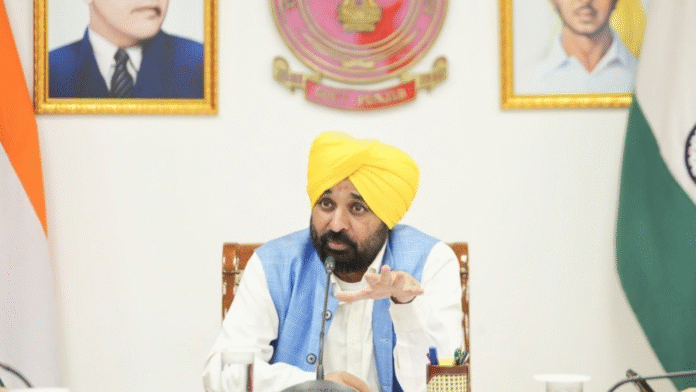
On Wednesday, Chief Minister Bhagwant Mann inaugurated a major rural development initiative through a virtual ceremony, launching the construction of 500 state-of-the-art village councils and public service centres. The project, with a total investment of ₹125 crore, will span across Punjab.

Speaking at an event in Fatehgarh Sahib, Mann announced that every village with a population exceeding 2,800 would soon see the addition of a dedicated panchayat building and a digital service hub. The estimated expenditure for each village council building is ₹20 lakh, while the service centres will cost around ₹5 lakh each.

In this initial rollout, 500 villages lacking existing panchayat facilities have been selected. These new spaces will serve as focal points for community decision-making and local governance.

Mann also emphasised the role of service centres in expanding digital access for rural residents, enabling them to use government services without needing to travel far.

He further stated that Punjab is undergoing significant positive change, noting that nearly 90 percent of homes are now receiving electricity without any cost, bringing financial relief to families across the state.

Criticising opposition parties, Mann remarked that their leadership is fragmented and lacks a clear agenda for Punjab’s future.

In another development, the Chief Minister dispatched a special train carrying 500 women representatives from local village bodies to Maharashtra. These sarpanches and panches will take part in a national-level convention, which Mann described as a milestone moment. He added that the participants were chosen from among the state’s most proactive and high-performing panchayats, and the visit would help them exchange ideas and practices with their counterparts from across India.

Shashi Tharoor Reacts with Nuance to Supreme Court Verdict on Stray Dogs

0
Shashi Tharoor
Shashi Tharoor

Congress MP Shashi Tharoor has urged a reassessment of how stray dog management funds are allocated, advocating for direct support to reputable animal welfare groups instead of channeling money through municipal bodies.

In a post on X (formerly Twitter), Tharoor argued that the core issue isn’t a lack of funding but the inefficiency or unwillingness of local authorities to effectively carry out sterilisation and sheltering programs. He noted that funds often remain unused or are misdirected and suggested that NGOs with a track record in operating shelters and managing the Animal Birth Control (ABC) programme are better equipped to handle the task.

Tharoor emphasized the need to strike a balance between ensuring public safety and treating animals with compassion. He viewed the Supreme Court’s recent directive as a result of growing frustration with municipal inaction.

His remarks follow the Supreme Court’s August 11 order, which labeled the rise in dog bite cases as a deeply troubling issue. The court instructed authorities in Delhi NCR to begin the immediate and permanent relocation of all stray dogs and mandated the construction of shelters for around 5,000 dogs within six to eight weeks, with further expansion to follow. It also warned that anyone interfering with the relocation effort could face contempt of court.

BJP Hits Back, Raises Sonia Gandhi’s Name on Voter Rolls Even Before Citizenship in 1980s

0
Sonia Gandhi
Sonia Gandhi

The Bharatiya Janata Party has launched a strong counter to the Congress, mirroring the “vote theft” accusations made by Rahul Gandhi last week. The party has now turned the spotlight on former Congress chief Sonia Gandhi, questioning how her name found its way into India’s electoral rolls in the 1980s, allegedly before she became a citizen.

At a press briefing on Wednesday, Union Minister Anurag Thakur accused Congress and other opposition parties of securing victories with the help of “infiltrator voters.” He also criticized Congress for resisting the Election Commission’s ongoing Special Intensive Revision (SIR) of voter rolls in Bihar, calling out what he described as the party’s vote bank politics and selective appeasement.

Thakur pointed to alleged voter list irregularities in high-profile constituencies, including Rahul Gandhi’s Raebareli, Abhishek Banerjee’s Diamond Harbour, and Akhilesh Yadav’s Kannauj, citing instances of duplicate names, incorrect information, and mass rigging.

Adding fuel to the fire, BJP IT cell head Amit Malviya took to social media to claim that Sonia Gandhi’s name appeared on the voters’ list as early as 1980, despite her reportedly not holding Indian citizenship at the time. According to Malviya, the entry appeared during a voter list update using January 1, 1980, as the qualifying date, when the Gandhi family lived at 1 Safdarjung Road. He asserted that Sonia’s name was included alongside Indira Gandhi, Rajiv Gandhi, Sanjay Gandhi, and Maneka Gandhi.

He further alleged that the entry violated electoral laws, which require Indian citizenship to be eligible for registration. Malviya claimed her name was removed following controversy in 1982, only to reappear in 1983, again, he says, before her naturalisation as an Indian citizen.

The Congress has not officially responded to these new allegations. However, party MP Tariq Anwar, speaking to NDTV, stated that responsibility lies with the Election Commission, not Sonia Gandhi herself, as they were the authority that included her name.

This back-and-forth follows Rahul Gandhi’s explosive press conference on August 7 where he accused the Election Commission of large-scale electoral fraud in states like Maharashtra and Karnataka, citing the presence of over a crore questionable voters and other serious irregularities. In response, the EC has asked Gandhi to submit his evidence under oath. Gandhi has replied that the Commission need only examine its own records.