Home Blog Page 71

Work Permit Rule Changes by Trump Administration May Leave Thousands of Indians Jobless

0
Trump

A major policy shift by the US Department of Homeland Security (DHS) is set to impact thousands of Indian professionals and their families working in the United States. Beginning Thursday, foreign nationals will no longer receive automatic extensions on their Employment Authorisation Documents (EADs), meaning anyone whose renewal is not approved before their current permit expires will be required to stop working immediately.

Until now, foreign workers were allowed to continue their jobs for up to 540 days while their renewal applications were being processed. However, DHS announced that this grace period will end, citing the need for more frequent vetting and stronger security measures. The department advised applicants to file renewal requests up to 180 days before expiry to reduce the risk of losing work authorization.

The new rule is expected to hit Indian nationals particularly hard, as they make up a large portion of the skilled foreign workforce already struggling with extensive green card and visa delays. Those most affected will include H-1B visa holders awaiting permanent residency, H-4 dependent spouses who rely on work permits, students on STEM OPT extensions, and employment-based green card applicants with pending cases.

Legal experts warn that the policy could lead to widespread job losses and disruptions. Henry Lindpere, a senior immigration attorney, noted that most workers will lose authorization the moment their current EAD expires, since processing times at the US Citizenship and Immigration Services (USCIS) can range anywhere from three to twelve months depending on category and location.

USCIS and DHS have defended the move as a national security measure. USCIS Director Joseph Edlow stated that working in the US is a privilege, not a right, and that the agency is placing renewed focus on thorough background checks before approving extensions. Officials cited a 2025 case in Colorado involving an asylum seeker as an example of the need for tighter screening.

Only a few categories are exempt from the new rule, including holders of Temporary Protected Status (TPS) or those covered by special provisions under federal law or notices published in the Federal Register. For everyone else, once the current work permit expires, employment must stop immediately, even if a renewal application is pending.

For Indian workers, the implications are especially serious. Many have been waiting years—sometimes decades—for green cards due to per-country quotas, relying on temporary work permits that require frequent renewal. Immigration lawyers warn that delays under the new system could lead to forced unemployment, financial instability, and potential visa violations.

“This change could trigger a wave of job losses among skilled Indian professionals who have built their lives in the US,” said an immigration consultant based in New Jersey. “Even a short delay in processing could mean losing legal status and the right to work.”

The new DHS rule follows a series of restrictive immigration measures under the Trump administration, including a dramatic increase in H-1B visa fees and new hiring bans for foreign nationals at public universities in Florida. Officials argue these actions are intended to protect American jobs and ensure that only highly qualified foreign workers enter the US labour market.

For now, however, the rule adds another layer of uncertainty for hundreds of thousands of Indian professionals in the US technology, healthcare, and research sectors—many of whom are already trapped in one of the world’s most complex and unforgiving immigration systems.
Delhi AQI Plunges to ‘Very Poor’ as Cloud Seeding Experiment Fails

0
Cloud Seeding
Cloud Seeding

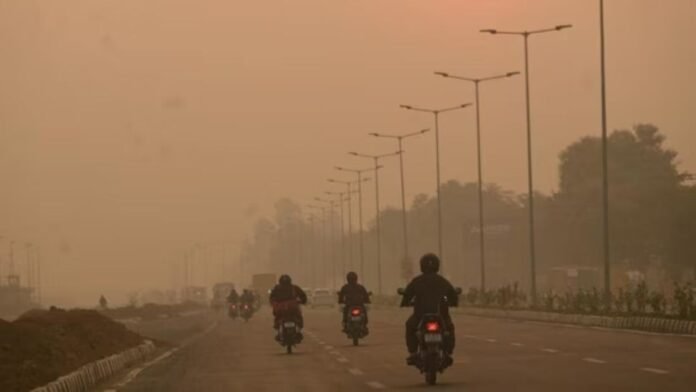
Delhi experienced a sharp deterioration in air quality on Thursday, with the Air Quality Index (AQI) reaching 352, marking an 80-point increase from Tuesday’s average. The decline occurred as the city’s much-anticipated cloud seeding experiment failed to produce results.

Widespread Pollution Levels

Central Pollution Control Board (CPCB) data revealed that 32 of Delhi’s 38 monitoring stations recorded ‘very poor’ air quality, with several areas entering the ‘severe’ category. Vivek Vihar registered the highest AQI at 415, followed by Anand Vihar at 409, both classified as ‘severe’. Wazirpur recorded an AQI of 394.

The AQI scale classifies 0-50 as ‘good’, 51-100 as ‘satisfactory’, 101-200 as ‘moderate’, 201-300 as ‘poor’, 301-400 as ‘very poor’, and 401-500 as ‘severe’.

Satellite cities including Noida, Ghaziabad, and Gurgaon also experienced ‘very poor’ air quality. The weather department predicted light rainfall later Thursday across Noida, Dadri, Greater Noida, Faridabad, and parts of Haryana.

Cloud Seeding Experiment Unsuccessful

The deteriorating conditions followed an unsuccessful cloud seeding attempt conducted by the Delhi government in collaboration with IIT Kanpur. The experiment, Delhi’s first in over five decades, involved two trial rounds aimed at inducing artificial rain to reduce pollutants.

The IIT Kanpur team attributed the failure to insufficient atmospheric moisture. When trials were conducted Tuesday, cloud moisture content measured only 10-15%, significantly below the required 50-60% humidity threshold for successful cloud seeding.

The failed experiment resulted in continued hazy skies and reduced visibility across multiple city areas.

Emergency Measures Implemented

With Delhi’s AQI consistently ranging between 300 and 400 over the past two weeks—approximately 20 times the acceptable limit—authorities have activated Graded Response Action Plan (GRAP) II measures. These restrictions include curbs on construction activities and a ban on non-BS-VI compliant commercial vehicles entering Delhi from November 1.

The persistent pollution crisis continues to pose health risks for Delhi’s residents, with no immediate natural weather interventions expected to provide relief. The unsuccessful cloud seeding experiment highlights the challenges of implementing artificial weather modification in unfavorable atmospheric conditions.

Trump Announces Major US-China Trade Breakthroughs Following Busan Meeting with Xi Jinping

0
Trump
Trump

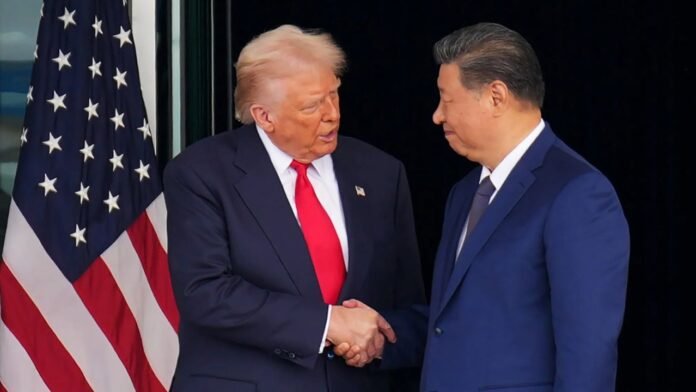
US President Donald Trump announced significant economic agreements with Chinese President Xi Jinping following over two hours of discussions in Busan, South Korea, on Thursday. The meeting yielded commitments on tariff reductions, agricultural purchases, and rare earth exports.

Key Economic Agreements

Trump disclosed a 10-percentage-point tariff reduction on Chinese goods, lowering rates from 57% to 47%. “I wouldn’t say everything was discussed, but it was an amazing meeting. We agreed that President Xi will work very hard to stop fentanyl, soybean purchases will start immediately, and tariffs on China will be lowered from 57% to 47%,” Trump stated.

Rare Earth Minerals Breakthrough

A significant development involved rare earth minerals, critical for high-tech manufacturing, electric vehicles, and defense equipment. “All the rare earth issue has been settled,” Trump announced, adding that “no more roadblocks” would impede Chinese exports to the United States.

A US official confirmed Beijing agreed to maintain rare earth exports under a one-year arrangement expected to extend, potentially easing supply chain concerns for American technology and defense companies.

Agricultural Trade Resumption

China committed to immediately resume US agricultural purchases, providing relief to American farmers affected by previous trade restrictions.

“We’re in agreement on large amounts, tremendous amounts of soybeans and other farm products to be purchased immediately,” Trump said, describing it as “a big win for our farmers.”

Fentanyl Cooperation

Trump reported Xi pledged intensified efforts against fentanyl production, a persistent issue in bilateral relations. “As you know, I put a 20% tariff on China because of the fentanyl coming in, which is a big tariff. I reduced it by 10% so it’s 10% instead of 20% effective immediately,” Trump explained aboard Air Force One.

Diplomatic Engagement

The meeting represents the first face-to-face encounter between the leaders since both returned to power this year. Trump characterized the session positively: “Overall, on a scale from zero to ten, the meeting was a twelve.”

Trump announced plans to visit China in April, with Xi expected to make a reciprocal US visit later in 2025. Notably, Taiwan was not discussed during their talks.

The White House plans to issue a joint statement detailing the Busan agreements later this week.

Bihar Vote War: How Siwan’s Bulldozers and Kites Target the Muslim Electorate

0
Bihar
Bihar

Siwan district in Bihar has become the epicenter of intense political campaigning, attracting heavyweight leaders including Uttar Pradesh Chief Minister Yogi Adityanath, Union Minister Amit Shah, and AIMIM chief Asaduddin Owaisi.

The district’s significant Muslim electorate and memories of controversial politician Mohammad Shahabuddin’s era have made it a crucial electoral battleground.

Owaisi’s Representation Challenge

AIMIM chief Asaduddin Owaisi initiated the political offensive by highlighting minority representation issues, stating: “Muslims form 17 per cent of Bihar’s population yet they remain deprived of justice and representation.”

Targeting Prime Minister Narendra Modi, RJD chief Lalu Prasad Yadav, and Chief Minister Nitish Kumar, Owaisi questioned existing power structures: “When communities with 3 per cent or 14 per cent of the population can have Deputy Chief Ministers and Chief Ministers, why should 17 per cent only spread carpets for them?”

Yogi Adityanath’s Response

Yogi Adityanath countered with a rally that drew hundreds of supporters, some arriving with bulldozers—a symbol associated with his governance style. In characteristic rhetoric, he warned: “Don’t let the return of Jungle Raj. Don’t let those who worship criminals take over again.”

His speech aimed at Hindu voter consolidation without directly naming any community.

AIMIM’s Electoral Ambitions

Local AIMIM candidate Mohammad Kaif articulated aggressive electoral goals: “If Nitish Kumar can be Chief Minister with 16 per cent, why not us with 17 per cent? This time, we’re aiming for the main seat.”

“Now Muslims are one, we will rule. Why should we beg from any party? We will win unitedly. This time the fight is for the community. Owaisi does not say anything wrong. Tejashwi Yadav has also only used Muslims. This time he will get a reply,” Kaif stated, accusing opposition leaders of exploiting Muslim votes without genuine representation.

Historical Context

Siwan’s older residents, particularly Hindu voters, recall the violence during Shahabuddin’s dominance in the 1990s and 2000s with fear. One resident referenced acid attacks from that period, stating: “We remember those acid attacks. People were terrified to even step out. We won’t let those days return.”

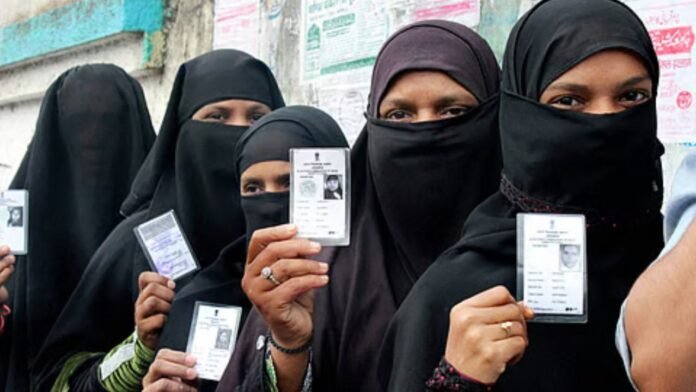
Muslim women voters expressed unified support for AIMIM’s kite symbol, with one group stating: “No one ever thought about us. Owaisi speaks for Muslims. We’ll vote unitedly — for the kite.”

Siwan represents Bihar’s complex intersection of identity politics, historical memory, and contemporary electoral ambitions.

Amit Shah Attacks INDIA Bloc Over Leadership Ambitions, Raises PFI Concerns in Bihar

0
Amit SHah
Amit SHah

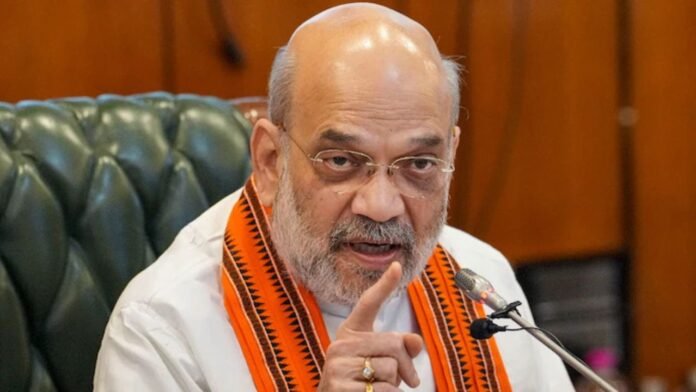
Union Home Minister Amit Shah launched a comprehensive attack on the INDIA bloc alliance during multiple campaign rallies across Bihar, targeting the Congress and Rashtriya Janata Dal over leadership succession plans and security issues.

Leadership Succession Criticism

Addressing a rally in Darbhanga, Amit Shah mocked the political aspirations of opposition leaders’ families, stating their ambitions face practical obstacles.

“The BJP has given tickets to many youngsters for the Bihar Assembly polls, but the RJD and Congress have not. Lalu ji wants to make his son Tejashwi (Yadav) the chief minister and Sonia ji wants her son Rahul (Gandhi) to be the PM. I want to let them know that both posts are not vacant,” Shah declared.

Corruption Allegations

The Home Minister characterized the Mahagathbandhan as a “thug bandhan” (alliance of thieves), accusing Lalu Yadav of involvement in fodder, bitumen, and land-for-jobs scams. He claimed Congress was implicated in corruption cases worth ₹12 lakh crore.

Security Concerns

Amit Shah raised questions about the banned Popular Front of India (PFI), suggesting potential policy reversals under opposition rule.

“PFI operatives were active in Patna’s Phulwari Sharif. Searches were conducted across the country and members of the organisation were put behind bars. Do you think that the PFI members will remain in prison if the RJD-Congress combine comes to power in Bihar?” he questioned, crediting the NDA government with banning the organization.

Immigration and Governance

At a Begusarai rally, Shah criticized Rahul Gandhi’s Voter Adhikar Yatra, alleging it aimed to protect infiltrators. “Rahul Gandhi and Lalu Yadav want to ensure that names of infiltrators remain in voter list. Tejashwi and Rahul want to bring back ‘jungle raj’ in Bihar,” he claimed.

NDA Unity Message

Speaking in Samastipur, Shah framed the election as preventing the return of lawlessness. “The Bihar polls are an election to prevent the return of ‘jungle raj’ to the state. The NDA in the state is like ‘paanch paandav’ – a strong alliance of five parties,” he stated, predicting a historic NDA victory.

Shah also accused the INDIA bloc of attempting to diminish former Chief Minister Karpoori Thakur’s legacy, referencing Prime Minister Modi’s decision to confer Bharat Ratna upon him.

Bihar’s 243 Assembly constituencies vote in two phases on November 6 and 11, with results announced November 14.

PM Modi Alleges Congress-RJD Rift, Criticizes Opposition Over Chhath Puja Remarks

0
PM Modi
PM Modi

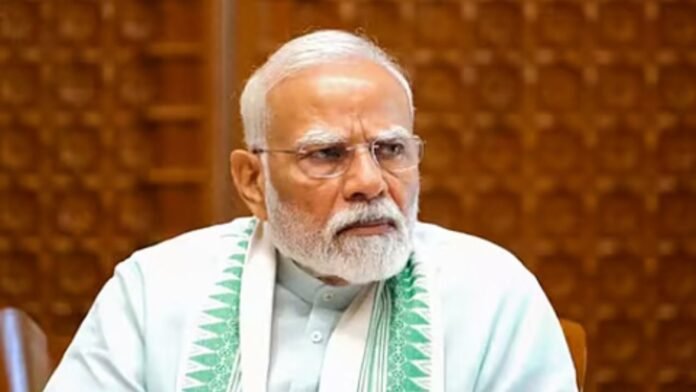
Prime Minister Narendra Modi launched a sharp attack on the Mahagathbandhan alliance ahead of Bihar assembly elections, alleging internal divisions between Congress and Rashtriya Janata Dal (RJD) while addressing a rally in Muzaffarpur.

Allegations of Alliance Discord

PM Modi compared the Congress-RJD partnership to “water and oil,” suggesting fundamental incompatibility between the two parties. He characterized their joint rallies in Bihar as a “sham,” questioning the sustainability of their electoral alliance.

The Prime Minister also criticized Leader of Opposition Rahul Gandhi and RJD leader Tejashwi Yadav for what he described as inappropriate language used against him during their campaign events. “Gandhi and Yadav think it’s their birthright to abuse me,” Modi stated at the rally.

Chhath Puja Controversy

PM Modi’s primary focus centered on recent comments about Chhath Puja, Bihar’s most significant festival dedicated to Hindu goddess Chhathi Maata, locally known as ‘Maiya.’ The remarks followed Gandhi’s allegation that the PM Modi was performing “drama” over Chhath Puja observances.

“Congress and the RJD leaders have insulted ‘Chhathi Maiya’ for votes,” Modi asserted, appealing to regional religious sentiments.

“Your son is busy praising Chhathi Maiya before the world. (But) Congress and RJD leaders are insulting Chhathi Maiya. Can anyone ever insult Chhathi Maiya to get votes in an election? Will Bihar tolerate such an insult? Will India, will my mothers, those who observe the Nirjala fast (a fast without water), tolerate this?” the Prime Minister questioned.

He intensified his criticism, stating: “How shamelessly are the RJD and Congress speaking? For them, the worship of Chhathi Maiya is just a drama, a farce?”

Long-term Political Impact

Modi predicted lasting electoral consequences from the controversy. “Bihar is the land of self-respect. Bihar will never forgive those who have insulted Chhath Puja,” he declared, suggesting the issue would remain in public memory for generations.

Cultural Heritage Initiative

The Prime Minister announced that the central government is pursuing UNESCO’s Intangible Cultural Heritage status for the Chhath festival, positioning his administration as protector of Bihar’s cultural traditions ahead of the crucial assembly elections.

Diana Pundole Becomes 1st Indian Woman to Race Ferrari in International Championship

0
Diana Pundole
Diana Pundole

Pune-based racing driver Diana Pundole is poised to create motorsport history as the first Indian woman to compete in a Ferrari at an international championship level. The 32-year-old will pilot a Ferrari 296 Challenge car in the Ferrari Club Challenge Middle East series.

Championship Details

The championship is scheduled to run from November 2025 through April 2026, featuring races across premier Formula One circuits in the Middle East region. Pundole will compete at iconic venues spanning Dubai, Abu Dhabi, Bahrain, Qatar, and Saudi Arabia.

The Ferrari 296 Challenge represents cutting-edge racing technology from the Italian manufacturer, designed specifically for track performance with precision handling and race-ready capabilities.

Historic Achievement of Diana Pundole

Speaking about this milestone opportunity, Diana Pundole emphasized the broader significance of her participation beyond personal achievement.

“It’s truly an incredible honour. Being part of the Ferrari Club Challenge Middle East as the first Indian woman is a proud moment not just for me but for women in Indian motorsport. I hope it encourages more women to pursue their passion for racing,” she stated.

Racing Background

Diana Pundole launched her competitive racing career in 2018 through the JK Tyre Women in Motorsport program, an initiative designed to promote female participation in racing. Since then, she has demonstrated consistent performance with multiple podium finishes across various racing events in India.

Her progression from domestic competitions to an international Ferrari championship represents significant advancement for Indian women in motorsport, a field traditionally dominated by male competitors.

Broader Impact

The Ferrari Club Challenge Middle East provides Pundole a prestigious platform to showcase her racing credentials on the international stage. Her participation challenges gender barriers in motorsport while potentially inspiring a new generation of female racers in India.

The championship’s concentration on renowned Formula One circuits offers competitors world-class racing infrastructure and the opportunity to compete against international talent. For Pundole, this represents the culmination of seven years of competitive racing experience and marks India’s growing presence in global motorsport competitions.

Her achievement adds to the gradual but steady increase in Indian women’s participation in international racing series, contributing to greater diversity in a traditionally male-dominated sport.

Sonakshi Sinha Reveals Accidental Entry into Bollywood Through Salman Khan Connection

0
Sonakshi Sinha
Sonakshi Sinha

Sonakshi Sinha recently disclosed that her entry into Bollywood was unplanned, crediting Salman Khan and his brother Arbaaz Khan for launching her acting career.

The actress, who debuted opposite Salman Khan in the 2010 blockbuster ‘Dabangg’, shared her journey during an appearance on Ranveer Allahabadia’s podcast.

Early Encouragement from Salim Khan

Sonakshi Sinha explained how her path to acting began through her father’s close friendship with Salim Khan, Salman’s father.

“I was never inclined. Salim Khan Saab and my father are very close friends. We would go to Galaxy Apartments for Ganpati, Diwali and all. At the age of 16, Salim Saab would say, ‘Why are you doing fashion designing? Stop wasting your time. Just become an actor.’ I was overweight then. He used to keep lecturing me,” she recalled.

Fashion Week Encounter

A pivotal moment occurred at Lakme Fashion Week, where Sonakshi Sinha worked as a college volunteer. “One fine day, I was at the Lakme Fashion Week as a volunteer from college; I was ushering people. It was a 5-day event for which I got Rs 3000. Salman, Arbaaz and family came there, and they saw me. They were like, ‘What are you doing here?’ Salman even asked me to take him out for dinner with my first salary. I was like it is impossible,” she shared.

The ‘Dabangg’ Opportunity

The breakthrough came at Amrita Arora’s wedding after Sinha had lost weight. “Arbaaz Bhai saw me there and offered me a film. I didn’t take him seriously at that time. But he reached my home with Abhinav Kashyap and Dilip Shukla.

They narrated the film to me. They shook hands, smiled and left. Nobody asked me if I want to do this film or not. And the next thing I know, I am on set. I really believe in destiny. After reaching the set, I understood that this is where I belong,” Sinha explained.

Career Trajectory

Over 15 years, Sonakshi Sinha has demonstrated versatility through films including ‘Lootera’, ‘Dabangg 2’, ‘Dabangg 3’, ‘Akira’, ‘Noor’, ‘Kalank’, and ‘Nikita Roy’. She will next appear in ‘Jatadhara’ alongside Sudheer Babu, continuing her exploration of diverse roles in Indian cinema.

President Murmu’s Photo Op With ‘Captured’ Rafale Pilot Sends a Clear Signal to Pakistan

0
president murmu
president murmu

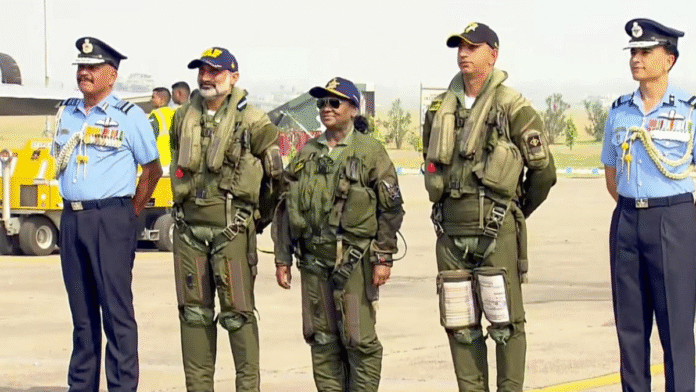
When President Droupadi Murmu took flight in a Rafale fighter jet from the Ambala airbase on Wednesday morning, it was more than a ceremonial gesture — it was a deliberate signal to Pakistan. Standing alongside Squadron Leader Shivangi Singh, the President’s flight underscored India’s air power and sent a clear diplomatic message.

Earlier this year, following India’s strikes on terror camps in Pakistan, Islamabad’s media had falsely claimed that Squadron Leader Shivangi Singh, one of the IAF’s Rafale pilots, had been captured. Those claims were quickly debunked by Indian authorities.

On October 29, the Varanasi-born officer personally escorted President Murmu on her maiden flight aboard the advanced Rafale multi-role fighter at the Indian Air Force base in Haryana.

The backdrop to this symbolic moment lies in Operation Sindoor, which India launched in May as a response to the terror attack in Pahalgam, Jammu and Kashmir, that left 26 people dead. The attack was traced back to the Pakistan-based Lashkar-e-Taiba group. In the days that followed, Pakistan attempted to claim that it had shot down Indian aircraft, including Rafales, and captured Indian pilots.

The Indian government and military swiftly dismissed these fabrications, stating that no Indian aircraft had been lost. Instead, they revealed that Pakistan had suffered the destruction of six of its own fighter jets, including four US-made F-16s and two China-supplied JF-17s.

Air Chief Marshal AP Singh also joined the show of strength at Ambala, piloting a Rafale himself during a formation sortie. President Murmu, as Supreme Commander of the Armed Forces, flew in another Rafale piloted by Group Captain Amit Gehani.

The event marked not only a historic first for India’s President but also a subtle yet powerful reaffirmation of India’s air superiority and its readiness to respond firmly to any provocation.

L&T Eyes Entry Into India’s Electronics Manufacturing Sector, Following Tata’s Lead

0

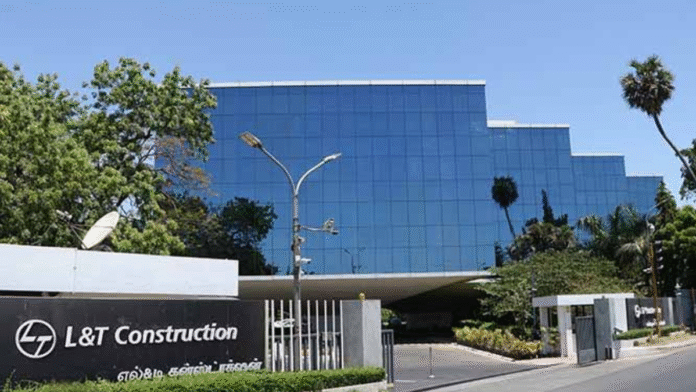
Larsen & Toubro (L&T), India’s largest engineering and infrastructure conglomerate, is reportedly exploring a strategic shift toward electronics manufacturing, taking inspiration from the Tata Group’s recent expansion into the sector. The move could mark a major transformation for the Mumbai-based company as it looks to diversify from large infrastructure projects to producing advanced electronic components.

Reports suggest that L&T has begun early talks with the Tamil Nadu government to acquire around 200 acres of land near Chennai, a key hub for electronics production in India. Initially, the company plans to focus on manufacturing components used in devices rather than building entire products. The long-term goal is to become a fully integrated manufacturer with complete end-to-end capabilities, covering design, production, and assembly.

Sources cited by The Economic Times said that while semiconductor production was not part of the original discussion, L&T could later use the same site for a semiconductor facility. These plans are still in their early stages, but insiders believe the company intends to expand its ambitions as groundwork progresses.

Expanding into Semiconductor Manufacturing

L&T’s growing focus on electronics manufacturing aligns with India’s national effort to build self-reliance in semiconductors and high-tech electronics under the Atmanirbhar Bharat initiative. With its strong foundation in precision engineering, defence, and heavy manufacturing, the company already holds a natural advantage in semiconductor-related systems and components. At present, L&T imports around 80 percent of the chips used in its defence and industrial divisions.

To reduce this reliance, the company created a wholly owned subsidiary called L&T Semiconductor Technologies in 2023. The unit focuses on designing analogue chips for automotive, industrial, and energy applications. In 2024, reports revealed that L&T planned to set up three semiconductor fabrication plants in India over the next five to ten years with an investment estimated between 10 and 12 billion dollars.

“The vision is to become the first global semiconductor company operating from India, headquartered here, with a footprint across Europe, Japan, and India,” said Sandeep Kumar, CEO of L&T Semiconductor Technologies. “The centre of gravity for all the development and manufacturing would be in India.”

Electronics Manufacturing Strategy

Industry analysts believe L&T’s approach to electronics manufacturing will differ from that of the Tata Group. Unlike the Tatas, who are venturing deep into smartphone production, L&T is expected to focus on specialized, high-value areas that build on its existing expertise in engineering and infrastructure.

“Their focus would be on areas that complement their core strengths, such as aerospace,” an analyst told The Economic Times. “L&T already operates precision engineering units that work on electronic systems, so expanding into EMS would be a natural step.”

Potential areas of focus could include Internet of Things (IoT) modules for the automotive sector, smart energy meters, and components for industrial automation. Analysts say that L&T’s extensive experience in infrastructure and defence, combined with its scale and resources, positions it well to become a significant player in India’s expanding electronics manufacturing ecosystem.

If these plans take shape, L&T could soon emerge as one of India’s key homegrown leaders in advanced electronics and semiconductor manufacturing, strengthening both the company’s portfolio and the nation’s drive toward technological self-sufficiency.