Home Blog Page 2

The Fake CIA Agent Scam: How an Indian-Origin Man Tried to Land Indonesian Defense Contracts

0
cia
cia

An Indian-origin businessman accused of posing as a CIA agent allegedly secured preliminary defence agreements worth billions of dollars in Indonesia after cultivating close ties with senior government officials.

According to a joint investigation by the Organized Crime and Corruption Reporting Project (OCCRP) and Indonesian publication Tempo, Gaurav Srivastava developed a relationship with Indonesian President Prabowo Subianto while the latter was serving as the country’s defence minister.

The proposed defence deals reportedly covered the procurement of fighter jets, helicopters, transport aircraft and military command systems.

Alleged ties with Prabowo

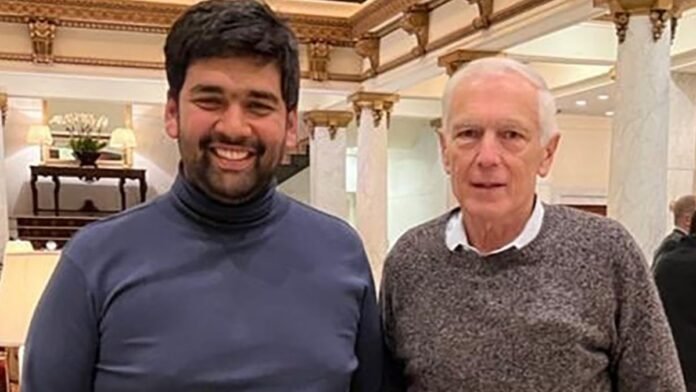
According to Tempo, Srivastava introduced himself to Indonesian officials and business leaders as an operative of the US Central Intelligence Agency (CIA). The report said he became close to Prabowo, who allegedly referred to him as “Mr G.”

Dutch oil trader Niels Troost told Tempo that he accompanied Srivastava to Prabowo’s Garuda Yaksa residence in Hambalang, West Java, in mid-2022.

Troost claimed Srivastava told him he frequently visited and stayed at Prabowo’s residence. During the journey, Srivastava allegedly said he had helped identify those responsible for the 2002 Bali bombings and played a role in getting Prabowo removed from a US immigration blacklist that had remained in place for nearly two decades over allegations linked to human rights abuses during his military career.

Troost also alleged that Srivastava discussed several personal habits of Prabowo that were known only to those close to him, including the Indonesian leader’s belief that spider webs inside the house should not be removed because they were part of nature.

Defence deals worth billions

The OCCRP-Tempo investigation said companies controlled by Srivastava obtained five preliminary defence agreements from Indonesia’s Defence Ministry and a state-owned defence company between 2020 and 2022.

Three Letters of Intention to Purchase were reportedly issued in 2020, followed by another letter of intent and a memorandum of understanding in 2021 and 2022.

The proposed acquisitions included 36 F-15 fighter jets, UH-60 Black Hawk helicopters, C-130 transport aircraft and a joint operations command and control centre for Indonesia’s Defence Ministry.

Investigators also reviewed photographs that allegedly showed Srivastava attending signing ceremonies alongside Prabowo and executives from one of his companies.

Despite the preliminary agreements, none of the proposed defence purchases ultimately materialised.

Defence Ministry spokesperson Rico Sirait confirmed the existence of the preliminary agreements but told Tempo they were not legally binding.

“The entire process of Indonesian defence cooperation and procurement is always carried out with utmost caution, prioritising the principles of good governance, national interest, and compliance with applicable mechanisms and regulations,” Sirait said.

Shell companies under scrutiny

The investigation further alleged that the four companies controlled by Srivastava which secured the agreements were shell entities with no established defence background. Corporate records reviewed by investigators reportedly showed that all four companies were later deregistered after failing to pay taxes.

In 2022, the United States approved a potential $13.9 billion sale of 36 F-15 fighter jets and related equipment to Indonesia. However, the announcement by the US Defense Security Cooperation Agency made no mention of any company linked to Srivastava.

The report also alleged that Srivastava developed business ties with Hashim Djojohadikusumo, Prabowo’s younger brother and chairman of the Arsari Group.

According to Tempo, Srivastava had already been involved in legal disputes in California before expanding his business operations into Indonesia.

Srivastava has denied allegations that he falsely presented himself as a CIA agent, describing them as “gross fabrications” on his website.

Civil lawsuits filed

Troost has filed civil lawsuits in California and the Southern District of New York, alleging that Srivastava falsely claimed to work for the CIA. The complaints reportedly include recorded phone calls in which Srivastava allegedly made those representations.

According to Troost, he transferred a 50% stake in his company to Srivastava because he believed the businessman had genuine intelligence connections. In court filings, Troost described him as “a brazen con man of remarkable skill.”

The lawsuit further alleges that Srivastava arranged a $51 million loan from their company to the Arsari Group, claiming the funds would be used for a covert US government programme.

Instead, Troost alleges that Srivastava persuaded the Arsari Group to transfer nearly half of the loan to him personally and used the money to purchase a $25 million mansion in Los Angeles. The complaint further claims that he later attempted to secure the remaining funds from the loan, but the Arsari Group declined.
Trump Revives Clash with Giorgia Meloni, Says ‘Restraining Order Needed’ Amid G7 Photo Controversy

0
trump
trump

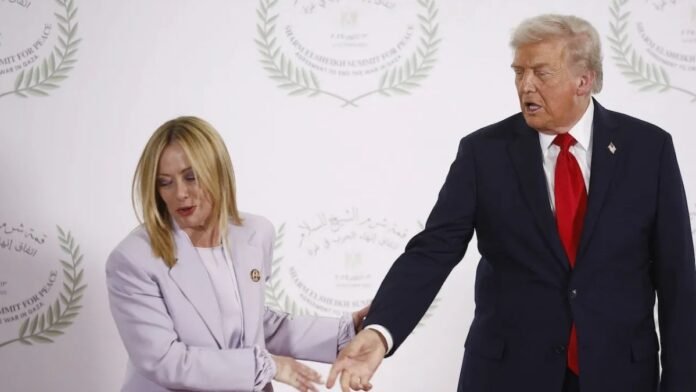
US President Donald Trump has reignited his public spat with Italian Prime Minister Giorgia Meloni by sharing a post on his Truth Social account that many interpreted as another swipe at the Italian leader. On Monday, Trump posted a photograph of himself and Meloni from the recently concluded G7 Summit in France, accompanied by the caption: “Restraining order needed.”

The post did not explicitly state who the remark was directed at, but many social media users interpreted it as a reference to Meloni.

Several users also linked the post to Trump’s earlier claim that Meloni had “begged” him for a photograph during the G7 Summit, an allegation the Italian Prime Minister had firmly rejected.

Trump’s ‘begged for photo’ claim

Trump and Meloni were among the world leaders, including Prime Minister Narendra Modi, who attended the G7 Summit in Evian-les-Bains, France.

Speaking about his interaction with Meloni after the summit, Trump claimed that the Italian leader had repeatedly asked for a photograph with him. According to a transcript published by Italian television channel La7, Trump said Meloni “wanted a picture with me so badly” and suggested he only agreed because he “felt sorry for her”, AFP reported.

Trump also implied that he had been doing Meloni a favour simply by speaking with her during the summit. His remarks came after a video showing the two leaders in conversation had circulated online.

“She’s probably happy I talked to her. I didn’t have to talk to her,” Trump was quoted as saying by the Italian broadcaster.

Meloni dismissed Trump’s claims

Meloni strongly rejected Trump’s remarks, describing them as completely false and expressing surprise over his comments.

“I can only say that it’s a shame he doesn’t show the same resolve toward the enemies of the West, toward the enemies of the United States, and instead is much more accommodating toward certain leaders. But there is one thing he must remember: neither Italy nor I beg,” she said.

She added, “Donald Trump’s statements are completely made up. I am frankly astonished. I don’t know why the President of the United States behaves like this towards his allies. Moreover, this is not the first time.”

Trump’s comments also had diplomatic repercussions, with Italian Foreign Minister Antonio Tajani cancelling a planned visit to the United States shortly afterward.

The latest exchange adds to a series of public disagreements between the two leaders. Although Meloni was once regarded as one of Trump’s closest allies in Europe, relations have become increasingly strained in recent months. She has criticised the US President over several issues, including his remarks targeting Pope Leo following the pontiff’s criticism of the Iran conflict. Trump, in turn, accused Meloni of lacking courage.

‘They Earned Our Respect’: Lionel Messi Pays Tribute to Cape Verde After Argentina Victory

0

Lionel Messi once again delivered when Argentina needed him most, scoring once and setting up another as the defending champions survived a major scare to edge past a spirited Cape Verde side 3-2 in their FIFA World Cup Round of 32 clash on Saturday. Speaking after the match, Messi admitted Argentina had expected a difficult contest, saying Cape Verde had already shown their quality with impressive performances against Spain and Uruguay. He also reserved special praise for veteran goalkeeper Vozinha and the rest of the Cape Verde squad.

With the match deep into extra time, Messi’s dangerous corner proved decisive as Diney Borges inadvertently turned the ball into his own net, handing Argentina a dramatic 3-2 victory and bringing an end to Cape Verde’s remarkable run that came within touching distance of one of the biggest upsets in World Cup history.

“Honestly, we knew it was going to be a very difficult match. It is no coincidence that this team did not lose to Spain or Uruguay,” Messi said after being named Player of the Match.

“Beyond qualifying for the next round, there are positives because we did a lot of good things. But we also made plenty of mistakes today, and those are things we need to improve,” he added.

Cape Verde push Argentina to the limit

Messi had earlier opened the scoring in the 29th minute, taking his World Cup tally to a record-extending 20 goals and moving two clear of France’s Kylian Mbappé on the tournament’s all-time scoring list.

However, Argentina never had complete control of the contest as Cape Verde twice fought back to level the score and keep their World Cup dream alive.

Forty-year-old goalkeeper Vozinha produced a string of outstanding saves throughout the match, frustrating Argentina’s attack and emerging as one of the standout performers of the contest.

“We did the hardest part by scoring the opening goal. We thought that after that we would settle into the game and play with more freedom, but the opposite happened,” Messi said.

“At times we gave the ball away too easily, dropped back too much and couldn’t press them properly. They took advantage of their strengths and punished us. We always knew it was going to be difficult. This is knockout football and nobody gives you anything. Some people might underestimate certain teams because of their name, but we knew that wasn’t the case. That’s what this World Cup has been like. Every team is competitive, every match is difficult and every game demands your best.”

Argentina will now face Egypt in the Round of 16 as they continue their title defence.

‘Safe for Older Vehicles’: Industry Experts Push Back Against E20 Petrol Damage Claims

0
e20
e20

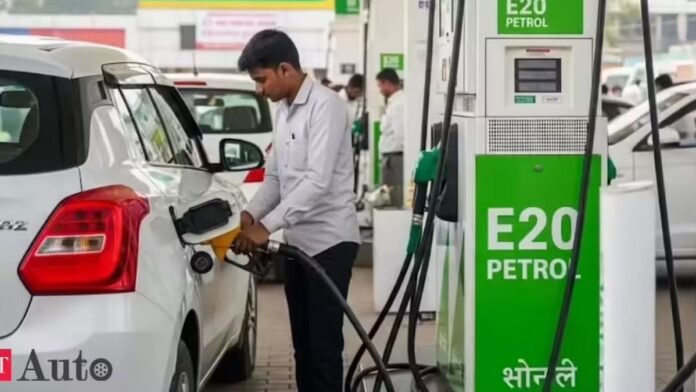
Industry experts and leading automobile manufacturers on Saturday defended the use of E20 petrol, asserting that the fuel, which contains 20% ethanol, is backed by years of scientific testing and is safe even for vehicles manufactured before the nationwide rollout of the higher ethanol blend. They also said the program has helped India cut crude oil imports and lower carbon emissions.

The clarification comes amid growing debate over E20 petrol, with some motorists, social media users and political leaders alleging that the higher ethanol blend has reduced fuel efficiency and caused engine-related issues, particularly in older vehicles.

Speaking at a press conference, former Engineers India Limited chairman and managing director Vartika Shukla said India’s ethanol blending program was introduced after extensive scientific research and consultation.

“This has not been done overnight. It is a measured, scientifically driven, step-by-step process,” she said, according to news agency ANI.

Shukla noted that ethanol blending in petrol had risen from around 1.5% in 2013-14 to 20% by December 2025, allowing India to achieve its target five years ahead of schedule. She said the program is supported by extensive scientific evidence and testing conducted by automobile manufacturers, the Automotive Research Association of India (ARAI) and the Society of Indian Automobile Manufacturers (SIAM).

She further said India had adopted practices already followed in countries such as the United States, Brazil, Canada and Germany. According to her, higher ethanol blending has reduced the country’s dependence on imported crude oil and strengthened India’s energy security during periods of geopolitical uncertainty.

Automakers dismiss engine damage concerns

Representatives from leading automobile companies said extensive laboratory testing, certification exercises and real-world vehicle data do not support claims that E20 petrol causes engine damage or excessive wear in vehicles originally designed for lower ethanol blends.

Toyota Kirloskar Motor’s Country Head and Executive Vice President for Corporate Affairs and Governance, Vikram Gulati, said vehicles sold in India undergo rigorous engineering and testing before reaching consumers.

“Vehicles that are made available to consumers are extremely well engineered, well designed and have a very immense element of oversight through technically sound testing agencies,” he said.

Describing ethanol as an efficient fuel, Gulati said it delivers strong performance while helping reduce emissions.

“In an era when we are facing the issue of climate change… this is a zero-carbon fuel because it’s derived from plants,” he said.

He added that ethanol blending has also helped shield consumers and the Indian economy from fluctuations in global crude oil prices.

Maruti Suzuki India’s Senior Executive Officer for Corporate Affairs, Rahul Bharti, addressed concerns regarding vehicles that were originally designed to run on E10 fuel.

“As a manufacturer, we have tested E10 cars… on E20 fuel for all parameters, and we have not found anything of concern,” Bharti said.

He added that adequate engineering safety margins had been incorporated to ensure there are no issues related to wear and tear, corrosion or the lifespan of components, even when vehicles manufactured before 2023 are operated on E20 petrol.

Hero MotoCorp Chief Business Officer Ashutosh Verma said the company’s analysis of service records from millions of two-wheelers also supports the safety of E20 fuel.

“We analyze crores of service data that we have, and there is no incidence whatsoever of any higher damage with vehicles that run on E20 than the vehicles that were running on fuels prior to E20,” Verma said.

E20 debate gathers momentum

The industry’s clarification comes days after concerns over E20 petrol gained traction on social media and in political circles.

Among those raising the issue was YouTuber and Jan Suraaj Party activist Manish Kashyap, who claimed in a widely circulated video that his vehicle developed engine problems after running on E20 petrol, alleging that the higher ethanol blend caused the damage. Toyota, without naming him, rejected the allegation and said the issue stemmed from contaminated fuel rather than the ethanol blend itself.

Several motorists have similarly claimed that E20 petrol leads to lower mileage, higher maintenance costs and compatibility issues in older vehicles. However, the government has repeatedly maintained that no official investigation has established any direct link between E20 fuel and the reported mechanical problems.

Earlier this week, Union Road Transport Minister Nitin Gadkari dismissed allegations that E20 petrol damages vehicle engines, describing such claims as “false.”

“Show me one vehicle that has been damaged because of E20 petrol,” Gadkari said, while reiterating that scientific studies have found no evidence linking E20 fuel to engine damage.

The Centre has projected ethanol blending as a key pillar of its clean energy strategy, saying the initiative reduces dependence on imported crude oil, lowers vehicular emissions and creates additional income opportunities for farmers through increased demand for ethanol feedstock. India achieved its target of 20% ethanol blending in petrol by the end of 2025, five years ahead of its original deadline.

Constitutional Amendments in the Offing? Here’s Why the Monsoon Session Matters

0
Amendment
Amendment

The Narendra Modi government heads into the Monsoon Session of Parliament, beginning July 20, with stronger numbers than it had just three months ago and a legislative agenda that could once again include key constitutional amendment bills.

Recent defections from Opposition parties have improved the BJP-led National Democratic Alliance’s strength in Parliament, potentially giving the government greater confidence to pursue proposals such as the Constitution (130th Amendment) Bill, which seeks to remove the Prime Minister, chief ministers and ministers from office if they remain in judicial custody for more than 30 days, even before conviction in certain cases.

Another major proposal is the Constitution (131st Amendment) Bill, which seeks to operationalize the already-passed 33% reservation for women in legislatures through delimitation. The bill was defeated during the previous session in April after the government fell short of the required two-thirds majority.

The broader One Nation, One Election (ONOE) proposal also remains under parliamentary scrutiny.

The Congress has once again accused the BJP of using defections to improve its numbers in Parliament with the ultimate aim of amending the Constitution, alleging that such moves could eventually impact reservations for Scheduled Castes, Scheduled Tribes and Other Backward Classes.

Speaking on Saturday, Congress general secretary Jairam Ramesh claimed the BJP was attempting to improve its constitutional arithmetic through political defections.

“Despite many efforts, they didn’t get a two-thirds majority… They’re splitting parties. But they’re not going to get a two-thirds majority,” he said.

“Their real motive is to change the Constitution of India… The purpose of crossing 400 seats was to be in a position to change the Constitution,” Ramesh added, referring to the BJP’s “Ab Ki Baar, 400 Paar” campaign during the 2024 Lok Sabha elections, in which the party fell short of the majority mark on its own.

Why constitutional amendments remain difficult
Unlike ordinary legislation, constitutional amendments require a much higher threshold under Article 368 of the Constitution.

With the Lok Sabha’s current effective strength at 540 members, a constitutional amendment requires not only a simple majority of at least 271 members but also the support of two-thirds of members present and voting. If all 540 MPs participate, at least 360 votes are required. Even with lower attendance, the required numbers remain significantly high.

Although the NDA’s strength has crossed the 300-mark following recent defections and support from allied MPs, it still remains short of an assured two-thirds majority. The Rajya Sabha also presents similar numerical challenges, making the support or abstention of regional parties crucial for the government’s constitutional agenda.

First hurdle: Constitution (130th Amendment) Bill
Among the bills expected to feature during the Monsoon Session is the Constitution (130th Amendment) Bill, which proposes that the Prime Minister, Union ministers, chief ministers and state ministers should automatically lose office if they remain in judicial custody for more than 30 consecutive days in cases punishable with imprisonment of at least five years.

The proposal was introduced last year before being referred to a Joint Parliamentary Committee.

According to PTI, the committee is expected to adopt its report around July 17, paving the way for the bill’s introduction during the upcoming session.

Union Home Minister Amit Shah has defended the proposal, arguing that public representatives should not continue governing while in jail.

“No minister, Chief Minister or Prime Minister in the country can run the government while being in jail,” Shah had said, citing the example of Arvind Kejriwal.

Responding to concerns that politically motivated cases could be misused, Shah had said, “If there is a fake case, the courts of the country are there to grant bail. If bail is not granted, then the person will have to quit.”

He also pointed out that Prime Minister Narendra Modi had voluntarily brought the office of the Prime Minister within the scope of the proposed amendment.

Opposition parties, however, have argued that the proposal effectively penalises individuals before conviction and could be misused through politically motivated prosecutions.

Women’s reservation and delimitation
The Constitution (131st Amendment) Bill remains one of the government’s most significant constitutional proposals.

The bill seeks to increase the strength of the Lok Sabha, undertake fresh delimitation based on the 2011 Census and operationalise the women’s reservation law before the 2029 general election.

While the government maintains that delimitation is necessary to implement the 33% women’s reservation law passed in 2023, Opposition parties argue that the proposal is primarily aimed at redistributing parliamentary seats.

The Congress and parties such as the DMK have expressed concerns that delimitation based on population would benefit northern states such as Uttar Pradesh and Bihar while reducing the political influence of southern states.

Several Opposition leaders have also questioned why the women’s quota cannot be implemented under the existing Lok Sabha strength. The government has maintained that expanding the House is necessary to ensure fair representation.

One Nation, One Election remains under review
The government’s larger constitutional roadmap extends beyond the current session.

The Constitution (129th Amendment) Bill, which seeks to implement the One Nation, One Election proposal, remains under examination by a 39-member Joint Parliamentary Committee chaired by BJP MP P.P. Chaudhary. Parliament has already extended the committee’s tenure to continue consultations.

Prime Minister Modi has repeatedly argued that frequent elections slow governance and development, while Chaudhary has described simultaneous elections as a historic reform that would serve the country’s long-term interests.

However, constitutional experts continue to express differing views. Former Chief Justice D.Y. Chandrachud, in his submission before the committee, reportedly said that while the Constitution does not require separate elections, caution must be exercised before granting the Election Commission broad powers to alter assembly tenures for synchronising polls.

Senior advocate Raju Ramachandran has argued that the proposal raises significant federalism concerns, while political scientist Milan Vaishnav has cautioned against redesigning democratic institutions without broad political consensus.

Reservation debate returns
The government’s constitutional agenda has once again revived political debate around reservations.

The issue first gained prominence during the 2015 Bihar Assembly elections after Rashtriya Swayamsevak Sangh chief Mohan Bhagwat suggested reviewing the reservation policy. The BJP was then forced to distance itself from the remarks as the Grand Alliance successfully projected the election as a battle to protect reservations.

The Congress-led INDIA bloc revived similar concerns during the 2024 Lok Sabha elections, alleging that the BJP’s “Beyond 400” campaign was aimed at securing enough seats to amend the Constitution and weaken reservations for Scheduled Castes, Scheduled Tribes and Other Backward Classes.

Prime Minister Modi has repeatedly dismissed the allegation, stating that “as long as Modi is alive, no one can end reservation.”

Despite that, the Congress has continued to link the government’s constitutional agenda with concerns over reservation.

Jairam Ramesh alleged that the BJP’s “real and ultimate target” was to amend the Constitution and weaken reservations, while arguing that delimitation was only one part of a broader political strategy.

At present, however, there is no constitutional amendment bill before Parliament proposing any changes to reservations for SCs, STs or OBCs.

Delhi Court Rejects Bail Pleas of Umar Khalid and Sharjeel Imam

0
umar khalid
umar khalid

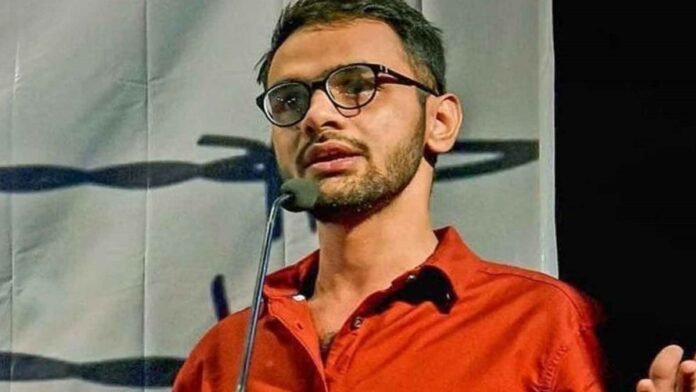
A Delhi court on Friday rejected the bail applications of student activists Umar Khalid and Sharjeel Imam in the larger conspiracy case linked to the 2020 Delhi riots. The order was passed by Additional Sessions Judge Sameer Bajpai of the Karkardooma Courts.

During the hearing, the Delhi Police opposed the fresh bail pleas, arguing that there had been no change in circumstances since the previous applications. The prosecution further contended that Khalid and Imam played key and distinct roles in the alleged conspiracy, setting them apart from the other accused in the case.

Special Public Prosecutor Madhukar Pandey made the submissions before the court, which had reserved its verdict after hearing arguments from both sides.

In their fresh bail pleas filed last month, Khalid and Imam argued that there had been a significant change in circumstances, citing a Supreme Court judgment delivered on May 18. The verdict, delivered by a bench comprising Justices B.V. Nagarathna and Ujjal Bhuyan, granted bail to Jammu and Kashmir resident Syed Iftikhar Andrabi in a narco-terror case investigated by the National Investigation Agency (NIA).

While granting bail in that case, the Supreme Court expressed “serious reservations” over the reasoning adopted in an earlier January 5 judgment, observing that it had failed to correctly apply the principles laid down by a larger three-judge bench in the 2021 Union of India vs K.A. Najeeb case. The apex court had held in K.A. Najeeb that prolonged incarceration and delays in trial could outweigh the stringent bail restrictions under Section 43D(5) of the Unlawful Activities (Prevention) Act (UAPA).

Europe-Based Fortune Global 50 Company Awards HCLTech $1.14 Billion AI Deal

0

Indian IT major HCLTech has secured a major deal worth $1.14 billion with a Europe-based Fortune Global 50 company to build an artificial intelligence-driven operating model, marking one of the largest contracts announced by an Indian technology firm this year.

In a regulatory filing with the National Stock Exchange (NSE) on Thursday, July 2, HCLTech said the agreement will initially run for around five years and can be extended for another five-year term. The company estimated the value of the initial contract at $1.14 billion.

“HCLTech is pleased to announce the signing of a significant strategic partnership with a Europe headquartered, Fortune Global 50 Firm to establish an AI-driven operating model to transform and manage their Global Digital Workplace and Enterprise Networks,” the filing stated.

“The initial term of the agreement is from July 2026 to December 2031, extendable for a further period of five years. The estimated value of the agreement during the initial term is US $1.14 billion. This is entirely a net new business for the company,” it added.

While HCLTech did not reveal the identity of its client, it confirmed that the company is headquartered in Europe and is part of the Fortune Global 50 ranking.

HCLTech doubles down on AI ambitions

HCLTech describes itself as a global technology company with more than 227,000 employees across 60 countries. According to the company’s website, it offers services across artificial intelligence, digital transformation, engineering, cloud computing and software.

Speaking to CNBC, HCLTech CEO and Managing Director C. Vijayakumar said the company’s long-term ambition is to become “the best AI solutions company in the world.”

What is the Fortune Global 50?

The Fortune Global 50 comprises the top 50 companies featured in the annual Fortune Global 500 ranking, which lists the world’s 500 largest corporations based on revenue.

According to Fortune, the companies on the 2024 Global 500 list generated a combined $41.7 trillion in revenue, representing an increase of 1.8% over the previous year.

Together, these companies employ around 70.1 million people worldwide, with their combined revenues accounting for more than one-third of global GDP. The Global 500 recorded $2.98 trillion in total profits in 2024, making it the second most profitable year in the ranking’s history. Financial services companies contributed nearly $1 trillion of those earnings, while Walmart retained the top spot for the 12th consecutive year and the 20th time overall since 1995.

India Presses Venezuela for Probe into Missing Organs of Dead Crew Member

0
Venezuela
Venezuela

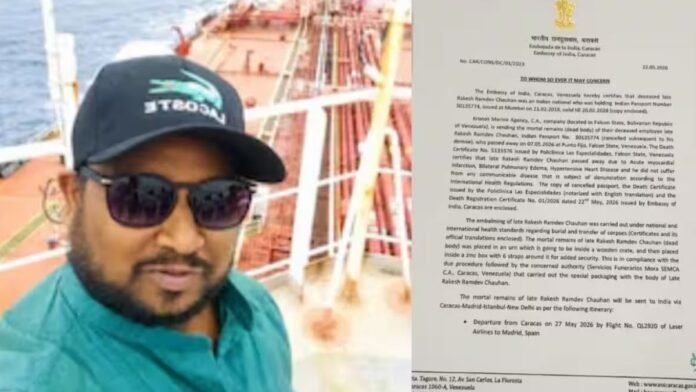
India has raised with Venezuelan authorities the case of an Indian seafarer whose body was repatriated with several internal organs missing after he died under unexplained circumstances, the Ministry of External Affairs (MEA) said on Friday.

Rakesh Chauhan, a 33-year-old seafarer, died in Venezuela’s Falcón state on May 7. According to the death certificate issued by a local medical facility, the cause of death was a heart attack. However, an autopsy conducted in Uttar Pradesh after his body was brought back to India last month found that his brain, heart, lungs, liver, kidneys, stomach and intestines were missing.

India takes up matter with Venezuela

Chauhan’s family has alleged that he was murdered, and the case has since drawn attention from the Forward Seamen’s Union of India (FSUI) as well as several Members of Parliament.

Responding to questions during the Ministry of External Affairs’ weekly media briefing, spokesperson Randhir Jaiswal said India has formally taken up the issue with Venezuelan authorities.

“We have taken up the matter with Venezuelan authorities with a request to urgently investigate the matter. We’ll keep you updated in that regard,” Jaiswal said.

Earlier, the Indian Embassy in Caracas said in a statement posted on social media that it had sought a “thorough investigation” into the alleged desecration of Chauhan’s body and the removal of his organs. The embassy added that it has been continuously pursuing the matter with the relevant Venezuelan authorities since the incident came to light.

Family and seafarers’ union sought probe

The case first came into the spotlight late last month after the Forward Seamen’s Union of India raised concerns over Chauhan’s death and the condition of his body, which was repatriated nearly two months after he died.

Doctors who conducted the postmortem examination in Uttar Pradesh reportedly concluded that the exact cause of death could not be established because several vital organs were missing, making it impossible to determine whether Chauhan had suffered injuries before his death.

According to his family, Chauhan last spoke to them on the morning of May 7 while aboard his vessel. Shortly afterwards, they were informed that he had collapsed, lost consciousness and was in critical condition. They were later notified of his death.

CPI(M) Rajya Sabha MP John Brittas has also written to External Affairs Minister S. Jaishankar, urging the government to seek a detailed explanation from Venezuelan authorities in light of what he described as the “extraordinary” circumstances surrounding Chauhan’s death.

Eight Nabbed by Gujarat ATS Over Suspected Jaish-e-Mohammed Network

0
gujarat
gujarat

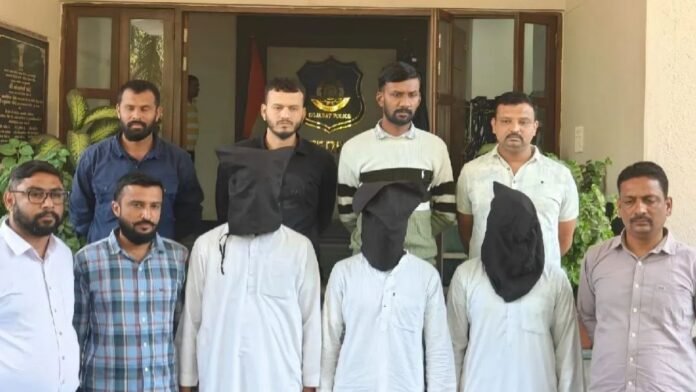
The Gujarat Anti-Terrorism Squad (ATS) on Friday arrested eight people, including seven from Gujarat and one from Madhya Pradesh, for allegedly plotting to establish a network of the banned terror outfit Jaish-e-Mohammed (JeM) and carry out terrorist activities in the state, officials said.

According to an official statement issued by the Gujarat ATS, the accused were allegedly working to build an active Jaish-e-Mohammed network in Gujarat by recruiting new members and spreading the organisation’s ideology. Investigators claimed they had been contacting individuals across the country through various platforms to radicalise them, conduct Dawat (inviting people to join the outfit), and expand the terror group’s presence in the state.

The ATS further alleged that the accused had formed an organisation called “Darul Islam Gujarat Jaish-e-Mohammed” as part of the conspiracy. Officials claimed they were in regular contact with Pakistan-based handlers identified as Abdullah and Mohammad Umar, translated Jaish-e-Mohammed literature from Urdu into Gujarati to widen its reach, and were actively involved in plans to carry out terrorist activities in Gujarat.

Investigators also alleged that the group received around ₹3 lakh to further the conspiracy. A portion of the money was reportedly used to purchase a second-hand car that was never officially transferred into the accused’s names.

During searches conducted as part of the investigation, the ATS claimed to have recovered 254 digital files from an encrypted application installed on one of the accused’s mobile phones. These reportedly included jihadi literature, speeches, audio and video recordings, photographs and a Jaish-e-Mohammed flag.

Officials also said they seized two books authored by JeM chief Masood Azhar that were printed in Pakistan, eight Urdu letters allegedly addressed to Azhar seeking membership of the banned outfit, photographs of handwritten Urdu documents, and Gujarati translations of JeM literature that investigators claim were prepared by two of the accused.

The arrested individuals have been identified as Ahmad Abdullah Gajivala alias Abu Ubaida (19) and Ibrahim Mohammad Husain Ghagha alias Abu Hamza (30), both residents of Nandasan in Mehsana district. Mudassir Abdullah Gajivala alias Abu Aya (22) is from Bhagal in Palanpur, Banaskantha.

The remaining Gujarat-based accused include Zakariya Durani Mohammad Ammar Ghagha alias Ibn Ammar alias Zakariya Palanpuri (21), Mufti Faujan Ismail Dauva alias Mufti Saab (40), and Mohammad Amin Shera alias Amin Palanpuri (21), all associated with Jamia Abul Hasan Madrasa in Khadiyasana, Siddhpur, Patan. Mohammad Abdul Rehman Savdi alias Mohammad Palanpuri alias Abu Unesa (22) is linked to Jamia Rahmaniya Khambhiya in Ambheta, Chikhli, Navsari.

The eighth accused, Bilal Durani Mohammad Ammar Ghagha alias Abu Dujana alias Abu Sufiyan alias Abu Jundal alias Umarbin Khatab (18), is a resident of Dewas in Madhya Pradesh.

A case has been registered against all eight accused under multiple provisions of the Unlawful Activities (Prevention) Act (UAPA), including Sections 13 (unlawful activities), 17 (raising funds for terrorist acts), 18 (conspiracy to commit terrorist acts), 38 (membership of a terrorist organisation), and 39 (support to a terrorist organisation). They have also been booked under Sections 61 (criminal conspiracy) and 148 (concealing the design to commit certain offences) of the Bharatiya Nyaya Sanhita (BNS), 2023.

‘I Should Be the Next 007’: Millie Bobby Brown Shares Her Dream Role After Enola Holmes 3

0
millie bobby brown
millie bobby brown

At just 22, Millie Bobby Brown has already headlined two major franchises, playing Eleven across all five seasons of Stranger Things and the titular detective in the Enola Holmes films, which recently returned with its third instalment. But the actor already has her sights set on another legendary role — James Bond.

Speaking about rumours linking her Enola Holmes 3 co-star Louis Partridge to the iconic British spy, Brown joked that she believes she should be in the running instead.

“I think I should be the next James Bond. Why am I not in that running? Can we get me in that running?” she said with a laugh.

Despite the playful remark, Brown was full of praise for Partridge, saying she is rooting for him regardless of who eventually lands the role.

“I don’t like all the competition and the speculation. All that matters is that he’s my James Bond and whatever it will be, what’s great is that they’ll find the person for it, whoever that may be. But Tewkesbury is Louis, hands down. There’s no other person that could ever play him,” she said.

Returning to Enola Holmes

As she reprises the role of Enola Holmes for a third time, Brown admitted that returning to the character continues to be one of the most enjoyable parts of her career.

“She’s just a really fun character to play. I have a lot of fun with the script, with the lines, and I love working with Louis. Enola and Tewkesbury’s relationship is blossoming and growing in this film, and I was just ready to jump into it full force. It’s very exciting that Netflix wants to continue with the franchise,” she said.

Asked whether revisiting a beloved character becomes more difficult with rising audience expectations, Brown said the process has actually become easier over time.

“It gets easier. Of course there is always the pressure of hoping that the audience is enjoying the evolution of this character that I’m building, but I don’t necessarily think it gets harder,” she explained.

Championing strong female characters

Brown also reflected on her preference for portraying strong female protagonists, particularly in stories set during periods when women had fewer opportunities and were often underestimated.

“That’s what I believe in, bringing more women to screen, women that are capable and heroes in their own story. It’s very impactful and meaningful, and I am very excited to continue bringing characters like that to screen that show range, slowly leaving the action world, entering into the romance world, and then more to come,” she said.