Home Blog Page 24

Coal Import Row Forces Sri Lanka Energy Minister to Resign Days After No-Trust Vote

0
sri lanka Kumara Jayakodi

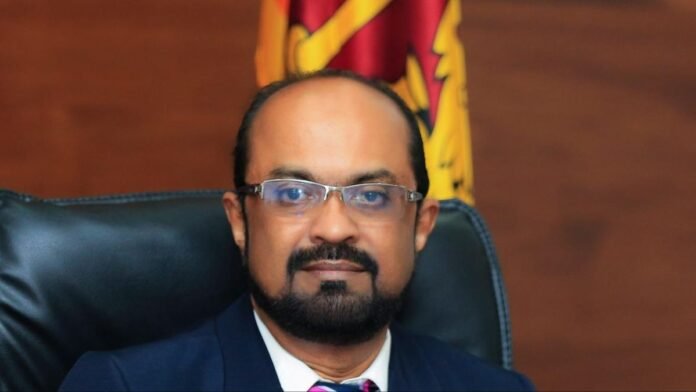
Sri Lanka’s Minister for Power and Energy, Kumara Jayakodi, resigned on Friday shortly after the announcement of a high-level Presidential Commission to investigate coal imports by a state-owned entity used for power generation.

Jayakodi’s resignation marks the first ministerial exit from the National People’s Power government, which came to power in late 2024 on an anti-corruption platform. Notably, he had survived a no-confidence vote just a week earlier.

Alongside him, the Ministry’s Secretary Udayanga Hemapala also stepped down, according to a statement from President Anura Kumara Dissanayake’s office.

The President’s Media Division stated that the resignations were intended to ensure an independent and impartial investigation by the Special Presidential Commission appointed to examine issues related to coal imports.

Earlier in the day, the government had announced the formation of this high-powered commission to investigate Lanka Coal Ltd, covering the entire period since coal imports began for power generation up to April 16, 2026.

Jayakodi had recently faced a no-confidence motion in Parliament, becoming the first minister from the NPP government to do so. However, he retained his position after the motion was defeated by a margin of 153 to 49 on April 10, reflecting the government’s strong parliamentary majority.

The motion accused him of causing significant financial losses to the state through coal procurement and of jeopardizing national energy security by allegedly misusing the procurement process.

During the debate, Prime Minister Harini Amarasuriya defended Jayakodi, stating that the opposition had failed to substantiate its allegations. Jayakodi also maintained that both he and his party remain committed to the anti-corruption principles of the government.

He has previously been indicted by the Bribery and Corruption Commission over alleged misconduct during his tenure at the State Fertilizer Corporation.

The opposition had continued to press for his resignation, arguing that the seriousness of the allegations warranted his stepping down.

‘3 Truths’ on Women’s Quota Bill: Rahul Gandhi Says It Has ‘Nothing to Do With Women Empowerment’

0
rahul gandhi
rahul gandhi

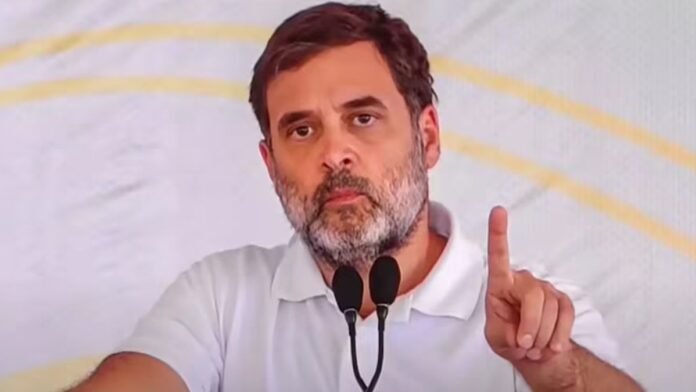
Congress leader Rahul Gandhi on Friday strongly criticized the government over the women’s reservation bill in Parliament, calling it an attempt to alter the country’s electoral map while using women as a cover.

Speaking in the Lok Sabha, Gandhi argued that the 131st Amendment Bill introduced in the House is different from the legislation passed in 2023 and does not genuinely address women’s reservation. He said there are certain truths that must be acknowledged, asserting that the current bill has nothing to do with empowering women.

Drawing a distinction between the two proposals, the Leader of the Opposition pointed out that a women’s reservation bill had already been passed in 2023, with the assurance that it would be implemented within ten years. According to him, that legislation represented the real commitment to women’s reservation, whereas the present bill is aimed at redrawing India’s electoral landscape.

He accused the government of hiding behind the issue of women’s empowerment and said the opposition would fully support the earlier bill if it were brought back for immediate implementation. Gandhi added that passing such a measure would be straightforward and would receive unanimous backing from opposition members.

Outlining what he described as three key concerns, Gandhi claimed that the government’s approach is intended to bypass caste considerations and reduce representation for Other Backward Classes and other marginalized communities. He said the effort is focused on denying these groups their share of political power.

He further alleged that the government is attempting to disconnect caste census data from representation for the next decade or more. Gandhi also expressed concern that the proposed changes could reduce representation for southern states, adding that the opposition would resist any such move.

CM Mann Announces ₹177 Crore Development Package for Historic City of Batala

0
Batala
Batala

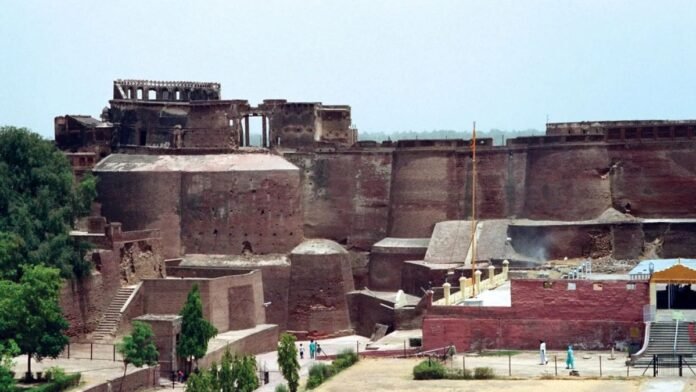
Batala, one of Punjab’s oldest and most historically significant cities, is poised for a major transformation as Chief Minister Bhagwant Singh Mann unveiled development projects worth ₹177 crore. The initiative combines extensive infrastructure expansion with a pointed political message aimed at previous governments. The projects include over ₹95.72 crore worth of works by the Municipal Corporation, ₹16.05 crore by the Mandi Board, and ₹65.09 crore allocated for road construction by the PWD. Additional repair works worth ₹42.56 crore and ₹34.97 crore are also part of the plan, alongside new bridges, a modern bus stand to ease congestion, and ₹14.81 crore earmarked for new police lines.

Positioning the initiative as a clear departure from past governance, Bhagwant Singh Mann said that the people of Punjab had rejected what he described as three generations of Akali Congress rule in 2022 and would not allow their return in 2027. He accused earlier governments of weakening anti beadbi laws to protect themselves and criticised traditional parties for being disconnected from the public.

Speaking after laying the foundation stone for several projects, the Chief Minister alleged that the Akalis had deliberately framed weak laws on beadbi to shield those responsible. He claimed that such decisions were driven by fear of accountability, suggesting that stricter laws could have implicated leaders themselves.

He highlighted that the Punjab Government has passed the Jaagat Jot Sri Guru Granth Sahib Satkar Amendment Bill 2026, which introduces stricter punishment for beadbi. Describing past incidents as a conspiracy to disturb peace and communal harmony in the state, he said the new law would ensure strict action against offenders and act as a deterrent. He emphasised that the state has a duty to protect Sri Guru Granth Sahib Ji and called the legislation a historic step.

Taking aim at the Akali Dal’s Punjab Bachao Yatra, Mann dismissed it as an attempt to safeguard family interests rather than serve the state. He questioned the party’s intentions, asking whom they were trying to protect Punjab from after years in power. He accused them of widespread corruption, emotional harm to the people, and links to various mafias.

The Chief Minister also made sharp historical allegations, claiming that certain political families had aligned with British rulers and honoured General Dyer after the Jallianwala Bagh massacre. He said such actions reflected an anti national mindset and argued that history continues to hold them accountable.

He further accused past leaders of damaging Punjab’s youth through both violence and the drug trade, alleging that drugs flourished under their rule and that they bear responsibility for its impact. According to him, these actions cannot be forgiven and remain fresh in public memory.

Mann described these leaders as opportunistic, claiming they shift positions for political gain. He said the strong public turnout at the event, despite extreme heat, reflected support for his government.

Highlighting governance efforts, he said the current administration has focused on public welfare while previous governments prioritised personal gains through power purchase agreements and coal deals. He noted that coal supply from the Pachwara Coal Mine resumed in October 2022 and that the state achieved a supply of 70 lakh metric tons in 2024 to 25, resulting in savings of ₹1,462 crore.

He also criticised Akali leader Sukhbir Badal for making what he described as unrealistic claims, saying such statements reflect desperation to regain power. According to Mann, opposition leaders frequently attack him because their own track record has been exposed.

The Chief Minister said earlier governments operated like a cycle of power sharing while exploiting state resources. He credited voters for choosing change, which he said has led to improvements in schools, healthcare and other sectors. He contrasted this with previous leaders who built large private estates and remained inaccessible to the public.

He added that people are now more aware and less influenced by misinformation. While his government focuses on sectors like education, healthcare, power and agriculture, he said opposition parties remain focused solely on regaining power.

Outlining key initiatives, Mann said farmers are now receiving daytime electricity supply and that 300 units of free power are provided monthly to domestic consumers, with around 90 percent receiving zero bills. He added that more than 65,000 youth have secured government jobs.

He encouraged citizens to enroll in the Mukh Mantri Sehat Yojna, which offers cashless treatment up to ₹10 lakh per family. He said over 30 lakh beneficiaries have received health cards and 1.65 lakh people have availed free treatment under the scheme.

Referring to the Mawan Dheeyan Satkar Yojna, he noted that it provides ₹1000 per month to women from general categories and ₹1500 to women from SC categories above 18 years of age.

Mann said the government is now ensuring responsible use of public funds for welfare, contrasting it with what he described as widespread misuse under previous regimes that hindered Punjab’s development. He reiterated that people had voted for a pro people government and would not forgive past leadership for their actions.

He accused earlier rulers of misusing religion for political purposes and said their focus on family interests led to a loss of public trust. According to him, this shift in public sentiment resulted in their electoral defeat.

During the event, senior AAP leader Manish Sisodia praised Mann’s leadership, calling him the most popular Chief Minister in Punjab and stating that his governance is focused on public welfare. Sisodia also criticised Prime Minister Narendra Modi, describing him as a threat to democracy, and urged people to safeguard their votes.

Cabinet Minister Lal Chand Kataruchak, MLA Amansher Singh Sherry Kalsi and other leaders were also present on the occasion.

Private Messaging Without Phone Numbers? WhatsApp May Roll Out New Feature Soon

0
whatsapp
whatsapp

WhatsApp is set to introduce a major change in how users connect on the platform by rolling out a long-awaited username feature that allows people to chat without sharing their phone numbers.

The feature is expected to be available across Android, iOS, Windows, and Web versions of the app. Once fully implemented, users will be able to create unique usernames linked to their accounts, making communication more secure while keeping personal mobile numbers private.

Eligible users will find a new Username option within their WhatsApp profile settings. The setup process is straightforward, allowing users to choose a preferred handle and connect with others using that username instead of a phone number.

WhatsApp has also laid out specific guidelines for creating usernames. Each one must be between 3 and 35 characters in length, include at least one letter, and can only contain lowercase letters, numbers, periods, and underscores. Usernames cannot start with “www.” or end with domain extensions like “.com” or “.net” to avoid confusion with official websites. According to WABetaInfo, the feature is currently being rolled out in phases and is available to a limited number of users.

A key aspect of this update is its integration with Meta’s broader ecosystem. Usernames must be available across platforms such as Instagram and Facebook before they can be used on WhatsApp. If a username is already taken on either platform, users will need to verify ownership through Meta’s Accounts Center to claim it on WhatsApp.

For additional security, WhatsApp is expected to introduce an optional username key, which will be a four-digit code required when someone contacts a user for the first time. This added layer ensures that only those who have both the username and the code can initiate conversations.

Despite these enhancements, some privacy concerns remain. Using the same username across WhatsApp, Instagram, and Facebook could make it easier to link profiles across platforms, potentially reducing user anonymity.

The rollout will continue gradually over the coming months, with WhatsApp closely tracking its performance before expanding access further. If widely adopted, the username feature could become one of the platform’s most significant privacy upgrades in recent years, giving users greater control over how they communicate online.

Canva Looks to Fix the Fragmentation in Modern Workflows

0
canva
canva

To explain the significance of Canva AI 2.0, co-founder and CEO Melanie Perkins reflects on the company’s early days, going back to 2011 and an experimental concept called Canvas Chef. It was an early attempt at artificial intelligence, built as a simple prompt based tool that could generate designs such as brochures or phonebooks. Perkins says Canva has always focused on simplifying complex processes and believes there is always a better way to approach design. Today, as the platform aims to grow into a complete productivity suite, its strategy combines new features with a deeper architectural layer and intelligent workflows.

The Canva AI 2.0 update is designed to bridge the gap between content generation and execution. It introduces conversational design tools, agent-driven editing within existing visuals, memory-based capabilities, and layered object intelligence for greater precision. The update also brings Canva Code 2.0, building on last year’s initial version, along with integrations for several popular platforms, including Google’s Gmail, Drive, and Calendar, Microsoft 365 and Outlook, as well as Notion, Slack, Zoom, and HubSpot. A web research module is also part of the rollout. The company has begun releasing a research preview of Canva AI 2.0, with broader availability expected in the coming weeks.

A major highlight of the update is Agentic Orchestration, which Perkins describes as a step toward making Canva a true creative partner. With a single prompt, users can generate multiple types of content and refine it later. The system understands user intent, selects the appropriate tools, and uses them to produce the desired output. This is supported by the Memory Library, particularly useful for teams and enterprise users, where the AI learns from past designs and adapts to established styles and preferences. Known as Living Memory, this feature enables continuous personalization across projects. Perkins explains that the system becomes smarter with use, learning from existing designs and building a customized memory base over time. This infrastructure works across Canva’s entire visual ecosystem, including presentations, documents, and social media content.

The introduction of connectors further expands functionality by allowing users to pull context from other applications. Whether for businesses or individual users, this feature enables Canva to access information from linked apps. For example, integration with Google Calendar can help generate a presentation based on an upcoming meeting’s agenda. Co-founder and Chief Product Officer Cameron Adams notes that connectors address the problem of work being spread across multiple platforms by bringing everything into one place.

Canva has also been building momentum with earlier features, such as Magic Layers, launched in public beta last month. This tool converts static images, including those created with AI, into fully editable layered designs. According to Adams, it has already been used nine million times within weeks of release. The feature aligns with the Canva Code 2.0 update, which now expands beyond initial support for PNG and JPG formats to include HTML files. This allows users to create more interactive designs, such as adding forms that feed data directly into Canva Sheets.

These developments come at a time of strong growth for the company. Canva now has over 265 million monthly active users, including more than 31 million paid subscribers, up from 24 million a year ago. The company reports annualized revenue of 4 billion dollars, with over 500 million dollars coming from its expanding business-to-business segment.

Cliff Obrecht, co-founder and Chief Operations Officer, highlights Canva’s growing presence in the AI space, noting that it ranks among the most widely used AI products globally. According to data from Andreessen Horowitz, Canva trails only ChatGPT and Google’s Gemini in global AI usage, while surpassing platforms such as DeepSeek, Grok and Claude. The same data, along with insights from YipitData, shows Canva leading in year-on-year customer spending growth at 101 percent, ahead of companies like Replit, Vercel, HubSpot, Box, and Figma.

Obrecht describes Canva’s evolution as a shift from being a design platform enhanced by AI tools to becoming an AI-driven platform centered around design. This transition places it in competition with a wide range of technology providers, not just those focused on creative workflows. The company’s broader Creative OS vision, introduced last year, reflects this ambition.

In this increasingly competitive landscape, Canva is positioning itself against a fragmented ecosystem that includes template platforms like Vecteezy, font resources such as FontSpace and FontFreak, stock image providers like Shutterstock and Getty Images, design software including Adobe Illustrator, editing tools like Photoshop and Seashore, publishing services such as Shutterfly and FedEx Office, and content management platforms like Adobe Creative Cloud, Microsoft OneDrive, Gmail and Box.

Perkins concludes that Canva’s mission remains consistent with its early vision. Over its first decade, the company brought together a fragmented design ecosystem into a single accessible platform. Now, as creative workflows become more scattered across tools and systems, Canva sees an opportunity to once again unify the process and make it simpler and more accessible for users worldwide.

Salary Hike, Pension Boost Under 8th Pay Commission: Fitment Factor Explained

0
8th pay commission

The Centre’s decision to establish the 8th Pay Commission has once again brought attention to the salaries, pensions and allowances of government employees. While expectations remain high, the process is still ongoing and the final recommendations have not yet been submitted.

Constituted every decade, Pay Commissions are responsible for revising the pay structure of central government employees and pensioners. Announced in January last year, the 8th Pay Commission continues this post Independence practice. Its scope extends beyond salaries, covering allowances, pensions, retirement benefits and the broader financial impact on the government.

The 8th Central Pay Commission has been tasked with recommending changes to salary structures, allowances and pensions. Its proposals are expected to affect lakhs of employees and are closely monitored as they influence both individual incomes and overall government expenditure, along with wider economic trends.

The panel is headed by former Supreme Court judge Ranjana Prakash Desai. Other members include Pulak Ghosh, a finance professor and member of the Prime Minister’s Economic Advisory Council, and former IAS officer Pankaj Jain, who serves as Member Secretary. The Commission is currently engaging with a wide range of stakeholders, including employee unions, ministries, labour organisations and pension groups. It has invited formal submissions and is conducting consultations, with a meeting scheduled in Dehradun on April 24, 2026, before finalising its recommendations, as per an official notification.

Although the Commission was notified on January 17, 2025 and was expected to take effect from January 1, 2026, its final report is still awaited. Past experience suggests that implementation may take time, as the 7th Pay Commission took about two and a half years, the 6th around two years and the 5th nearly three and a half years to be fully rolled out.

A key element in determining salary revisions is the fitment factor, which acts as a multiplier for basic pay. The higher this factor, the greater the increase in salaries and pensions.

The proposed revisions are likely to impact around 50 lakh central government employees, including defence personnel, as well as nearly 65 lakh pensioners. At the entry level, basic pay could rise from ₹18,000 to approximately ₹51,480 depending on the final fitment factor. The pay structure spans 18 levels, ranging from entry level Group D employees to senior Group A officers, meaning the actual increase will vary across categories. Even conservative estimates suggest that the hike could range from over ₹38,500 to more than ₹2 lakh depending on the level.

Pensions are also expected to see a significant rise, as any change in basic pay directly affects them. At present, the minimum pension is around ₹9,000, which could increase to between ₹22,500 and ₹25,200 depending on the formula adopted by the Commission.

‘Won’t Leave Until Rights Secured’: Iran Pushes Back on US Blockade in Hormuz

0
Hormuz
Hormuz

Mohsen Rezaei, military adviser to Iran’s Supreme Leader, has issued a strong warning to the United States after its naval blockade of Iranian ports, saying the Islamic Republic will not withdraw from the Strait of Hormuz until its rights are fully secured, according to Iranian state media outlet Press TV.

As reported by Press TV, Rezaei, a former commander of Iran’s Islamic Revolutionary Guard Corps, described the strategic waterway as a key point of leverage and said Iran would continue to assert control over it in response to what Tehran considers unlawful restrictions on its economic and maritime activities.

Rezaei stated that Iran will remain in the Strait of Hormuz until its rights are fully secured and stressed that future agreements must be drafted more carefully with greater emphasis on economic concerns. He added that unlike the United States, which he claimed fears prolonged conflict, Iran is prepared and experienced in long term warfare. He also questioned why US forces avoid crossing the strait if Iran’s naval capabilities have supposedly been weakened, and said that unlike earlier negotiations where the other side dictated terms, Iran is now setting the conditions.

The Strait of Hormuz, a vital route through which nearly one fifth of the world’s oil supply passes, has become a central flashpoint in the ongoing tensions between Iran and the United States, even as diplomatic efforts continue in the background to resolve the conflict in West Asia.

The developments follow an announcement by the United States Central Command on Wednesday that a comprehensive blockade of Iranian ports has been successfully carried out, with US forces claiming control over key regional waterways, including the Strait of Hormuz.

In a statement, CENTCOM Commander Admiral Brad Cooper said that within 36 hours of launching the operation, US forces had effectively halted all maritime trade entering and leaving Iran.

50% Hike in Lok Sabha Seats Planned, 272 to Be Set Aside for Women: Law Minister

0
union law minister arjun ram meghwal

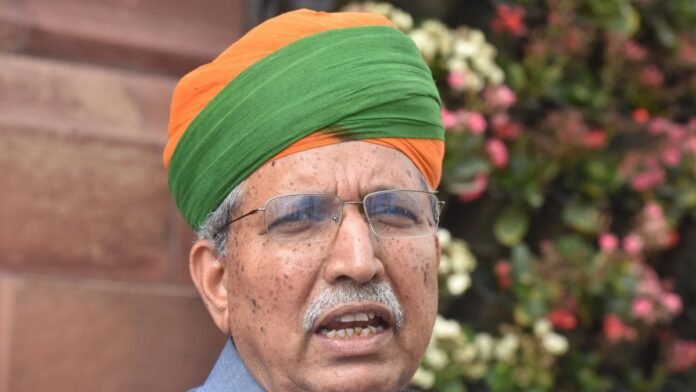
Union Law Minister Arjun Ram Meghwal on Thursday announced that the number of Lok Sabha seats across all states will rise by 50 percent following a fresh delimitation exercise. The statement came as Parliament reconvened for a three-day special session to consider legislation aimed at expanding the strength of the lower House and implementing the 33 percent reservation for women. He stated that the total strength of the Lok Sabha would increase from the current 543 to 815 seats after the proposed expansion.

A set of key bills, including the Delimitation Bill 2026, the Constitution One Hundred and Thirty-first Amendment Bill 2026, and the Union Territories Laws Amendment Bill 2026, have been introduced to facilitate this change. These bills propose increasing the number of seats and carrying out delimitation using the most recent available data, effectively based on the 2011 Census, in order to implement the women’s quota starting from the 2029 general elections.

Meghwal described the plan as a straightforward formula, stating that all states would see a 50 percent increase in seats, with 272 of the total seats reserved for women, ensuring that no state is left at a disadvantage.

However, the proposal has drawn criticism from the Opposition. Leader of the Opposition Rahul Gandhi argued that both delimitation and women’s reservation should be linked to the ongoing census and should account for caste-based enumeration. Opposition leaders have also raised concerns that relying on the 2011 Census could disadvantage southern states, while the government has insisted that the increase in seats will be carried out in a proportional manner.

‘Attack on Federal Structure’: AAP Criticizes Center’s BBMB Appointment Rule Changes

0
AAP
AAP Harjot Singh Bains

The Aam Aadmi Party in Punjab has criticized the Center’s decision to amend the rules governing appointments in the Bhakra Beas Management Board, describing it as part of a broader pattern aimed at weakening the state’s authority and undermining the federal framework. Party leaders said the move reflects an attempt by the BJP-led central government to increase its control over Punjab’s key institutions and natural resources.

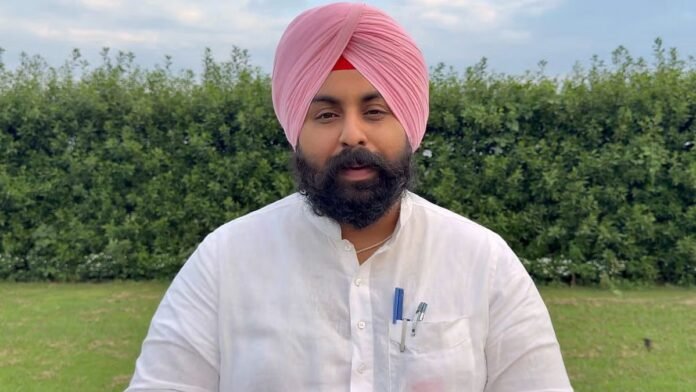
Punjab Cabinet Minister Harjot Singh Bains strongly opposed the amendment, saying it demonstrates the Center’s intent to erode Punjab’s rights at every opportunity. He described the decision as a direct blow to the federal structure and expressed concern that such a step was taken on the birth anniversary of Dr. B. R. Ambedkar, who had envisioned a balanced and cooperative system between the Center and states.

Bains also warned that changes in the appointment process could weaken Punjab’s role in managing its water resources. He said removing the requirement of appointing officers with local understanding risks sidelining regional expertise and could affect the state’s interests. Calling the move unconstitutional, he urged the Center to reverse the decision and asked BJP leaders in Punjab to clarify their position.

Cabinet Minister Barinder Goyal echoed similar concerns, stating that the amendment appears to be a calculated attempt to interfere in Punjab’s control over its resources. He pointed out that since the formation of the board in 1974, there had been a well-established arrangement regarding representation from Punjab and Haryana, which had functioned without dispute. He argued that altering this system without justification raises serious questions about the Center’s intentions.

Goyal further said that by introducing flexible wording in the rules, the Center has created room to appoint individuals of its choosing. He also highlighted that Punjab had earlier opposed increasing the number of board members due to the additional financial burden, but its objections were overlooked. According to him, this step, along with earlier decisions such as deploying central forces at dams, places unnecessary strain on the state and signals a shift towards greater central control.

AAP Punjab media in charge, Baltej Pannu, also criticized the changes, saying they effectively open up positions that were traditionally associated with Punjab to candidates from anywhere in the country. He alleged that the Centre’s larger objective is to gain control over Punjab’s water and other key institutions.

Pannu further accused the BJP of pursuing policies that are harmful to Punjab’s interests while simultaneously projecting political ambitions in the state. He warned that such an approach poses a threat to the federal structure and could have serious consequences if left unchecked.

Reaffirming the party’s stance, he said the people of Punjab are aware of these developments and will resist any attempts to compromise the state’s rights. He added that the Aam Aadmi Party will continue to oppose such measures and work to protect Punjab’s resources and interests.

Special Trains to Lift 155 LMT Foodgrain From Punjab FCI Godowns, Big Relief for Farmers: CM Mann

0

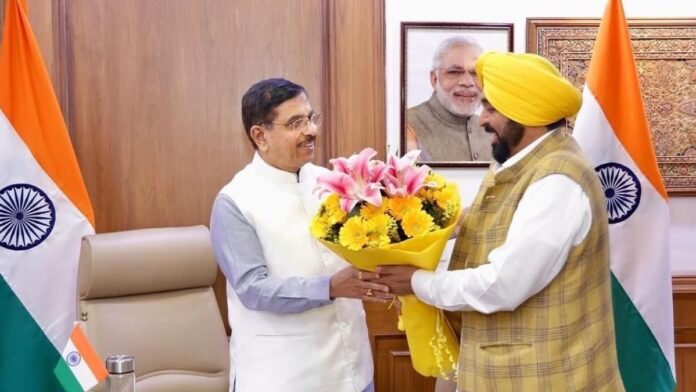
Punjab Chief Minister Bhagwant Singh Mann met Union Food and Public Distribution Minister Pralhad Joshi in New Delhi on Friday and secured major relief measures aimed at easing pressure on farmers and mandis. The Centre has agreed to operate special trains to transport 155 lakh metric tonnes of foodgrains currently lying in Punjab, a move expected to address the state’s severe storage shortage ahead of the Rabi marketing season.

In addition to this immediate step, Mann raised several long standing issues affecting the state. These included higher interest rates on Cash Credit, pending dues of around ₹9,000 crore under the Rural Development Fund, compensation for crops damaged by hailstorms and the demands of commission agents. The Union Minister responded positively and assured follow up action, including the creation of a mechanism at the secretary level to resolve pending financial matters.

Sharing details of the meeting on social media, Mann said discussions focused on key concerns related to Punjab, including the demands of arhtiyas and the urgent need to clear foodgrain stocks. He highlighted the need for faster movement of 15.5 million metric tonnes of wheat and rice and called for the release of pending Rural Development Fund payments. He also urged the Centre to reduce interest rates under the Cash Credit system and resolve issues related to EPF payments for mandi labourers.

The Chief Minister pointed out that Punjab is facing an acute shortage of storage space, with 180.88 lakh metric tonnes of foodgrains already occupying nearly the entire covered capacity of around 183 lakh metric tonnes. With the Rabi Marketing Season for 2026 to 27 beginning on April 1, the state expects procurement of around 130 to 132 lakh metric tonnes of wheat, which will further strain storage facilities.

He added that a significant portion of last year’s wheat stock is already lying in open storage due to limited space, forcing the state to store nearly 40 lakh metric tonnes under less than ideal conditions. Mann also expressed concern over the slow pace of foodgrain movement, noting that only about 5 lakh metric tonnes are being transported each month. He suggested increasing this to at least 12 lakh metric tonnes monthly or expanding distribution under central welfare schemes to ease the burden.

Raising financial concerns, Mann said Punjab is incurring losses due to higher interest rates charged by banks on procurement funds compared to the rates permitted by the Centre. He pointed out that this mismatch results in an avoidable loss of around ₹500 crore each season and called for alignment of interest calculations.

He also pressed for the release of pending Rural Development Fund dues, stating that the money is essential for improving mandi infrastructure and rural roads. While acknowledging that the issue is currently under legal consideration, he urged the Centre to release the funds, even in phases, as they rightfully belong to Punjab.

On the issue of commission agents, Mann said the current commission rates fixed by the Centre have not kept pace with expectations, leading to dissatisfaction among arhtiyas. He urged the Centre to revise the commission to 2.5 percent of the minimum support price in line with state legislation.

He further highlighted concerns over withheld mandi labour payments, stating that the Food Corporation of India has been holding back a portion of these funds due to EPF related issues. Mann argued that since state agencies are already securing undertakings from arhtiyas to address any liabilities, there is no reason to continue withholding payments and called for their immediate release.

Emphasising Punjab’s critical role in the national food procurement system, Mann said timely intervention by the Centre is essential to ensure smooth procurement operations, safeguard farmers and prevent additional financial strain on the state.