Home Blog Page 228

PM Modi All Set to Leave For G7 Summit on June 13

0
**EDS: IMAGE VIA PMO** Thrissur: Prime Minister Narendra Modi waves at people gathered for his welcome upon his arrival at Thriprayar, in Thrissur district, Wednesday, Jan. 17, 2024. (PTI Photo)(PTI01_17_2024_000154B)

Prime Minister Narendra Modi will depart for Italy on Thursday to attend the 50th G7 Summit. During his visit, Modi is also scheduled to hold a bilateral meeting with Italy’s Prime Minister Giorgia Meloni. This marks the prime minister’s first overseas trip since beginning his third consecutive term.

“At the invitation of the Prime Minister of Italy (Giorgia Meloni), Prime Minister Narendra Modi will be traveling to Apulia, Italy tomorrow to participate in the 50th G7 Summit on June 14, where India has been invited as an Outreach Country,” stated Foreign Secretary Vinay Mohan Kwatra on Wednesday.

“This will be the prime minister’s first overseas travel after assuming office in his third consecutive term. It will also afford him an opportunity to engage with other world leaders present at the G7 Summit on issues important to India and the Global South,” he added.

Kwatra mentioned that this will be India’s 11th participation in the G7 Summit and the 5th consecutive participation by PM Modi.

He noted that Modi’s participation in the G7 Summit would provide an opportunity to follow up on the outcomes of the G20 Summit held under India’s presidency last year.

“Prime Minister’s participation in the G7 Summit would also provide a timely opportunity to follow up on outcomes of the G20 Summit held under India’s presidency last year and deliberate on issues significant for the Global South,” he said.

Modi will participate in the Outreach session along with other invited countries on June 14.

“At this session, the focus will be on Artificial Intelligence, Energy, Africa, and the Mediterranean. It will be a block agenda item where the G7 and the Outreach Countries will share their views and perspectives,” the foreign secretary said.

Last year, PM Modi attended the G7 summit in Hiroshima, where he held talks with Zelenskyy and other world leaders on the sidelines of the summit.

India’s Popular Snack Maker Haldiram Planning to Raise Funds Through IPO

0

The owners of Haldiram Snacks Pvt Ltd. are considering an initial public offering (IPO) for the food producer and restaurant operator after plans to sell to foreign investors stalled, according to a Bloomberg report.

The Agarwal family is exploring a listing because bids ranging from $8 billion to $8.5 billion did not meet their valuation expectation of around $12 billion, sources revealed anonymously due to the private nature of the information.

In May, Haldiram’s received bids from a Blackstone Inc.-led consortium, which included the Abu Dhabi Investment Authority and GIC Pte, as well as from a consortium led by Bain & Co. and Temasek Holdings Pte, according to local media reports.

The IPO considerations are still in the preliminary stages, and the controlling shareholders might still decide to lower their asking price and proceed with a sale, the sources added.

India has become a hotspot for IPOs, raising approximately $3.9 billion so far this year—double the amount raised during the same period in 2023 and surpassing the combined totals of Hong Kong and Korea, according to data compiled by Bloomberg.

Founded by Ganga Bishan Agarwal in the 1930s in North India, Haldiram’s offers a variety of foods, including sweet and savory snacks, frozen meals, and breads. The company also operates 43 restaurants in and around Delhi, according to its website.

Anand Mahindra Congratulates Andhra Pradesh’s CM

0

Anand Mahindra, chairman of Mahindra Group, extended his congratulations to Telugu Desam Party (TDP) chief N Chandrababu Naidu on Wednesday, who was sworn in as the Chief Minister of Andhra Pradesh earlier today. Mahindra conveyed his congratulations in Telugu, the regional language of the state, acknowledging Naidu’s return to power after defeating the incumbent YS Jagan Mohan Reddy.

“Congratulations to Nara Chandrababu Naidu who took oath as Chief Minister of Andhra Pradesh,” Mahindra said in a post on X.

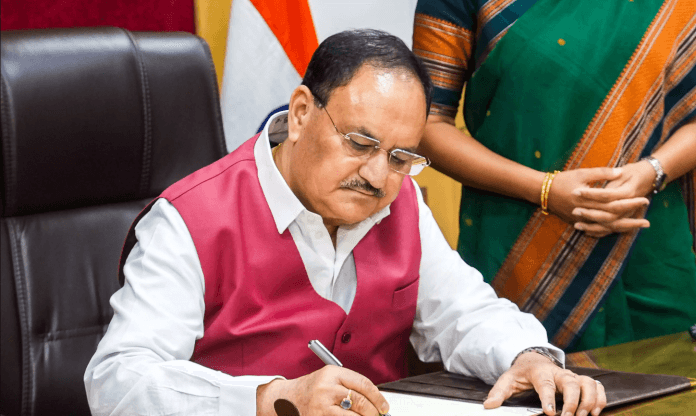
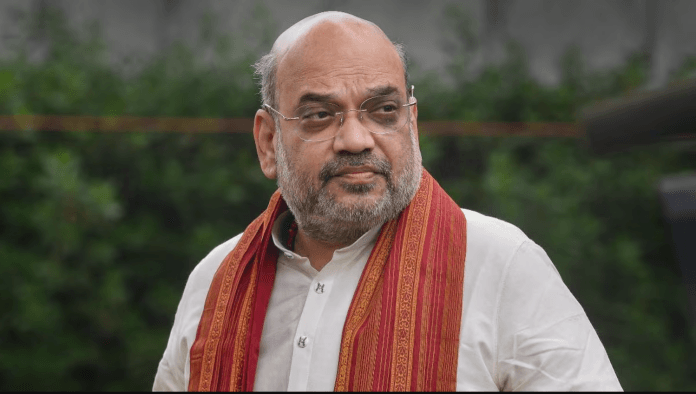
N Chandrababu Naidu took the oath as the 18th Chief Minister of Andhra Pradesh in a ceremony that saw the presence of notable figures, including Prime Minister Narendra Modi, Union Minister Amit Shah, and JP Nadda. Alongside Naidu, 26 ministers were also sworn in, including his son Nara Lokesh and JanaSena party chief Pawan Kalyan.

Among those who took oath were Atchannaidu, P Narayana, Kollu Ravindra, Nimmala Rama Naidu, Anitha Vangalapudi, Anam Ramanarayana Reddy, Kolusu Parthasarathy, NMD Farooq, Payyavula Keshav, A Stya Prasad, Dola Sree Bala Veeranjaneya Swamy, Gottipati Ravi Kumar, Gummidi Sandhya Rani, BC Janardhan Reddy, TG Bharath, S Savitha, Vasamsetty Subhash, Kondapalli Srinivas, and Mandipalli Ram Prasad Reddy. Additionally, Janasena party’s Nadendla Manohar, Kandula Durgesh, and BJP legislator Satya Kumar Yadav took oath as ministers.

The TDP-led National Democratic Alliance (NDA) secured a significant victory in the Andhra Pradesh Assembly election, winning 164 out of 175 seats. The TDP won 135 of the 144 seats it contested, while the Jana Sena Party (JSP) won all 21 seats it contested, and the BJP won eight of 10 seats it contested. The incumbent YSR Congress Party (YSRCP) managed to win only 11 seats.

The 2024 elections significantly elevated N Chandrababu Naidu’s prominence not only in Andhra Pradesh but also at the national level, making him the second-most-important partner of the National Democratic Alliance (NDA).

Home Ownership Cost has Jumped in USA Since 2020

0

The cost of homeownership in the US has risen by 26% since 2020, with expenses such as taxes, insurance, and utilities all increasing during a period of high inflation.

According to personal finance website Bankrate, the average annual expense for owning and maintaining a typical single-family home, excluding mortgage payments, reached $18,118 in March. This amounts to $1,510 per month, approximately $300 more than four years ago when the pandemic lockdowns began.

The calculation is based on Redfin’s March median sales price of $436,291.

“It was really eye-opening to see just how much it costs to maintain a home,” said Jeff Ostrowski, an analyst at Bankrate. “Until you own a house, it doesn’t dawn on you how much money you’re throwing into the house every month and year.”

In its analysis, Bankrate included property taxes, home insurance, energy costs, internet and cable bills, and 2% of the sales price for maintenance—expenses many buyers tend to underestimate.

Home maintenance represented the largest portion of ownership costs in Bankrate’s findings. Therefore, states where purchase prices increased significantly during the pandemic saw higher percentage jumps in overall expenses. Property taxes were the second-largest cost in high-tax states like New Jersey and Connecticut, while in others, energy bills were the second-highest expense.

Over the past four years, homeowners in Utah experienced the biggest increase in expenses, which surged 44%. Idaho followed at 39%, and Hawaii at 38%. Alaska and Texas saw the smallest increases, with costs rising 14%. Annual costs varied significantly, from $11,559 in Kentucky to $29,015 in Hawaii.

Ostrowski noted that these totals might be overstated, especially for owners of newly built homes that don’t require repairs, but they are still useful for buyers to consider.

“It’s certainly better to be over-prepared and have some extra money sitting in a high-yield savings account,” he said, “as opposed to under-prepared and scrambling.”

Supreme Court Will Take Up Delhi’s Additional Water Supply Issue on June 12

0

Days after the Supreme Court directed the Himachal Pradesh government to urgently release 137 cusecs of surplus drinking water to Delhi, the Upper Yamuna River Board (UYRB) informed the court on Monday that there is no way to measure Himachal’s compliance. The state lacks storage facilities to measure the additional flow, and no data is available to verify the surplus water released after meeting its own requirements.

A vacation bench of the Supreme Court, headed by Justice PK Mishra, adjourned the hearing to June 12 because a copy of the UYRB report was not before it. The Haryana government, also party to the proceedings, claimed to have submitted a document to the court. The bench reprimanded the Delhi government for not addressing a filing defect noted by the registry, which prevented the court from receiving reports and applications.

Justice PB Varale, also on the bench, remarked, “The defects were pointed out last week and still they have not been removed.” Addressing the Delhi government, represented by senior advocate Abhishek Manu Singhvi, Shadan Farasat (virtually), and advocate Talha Abdul Rehman (physically present), the bench warned, “You cannot take this court for a ride. Let the office verify if you have removed the defects. If not, this petition will be dismissed.” Rehman assured the court that the defects would be resolved by the end of the day.

Additional Solicitor General (ASG) Vikramjit Banerjee, representing the Centre and UYRB, along with senior advocate Wasim Qadri, informed the court that the Board had filed its status report in accordance with the June 6 order. This order required Himachal Pradesh to supply 137 cusecs of surplus water to Delhi and directed Haryana to ensure the surplus water received at Hathnikund Barrage (HKB) reaches Delhi via Wazirabad. The Board was instructed to measure the surplus flow at HKB and report compliance.

The UYRB report stated, “Himachal Pradesh does not have any storage from where it can release the additional water amounting to 137 cusecs in pursuance to the June 6 order.” The report also noted, “The complete information ascertaining the utilization by HP has not been supplied (to the UYRB)…in the absence of which the board is not in a position to estimate the unutilized share of the state of HP which they want to share with the national capital territory of Delhi and pass through the state of Haryana.”

The Board further informed the court that it had written to both the Haryana and Himachal Pradesh governments to establish modalities for measuring the excess flow at HKB. While Haryana responded, Himachal Pradesh did not. A letter from HP Jal Shakti Vibhag to its Haryana counterpart on June 6 stated that “137 cusecs of unutilized water is already flowing uninterruptedly from HP to HKB in river Yamuna.”

The Board concluded, “It therefore emerges that HP is not releasing any additional water subsequent to the order of Supreme Court on June 6 which could be measured by UYRB.” This was supported by inflow data at HKB from June 6, which showed variations in the recorded cusecs, indicating no significant change in water flow post the order.

Senior advocate Shyam Divan, representing the Haryana government, informed the court that the state had also filed a response, which was not available to the court.

Recognizing the importance of reviewing the reports amidst extensive media coverage, the court noted, “There is so much reporting in the media and if we do not read the files, then the media reports can impress us, which is not a good thing.”

Former Haryana CM Manohar Lal Khattar Gets New Position

0

Manohar Lal Khattar, the first chief minister of Haryana and Lok Sabha MP from Karnal, was appointed Union Cabinet Minister for Power and Urban Affairs on Monday as Prime Minister Narendra Modi assigned portfolios to his Union council of ministers.

In the recent Lok Sabha election, Khattar defeated Congress party’s Divyanshu Budhiraja. The 70-year-old contested parliamentary elections for the first time after serving as chief minister from October 26, 2014, until his resignation on March 12, 2024.

Khattar joined the Rashtriya Swayamsevak Sangh (RSS) in 1977 and became a full-time pracharak (worker) in 1980, serving in this role for fourteen years before moving to the BJP in 1994.

When the party nominated Khattar for the Lok Sabha elections earlier this year, he resigned as MLA from the Karnal Assembly constituency, making way for his successor and the party’s state president, Nayab Saini.

Khattar made his electoral debut in 2014 and was elected to the Haryana Legislative Assembly from the Karnal constituency. He also served as the chairman of the BJP’s Haryana Election Campaign Committee for the 2014 Lok Sabha Elections.

During a public gathering in Gurugram on March 11, Prime Minister Modi spoke about his friendship with Khattar, recalling their motorcycle rides in Haryana and their work together for the RSS.

Khattar comes from an agricultural background, with his family settling in Haryana’s Rohtak district after arriving from Pakistan post-Partition. He was born in Nindana, Rohtak, in 1954.

During his first stint as chief minister, Khattar faced criticism over his handling of the February 2016 Jat quota stir, which resulted in widespread violence and arson across the state. This was followed by violent incidents in 2017 after Dera Sacha Sauda chief Gurmeet Ram Rahim Singh was convicted of rape by a court in Panchkula.

Raymond Reality Wins The Massive Redevelopment Project in Mumbai

0

Raymond Realty, the real estate arm of Raymond Group, announced on June 10 that it has been selected to redevelop a housing project in Mumbai’s Bandra East area, with an estimated revenue potential exceeding ₹2,000 crore, according to a regulatory filing.

Raymond Realty secured the redevelopment project with unanimous approval from the members of the housing society MIG VI CHS Ltd. The project, strategically located in Bandra East, aligns with the company’s growth plans for real estate development in the Mumbai Metropolitan Region (MMR), as stated in the filing.

Previously, the company signed three joint development agreements for projects in Mahim, Sion, and Bandra, with an estimated development value of over ₹5,000 crore. Including the new Bandra project, the estimated Gross Development Value (GDV) of Raymond Realty’s ongoing projects in Mumbai will be around ₹7,000 crore.

“The addition of another project in Bandra has solidified our position as one of the leading developers in the area. Receiving unanimous approval from the society members of MIG VI CHS underscores our commitment to providing luxurious living spaces and highlights our expertise in large society and MHADA redevelopment,” the company stated.

Raymond Realty’s first project in the Mumbai real estate market was announced in February 2024 in Bandra East. This project will offer a mix of 2, 3, and 4 BHK apartments, along with 30 amenities and a clubhouse spanning 16,000 sq ft.

Adani Realty also has a presence in the Bandra East micro-market, having acquired a 24-acre plot in Bandra West earlier this year. The company is also involved in the redevelopment and rehabilitation of Dharavi, Asia’s largest slum cluster, located about 10 minutes from Bandra.

Local brokers note that the market rate in Bandra East is around ₹50,000 to ₹60,000 per sq ft, depending on the building, its amenities, and its proximity to the Bandra Kurla Complex (BKC), one of India’s most expensive commercial districts.

Maldives’ Parliamentary Panel to Look Into Agreements Signed With India

0
Maldives
Maldives

A Maldivian parliamentary committee decided on Monday to review three agreements signed by former president Ibrahim Solih’s administration with India, including a pact to develop a naval base.

The parliamentary panel overseeing security services accepted a proposal from Ahmed Azaan, a member of President Mohamed Muizzu’s People’s National Congress (PNC) party, to investigate the three agreements.

“Today, the National Security Services Committee of the parliament has decided to conduct a parliamentary inquiry to investigate actions undertaken by President @ibusolih‘s administration that undermined the sovereignty and independence of the Maldives,” Azaan said in a post on X.

This decision coincided with Muizzu’s visit to India for the inauguration of Prime Minister Narendra Modi’s third term. During the visit, Muizzu met with Modi and Union Minister S Jaishankar in the Indian capital to discuss strengthening cooperation in areas of mutual interest.

Azaan initially suggested that the panel investigate all agreements signed by the former administration with India. However, other members preferred to focus on specific agreements. Azaan then proposed examining a 2019 agreement with India for hydrographic surveys, an agreement to develop the Uthuru Thila Falhu naval base, and an agreement in which India gifted a Dornier aircraft to the Maldives.

Muizzu’s government has already decided to scrap the hydrographic survey agreement. Azaan questioned why the Solih administration had signed these agreements and expressed concerns about the naval base agreement, noting that the Maldives National Defence Force’s senior leadership was not consulted.

Azaan suggested forming a sub-committee to examine these agreements and any other actions of the previous government that might have jeopardized the Maldives’ sovereignty.

The parliamentary panel subsequently established a sub-committee of four MPs, including Azaan. It was not clear when the sub-committee would present its findings.

Jasprit Bumrah Leads Indian Bowlers to Greater Heights

0

Rohit Sharma didn’t need to make frantic gestures to reposition his fielders, nor did the senior players huddle around the bowlers after every delivery with advice. Defending a mere 119 runs often leads to chaotic scenes and prolonged deliberations, but at Nassau County International Cricket Stadium against Pakistan on Sunday, India’s bowlers remained calm and composed. Their clinical performance restricted Pakistan to 113/7 in 20 overs, securing a six-run victory in a Group A clash of the T20 World Cup.

In low-scoring games, teams typically aim to take early wickets to gain an advantage. However, this match was more about persistence and pressure, rather than aggressive wicket-taking. The pitch demanded a strategy of attrition, with bowlers focusing on building pressure and avoiding easy boundaries.

India’s bowlers, seasoned by their extensive IPL experience, executed their plans flawlessly. Jasprit Bumrah led the attack with a stellar performance, finishing with figures of 4-0-14-3. Unlike the 1990s and early 2000s when India envied Pakistan’s pace bowlers, Bumrah now stands as the star of the fast-bowling world.

However, Bumrah’s brilliance alone wouldn’t have been enough, given Pakistan’s modest required run rate of six per over at the start of their chase. Arshdeep Singh, Mohammed Siraj, Hardik Pandya, Axar Patel, and Ravindra Jadeja also played crucial roles. Their combined effort led to the joint-lowest total successfully defended in T20 World Cup history.

The slow surface, though not ideal for a T20 game, gave the bowlers from both teams an edge. Despite India’s strong start of 81/3 in their first ten overs, Pakistan’s bowlers managed to limit them to 119. Batting second, Pakistan should have been able to strategize their chase more effectively.

Yet, they fell short. India’s bowlers, while not producing any magical deliveries, maintained discipline and prevented Pakistan from gaining momentum. Arshdeep’s first over included some hittable deliveries, but India’s bowlers quickly adjusted and avoided chasing wickets.

Bumrah demonstrated this approach by maintaining a hard length, which left Babar Azam uncertain about whether to play or leave the ball. Azam’s indecision led to a catch at slip by Suryakumar Yadav. Bumrah’s ability to deliver consistently without seeking flashy deliveries sets him apart. Mohammed Siraj complemented Bumrah with an economical opening spell of 3-0-10-0. According to CricViz data, India’s pacers bowled 30% of their deliveries on a hard length, significantly more than Pakistan’s 17%.

Overall, India’s disciplined bowling and strategic execution were key to their narrow victory over Pakistan.

Central Government Has Policy Measures to Reduce Pulses and Edible Oil Imports

0

New Delhi: The central government is planning a special focus on reducing imports of pulses and edible oil, increasing ethanol supply, and stabilizing food prices as part of its 100-day agenda, according to a senior official.

This effort will involve introducing stringent policy measures similar to those implemented over the past year and a half.

The agriculture ministry is drafting a new scheme to achieve self-sufficiency in pulses by 2027. This initiative aims to cut the government’s significant expenditure on importing pulses and edible oil to boost domestic supply. In the 2023-24 financial year, India’s import bill was $854.8 billion, compared to $898 billion in FY23. Agricultural exports in FY24 reached $48.9 billion, marking an 8% decline from $53.2 billion in FY23.

Although agricultural imports fell due to a decrease in edible oil imports, pulse imports reached a six-year high. The country spent $3.75 billion on importing pulses and $14.8 billion on vegetable oils, compared to the previous year’s $1.94 billion and $20.84 billion, respectively, according to the commerce ministry.

“Our 100-day agenda will surely focus on oilseeds, pulses, and biofuel, alongside the welfare of 140 million farmers. However, a major focus will be on reducing the import bill. Another crucial aspect is the price stabilization of agricultural commodities,” a senior official said.

“We aim to achieve self-sufficiency in pulses within the next 3-4 years. We are open to all kinds of support, similar to what we have for oilseeds. A new programme focusing on development is being prepared to promote pulses production significantly, and it is expected to be unveiled in the coming days.”