Home Blog Page 84

Delhi: CM Rekha Gupta Announces 10 ‘Namo Van’ Projects to Combat Air Pollution

0
Rekha Gupta
Rekha Gupta

Delhi Chief Minister Rekha Gupta unveiled plans on Monday to develop 10 “Namo Van” green zones across the capital to enhance forest cover and address the city’s persistent air pollution challenges.

CM Rekha Gupta announces 10 projects to combat air pollution

Speaking at the ‘Aadhar Infra Confluence 2025’ hosted by Panchjanya, CM Rekha Gupta outlined her government’s comprehensive environmental strategy alongside broader development goals for the capital.

“This year, we started planting 70 lakh saplings. We will also develop 10 dense wooded areas as ‘Namo Van’,” she announced, detailing her administration’s urban infrastructure initiatives.

Anti-Pollution Measures in Delhi

The CM emphasized her government’s multi-pronged approach to air quality improvement since taking office six years ago. She noted that her administration inherited numerous “legacy” issues from previous governments and responded with unprecedented environmental measures.

For the first time in Delhi’s history, her government introduced a comprehensive dust mitigation plan. “One thousand water sprinklers are being deployed across the city, and it has been made mandatory for all high-rises to have smog guns,” she stated.

The government is also transitioning the entire public transport fleet to electric vehicles while developing an updated EV policy. Additionally, officials are working on addressing wood burning by security guards during winter months, a practice contributing to seasonal air pollution.

Infrastructure Development

Gupta highlighted significant progress in flood management, particularly regarding the Yamuna River. “As a result of the government’s efforts, the floodwater of the Yamuna this year did not spread beyond its floodplains,” she reported.

The administration focused on desilting major drainage systems, removing 25,000 metric tonnes of silt from the Barapulla and Shahdara drains while addressing critical waterlogging points citywide. These efforts prevented major flooding in residential areas during monsoon season.

Urban Challenges

Despite progress, Rekha Gupta acknowledged substantial challenges facing Delhi’s urban development. Nearly 700 slum clusters lack proper sewer connections and water supply, while 1,800 unauthorized colonies force residents to endure substandard living conditions.

Her government’s priorities include strengthening basic infrastructure through comprehensive sewer lines and water pipelines across all city areas, alongside improved roads, transportation facilities, healthcare, and education access.

The Chief Minister positioned her administration’s vision as transforming Delhi into a hub for education, tourism, IT, and healthcare while maintaining environmental sustainability and job creation.

Nepal PM Sushila Karki Builds Interim Cabinet With Three Fresh Inclusions

0
Nepal PM Sushila Karki

Nepal’s interim administration has introduced its first set of ministers. Prime Minister Sushila Karki has entrusted three leaders with cabinet responsibilities: Kulman Ghising, Ram Aashor Khanal, and Om Prakash Aryal. The trio took their oath at Sital Niwas, the presidential residence in Kathmandu, on Monday. Each of them has professional ties to India, underscoring Karki’s inclination toward competence and proven experience over political bargaining.

In another landmark move, Karki appointed Senior Advocate Savita Bhandari as attorney general. This marks the first time a woman has ever held the post in Nepal. Daughter of the 99-year-old lawyer Krishna Prasad Bhandari, she is being hailed as a symbol of progress for women in the legal field and a step toward broader representation in the country’s judiciary.

Profiles Of The New Ministers

Kulman Ghising
Known as Nepal’s most reliable name in the power sector, Ghising earlier headed the Nepal Electricity Authority and earned credit for ending the country’s crippling load-shedding. His work as an engineer and reformer has reshaped public services, winning him the title “Power Hero.” A graduate of the Regional Institute of Technology in Jamshedpur, India, he brings both technical skill and administrative clarity. His role in the cabinet signals that energy reform and infrastructure will be central priorities of the new government.

Ram Aashor Khanal
Khanal, a former finance secretary, has long been associated with Nepal’s economic resilience. He is known for rescuing the financial system during crises, drafting tax reforms, and steering national budgets. His international representation of Nepal and his links with India make him a bridge for economic cooperation. His presence in the cabinet reflects Karki’s emphasis on stability and sustainable growth.

Om Prakash Aryal
Aryal is a veteran advocate and human rights defender with a long record of public interest litigation. He has argued crucial cases in the Supreme Court, focusing on accountability, constitutional integrity, and anti-corruption reforms. His collaboration with Indian legal circles and his outspoken defense of judicial independence underline his credibility. His appointment highlights the government’s resolve to strengthen democratic institutions and judicial reforms.

Political Context

Karki took charge in the wake of widespread Gen-J protests, which demanded sweeping political reforms. The public unrest created both urgency and expectation, leaving her administration tasked with delivering stability while restoring faith in governance.

Kathmandu is already showing signs of renewal. Markets are bustling, traffic is steady, and aerial footage depicts a city regaining its rhythm.

Rising Expectations

Citizens are looking to the new leadership for immediate action and steady progress. The arrival of respected figures like Ghising and the historic naming of Savita Bhandari send a clear message that Karki intends to govern differently. With the formal induction of the ministers and the attorney general, Nepal enters a new phase of leadership where efficiency and inclusivity are expected to guide the path forward.

Now, Reach Delhi’s Sarai Kale Khan to Meerut in Just 1 Hour – Here’s about RRTS

0
Sarai Kale Khan
Sarai Kale Khan

The final station on the Delhi-Ghaziabad-Meerut Regional Rapid Transit System (RRTS) corridor at Sarai Kale Khan is poised to begin operations, with its inauguration scheduled for September 17, sources indicate. The date coincides with Prime Minister Narendra Modi’s birthday, though official confirmation remains pending.

About RRTS – Delhi-Ghaziabad-Meerut Regional Rapid Transit System

The new station will enable travel between Sarai Kale Khan and Meerut in under one hour with stops at all stations, according to National Capital Region Transport Corporation (NCRTC) officials. This completion marks a significant milestone for the 82.15-kilometer corridor connecting Delhi with neighboring states.

Major Transit Hub Design

Sarai Kale Khan station, among the largest on the corridor, has been designed to handle substantial passenger volumes and function as a major multi-modal transport hub. The facility integrates bus terminals, metro lines, and railway stations to ensure seamless passenger interchanges.

Spanning 215 meters in length, 50 meters in width, and 15 meters in height, the station will facilitate interconnection between three RRTS corridors and serves as a gateway to the National Capital Region (NCR).

Indigenous Manufacturing of RRTS

In alignment with the government’s “Make in India” initiative, all trainsets have been indigenously designed in Hyderabad and manufactured at the Alstom facility in Gujarat. The entire project carries an estimated cost exceeding Rs 30,000 crore.

Officials project the system will increase public transport’s share on the Delhi-Meerut route from the current 37% to 63%. Trial runs have successfully demonstrated trains covering the Sarai Kale Khan to Modipuram stretch in under an hour.

Service Features

“Namo Bharat trains, with a maximum operational speed of 160 kilometres per hour, offer a fast, comfortable and reliable option for longer-distance commuters. Unlike conventional railway or metro services, passengers do not require seat reservations and benefit from fewer stops and quicker travel,” NCRTC spokesperson Puneet Vats explained.

“This corridor is designed not just for mobility but to foster balanced regional development and reduce carbon emissions by promoting public transport,” he added.

The project emphasizes women’s safety through dedicated coaches, female staff, and comprehensive surveillance systems. A significant number of women serve as train operators and station controllers along the corridor.

Once operational, Sarai Kale Khan station will serve commuters across Delhi, Uttar Pradesh, Haryana, and Rajasthan, connecting suburban areas and supporting regional economic growth.

Supreme Court Lets Waqf Amendment Act Proceed But Strikes Certain Rules

0
Supreme Court

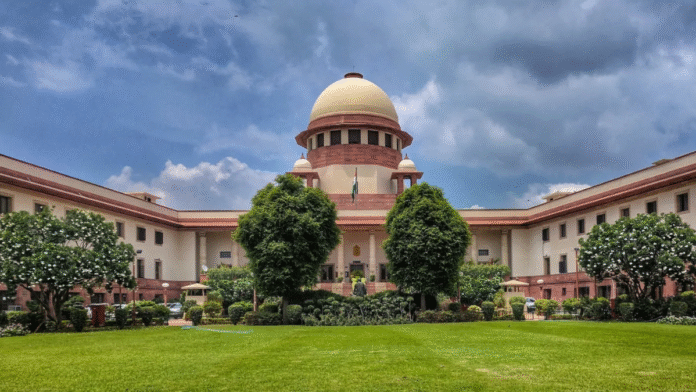
On Monday, the Supreme Court allowed the Waqf (Amendment) Act, 2025 to remain in force but chose to pause a few controversial sections. The provisions placed on hold include the one giving district collectors authority to decide whether land claimed as waqf is actually state property, as well as the rule that only a legitimate property owner who has followed Islam for at least five years may establish waqf through a registered deed.

While announcing the order, Chief Justice of India Bhushan R Gavai clarified that the five-year requirement for being a practising Muslim will apply only after state governments notify detailed rules for determining religious adherence.

The bench, which included Justice AG Masih, ruled that compulsory registration of waqf lands on a nationwide portal must continue without interference. At the same time, it struck down the clause giving collectors the final word on whether a property is waqf or government land, and barred them from altering revenue records on their own. Such disputes, the court said, must remain open to examination by waqf tribunals and high courts, and until those cases are settled, third-party rights cannot be created over the land in question.

The judges also directed that the Central Waqf Council, functioning under the Union Ministry of Minority Affairs and chaired ex officio by the Union minister, cannot have more than four members who are not Muslim. In the same spirit, state waqf boards were told not to include more than three non-Muslim members. The court added that the chief executive officers of these boards should, as a matter of preference, be Muslims, even though the new law does not specifically make this a condition.

While announcing the verdict, Chief Justice Bhushan R Gavai reminded that every law carries a presumption of constitutionality, but he also said that adequate protections are essential, and that justified freezing some of the new provisions.

The judgment follows an earlier hearing on August 22, when the bench had refused to halt a government notification requiring all waqf lands to be registered on a digital portal within six months. Issued on June 6 by the Minority Affairs Ministry, that notification directed that every waqf property be entered into the UMEED platform, a system meant to centralise information across the country.

On that day, the Chief Justice noted that the court could not issue an interim stay since the matter had already been reserved for judgment. He told lawyers seeking relief that compliance was necessary for now and the court’s final ruling would address the concerns raised.

According to the government, UMEED is intended to build a transparent, central database of waqf properties complete with photographs and geotagged details. Any land not entered in time could be marked as disputed and sent to a tribunal for further scrutiny.

The challenges to the law were heard over three days in May, and the bench kept its decision pending from May 22. During those hearings, the court observed that keeping a formal list of waqf properties has been part of Indian law for more than a hundred years.

The judges recalled that even under the Mussalman Waqf Act of 1923, details of waqf had to be provided though registration was not compulsory, and by the 1954 Act such registration became the norm. A government report in 1976 had also underlined the importance of proper registration. The court remarked that the legal framework since 1923 has consistently emphasised this process.

Kapil Sibal, appearing for one of the petitioners, argued that making custodians of waqf responsible for registration penalises the community for what he called decades of government inaction. He said that the state had been tasked since 1954 with identifying such properties, and its failure could not now be turned into a burden on Muslims. In his view, this scheme undermined the constitutional right under Article 26 to manage their own religious property.

The petitioners also objected to the clause requiring that only Muslims who had practised their faith for at least five years could dedicate land as waqf, pointing out that no such restriction exists in the case of other religious trusts or endowments.

Solicitor General Tushar Mehta defended the changes, arguing that the 2013 amendment, which permitted any individual to create waqf, was conceptually wrong. Since waqf is an Islamic institution, he said, it could not logically be open to people of other faiths. He maintained that the 2025 law was aimed at strengthening oversight and preventing abuse.

Another provision under challenge was the ban on creating waqf over tribal land. Mehta said this was needed to protect vulnerable communities and their traditions, citing recommendations made by a joint parliamentary committee. The judges, however, questioned the reasoning, asking why a uniform religion should be prevented from operating over tribal lands if no fraud or misrepresentation was involved.

Senior advocates Rajeev Dhavan and Abhishek Manu Singhvi stressed that the law placed Muslims at a disadvantage and threatened to erase properties historically regarded as waqf. Dhavan noted that charity is central to Islam, while Singhvi warned that the registration process and state involvement risked creating an endless cycle of disputes blocking recognition of legitimate endowments.

States and intervenors siding with the Union highlighted alleged misuse, claiming that vast tracts of land, sometimes entire villages, had been declared waqf without sufficient basis.

Altogether, the petitions have challenged the statute on constitutional grounds, alleging that it violates fundamental rights and disrupts long-standing religious practices. The Centre has stood by the law, calling it a reform necessary to ensure accountability, transparency, and protection from encroachment.

Mossad Rejected Attacks Against Hamas Leaders in Qatar: Sources

0
MOssad
MOssad

Israel’s foreign intelligence agency Mossad declined to participate in ground operations against Hamas officials in Qatar, leading to Tuesday’s controversial airstrikes instead, according to a Washington Post report citing Israeli officials.

Mossad denies airstrikes against Hamas in Qatar

The airstrikes targeted senior Hamas leaders in Qatar, marking a significant escalation in Israel’s operations against the Palestinian militant group. However, the absence of Mossad from Israel’s official statements regarding the operation revealed internal disagreements within the Israeli security establishment.

Two Israeli sources familiar with the matter told the newspaper that Mossad chief David Barnea opposed a recent plan for an on-the-ground operation “partly because such an action could rupture the relationship he and his agency had cultivated with the Qataris.” Qatar has served as a crucial mediator in ceasefire negotiations while hosting Hamas leadership.

Internal Opposition and Support

The strike faced resistance from key military figures. Israel Defence Forces Chief Lt Gen Eyal Zamir opposed the timing of the operation, while Strategic Affairs Minister Ron Dermer and Defence Minister Israel Katz supported Prime Minister Benjamin Netanyahu’s decision. Notably, Nitzan Alon, a senior IDF officer responsible for hostage negotiations, was excluded from planning meetings to prevent opposition voices.

The Mossad’s concerns influenced both the timing and methodology of the strike. “We can get them in one, two, or four years from now, and the Mossad knows how to do it,” one Israeli official questioned. “Why do it now?”

Casualties and Diplomatic Fallout

Hamas reported that while the airstrike failed to eliminate top officials including acting leader Khalil al-Hayya, it killed several relatives, aides, and a Qatari officer. Qatar condemned the attack as “state terrorism” and accused Israel of betraying the mediation process.

Netanyahu defended the operation, drawing parallels to America’s post-9/11 response. “I say to Qatar and all nations that harbour terrorists, you either expel them or you bring them to justice. Because if you don’t, we will,” he stated. He characterized Hamas’ October 7 attack as Israel’s “9/11 moment” and accused Doha of providing safe haven to terrorists.

International Response

US President Donald Trump expressed dissatisfaction with the operation, stating he was “very unhappy about every aspect” of it. The strike has raised concerns about its impact on ongoing diplomatic efforts and regional stability.

Analysts suggest Netanyahu may have lost patience with the prolonged ceasefire negotiations, opting for military action despite internal opposition from intelligence and military leadership.

Chhattisgarh: Conversion Allegations Spark Clashes in Bilaspur and Durg Districts

0
Chhattisgarh
Chhattisgarh

Chhattisgarh: Communal tensions erupted across two Chhattisgarh districts over the weekend as Christian prayer meetings triggered confrontations with Hindu organizations, leading to arrests, protests, and prolonged standoffs at police stations.

Religion Conversion sparks row in Chhattisgarh

In Bilaspur’s Sipat area, approximately 300 Christians had assembled for a community prayer meeting when Hindu organizations staged demonstrations outside the venue, alleging illegal religious conversions were taking place. The Sipat police subsequently registered cases against seven Christian community members, igniting widespread anger among the Christian population.

The arrests prompted hundreds of Christians to surround the police station, demanding withdrawal of charges against their community members. Simultaneously, Hindu organizations also besieged the same facility, insisting on strict action against the accused. Both groups maintained their protests for nearly 10 hours, creating a volatile atmosphere throughout the city.

Durg Violence Escalates – Here’s what happened:

Similar tensions materialized in Chhattisgarh’s Durg district, where Vishwa Hindu Parishad, Bajrang Dal, and Hindu Jagran Manch activists surrounded a local church during a prayer meeting held in a residential area near Bafna Mangalam on Jail Road.

The situation deteriorated when a Christian community member identified as “John” allegedly verbally abused Bajrang Dal workers, triggering violent clashes. Eyewitness accounts and video evidence show John being beaten with sticks before police intervention and his subsequent arrest.

John’s detention further inflamed communal tensions, prompting large numbers of Christians to march to the police station while raising slogans. Police relocated both parties to Pur village police station on the city’s outskirts to file complaints, though heated arguments persisted even there. The arrival of Bhim Army activists from Raipur further escalated the situation.

Official Response and Demands

Jyoti Sharma of a right-wing organization alleged John had a history of similar incidents and receives foreign funding, demanding his expulsion from the district and investigation of his bank details. The group threatened agitation if their demands weren’t met.

Durg Additional Superintendent of Police Sukhnandan Rathore confirmed prior knowledge of the prayer gathering. “On reaching the spot, people of Bajrang Dal and the Christian community were found fighting with each other, due to which a law-and-order situation arose. Both parties have now been counselled, and the investigation is ongoing,” he stated.

Christian leaders rejected conversion allegations, with one stating: “The definition of conversion is not clear; neither the government nor the administration has an answer to it. All this is just a fabricated story. We are ready to hold prayer meetings in the open. We are a Christian community preaching the message of love. People join us freely because of love. Those who join us are giving up addiction and improving their social status, which is a positive change.”

Bigg Boss 19: Nagma, Natalia Out of House in Double Elimination – Here’s a Recap!

0
Bigg Boss 19
Bigg Boss 19

Bigg Boss 19: The season 19 has maintained the franchise’s trademark unpredictability, delivering its first major surprise with a double elimination that caught viewers off guard after three weeks of escalating drama inside the house.

Double Elimination in Bigg Boss 19 House

Social media influencer Nagma Mirajkar and Polish actor Natalia Janoszek became the season’s inaugural casualties, marking an unexpected end to their reality TV journey. The makers announced both departures through social media posts, sharing individual farewell messages for each contestant.

For Natalia’s exit, they posted: “Iss season ka pehle eviction! Natalia Janoszek ka safar hua khatam, kaisi lagi aapko unki journey?” [The first eviction of the season! Natalia Janoszek’s journey comes to an end. How did you find her journey?]

Nagma’s elimination was announced with equal drama: “Aaj ka double elimination hua shocking!! Nagma Mirajkar huyi iss week ghar se beghar!” [Today’s double elimination was shocking!! Nagma Mirajkar has been evicted from the house this week!]

Farah Khan’s No-Nonsense Weekend in Bigg Boss 19

With Salman Khan occupied with other shooting commitments, filmmaker Farah Khan stepped in as guest host for Weekend Ka Vaar, bringing her characteristic directness to the proceedings. She wasted no time addressing contentious house dynamics.

Khan first confronted Kunickaa Sadanand about her “control freak” behavior, specifically targeting incidents where Kunickaa instructed Zeeshan Quadri to clear his plate of puris and reprimanded housemates for improper eating habits.

The critique continued as Farah addressed Kunickaa’s comments about fellow contestant Tanya Mittal’s upbringing. “She reminded everyone that no one has the right to comment on someone’s parenting,” establishing clear boundaries regarding personal attacks within the house.

Baseer Ali also faced Farah’s scrutiny when she confronted his dismissive attitude toward other contestants. “She slammed him for saying the other contestants weren’t ‘on his level,'” challenging his perceived superiority complex.

Viewing Details of Bigg Boss 19

Bigg Boss 19 continues its daily broadcast schedule on Colors TV at 10:30 PM, with earlier streaming availability on JioHotstar at 9 PM, allowing fans to catch all the unfolding drama before television audiences.

The double elimination sets a dramatic precedent for the season, suggesting viewers can expect continued surprises as the competition intensifies.

Shabana Azmi to Divya Dutta honour Tannishtha Chatterjee’s Triumph over Cancer – See Post

0
Tannishtha Chatterjee

In a heartwarming display of friendship that could rival any Bollywood script, veteran actress Tannishtha Chatterjee received the ultimate send-off from her star-studded girl gang as she prepares to showcase her directorial debut “Full Plate” at the prestigious Busan International Film Festival.

Shabana Azmi captured the celebration on Instagram, sharing group photos featuring Tannishtha alongside Urmila Matondkar, Sandhya Mridul, Shahana Goswami, and Divya Dutta. The images radiate pure joy, showing the actresses sharing hearty laughs together, while a video reveals Tannishtha cutting a celebratory cake as her friends cheer enthusiastically.

About Tannishtha Chatterjee Cancer Journey

What makes this celebration extraordinary is the context: Tannishtha completed her film’s post-production while battling stage 4 oligo metastatic cancer, earning her the affectionate nickname “Tiger Tan” from her support network.

Shabana Azmi’s caption perfectly encapsulated the sentiment: “To Tiger Tan as she heads to Busan International Film Festival with her directorial venture which she completed during her cancer treatment. You rock of Gibraltar.”

Sisterhood in Action

During a media interview, Tannishtha revealed the depth of her friends’ support throughout her medical journey. “They have been taking turns to come to the hospital. Shabana ji came to the hospital many times. Tanvi came so many times. Urmila and Divya also came. Everyone came. They have been visiting me regularly,” she shared.

The support extended beyond her famous friends. “Dipti Gupta, a very well-known cinematographer, she has been such a rock-solid support, she has come so many times. Sanjay Suri, a very dear friend of mine… has come. He has also been a caregiver to his mum,” Tannishtha explained.

Organized Care Network – Tiger Tan

Perhaps most touching was how her friends self-organized their support. “For every chemo cycle, there were two-three people who would divide hours among themselves. They figured it out on their own. I was not telling people. They formed groups and have been there with me throughout. It felt wonderful,” she revealed.

“Full Plate,” starring Kirti Kulhari with Monica Dogra, Sharib Hashmi, and Indraneil Sengupta, premieres at Busan International Film Festival 2025, representing triumph over adversity through unwavering friendship.

Amitabh Bachchan Thanks Wife Jaya For Stepping Back From Films To Raise Their Children

0

Amitabh Bachchan has often acknowledged that his success would have felt incomplete without the choices Jaya Bachchan made for their family.

Jaya’s journey in cinema is remembered for the grace and authenticity she brought to her roles. At a time when Hindi films were dominated by larger-than-life portrayals, her natural style of acting stood out. She shared the screen with legends like Dharmendra, Sanjeev Kumar, and Amitabh himself, and never faded into the background.

The year 1973 marked a new chapter in her life. Marriage to Amitabh was followed by a few more film appearances, but motherhood soon became her priority. With the arrival of Shweta in 1974 and Abhishek in 1976, Jaya gradually distanced herself from the limelight. She returned briefly in films such as Yash Chopra’s Silsila in 1981, a project that stirred endless discussions for its casting, but her presence on screen became rare.

For someone who could have continued to shape the course of Hindi cinema, her decision to step away was a remarkable sacrifice. Few actresses of her stature would have chosen family over an illustrious career at its peak.

Adani Power to Establish $3 Billion Ultra Super-Critical Plant in Bihar

0
Adani Power
Adani Power

Adani Power announced plans on Saturday to construct a 2,400 MW ultra super-critical power plant in Bihar’s Bhagalpur district, representing a $3 billion investment (approximately Rs 26,482 crore) in the state’s energy infrastructure.

The Adani group subsidiary has executed a 25-year Power Supply Agreement (PSA) with Bihar State Power Generation Company Ltd. (BSPGCL) to supply electricity from the facility, which will be located at Pirpainti in Bhagalpur district.

Adani Power to launch project in Bihar

The power supply agreement follows a Letter of Award issued by BSPGCL to Adani Power in August, acting on behalf of North Bihar Power Distribution Company Ltd (NBPDCL) and South Bihar Power Distribution Company Ltd (SBPDCL). Adani Power secured the project by submitting the lowest supply rate bid at Rs 6.075 per KWh.

The company plans to invest approximately $3 billion to construct the new facility, comprising three 800 MW units, along with supporting infrastructure under the Design, Build, Finance, Own, and Operate (DBFOO) model. Construction is targeted for completion within 60 months from project commencement.

Coal linkage for the power plant has been allocated under the Government of India’s SHAKTI Policy, ensuring fuel security for the facility’s operations.

Adani Power project brings employment in Bihar

The project promises significant employment opportunities for Bihar, with Adani Power estimating direct and indirect employment for 10,000-12,000 people during the construction phase. Once operational, the facility will provide permanent employment for approximately 3,000 individuals.

About Adani Power:

Adani Power, part of billionaire Gautam Adani’s business conglomerate, holds the distinction of being India’s largest private thermal power producer. The company currently operates an installed thermal power capacity of 18,110 MW across its portfolio.

This Bihar project represents a substantial addition to Adani Power’s generation capacity, increasing its footprint by over 13% once commissioned. The ultra super-critical technology employed will ensure higher efficiency and lower emissions compared to conventional thermal plants.

The investment underscores Adani Power’s continued expansion strategy in India’s power sector, particularly in states requiring enhanced electricity generation capacity to meet growing demand. Bihar’s power infrastructure development aligns with the state’s industrial growth objectives and energy security requirements.