Home Blog Page 64

CBI to Host Conference Aimed at Boosting Extraditions and Interpol Cooperation

0
CBI

The Central Bureau of Investigation is preparing to host a landmark strategy conference next week that will bring together central and state agencies to discuss how India can improve its pursuit of fugitives abroad. The focus will be on increasing the number of Interpol red notices, strengthening coordination to track offenders on foreign soil, and substantially raising extradition figures, which officials admit remain very low.

Senior representatives from multiple agencies, including the CBI, Enforcement Directorate, Income Tax Department, Customs, Directorate of Revenue Intelligence, Financial Intelligence Unit, National Investigation Agency, Intelligence Bureau, state police forces, the Ministry of Home Affairs, and the Ministry of External Affairs, are expected to attend. According to officials, one of the key topics will be the formation of specialised teams to locate and extradite different categories of fugitives such as terrorists, gangsters, drug traffickers and economic offenders.

The two-day event will be held on October 16 and 17 at Bharat Mandapam in Delhi. Union Home Minister Amit Shah will inaugurate the conference, which will also be attended by Foreign Secretary Vikram Misri and Home Secretary Govind Mohan. Police liaison officers from various international agencies posted in India will also take part.

There will be eight sessions in total, with two focused entirely on the extradition process. These will include discussions on preparing strong extradition requests, maintaining consistent communication with prosecutors abroad, ensuring timely responses to legal queries, and improving informal engagement with foreign law enforcement bodies.

“The Union home minister first emphasised in July the need to recalibrate India’s approach towards bringing back fugitives from foreign countries, which requires more coordinated efforts from all the stakeholders and better international cooperation. Hence, the CBI is organising this first-of-its-kind strategy conference, where all agencies will discuss ways to multiply the extraditions, develop a joint approach to locate fugitives and use Interpol tools like red notice through proper channels,” a government officer said on condition of anonymity.

Government figures indicate that between 2019 and 2024, India made 178 formal extradition requests but succeeded in bringing back only 23 fugitives. In total, 134 individuals have returned over the last five years, though most came through deportation rather than extradition, a process that depends more on diplomatic coordination. Nearly 30 fugitives have been returned to India this year alone through both routes. India currently has extradition treaties with 48 nations.

“The number is still very low. A large number of white collar criminals like Nirav Modi, Mehul Choksi; high-profile gangsters like Goldy Brar, Happy Passia, and drug smugglers based abroad have eluded the extraditions so far,” said a second officer.

He added, “We will discuss the creation of dedicated teams for different categories of fugitives – terrorists, gangsters, drug smugglers and economic offenders – for a focused approach to coordinate with agencies in respective countries and send foolproof requests in consultation with the CBI and MEA.”

The officer further emphasised the Ministry of External Affairs’ role in these efforts. “The conference will highlight the need for MEA to be more proactive while handling extraditions,” he said.

Another session will examine how state and Union Territory police can leverage the CBI’s Bharatpol platform to file a larger number of Interpol red notices. Officials believe this will make it harder for fugitives to move freely in countries where they are hiding.

“Currently, we send around 200 requests to Interpol every year for issuing red notices while a smaller country like South Korea sends approximately ten times this number. The states/UTs need to be encouraged to use the international cooperation route with the help of CBI,” said the first officer.

The conference will also take up the subject of conducting “trial in absentia” for fugitives whose extradition may take several years. This provision was recently introduced under the Bharatiya Nagarik Suraksha Sanhita, which has replaced the Criminal Procedure Code.

Venezuela Leader Maria Corina Machado Awarded 2025 Nobel Peace Prize Beats Trump

0
Maria Corina Machado

The Norwegian Nobel Committee awarded the 2025 Nobel Peace Prize to Maria Corina Machado, Venezuela’s main opposition leader currently in hiding, recognizing her efforts to promote democratic rights amid President Nicolas Maduro’s authoritarian regime.

Nobel Committee’s Recognition

The committee honored Machado, 58, for her “tireless work” promoting democratic rights in Venezuela and her “struggle to achieve a just and peaceful transition from dictatorship to democracy.” They commended her as a “brave and committed champion of peace” who “keeps the flame of democracy burning during a growing darkness.”

Political Background of Maria Corina Machado

Maria Corina Machado, known as Venezuela’s “Iron Lady,” has been central to the country’s pro-democracy movement despite facing arrests, travel bans, and political persecution. She was barred from running in the 2024 presidential election, which opposition groups claimed they won, though Maduro declared victory and launched a crackdown that forced Machado into hiding.

The industrial engineering graduate heads the National Coordinator of Vente Venezuela, a liberal political party she co-founded in 2013, and served in the National Assembly from 2010 to 2015. Time Magazine included her in “The 100 Most Influential People of 2025” list.

US-Venezuela Relations

The award comes as US President Donald Trump has intensified pressure on Maduro’s government over drug trafficking operations, halting diplomatic efforts and fueling speculation about potential regime change. The US doubled its reward for Maduro’s capture to $50 million in August.

Machado thanked Trump’s administration in August: “We, Venezuelans, thank President Trump and his administration for their firm and decisive action to dismantle the criminal and terrorist structure that is illegitimately holding onto power in our country,” she tweeted.

Trump’s Prize Ambitions

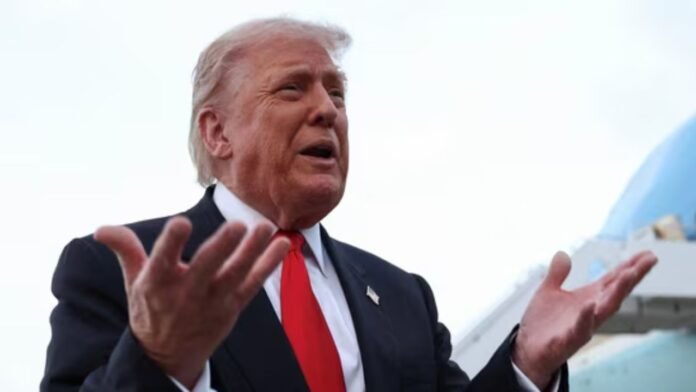
The decision disappoints Trump, who has repeatedly argued he deserved the prize for resolving “eight wars.” He would have joined Theodore Roosevelt, Woodrow Wilson, Jimmy Carter, and Barack Obama as US presidents receiving the award.

However, the committee’s choice aligns with Trump’s Venezuela policy, potentially softening any disappointment over being passed over for recognition of his diplomatic efforts.

The prize underscores international support for Venezuela’s democratic opposition amid ongoing political crisis.

Passengers to Soon Get Free Ticket Rescheduling Option on IRCTC

0
Indian railways.

Indian Railways is set to introduce a convenient new feature that will let passengers modify the date of their confirmed tickets online without paying any additional charges. The service, which is expected to be rolled out in January 2026, will be accessible through the Indian Railway Catering and Tourism Corporation (IRCTC) website as well as its mobile application.

Union Railway Minister Ashwini Vaishnaw confirmed that the initiative is part of a broader effort to make ticketing more user-friendly and efficient. The new option will allow passengers to reschedule their confirmed tickets directly, eliminating the need for cancellations and rebookings that often result in extra costs and inconvenience.

At present, travellers who need to change their plans must cancel their tickets and book new ones, which leads to deductions from the fare. For instance, cancelling a confirmed ticket between 48 and 12 hours before departure attracts a 25% charge, while cancellations made within 12 hours of travel result in a 50% deduction.

The upcoming system will streamline this process. Passengers will be able to select a new travel date for their confirmed tickets through their IRCTC accounts, provided seats are available. If the fare on the new date is higher, they will only need to pay the difference; if it’s the same or lower, no extra amount will be charged.

Railway officials explained that the rescheduling function will be integrated into IRCTC’s central reservation system in real time. Once a passenger logs in, they can choose their existing booking, view seat availability for the preferred date, and confirm the change instantly.

Officials noted that the feature is designed to benefit frequent travellers and those with uncertain schedules by saving time and avoiding unnecessary financial loss. The initiative also supports Indian Railways’ ongoing push toward digital innovation and better customer service.

In recent months, the Railways have implemented several other measures to modernize its ticketing and reservation system. From October 1, users must complete Aadhaar verification to book general reservation tickets within the first 15 minutes of opening. Additionally, the advance reservation period was reduced from 120 to 60 days last year to ensure more accurate travel planning and reduce last-minute cancellations.

PM Modi Calls India-UK Ties Crucial for Global Stability After Talks with Starmer

0
India & UK relations.

Prime Minister Narendra Modi described the India–UK partnership as a key force for global stability and economic progress, following comprehensive talks with his British counterpart, Keir Starmer, in New Delhi on Thursday. The discussions focused on strengthening cooperation across trade, investment, defence, and emerging technologies, marking a new chapter in the deepening strategic relationship between the two democracies.

Starmer arrived in Mumbai on Wednesday leading a high-level trade delegation of over 120 business leaders. His two-day visit comes just three months after India and the UK finalized their long-awaited free trade agreement, a milestone reached after years of intermittent negotiations that were often impacted by global economic disruptions and shifting trade dynamics.

Both leaders praised the newly concluded Comprehensive Economic and Trade Agreement (CETA), highlighting its potential to reduce tariffs, expand market access, create jobs, and deliver significant benefits for industries and consumers in both countries. They also underscored their shared commitment to upholding global stability and a rules-based international order.

At the meeting, several major initiatives were announced under the Technology Security Initiative (TSI), focusing on collaboration in artificial intelligence, telecommunications, critical minerals, and healthcare innovation. The two sides also advanced defence cooperation, signing an agreement for the government-to-government supply of lightweight multirole missile systems to enhance India’s air defence capabilities. In addition, Indian Air Force instructors will soon work alongside their Royal Air Force counterparts under a new joint training arrangement.

Speaking at a joint press event, Modi emphasized that India and the UK were “natural partners” united by shared democratic values and a common vision for global progress. “India’s energy and the UK’s expertise form a partnership of trust, driven by talent and technology,” he said, adding that the collaboration is well positioned to address global challenges in an era of uncertainty.

Starmer echoed Modi’s sentiments, saying the two nations were forging a “modern partnership built for the future” that would seize the opportunities of a rapidly evolving global economy. He reaffirmed the UK’s support for India’s “Viksit Bharat 2047” vision and said the TSI would be the foundation for deeper engagement in AI, communications, and advanced defence technology.

Modi revealed that India and the UK would soon launch an Industry Guild and a Supply Chain Observatory to enhance cooperation on critical minerals. He also announced the creation of a joint Climate Technology Startup Fund to encourage innovators in sustainability and clean technology from both nations.

On the defence front, Modi noted that the two countries were moving toward co-production and greater industrial integration. Their discussions coincided with Konkan 2025, a joint naval exercise currently underway, featuring a British carrier strike group and Indian naval assets.

A joint statement confirmed that India and the UK would establish a Regional Maritime Security Centre of Excellence under the Indo-Pacific Oceans Initiative and finalize a new agreement on developing maritime electric propulsion systems for Indian vessels. The two sides also reiterated their shared commitment to counter-terrorism, pledging to work together against extremist ideologies, terror financing, and cross-border threats.

“The Prime Ministers condemned in the strongest terms the April 2025 terrorist attack in Pahalgam, Jammu and Kashmir,” the statement said, adding that both nations would intensify efforts to bring global terror networks and their sponsors to justice.

Higher education featured prominently in the discussions as well. Nine leading British universities are set to open campuses in India, including the University of Southampton in Gurugram and the University of Liverpool, York, Aberdeen, and Bristol, which have received approvals for branch campuses. Queen’s University Belfast and Coventry University will open in GIFT City, while Lancaster University and the University of Surrey have also been cleared to establish Indian campuses. The initiative is expected to give a £50-million boost to the UK’s education sector while supporting India’s growing demand for higher education access.

Both leaders also exchanged views on regional and global issues, including the Indo-Pacific, the conflict in Ukraine, and the humanitarian crisis in Gaza. Modi reiterated India’s call for peace through dialogue and diplomacy, emphasizing the need for stability in West Asia and maritime security in the Indo-Pacific.

Starmer welcomed the initial phase of the Gaza peace plan and urged that it be implemented fully and immediately, along with the lifting of restrictions on humanitarian aid. The visit concluded with both sides reaffirming their shared vision for a stronger, forward-looking partnership that contributes to global peace, prosperity, and innovation.

Sports Ministry Acts After Indian Flag on Swimwear Triggers Uproar at Asian Championship

0
Indian swimming

A heated debate has surfaced at the ongoing Asian Aquatics Championship in Ahmedabad after members of India’s men’s water polo team were spotted wearing swimming trunks that displayed the Indian national flag. The incident has sparked widespread outrage among former athletes and spectators, who view it as a serious breach of the Flag Code of India, 2002.

Reports from Dainik Jagran indicate that the controversy quickly reached the Ministry of Youth Affairs and Sports as well as the Indian Olympic Association (IOA). Both authorities have asked the Swimming Federation of India (SFI) to explain how the violation occurred. As India hosts the championship, many have called the episode an avoidable embarrassment on an international platform.

The Flag Code of India clearly states that the national flag must not be displayed on any garment worn below the waist, including shorts, trousers, or swimwear. The Prevention of Insults to National Honour Act, 1971 also prohibits using the tricolour on undergarments, napkins, cushions, or other household items. Although global aquatic events allow athletes to feature small national emblems on caps or jerseys, Indian law overrides these international norms when it comes to representing the country.

In this case, members of the Indian water polo team had the tricolour printed directly on their swimming trunks instead of restricting its use to the headgear, as prescribed by both Indian regulations and international standards. The issue was first reported by onlookers and quickly gained traction online, drawing sharp criticism from the sports community and patriotic groups alike.

Officials from the Swimming Federation of India have acknowledged the oversight and promised to resolve it without delay. “We are taking this matter seriously. The players’ kits will be modified before the next match, and the flag will only appear on swimming caps as per the rules,” an SFI spokesperson told Dainik Jagran. The spokesperson further stated, “While many countries display their flags on sportswear, we respect the national protocol and sentiments of the people of India.”

The SFI maintained that its decision followed World Aquatics (formerly FINA) guidelines, which permit a national flag or country code on athletic gear up to a fixed size. However, legal experts and former athletes have pointed out that when Indian teams compete under the national banner, domestic laws and the Flag Code take precedence over any international sporting regulations.

Responding swiftly, the Ministry of Youth Affairs and Sports has demanded a comprehensive report from the SFI and instructed that immediate corrective steps be taken. A senior ministry official stated that although the violation appears unintentional, matters involving the respect of the national flag must be treated with utmost seriousness. The official added that the incident seemed to stem from a lapse in judgment rather than malice but emphasized that the dignity of the national emblem is non-negotiable.

The SFI has since confirmed that new uniforms are being prepared for the team and that all future kits will strictly adhere to the national flag code. The Federation assured that such an incident will not occur again as it works closely with the Sports Ministry to maintain the highest standards of national representation.

Bhagwant Mann Vows to Transform Punjab into a Leading Business Hub

0
Punjab

Punjab, once celebrated as the nation’s breadbasket and the sacred land of the Gurus, is now rewriting its identity as a global growth hub. Under the leadership of Chief Minister Bhagwant Singh Mann, the state has transitioned from an agriculture-based economy to a magnet for international investment. The world’s leading corporations—from Japan, the United States, Germany, the Netherlands, and the United Kingdom—are placing their trust in Punjab’s fertile potential and reform-driven administration. Since 2022, investment proposals amounting to ₹1.23 lakh crore have taken root, creating nearly 4.7 lakh new jobs and bringing a fresh wave of prosperity to every district of the state.

Chief Minister Mann has often said that Punjab’s greatest strength lies in the spirit of its people—their resilience, dedication, and ability to turn challenges into triumphs. “Our promise was to bring dignity, jobs, and prosperity to every home in Punjab, and that promise is becoming reality,” he stated during a recent public address. The numbers speak for themselves: over ₹18,000 crore in foreign investment has flowed into Punjab since 2021, including more than ₹8,000 crore in 2025 alone. Global powerhouses such as Amazon, Nissan-Renault, Siemens, De Heus, and PepsiCo are not only investing here but also transforming the state into a model of sustainable and inclusive growth.

Every corner of Punjab now carries a success story. In Rajpura, the Dutch company De Heus has built a cutting-edge animal feed plant worth ₹150 crore, completed in just two years, which is employing over 300 local youth and strengthening the regional farming network. Mohali has become a digital hub with Amazon Web Services setting up ₹7,000 crore AI and data infrastructure, creating high-skill jobs for Punjab’s new tech generation. Meanwhile, Ludhiana, the industrial powerhouse, has welcomed a ₹500 crore electric vehicle plant by Nissan-Renault, driving both employment and clean mobility. Siemens Energy’s ₹450 crore solar and wind projects in Bathinda and Fazilka are powering hundreds of homes with green energy, and PepsiCo’s ₹150 crore expansion in Sangrur has brought sustainable food processing to the heart of Punjab. Alongside them, Nestlé, Cargill, Freudenberg, and Hindustan Unilever have invested over ₹3,000 crore since 2023, generating thousands of jobs and reaffirming Punjab’s position as India’s rising industrial force.

Behind this surge of development is an unwavering commitment to reform. The FastTrack Punjab portal, launched by the Mann government, has emerged as a digital revolution in governance. Offering over 150 online services under one platform, it has made setting up a business in Punjab faster than ever before. The Punjab Right to Business Act ensures that all industrial projects receive approvals within a matter of days—five days for projects in industrial parks and forty-five for others. With lower power tariffs, accessible land, and tax incentives, Punjab has become a state where investors find ease and transparency, not hurdles and delays. As CM Mann put it, “We have replaced red tape with red carpets. Today, Punjab welcomes every investor with open arms.”

This transformation is reshaping the state’s economic foundation. Agriculture continues to thrive, but now it stands alongside world-class industries in manufacturing, food processing, and renewable energy. Punjab contributes 17 percent of India’s wheat production, yet it is also home to auto clusters in Ludhiana and Rupnagar, clean energy initiatives by Siemens, and digital infrastructure by Amazon. The proposed film city in Amritsar and a modern tourism policy are opening entirely new sectors of growth, promising opportunities beyond traditional industries.

Punjab’s economy today stands strong with a Gross State Domestic Product of ₹8.91 lakh crore and an impressive annual growth rate of 9 percent. Though the state covers only 1.5 percent of India’s total land area, its contribution to the national economy continues to grow remarkably. This investment boom is creating livelihoods, boosting exports, and advancing eco-friendly technologies that conserve water and promote sustainability. It is not only an economic victory but also a social transformation—one that restores dignity, employment, and hope to countless families.

As Punjab prepares for the Progressive Punjab Investors Summit in Mohali from March 13 to 15, 2026, the excitement is palpable. “This summit celebrates Punjab’s strength and its readiness to lead India’s next chapter of industrial growth,” Chief Minister Mann announced. The event aims to bring ₹20,000 crore worth of new investments in green energy, AI, and semiconductor manufacturing, opening the doors to a new future.

The story of modern Punjab is one of confidence and resurgence. Every new project, every factory, and every job is a reflection of the government’s determination to turn dreams into achievements. With the spirit of the Gurus as its guide and the ambition of its youth as its driving force, Punjab is no longer just feeding the nation—it is leading it into a new era of innovation, enterprise, and global pride.

CM Bhagwant Mann’s FastTrack Punjab Initiative Boosts Ease of Doing Business with Major Investment and Job Gains

0
Punjab

Punjab is witnessing a new wave of progress as Chief Minister Bhagwant Mann’s government transforms how businesses take shape in the state. With the launch of the revamped FastTrack Punjab Portal on June 10, 2025, following its redesign on May 29, Punjab has made it easier than ever for investors to start operations. The platform has removed old bureaucratic barriers, opening doors for faster approvals, transparent systems, and fresh opportunities that are driving the state’s industrial growth and employment generation.

What once required endless paperwork and months of waiting is now completed in a matter of days. Earlier this year, more than 8,000 business applications were pending beyond their deadlines, but now only 283 remain. This marks an impressive 96 percent reduction. District-level pendencies dropped from 833 to just 17, and all 166 state-level cases have been fully resolved. These achievements, highlighted in recent reports, reflect not just administrative reform but also a growing sense of confidence among investors who now view Punjab as a reliable and promising destination.

At www.fasttrack.punjab.gov.in, the FastTrack Punjab Portal integrates over 20 departments, covering services like land, environment, forest, and fire safety clearances. The process has been simplified to a single form, ensuring all approvals under the Punjab Right to Business Act, 2025, are granted within 45 days. For projects in industrial parks, initial permissions are issued in five days, while others receive clearance within 15 to 18 days based on self-declaration. The Revenue Department has also launched India’s first online CRO certification service for land validity, approving 78 of 134 applications so far.

The system’s efficiency is its greatest strength. If any department fails to respond within the specified time, the application is automatically approved. Smart technology ensures that errors are caught instantly, and redundant or outdated files are removed. In case of rejections, applicants can appeal through a dedicated board. Regular updates via SMS and email keep users informed at every stage. In just four months, 87 percent of 17,006 service applications and 81 percent of 4,884 license applications were processed within the timeline. Out of 112 total project applications, 85 were approved, including seven that were automatically cleared.

The results of these efforts have been remarkable. Between April and September 2025, Punjab received 1,295 new project proposals, bringing in investments worth ₹29,480 crores and generating 67,672 jobs. Since March 2022, 7,414 projects have been approved, leading to total investments of ₹1.29 lakh crores and creating 4.6 lakh jobs. The portal alone has attracted projects valued at ₹21,700 crores, marking a 167 percent rise from 2024 and 110 percent from 2023. Industrial land sales and infrastructure upgrades have also accelerated, with ₹300 crores invested in the development of 52 industrial areas and ₹150 crores distributed in subsidies since April.

Punjab’s rise by five spots in the national Ease of Doing Business ranking reflects the success of these reforms. Entrepreneurs now describe the system as transparent, fast, and dependable. “What used to take months is now done in days,” said one investor. Aam Aadmi Party leader Arvind Kejriwal praised the initiative as “the country’s biggest business reform,” saying that Punjab is now corruption-free and attracting investors once again.

This achievement goes beyond business and governance. The FastTrack Punjab initiative is setting new standards for efficiency and transparency while giving hope to youth through new job opportunities. By promoting economic development and reducing social challenges, the Mann government has taken another decisive step toward building a stronger, self-reliant, and prosperous Punjab.

Punjab’s Growth Gets Wings as Shiva Texfabs Invests ₹815 Crore

0

Under the leadership of Chief Minister Bhagwant Singh Mann, Punjab is transforming from a primarily agricultural state into one of India’s most promising industrial hubs. The state’s progressive industrial policy and transparent governance have begun to attract major investors, and the latest example is Shiva Texfabs Limited’s decision to invest ₹815 crore in Ludhiana. This textile giant, part of the respected Shiva Group, plans to build an advanced manufacturing facility that will reinforce Ludhiana’s standing as the Manchester of India and strengthen Punjab’s presence in the global textile market.

Established in 2012, Shiva Texfabs specializes in the production of high-quality polyester filament, spun yarns, and performance fabrics that cater to both Indian and international customers. The company’s management credited the Punjab government’s smooth coordination and investor-friendly reforms for their decision to move forward with such a large investment. They described the process as efficient and transparent, a reflection of the state’s new approach to economic development.

The impact of this project will go far beyond industry growth. Thousands of young men and women across Punjab are expected to find employment in the new facility, bringing stability and prosperity to families across the region. With more people working, the local economy will expand, small businesses will benefit, and overall consumer spending will rise. The Chief Minister has said that the measure of real progress lies in the opportunities created for the youth, and this project directly fulfills that goal.

The Mann government has focused heavily on simplifying the industrial setup process, making it faster and easier for companies to start operations in Punjab. The single-window clearance system and clear regulatory framework have reduced red tape and built investor confidence. These reforms have made Punjab one of the most preferred destinations for setting up industries in the country.

The ₹815 crore investment by Shiva Texfabs is not just a financial milestone; it is a symbol of Punjab’s renewed self-belief and economic resurgence. It sends a clear message to both national and international investors that the state is ready for large-scale industrial growth. This project aligns perfectly with the goals of Make in India and Make in Punjab, ensuring that the benefits of industrialization reach every corner of the state.

Chief Minister Mann has often spoken about Punjab’s dual identity, where fertile fields represent the backbone of agriculture and factories symbolize the spirit of progress. In his words, “Excellent is the grain of wheat in the field, but even more excellent is every warp and weft woven in the factory.” This vision captures the state’s journey toward balanced, inclusive development.

The Chairman of Shiva Texfabs has publicly praised the Punjab government for its cooperation and efficiency, stating that such responsiveness encouraged them to make their decision swiftly. This partnership between the government and the private sector marks a turning point in Punjab’s growth story.

Punjab is now moving beyond traditional boundaries. With each investment, the dream of Rangla Punjab, a prosperous and self-reliant state, is coming closer to reality. Chief Minister Mann’s administration has not just promised change; it has set it in motion, ensuring that Punjab’s future will be built not only from its rich soil but also from its thriving industries.

Javed Habib in Soup: Celebrity Hairstylist Booked for Alleged Fraud Case

0
Javed Habib
Javed Habib

Uttar Pradesh’s Sambhal police have issued a lookout notice against celebrity hairstylist Javed Habib and his family members in connection with an alleged multi-crore fraud involving investment schemes. The action follows registration of 20 FIRs against Habib’s son and three other individuals.

Javed Habib in legal trouble

Sambhal Superintendent of Police KK Bishnoi stated that preliminary investigations suggest fraud totaling Rs 5 to Rs 7 crore, though the figure may increase as additional victims file complaints. Current probes have confirmed scams worth approximately Rs 1 crore.

Bishnoi said, “To curb crime and criminals in Sambhal, a total of 20 cases have been registered against financial fraudster Jawed Habib and his son, along with three others. These individuals operated as a gang and defrauded people. They took Rs 5-7 lakh in cash from people and lured them into investing… A case has been registered in the matter. A total of 35 people have filed complaints.”

Police investigations focus on FLC (Follicle Global Company), reportedly founded by Habib’s wife. Authorities are examining the company’s assets and digital financial transactions. In 2023, FLC organized a major event in Sambhal where over 100 attendees reportedly invested substantial sums.

Here’s what Javed Habib’s legal aid said:

However, Javed Habib’s legal representative disputed the allegations Tuesday, clarifying that no FIRs have been filed directly against the hairstylist himself. The lawyer maintained that Habib and his son attended the Sambhal event solely as chief guests to promote hair and beauty industry practices, with no financial or business connections to FLC.

Pawan Kumar, Advocate for Jawed Habib, said, “There have been no FIRs registered in the name of Jawed Habib. We have no direct involvement in them… Jawed Habib regularly conducts hair and makeup seminars across India, and one such seminar was organised by FLC (Follicle Global Company) in Sambhal, where he was invited to speak. He, along with his son, attended the event as the chief guest.”

Kumar elaborated, “These accusations are being made without any proof. In the event, Jawed Habib only tried to promote the hair and beauty business. He had only attended the Sambhal seminar as part of his professional work. Beyond that, there is no business or financial relationship between him and any such company. On 22nd January, 2023, we issued a public notice clarification that we had no association whatsoever with Follicle Global Company. The notice was issued before the event took place… When we got to know that people were breached in the name of FLC and there were attempts of fraud, we issued this public notice.”

PM Modi Inaugurates Navi Mumbai International Airport’s 1 Phase

0
Navi Mumbai International Airport

Prime Minister Narendra Modi on Wednesday officially opened Phase 1 of the Navi Mumbai International Airport (NMIA), a major infrastructure project developed at an estimated cost of Rs 19,650 crore.

The greenfield airport occupies 1,160 hectares and is expected to alleviate congestion at Mumbai’s existing Chhatrapati Shivaji Maharaj International Airport.

PM Modi inaugurates Navi Mumbai International Airport

PM Modi conducted a walkthrough of the facility before the ceremonial inauguration. The airport’s operational rollout will begin with domestic flights in the coming weeks, while international services are scheduled to launch by December 2025.

The airport’s master plan includes four passenger terminals and two parallel runways. Additionally, a VVIP terminal is scheduled for construction beginning in 2026, with completion targeted for 2030.

About the Navi Mumbai International Airport

London-based Zaha Hadid Architects designed the terminal, which features a lotus-inspired architectural concept. The interior will display artistic installations highlighting Maharashtra’s cultural heritage and historical significance.

NMIA incorporates several innovative features, including an Automated People Mover system providing connectivity between all terminals. The facility has been equipped with infrastructure for Sustainable Aviation Fuel (SAF) storage and will generate approximately 47 MW through solar power installations. Electric bus services will support ground transportation needs. Notably, NMIA will become India’s first airport accessible via water taxi services.

India’s 1st Fully Digital Airport

Major carriers IndiGo, Air India, and Akasa Air have announced their intention to operate from the new facility. The airport management aims to establish NMIA as India’s first fully digital airport, implementing paperless boarding processes, electronic gates, and a dedicated mobile application providing passengers with real-time flight information.

Maharashtra Chief Minister Devendra Fadnavis, who called the inauguration a “grand moment” for Maharashtra and Mumbai’s growth, announced that the airport would be named after Dinkar Balu Patil. Patil was an advocate for equitable compensation for individuals displaced during Navi Mumbai’s original development.

The airport represents a significant expansion of India’s aviation infrastructure, positioning the Mumbai metropolitan region to handle increased passenger volumes and compete more effectively as an international aviation hub. The phased development approach allows for operational capacity to grow alongside demand over the coming years.