Home Blog Page 39

‘Losing a True Partnership and Friendship Was Hard’: Jennifer Garner Reflects on Split From Ben Affleck

0
jennifer garner and affleck

Actor Jennifer Garner has spoken candidly about her divorce from Ben Affleck, describing the experience as deeply difficult. In a recent conversation with Marie Claire, Garner said the most painful part of the separation was not the public attention, but the personal loss that came with it.

Reflecting on that period, Garner explained that the real challenge was the dissolution of a family unit. She said the hardest part was saying goodbye to a genuine partnership and friendship. According to her, what people saw or speculated about was not the source of pain. Instead, it was the reality of a family breaking apart and losing a shared life that made the experience so heavy.

She also spoke about how her relationship with Affleck has evolved over time, particularly when it comes to raising their children together. Garner shared that she has now reached a place where co parenting feels calm and balanced, something she never imagined would be possible in the aftermath of their split. She said that time played a crucial role in that journey, allowing space for healing, forgiveness, and the rebuilding of trust. Garner added that many women fear they will never regain a sense of peace or friendship after a breakup, but time can open the door to a new and healthier dynamic.

In addition, Garner touched on the importance of staying connected to loved ones. She said she makes a conscious effort to spend time with people who matter to her, noting that emotional strength comes from relationships and the support of those who stand by you during difficult phases of life.

Garner also made it clear that she avoids engaging with gossip or speculation about her personal life, especially when it concerns her children. She said paying attention to such talk offers no benefit to her or her family, and she chooses not to take it in.

Garner and Affleck married in 2005 and announced their separation in 2015. Their divorce was finalised in 2018. They continue to co parent their three children, Violet, Seraphina, and Samuel. Since 2018, Garner has been in a relationship with tech CEO John Miller.

India Faces Possible 50%–500% Tariff Shock as Trump ‘Favours’ Russia Sanctions Move

0
Trump India
Trump India

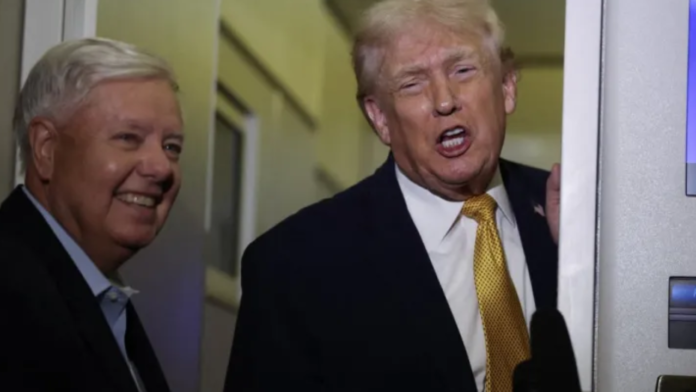
US President Donald Trump has stepped up his push to bring the war in Ukraine to an end by backing a new sanctions push against Russia that could also hit countries doing business with Moscow, including India. Trump has approved a proposed law that would sharply expand penalties not just on Russia but on its key trade partners as well.

Republican Senator Lindsey Graham confirmed that the President has cleared a bipartisan sanctions bill targeting Russia. Speaking to reporters, Graham said he expects the legislation to be put to a vote soon, possibly as early as next week. He described his recent meeting with Trump as productive and said the President had given the go ahead for the bill to move forward.

Graham explained that the proposed law would give Trump broad authority to act against countries that continue to buy discounted Russian oil, arguing that such trade helps sustain Moscow’s war effort. India features prominently among the nations likely to be affected, as it remains one of the major buyers of Russian crude and is already facing elevated tariffs from the United States.

In August 2025, Trump imposed an additional 25 percent tariff on Indian imports, calling it a penalty for New Delhi’s continued purchase of Russian oil. That move pushed total US tariffs on Indian goods to 50 percent. Other major economies such as China and Brazil are also expected to face scrutiny under the same framework, in line with Trump’s earlier warnings to BRICS nations.

What the proposed sanctions law includes

The proposed Sanctioning Russia Act of 2025 is designed to target individuals and countries that the US President determines are acting in line with Russian interests or blocking efforts to reach a peace settlement in Ukraine. The bill outlines four scenarios under which sanctions could be imposed. These include refusing to engage in peace talks with Ukraine, breaching a negotiated peace agreement, launching a fresh invasion of Ukraine, or attempting to undermine or overthrow the Ukrainian government.

If a person or country falls under any of these categories, the legislation directs the President to impose a range of penalties. These include visa restrictions and tariffs that could go as high as 500 percent. The bill also calls on the US Treasury to freeze assets and on the Commerce Department to halt the export or transfer of US produced energy products to or within Russia.

What this means for India

India is already among the countries facing the steepest US tariffs. During Trump’s so called Liberation Day trade actions in 2025, Washington rolled out fresh duties on multiple trading partners. India was initially hit with a 25 percent tariff, which was later doubled after Trump accused New Delhi of indirectly supporting Russia’s war by continuing to buy its oil.

As a result, India now faces a total tariff burden of 50 percent on exports to the United States, placing it alongside Brazil among the hardest hit nations. With the start of 2026, Trump has also signalled that tariffs on India could rise further, again pointing to its ongoing energy trade with Russia.

Speaking to reporters aboard Air Force One, Trump said Prime Minister Narendra Modi understood his displeasure over the issue. He described Modi as a good leader but added that the United States could raise tariffs on India very quickly because of its trade ties with Russia.

If the new sanctions bill becomes law, Trump would be required to impose tariffs of at least 500 percent on all goods and services imported into the United States from countries that knowingly trade in Russian origin uranium and petroleum products. This provision could significantly escalate economic pressure on India if it continues to import Russian energy.

After Mamata Banerjee Turned Up During I-PAC Raids, ED Seeks Calcutta HC’s Permission To File Obstruction Plea

0
mamata banerjee
mamata banerjee

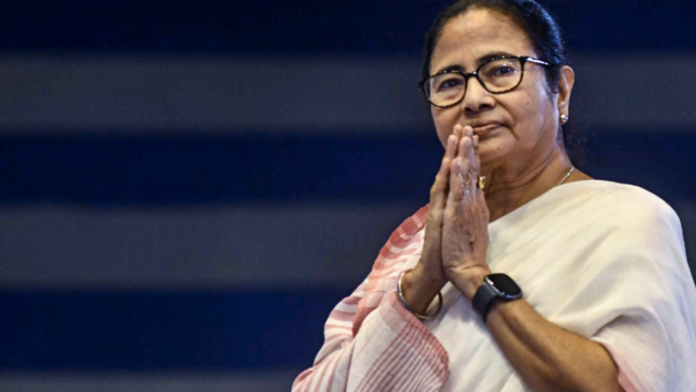
The Enforcement Directorate has approached the Calcutta High Court seeking permission to move a petition alleging interference in an ongoing money laundering investigation, after West Bengal Chief Minister Mamata Banerjee arrived at the residence of political consultant Pratik Jain during a raid on Thursday. The development was reported by PTI.

According to the probe agency, searches were carried out at ten locations on the same day as part of a money laundering case linked to West Bengal. Six of these locations were in the state, while four were in Delhi. Among the places searched were the Kolkata office of the Indian Political Action Committee and the south Kolkata residence of its co founder and director Pratik Jain.

The Indian Political Action Committee, commonly known as I PAC, provides political consultancy services to the ruling Trinamool Congress in West Bengal and also manages the party’s information technology and media operations.

The situation escalated when Mamata Banerjee reached Jain’s residence during the raid and alleged that the agency was attempting to confiscate sensitive party documents and electronic storage devices containing details related to the Trinamool Congress’s election strategy.

Following this intervention, the counsel representing the Enforcement Directorate brought the matter to the attention of Justice Suvra Ghosh of the Calcutta High Court. The agency sought the court’s permission to file a formal petition claiming that its investigation had been obstructed and requesting safeguards to allow it to proceed without interference.

In its submission, the Enforcement Directorate alleged that the chief minister entered Jain’s home while the search was in progress and removed crucial evidence, including physical records and electronic devices. The agency further claimed that Banerjee later went to the I PAC office in Salt Lake along with her aides and police personnel, where documents and electronic material were forcibly taken away.

The agency maintained that these actions, along with the presence of the Kolkata Police commissioner at Jain’s residence, created hurdles in the investigation being conducted under the Prevention of Money Laundering Act.

Rejecting allegations that the raids were politically driven, the Enforcement Directorate clarified that the searches were carried out solely on the basis of evidence. It stressed that no political party office had been targeted and that the action was not connected to any election. The agency said the operation was part of a routine effort to curb money laundering and was conducted strictly in line with legal procedures and safeguards.

Five Detained After Stone Pelting Incident During Demolition Near Turkman Gate Mosque; FIR Filed

0
FIR
FIR

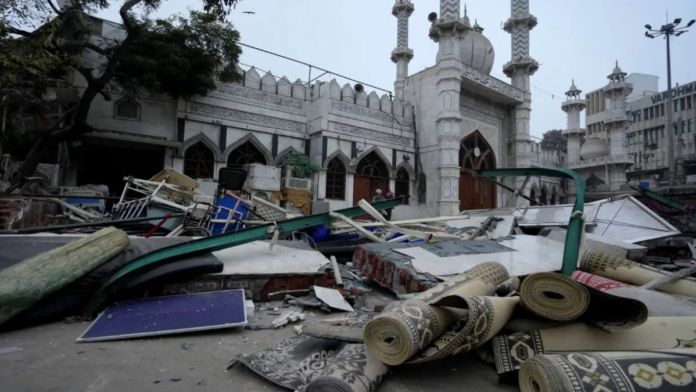
Five individuals were taken into custody after the Delhi Police registered a first information report over alleged stone pelting during an early morning demolition drive carried out by the Municipal Corporation of Delhi near a century old mosque at Turkman Gate on Wednesday.

Confirming the action, Deputy Commissioner of Police for the Central district Nidhin Valsan said the case has been registered under multiple provisions of the Bharatiya Nyaya Sanhita 2023, along with sections of the Prevention of Damage to Public Property Act 1984. The charges include rioting, obstructing public servants while performing official duties, damaging government property, and causing injuries to on duty police personnel.

A senior police official confirmed that at least five policemen were injured during the incident. Another officer familiar with the investigation said the detained individuals were identified using footage recorded by body worn cameras and other video evidence collected from the site.

Tension had briefly gripped parts of Old Delhi after civic authorities, supported by heavy police presence, began removing what they described as illegal encroachments adjoining Masjid Syed Elahi, also known as Faiz e Elahi Masjid, near Ramlila Maidan. Although the demolition was scheduled to begin at 8 am, it was initiated around 1.30 am, which led to protests from residents in the surrounding area.

Videos shared within local neighbourhood groups showed bulldozers and earth moving machines demolishing structures close to the mosque while police personnel formed security cordons. Some clips also appeared to show the use of tear gas and instances of stone pelting. These videos could not be independently verified.

Joint Commissioner of Police for the Central Range Madhur Verma said the demolition was conducted in compliance with directions issued by the Delhi High Court and that extensive law and order arrangements were put in place. He explained that the area was divided into nine zones, each overseen by an officer of the rank of additional deputy commissioner of police. More than ten companies of the Delhi Police and the Rapid Action Force were deployed at sensitive locations.

Verma added that advance coordination meetings were held with members of the Aman Committee and other local representatives to prevent unrest. Despite these measures, he said a small group attempted to disrupt the drive by throwing stones, after which the situation was brought under control through limited and proportionate use of force. A senior police officer, speaking on condition of anonymity, also said only minimal force was used.

Reacting to the developments, Delhi Home Minister Ashish Sood said the demolition was strictly aimed at removing illegal encroachments and stressed that the Faiz e Elahi Mosque itself was not harmed. He said the action was confined to unauthorised commercial structures that fell within the scope of court orders and denied any arbitrariness or ill intent on the part of the government.

Calling the violence unfortunate, Sood said five people had been arrested so far. He added that obstructing lawful action carried out under judicial directions was unacceptable and that those involved in demonstrations and violence would face legal consequences.

The demolition drive took place even as the Delhi High Court on Tuesday issued notice on a petition filed by the managing committee of Masjid Syed Elahi. The petition challenges the decision of the Municipal Corporation of Delhi to remove alleged encroachments from land adjoining the mosque and a nearby graveyard. A bench led by Justice Amit Bansal observed that the issue required examination and directed the MCD and the Land and Development Office to submit their responses. The matter has been listed for further hearing on April 22.

Earlier, on December 22, 2025, the MCD had issued a notice stating that all structures beyond 0.195 acres, which is the area occupied by the mosque, were liable to be demolished as part of an anti encroachment drive. The civic body said no documentary proof had been provided to establish lawful ownership or possession of the remaining land by the managing committee or the Delhi Waqf Board.

The action follows a November 12, 2025, order of the Delhi High Court directing the MCD and the Public Works Department to clear nearly 38,940 square feet of encroachments at Ramlila Ground near Turkman Gate within three months. That order was based on a joint survey conducted in October 2025 by multiple agencies, including the MCD, the Delhi Development Authority, the Public Works Department, the Land and Development Office, the Union urban development ministry, the revenue department, and the police.

Officials said MCD teams had earlier faced resistance from locals when they visited the site on Sunday to mark the encroached areas, prompting authorities to deploy additional police forces ahead of Wednesday’s demolition drive.


Russia-Flagged Oil Tanker With Venezuela Links Targeted by US Forces Days After Maduro ‘Capture’, Says Report

0
Russia
Russia

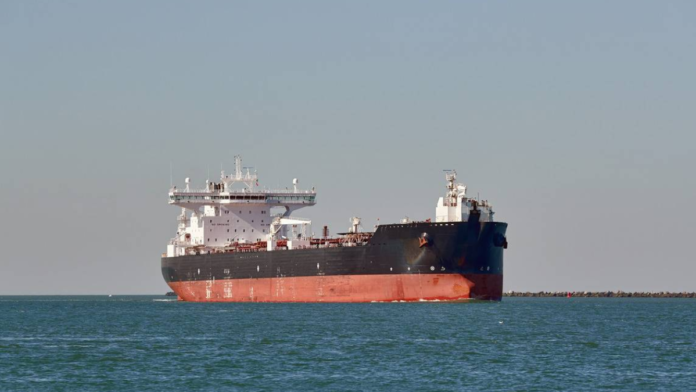
The United States is reportedly trying to take control of a Russian flagged oil tanker with connections to Venezuela after tracking it for more than two weeks across the Atlantic Ocean. According to a report by Reuters, the operation is unfolding even as a Russian submarine and a warship were operating in nearby waters, citing two American officials familiar with the situation.

The attempted seizure, which could further strain relations between Washington and Moscow, follows the tanker’s escape from a US maritime blockade targeting sanctioned vessels. The ship, previously known as Bella 1, had also resisted earlier attempts by the US Coast Guard to board it. Officials said the current operation is being jointly conducted by the Coast Guard and the United States military.

Sources added that Russian naval assets, including a submarine, were present in the general area during the operation, though their exact proximity remains unclear. The interception is reportedly taking place near Iceland.

Reuters noted that this appears to be the first known instance in recent times where the United States military has moved to seize a vessel sailing under a Russian flag. The development comes only days after a covert overnight operation by US Special Forces in Caracas that led to the capture of Venezuelan President Nicolas Maduro.

Russian state broadcaster RT aired images showing a helicopter hovering near the tanker, now called Marinera, suggesting that American forces were attempting to board the vessel. The report added that the tanker, which has been sanctioned by the United States, was not carrying any cargo at the time.

In a related development, the US Coast Guard also stopped another tanker linked to Venezuela near the northeastern coast of South America. This marked the fourth such interception in recent weeks, according to AFP.

Earlier interception attempts

US authorities had first tried to stop the same tanker last month, but the vessel refused to comply with boarding requests. Shortly after that incident, it was re registered under a Russian flag. Now operating under the name Marinera, the tanker has become the latest target in a series of maritime enforcement actions launched since US President Donald Trump intensified pressure on Venezuela.

Separately, US officials told Reuters that another Venezuela linked tanker was also intercepted in Latin American waters, underscoring Washington’s continued efforts to enforce a maritime blockade against vessels associated with Venezuelan oil exports.

3,100 Playgrounds Planned in Punjab as Govt Steps Up Efforts to Promote Sports Culture, Says Harjot Singh Bains

0
Punjab
Punjab

The 69th National School Games got underway on Tuesday with a formal opening ceremony at Guru Nanak Stadium in Ludhiana, setting the stage for a nationwide celebration of school level sports. The event was inaugurated by Punjab Education Minister Harjot Singh Bains and has brought together young athletes from every state and Union Territory. Teams from Kendriya Vidyalayas, Navodaya Vidyalayas and Vidya Bharati institutions are also taking part in the Games, which will run from January 6 to January 11.

While addressing students, coaches and officials, Harjot Singh Bains outlined the sporting disciplines featured in this edition of the Games. He said that competitions include Under 14 judo for both boys and girls, Under 14 taekwondo for boys and girls, and Under 19 gatka events for both categories. He added that matches are being conducted at several venues across Ludhiana, including BCM Arya Model Senior Secondary School in Shastri Nagar, Government Senior Secondary School, PAU Ludhiana, and the Open Air Theatre at PAU.

Describing the occasion as a proud moment for the state, the minister said Ludhiana and Punjab were honoured to host such a large national event. He noted that nearly 1,000 athletes and over 350 coaches have travelled from different regions of the country, including Punjab, Jammu and Kashmir, Ladakh, Andhra Pradesh and the North Eastern states.

He also spoke about the arrangements made for the visiting contingents, stating that the district administration had ensured proper facilities despite the winter conditions. According to him, accommodation, meals and transportation have been carefully planned, while security has been strengthened through the deployment of PCR teams and the installation of CCTV cameras at all competition venues.

Highlighting the state government’s long term commitment to sports development, Harjot Singh Bains said the Punjab government under Chief Minister Bhagwant Singh Mann is aggressively expanding sports infrastructure. He shared that construction of around 3,100 playgrounds across villages and urban areas is currently underway in the first phase, with the larger goal of ensuring that every village in Punjab has its own sports ground.

The minister also pointed to efforts being made to strengthen training and athlete support. He said coaches are being recruited in large numbers for sports nurseries focused on disciplines such as boxing, hockey and kabaddi. In addition, improvements have been made to players’ diets to help them train more effectively and deliver better performances.

Speaking about Punjab’s sports policy, Bains explained that the state has introduced a unique system of financial support. Under this policy, athletes selected for major international events such as the Asian Games, Commonwealth Games, World Championships or the Olympics receive financial assistance in advance. He noted that while many states reward athletes only after they win medals, Punjab’s approach of supporting players beforehand has led to a noticeable rise in medal tallies.

He further said that Punjab’s sporting legacy is being revived, pointing out that the Indian men’s and women’s cricket teams, as well as the national hockey team, are currently performing strongly under the leadership of captains from Punjab. The growing presence of Punjabi players in the Indian hockey team, he added, reflects the state’s steady return to prominence in the world of sports.

Several dignitaries attended the opening ceremony, including MLA Daljit Singh Bhola Grewal, Director Secondary Education Gurinder Singh Sodhi, Mayor Principal Inderjit Kaur, Senior Deputy Mayor Rakesh Parashar, Deputy Mayor Prince Johar, District Education Officer Dimple Madan and District Sports Officer Kuldeep Chugh, along with senior officials from various government departments.

Hope for Millions of Youth as Mann Government Transforms Drug De-Addiction With ₹67.49 Lakh Investment

0
Punjab
Punjab

Punjab’s Social Security, Women and Child Development Minister Dr Baljit Kaur has said that the state government, under the leadership of Chief Minister Bhagwant Singh Mann, is pursuing its mission to make Punjab drug free with determination and long term commitment. She noted that the government has already taken several decisive steps, and their impact is now clearly visible at the ground level. To strengthen this drive, the state has invested a total of ₹467.49 lakh so far.

According to the minister, the fight against drug abuse is being carried out through a coordinated effort involving multiple departments of the Punjab government. These departments have jointly designed and implemented awareness and outreach programmes aimed at educating people, encouraging community participation, and building a strong social movement against drugs. Special attention has been given to children and teachers, with awareness initiatives rolled out across schools and educational institutions. Dedicated funds have been earmarked to ensure these programmes are implemented effectively.

Dr Baljit Kaur further explained how resources have been allocated across departments as part of the campaign. The Department of Health and Family Welfare spent ₹107.22 lakh on related initiatives, while the Department of Information and Public Relations invested ₹202.99 lakh in large scale public awareness efforts. In addition, the Social Security Department utilised ₹109.12 lakh to organise awareness camps in every district of the state.

She highlighted that drug abuse has inflicted the deepest wounds on Punjab’s youth and their families. Many mothers live in constant worry about their sons’ futures, children have watched hope fade from their fathers’ eyes, and countless homes have lost their peace and happiness due to addiction. Dr Baljit Kaur said the Mann government recognises this suffering and is approaching the issue not just through policy and enforcement, but with empathy and sensitivity.

Reiterating the government’s vision, she said the goal goes beyond eliminating drugs. The larger aim is to help young people rediscover their confidence, bring comfort to grieving mothers, and restore stability and joy to families across Punjab. She added that Chief Minister Bhagwant Singh Mann remains firmly committed to ensuring that Punjab’s youth stay away from drugs and move toward lives defined by dignity, opportunity, and progress.

Under Mann’s leadership, the Punjab government is not only framing policies but also working to heal broken families and rebuild shattered dreams. The substantial financial commitment and close coordination among departments reflect a governance model focused on action and accountability, reinforcing the belief that Punjab’s future is now being steered in the right direction.

India Advises Citizens in Iran Amid Growing Protests Targeting Khamenei Regime

0
Khamenei
Khamenei

The Ministry of External Affairs has advised Indian citizens to put off all non essential travel to the Islamic Republic of Iran until further instructions are issued. In its advisory, the ministry urged Indian nationals and persons of Indian origin currently in Iran to remain vigilant, stay away from protest sites and demonstrations, and regularly follow updates from news sources as well as official communications shared by the Embassy of India in Tehran.

The advisory also asked Indian citizens residing in Iran on long term or resident visas to ensure they are registered with the Indian mission, if they have not already completed the process. The ministry stressed that staying connected with the embassy would help ensure timely assistance if the situation worsens.

Iran has been witnessing growing unrest in recent weeks. What initially began as protests over rising prices and economic pressures has gradually expanded into broader demonstrations raising concerns about governance and human rights. These protests have intensified across several regions, drawing large crowds and sharper public messaging.

The situation has taken on added significance as Iran figures among the countries frequently criticised by US President Donald Trump. This follows a dramatic US military operation in Venezuela, where President Nicolas Maduro and his wife were captured and taken to New York by American forces. Given Iran’s long standing alliance with Venezuela, analysts believe Tehran could face increased scrutiny or pressure from Washington.

According to Iranian officials who spoke anonymously to Reuters, mounting external pressure has sharply limited Tehran’s options. The leadership, they said, is struggling to balance rising public anger at home with increasingly firm demands and threats from the United States, leaving few safe or viable paths forward. Some officials privately expressed fears that Iran could become the next major target of Trump’s hardline foreign policy approach.

Iran’s economic situation has already been under severe strain due to years of US sanctions. Conditions worsened further after coordinated strikes by the United States and Israel on Iranian nuclear facilities, including the Fordo site. Washington alleged that Tehran was pushing ahead with uranium enrichment and nuclear weapons development, accusations that Iran has consistently denied.

Meanwhile, protests have continued to spread across western and southern cities in Iran. Demonstrators have been seen carrying placards and chanting slogans critical of the ruling establishment, with calls such as “Down with the Islamic Republic” and “Death to the dictator” echoing through the streets as public discontent grows.

Punjab Leads Maternal Care Reform as 20,000 Expectant Mothers Turn to Aam Aadmi Clinics Every Month

0
Punjab
Punjab

Punjab has taken a major step toward strengthening maternal and child health by reshaping how pregnancy care is delivered across the state. Under the leadership of Chief Minister Bhagwant Singh Mann, the state government has shifted a large part of maternal healthcare to neighbourhood level facilities, with Aam Aadmi Clinics becoming the first point of care for expectant mothers. Just four months after rolling out a structured and protocol based pregnancy care system, the response has been striking, with close to 20,000 pregnant women now visiting these clinics every month.

Punjab Health and Family Welfare Minister Dr Balbir Singh said the initiative has already delivered tangible results. More than 10,000 women have received ultrasound scans free of cost through a newly created referral mechanism. By partnering with nearly 500 private diagnostic centres, the government has ensured that services which typically cost between ₹800 and ₹2,000 are provided without any charge. In just 120 days, this has reduced household medical spending by an estimated ₹1 crore.

Government data had earlier highlighted serious gaps in maternal care. Fewer than seven in ten pregnant women were getting their first antenatal check up, and less than 60 percent completed the recommended four visits. Punjab’s maternal mortality ratio stood at 90 per one lakh live births, exceeding the national average. These indicators made it clear that a more accessible and consistent pregnancy care framework was urgently needed.

With around 4.3 lakh pregnancies recorded in the state every year, timely screening and regular follow-ups are crucial for protecting mothers and newborns. Over the past three years, the Mann government has built a network of 881 Aam Aadmi Clinics, which now form the foundation of Punjab’s primary healthcare system. These clinics have logged more than 4.6 crore outpatient visits and currently cater to about 70,000 patients every day. The expanded pregnancy care model was layered onto this existing infrastructure about four months ago.

Under the revised system, expectant mothers can receive almost all essential antenatal services directly at their local Aam Aadmi Clinic. This includes blood tests, screening for HIV and syphilis, sugar and thyroid checks, hepatitis tests, fetal heart monitoring, cholesterol evaluation, and hemoglobin assessment. When an ultrasound is required, doctors issue an official referral that allows women to undergo the scan at empanelled centres without paying anything.

Each month, nearly 5,000 women are flagged as high-risk cases. This enables healthcare teams to closely monitor these pregnancies, offer targeted support, and ensure timely referrals to higher-level hospitals when specialist intervention is needed.

The changes have also made pregnancy care far more convenient. Women no longer need to travel long distances or wait for hours at overcrowded hospitals. Most tests can be completed close to home, consultations are quicker, and ultrasound scans no longer create a financial burden. From the first antenatal visit to postnatal follow-up, the entire care journey is now linked through standard clinical protocols, digital tracking, efficient referral systems, and community-level outreach.

Reflecting on the impact of the programme, Dr Balbir Singh said the initiative demonstrates the Punjab government’s long-term commitment to mothers and children. He noted that with lakhs of pregnancies every year, bringing comprehensive pregnancy care to Aam Aadmi Clinics is a transformative move that places quality healthcare within reach of every family and sets a new standard for primary care delivery in the country.

The state government views this reform as one of its most important investments in maternal and child health in recent years. By removing barriers related to distance, cost, and lack of awareness, the initiative aims to ensure that no woman is excluded from essential care while steadily improving outcomes for mothers and newborns across Punjab.

INS Arisudan Emerges as Likely Name for Arihant Class Nuclear Submarine S4

0
INS Arisudan
INS Arisudan

The fourth and final submarine of India’s Arihant class, a nuclear-powered vessel equipped with long-range ballistic missiles and currently designated as S4*, is expected to be named INS Arisudan. The submarine was launched on October 16 last year by Defence Minister Rajnath Singh. Arihant, which means destroyer of enemies, serves as the shared class name for all of India’s nuclear submarines.

Sources indicate that the proposed name for S4* will first be reviewed by the ship naming committee of the Indian Navy. It will then require clearance from the Defence Ministry before receiving final approval from the President of India. INS Arisudan is expected to be formally commissioned into service in 2027.

Its immediate predecessor, INS Aridhaman, is likely to enter service in the first half of 2026. At the same time, progress has accelerated on the design and construction of two indigenous nuclear-powered attack submarines armed with conventional weapons. This development gained momentum after the government led by Narendra Modi approved the P77 attack submarine programme on October 9, 2024. India is also expected to lease an Akula-class nuclear-powered submarine from Russia by 2028. Sources further suggest that Moscow had offered to lease an additional blue water submarine ahead of the visit of Russian President Vladimir Putin to India on December 5, 2025.

Submarine-based nuclear deterrence remains the strongest pillar of the nuclear triad, as these platforms ensure a credible second strike capability. This is especially critical for India, which follows a no-first-use nuclear doctrine. While China also adheres to a similar policy, Pakistan maintains a first use nuclear doctrine, making undersea deterrence even more significant for India’s strategic posture.

INS Arihant, the first submarine of the class, is armed with K 15 nuclear missiles that have a range of 750 kilometres. The remaining submarines in the class, which are approximately 1000 tonnes heavier, are expected to be fitted with K 4 missiles capable of striking targets up to 3500 kilometres away. These missiles are currently undergoing trials under the supervision of the Defence Research and Development Organisation and the Strategic Forces Command. For sustained deterrence patrols and access denial missions across the Indo Pacific, India requires submarines with virtually unlimited operational range.

Traditionally, Indian warships follow a naming pattern linked to the lead vessel of their class, with the entire class deriving its name from the first ship commissioned. In line with this practice, all Indian SSBNs carry names that signify the destruction of enemies. Conventional diesel powered attack submarines are typically named after earlier vessels that have been decommissioned, while Kalvari class submarines inherit names from former Russian Foxtrot class boats.

The Indian Navy’s guided missile destroyers usually take their names from Indian cities such as INS Delhi, INS Surat, INS Imphal, INS Kolkata, INS Mumbai, and INS Visakhapatnam. Frigates, on the other hand, are named after major rivers and mountain ranges, including classes like Ganga, Brahmaputra, and Shivalik, reflecting a long standing naval tradition.