Home Blog Page 37

Political Tension Mounts After Uddhav Thackeray’s Cryptic Note, Shinde Relocates Corporators

0
uddhav thackeray
uddhav thackeray

Maharashtra deputy chief minister Eknath Shinde acted swiftly after the BMC results by moving newly elected Shiv Sena corporators to a hotel in Bandra, amid concerns over possible poaching. At the same time, a defiant Uddhav Thackeray reached out to party workers, asserting that it was still his “dream” to see a Shiv Sena (UBT) mayor elected in Mumbai, even after losing control of the country’s richest civic body.

Speaking to Sena (UBT) cadres in Mumbai, Thackeray framed the BMC outcome not as a setback but as a morale-boosting result achieved in adverse conditions. He credited party workers for the performance, saying they were the real architects of the outcome and that the result, given the circumstances, was a matter of pride. He repeatedly praised the cadre for standing by the party despite limited resources.

Thackeray also launched a scathing attack on the BJP and the ruling alliance, accusing them of abusing power and securing victory through betrayal. He said they may believe they have finished the Shiv Sena on paper, but they could never erase the party’s presence on the ground or its connection with the people. Alleging that every possible tactic had been used against his party, he added that while traitors may have left, loyalty could not be bought.

In one of his strongest charges, Thackeray claimed the BJP had effectively “mortgaged Mumbai” to win the civic elections. He told workers that the Marathi community would never forgive such an act and reiterated that Sena (UBT) remained the true voice of the Marathi manoos.

Shinde’s concern over numbers explains the decision to house corporators together. In the 227-member BMC, the majority mark is 114. The BJP has secured 89 seats, while the Shinde-led Shiv Sena has won 29, taking the ruling alliance’s total to 118, only four seats above the halfway mark.

With the margin narrow and the mayoral election approaching, Shinde’s move is seen as a precaution to prevent poaching or last-minute defections that could disrupt the numbers and complicate the ruling alliance’s hold over the civic body. Party leaders said the step was taken purely to safeguard support at a sensitive moment.

Tariff Threat Issued by Trump for Countries Opposing the US Stand on Greenland

0
Trump
Trump

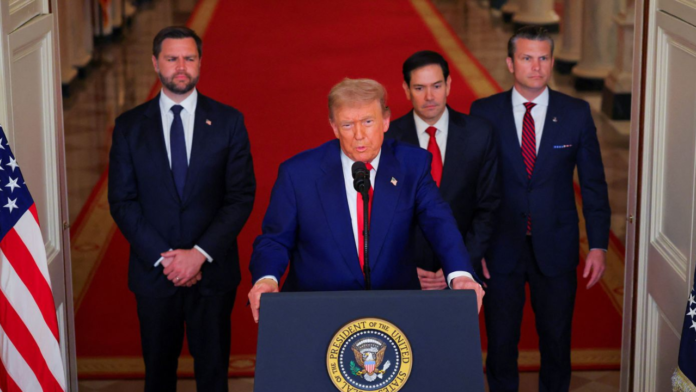
United States President Donald Trump on Friday warned that countries refusing to support Washington’s push to take control of Greenland could face trade tariffs.

Trump did not spell out how such tariffs would be applied, but reiterated his long-held view that Greenland is strategically vital for American national security. Speaking at a healthcare-related event at the White House, he said the United States might penalise countries that oppose its position on Greenland, stressing that control of the territory is necessary from a security standpoint.

For months, Trump has publicly argued that the US should gain control of Greenland, which is a self-governing territory within the Kingdom of Denmark. While the White House has previously said that all options remain under consideration regarding the territory, this marks the first time Trump has explicitly linked the issue to the threat of tariffs against other nations.

The comments came a day after several European countries deployed small contingents of troops to Greenland. Denmark also said it was moving ahead with plans to establish a larger and more permanent NATO presence on the island to strengthen its security, according to Reuters. The show of support was intended to assist Denmark in preparing military exercises and followed meetings involving officials from the United States, Denmark and Greenland.

According to Bloomberg, a delegation of US senators and representatives met members of the Danish parliament on Friday. Protests opposing Trump’s Greenland proposal are expected across Denmark on Saturday.

Danish Foreign Minister Lars Lokke Rasmussen has spent the past week in Washington holding discussions with members of the US Congress. His visit followed talks with US Vice President J D Vance and Secretary of State Marco Rubio.

After those meetings, Rasmussen said that a fundamental disagreement with Trump over Greenland remained. However, he added that both sides had agreed to set up a working group to explore ways to address their differences, according to Associated Press.

January 20 Marked for BJP’s New Party President Announcement

0

The Bharatiya Janata Party has said it will declare the name of its next national president on January 20. The process will begin a day earlier, on January 19, when nominations for the post are scheduled to be filed.

Party sources indicate that the position is likely to go to Nitin Nabin, who is currently serving as the BJP’s national working president. The Bihar leader, a five time MLA, was appointed to the working president’s role on December 14 last year, a move widely seen within the party as a signal of generational change in the leadership.

Nabin is expected to submit his nomination next week and is likely to be elected unopposed, as there is little indication of any other senior leader entering the race. According to sources, there is broad consensus within the party in his favour.

The leadership transition follows a familiar pattern within the BJP. J P Nadda was first made national working president in June 2019 before taking over as party chief, succeeding Amit Shah after being elected unopposed on January 20, 2020.

At 45, Nabin is among the younger leaders in the party’s top ranks. He is the son of late BJP stalwart and former MLA Nabin Kishore Prasad Sinha. Within the organisation, he is considered ideologically committed and closely aligned with the party structure, with roots in the Rashtriya Swayamsevak Sangh.

He represents the Bankipur assembly constituency in Bihar and has served twice as a minister in the state government, adding administrative experience to his organisational role.

The formal election process will begin on January 19, and BJP chief election officer K Lakshman is expected to officially announce the name of the new national president on January 20.

‘Fired the Gun From His Shoulder’: Gambhir Accused of Orchestrating Rohit Sharma’s ODI Captaincy Removal via Agarkar

0
Gambhir
Gambhir

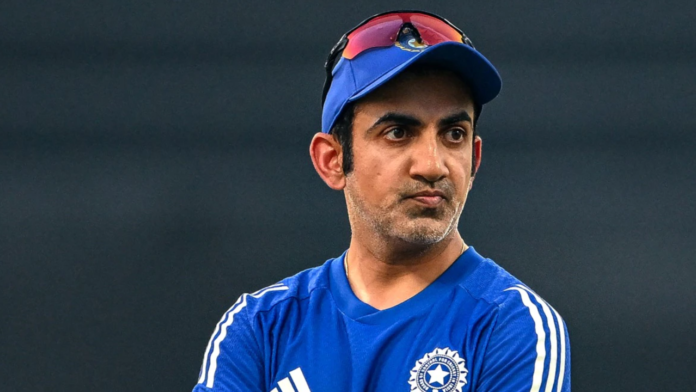
Former India cricketer Manoj Tiwary has suggested that head coach Gautam Gambhir played a part in Rohit Sharma being removed as India’s ODI captain. Tiwary alleged that Gambhir may have influenced chief selector Ajit Agarkar in taking the call, and said the decision reflected a lack of respect towards Rohit. While Rohit had stepped away from T20Is in June 2024 and Tests last May, he remained active and in strong form in ODIs, with his sights set on peaking ahead of the 2027 World Cup. However, when India’s squad for the Australia ODI series was announced in October, Shubman Gill was named the new captain. The move surprised many, especially since Rohit had lifted the ICC Champions Trophy in his final match as skipper.

Tiwary believes that although Agarkar is known for his independent decision making, such a significant call would not have been taken in isolation and that the coach’s views would inevitably have been part of the process.

“I don’t know what the main cause is. But knowing Ajit Agarkar, he is a personality. He is a decision maker. He will not take a step back in taking such steps. But whether he was influenced by someone to fire the gun from his shoulder is something we need to look at. A lot of things happen behind the scenes, which makes 1+1 2. Maybe the decision was made by the chief selector, and he was very upfront about it. Naturally, the coach’s inputs must be there. You cannot make the decision on your own. Both are equally responsible for whatever decision was made,” Tiwary told Sports Today.

Tiwary went on to say that Rohit’s removal as ODI captain has dampened his interest in watching the format, even though Virat Kohli continues to feature in the side. He added that Rohit himself no longer appears the same on the field. While cameras still catch glimpses of his lighter moments and occasional banter with bowlers, the fiery Rohit who once delivered the famous ‘garden boys’ remark seems to have faded into the background.

Questions over the decision continue

Tiwary also questioned the reasoning behind stripping Rohit of the captaincy, saying it was difficult to understand how his intent or leadership credentials could be doubted. While he acknowledged that a leadership transition to Gill was bound to happen at some stage, he felt it could have been managed more sensitively, perhaps by allowing Rohit to continue through the New Zealand ODI series.

“See, there has been a lot of inconsistency in picking the playing XI, in my opinion. If I have to be brutally honest with you, I have lost interest in watching the ODI games. The things that have panned out of late, when the T20 World Cup-winning captain and the Champions Trophy-winning captain is removed from the captaincy, and the responsibility is given to the new guy, which I felt was not required. I have played with Rohit. We have a connection, so I didn’t like how it panned out. I felt it was disrespectful to a cricketer who has given so much to the cricket lovers across the world. From that day, I lost a bit of interest. A lot of controversies, and I feel that is happening because the clarity is not there,” added Tiwary.

“It would have made this decision more sensible, because Rohit is a proven captain. He has won two ICC trophies. We nearly missed out in 2023. I felt Travis Head was lucky; it was his day. If we had won that, Rohit would have ended up with three trophies. I just wonder why you had doubts regarding Rohit playing the 2027 World Cup. That means you doubted his abilities. Why would you do that? When he has scored three double hundreds, there was no question of doubting him. A big player always gets the runs. The mindset with which he played in 2023, he is such a selfless cricketer, he wanted to make a statement. Doubting his ability was a big mistake, and then removing him from captaincy was a big mistake as well. I thought it shouldn’t have happened. It cannot be cricketing logic behind his removal as the captain.”

Lok Sabha Inquiry Panel Gets Go-Ahead as SC Rejects Justice Yashwant Varma’s Plea

0
lok sabha

The Supreme Court on Friday rejected a plea filed by Allahabad High Court judge Yashwant Varma, who had challenged the Lok Sabha Speaker’s decision to admit a motion seeking his removal and to set up an inquiry committee under the Judges Inquiry Act of 1968. The motion followed reports of unaccounted cash allegedly found at his official residence in Delhi last year.

A bench comprising Justices Dipankar Datta and Satish Chandra Sharma cleared the way for the three member inquiry committee to continue its work, holding that Justice Varma was not entitled to any relief. Justice Datta, while reading out the operative portion of the verdict, said the petition had no merit.

The bench firmly dismissed the judge’s argument that the Judges Inquiry Act required a joint committee to be formed and that the Rajya Sabha deputy chairman did not have the authority to reject the removal motion in the Upper House. The court had reserved its verdict last week after hearing extensive arguments on whether the procedure adopted under the 1968 law was valid, particularly since removal motions were moved in both Houses of Parliament on the same day.

Justice Varma had questioned the impeachment process initiated against him after a fire at his official residence in March 2025 allegedly led to the discovery of cash. At the time, he was serving as a judge of the Delhi High Court. A subsequent in house inquiry by the Supreme Court found his explanation unsatisfactory, following which then Chief Justice of India Sanjiv Khanna recommended that the matter be referred to the Prime Minister and the President.

Notices seeking Justice Varma’s removal were introduced in both the Lok Sabha and the Rajya Sabha on July 21, 2025. While the Lok Sabha Speaker admitted the motion on August 12 and constituted a three member inquiry committee, the Rajya Sabha deputy chairman declined to admit the motion, calling it defective. This decision came soon after the resignation of then Vice President and Rajya Sabha Chairman Jagdeep Dhankhar.

Justice Varma argued that since motions were submitted in both Houses on the same day, the law required a joint committee to be formed by the Speaker of the Lok Sabha and the Chairman of the Rajya Sabha. He maintained that the failure to do so invalidated the entire process. The Lok Sabha secretariat, backed by the Union government, countered this by saying the Rajya Sabha motion was never admitted and therefore had no legal standing, leaving the Lok Sabha Speaker free to proceed independently.

Solicitor General Tushar Mehta, appearing for both Houses of Parliament, told the court that no Rajya Sabha member had challenged the rejection of the motion in the Upper House. He added that Justice Varma himself had not contested that decision, as it effectively worked in his favour. Any judicial intervention at this stage, Mehta argued, would disrupt a constitutionally mandated accountability process. He also cited Article 91 of the Constitution to state that the deputy chairman was empowered to act as Chairman during a vacancy.

During hearings on January 8, the bench repeatedly stressed the need to balance the rights of a judge facing impeachment with the will of elected representatives who had moved the motion. The court declined to halt the inquiry or grant Justice Varma additional time to respond, observing that constitutional mechanisms could not be paralysed due to vacancies or hypothetical concerns.

Senior advocates Mukul Rohatgi, Sidharth Luthra, Siddharth Agarwal and Jayant Mehta, representing Justice Varma, argued that the Rajya Sabha deputy chairman lacked the authority to reject the motion and that such power rested solely with the Chairman. They warned that allowing a deputy chairman to exercise this discretion could create conflicts of interest. The bench, however, questioned whether such possibilities could justify stalling the entire process.

As reported earlier by Hindustan Times, records placed before the Supreme Court showed that Rajya Sabha secretary general P C Mody had, in an opinion dated August 11, 2025, flagged several procedural and factual defects in the notice moved by Opposition members in the Upper House. Although the notice met the numerical requirement under the law, Mody concluded it was not valid due to incorrect legal references and inconsistencies, including mentions of events predating the fire incident. Acting on this opinion, deputy chairman Harivansh formally rejected the motion and informed the Lok Sabha secretariat.

The inquiry committee appointed by the Lok Sabha Speaker consists of Supreme Court judge Aravind Kumar, Madras High Court Chief Justice Manindra Mohan Srivastava, and senior advocate B V Acharya.

Justice Varma submitted his response to the committee on January 12, denying the allegations and asserting that no cash was recovered from his residence. He is scheduled to appear before the panel in person on January 24.

US Visa Processing Pause Draws Response From Pakistan: ‘Hope It Resumes Soon’

0
Pakistan
Pakistan

After the United States temporarily halted immigrant visa processing for Pakistan, Bangladesh, and more than 70 other countries on Wednesday, Islamabad said it expects the process to restart soon and described the move as part of an internal policy review by Washington.

The decision forms part of US President Donald Trump’s broader immigration crackdown. The Trump administration said the pause applies to countries whose migrants are believed to rely on welfare benefits in the US at what it called unacceptable levels.

Pakistan responds to visa pause

Reacting to the development, Pakistan Foreign Office spokesperson Tahir Andrabi said Islamabad remains hopeful that normal immigrant visa processing will resume in the near future. Speaking to news agency PTI, Andrabi said Pakistani authorities are in contact with their US counterparts to gather more clarity on the issue.

He added that Pakistan understands the suspension as part of an ongoing internal review of US immigration policies and systems, and expressed optimism that routine visa services would restart once the review is completed.

US suspends visas for 75 countries

The Trump administration announced that the visa processing pause would apply to 75 countries, including Pakistan, Bangladesh, Iran, Russia, Nepal, Afghanistan, Egypt, Iraq, Kuwait, Lebanon, Morocco, Sudan, Thailand, and Yemen, among others.

In a statement shared on X, the administration said the suspension would remain in place until the US is satisfied that new immigrants would not place a financial burden on American taxpayers. Reiterating its long standing stance, the statement said the administration would continue to prioritise an “America First” approach.

The suspension is set to take effect from January 21 and will not impact applications for non immigrant visas, including tourist and business travel.

The US State Department said the decision would affect several countries whose immigrants, it claimed, often become public charges after arriving in the United States. Countries cited in this context included Somalia, Haiti, Iran, and Eritrea.

Environment Minister Says 40% Canopy Cover in Aravallis Can Unlock Green Credits

0
Aravallis
Aravallis

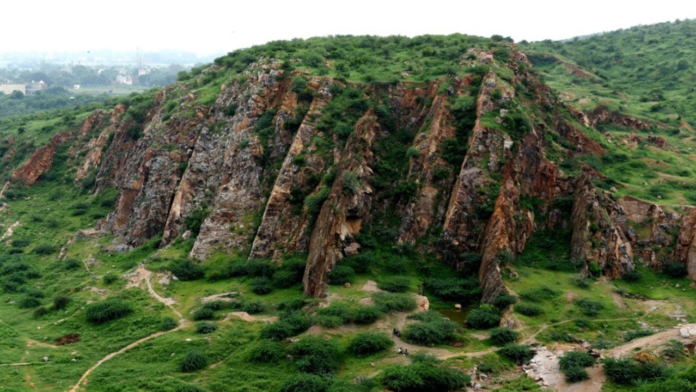
Organisations interested in undertaking tree plantation activities in the Aravalli hills can approach the Union environment ministry under the Green Credit scheme, Union environment minister Bhupender Yadav said on Wednesday.

Explaining the mechanism, Yadav said that any organisation willing to carry out afforestation on degraded forest land in line with forest department management plans would be eligible for green credits if it manages to achieve at least 40 percent canopy cover within four to five years. He added that the initiative is already underway in the Aravallis, with afforestation work covering about 750 acres in Gurugram and another 250 acres near the Manesar Industrial Area.

Addressing concerns around mining, the minister clarified that no mining activity is permitted in the Aravalli region within Delhi and that this position will not change in the future. He also noted that mining will remain prohibited in most districts of Haryana.

Yadav pointed out that around 97 square kilometres of Aravalli revenue land in Haryana, stretching from Naurangpur to Nuh, has been identified for afforestation and notified as a Protected Forest. He said several degraded patches across the Aravallis could be restored under the Green Credit programme.

Earlier this month, it was reported that the environment ministry had opened the door for both private and government entities to lease forest land for afforestation and timber-related activities without paying mandatory environmental compensation charges. In a communication sent to state governments on January 2, the ministry said that afforestation and silvicultural activities carried out under approved state plans would now be treated as forestry activities. This reclassification means such projects would not attract compensatory afforestation obligations or net present value fees, which are usually imposed to offset forest loss and ecological damage.

Eco restoration roadmap for the Aravallis

On Wednesday, Yadav also unveiled a new eco restoration framework for the Aravalli landscape, drawing on pilot projects carried out in four villages of Gurugram. The framework aims to provide a model that can be replicated across the 670-kilometre-long mountain range.

Titled A Report on Eco restoration of the Aravalli Landscape, the document was prepared by the Sankala Foundation after detailed field surveys and consultations with local stakeholders in Sakatpur, Naurangpur, Shikohpur, and Gairatpur Bas.

The framework outlines a multi-dimensional approach that includes forest and biodiversity management, control of invasive species, water resource conservation, diversification of livelihoods, improved urban planning, and adaptive monitoring systems. According to the report, the proposed model combines scientific data, community participation, and policy alignment to restore degraded forest areas while balancing ecological, social, and economic needs.

Officials said the findings will be used to develop a comprehensive eco-restoration plan that can be implemented across all four Aravalli states in 29 districts.

Field assessments in the Gurugram villages revealed that forest patches are severely degraded and fragmented, with invasive species such as Prosopis juliflora, Lantana camara, and Parthenium hysterophorus dominating large areas. The spread of these species has significantly reduced native biodiversity. The report also noted that all villages depend entirely on groundwater for irrigation, contributing to falling water tables and further stressing forest ecosystems. More than 43 percent of households rely on forests for fuelwood, fodder and medicinal plants, with women playing a central role in managing these resources despite limited alternative livelihood options.

Widespread degradation across the range

The report also brings together data highlighting the extensive degradation of the Aravalli range, which runs through Delhi, Haryana, Rajasthan, and Gujarat, and acts as a natural barrier against the eastward spread of the Thar Desert.

Since 1970, the range has lost over 40 percent of its forest cover, largely due to tree cutting and illegal construction that has broken habitat continuity. In Haryana and Delhi, ridge forests are now punctuated by real estate projects and highways.

Large-scale extraction of building materials such as granite, quartzite, and sand has further damaged the landscape. In Rajasthan alone, about 2,400 mining leases were active within or near the Aravalli hills until court interventions brought many of them to a halt. Between 1999 and 2019, overall forest cover declined by nearly one percent, while the central Aravallis have lost 32 percent of their cover since 1975.

In Rajasthan, a quarter of the hills have degraded since the late 1960s. A 2024 report by a Supreme Court-appointed Central Empowered Committee found that 31 of 128 hills in the state have effectively disappeared due to human activity. In Haryana, desertification affected 8.2 percent of the land by 2018-19, with more than 5.7 lakh hectares of the Aravallis lost by 2019. Projections suggest that degradation could increase by another 22 percent by 2059 if corrective measures are not accelerated.

Supreme Court Takes Up ED–Didi Standoff Linked to I-PAC Raids, Timing and Obstruction in Focus

0
mamata banerjee
mamata banerjee

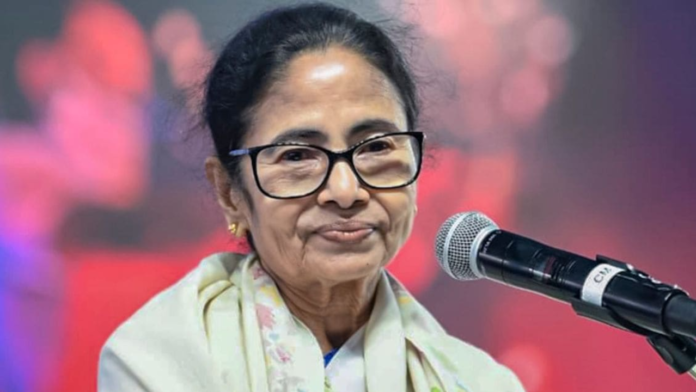
The Enforcement Directorate on Thursday told the Supreme Court that West Bengal Chief Minister Mamata Banerjee has shown what it described as a troubling and recurring tendency to enter premises while statutory authorities are carrying out official proceedings. The submission was made as the top court heard the ED’s petition alleging interference during its recent search operations in Kolkata at the offices of I PAC, the political consultancy firm that works with the ruling Trinamool Congress.

The ED has approached the Supreme Court seeking directions against the West Bengal government and central authorities, including the Department of Personnel and Training and the Ministry of Home Affairs. The agency has asked for the suspension of senior police officials, among them West Bengal Director General of Police Rajiv Kumar, Kolkata Police Commissioner Manoj Kumar Verma, and Deputy Commissioner of Police for South Kolkata Priyabatra Roy, accusing them of obstructing its investigation.

Appearing for the ED, Solicitor General Tushar Mehta and Additional Solicitor General S V Raju argued that a disturbing pattern was evident. Citing previous instances, Mehta said that whenever statutory bodies exercised their legal authority, the chief minister allegedly intervened directly. He told the court that senior officers accompanied her, accused them of acting in concert, and recalled earlier incidents where officials sat in protest alongside political leaders. He also referred to past episodes where the residence of a senior CBI officer was surrounded and stones were allegedly thrown, according to reports by LiveLaw.

Supreme Court flags disturbance in Calcutta High Court

During the hearing, the Supreme Court also took note of what it termed serious disruption in the Calcutta High Court last Friday while the I PAC raids case was being heard. Proceedings there had to be adjourned after the presiding judge remarked that there was excessive disturbance in the courtroom.

Referring to those events, Mehta told the Supreme Court that a large number of lawyers and others entered the high court during the hearing, calling it an example of mob behaviour overriding democratic processes. The bench responded by saying it was deeply concerned by what had transpired in the Calcutta High Court, PTI reported.

Senior advocate Kapil Sibal, representing the West Bengal government, countered the ED’s claims. He said the chief minister did not obstruct the searches and only took away I PAC chief Pratik Jain’s laptop and his personal iPhone. According to Sibal, no seizure had taken place until around noon, and the laptop contained sensitive election related information. He argued that this was acknowledged in documents signed by the ED itself and claimed there was no disruption of the investigation. He further alleged that the ED’s actions were mala fide and aimed at accessing political material.

Sibal also questioned the timing of the raids, pointing out that they were conducted just months before the state assembly elections. He said the last statement in the underlying case cited by the ED had been recorded in February 2024 and asked why the agency had suddenly acted now. He argued that the ED was aware that I PAC held extensive party data and suggested the raids were intended to gain access to election strategy material, a move he said would unfairly impact the democratic process.

Background of the ED raids

The case is being heard by a Supreme Court bench comprising Justices Prashant Kumar Mishra and Vipul Pancholi, following a petition filed by the Enforcement Directorate under Article 32 of the Constitution.

Tensions escalated in Kolkata last week when Chief Minister Mamata Banerjee rushed to the residence of Pratik Jain during ED searches. She alleged that officials were attempting to seize hard disks, internal documents, and sensitive data belonging to the Trinamool Congress. Visuals from the scene showed her surrounded by police personnel, holding documents, and pushing through a crowd of media persons.

The ED said the searches were part of an investigation into a money laundering case. Raids were carried out at both Jain’s residence and the office of the Indian Political Action Committee, which provides political consultancy to the TMC and manages its IT and media operations.

Despite Loss of 15 Satellites, ‘KID’ Pulls Through in ISRO’s PSLV C62 Mission

0
ISRO
ISRO

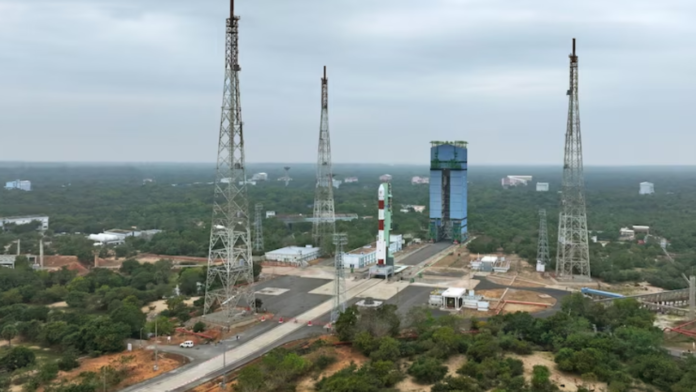
Against the backdrop of a troubled launch, one small spacecraft managed to stand out. A satellite known as KID successfully separated from the rest of the payload even as 15 other satellites failed to reach their intended orbit during the Indian Space Research Organisation’s PSLV C62 mission. The launch, part of the EOS N1 programme, took place from Sriharikota in Andhra Pradesh on Monday.

The 44.4 metre tall, four-stage rocket lifted off on schedule at 10.18 am from the Satish Dhawan Space Centre at Sriharikota. The mission aimed to deploy one primary Earth observation satellite along with multiple co-passenger satellites into a sun-synchronous orbit at an altitude of 512 kilometres, following a flight lasting roughly 17 minutes.

After receiving clearance from the mission director, the automated launch sequence began, with scientists from the Indian Space Research Organisation providing live updates as the vehicle climbed. The early phases unfolded as planned, but concerns emerged soon after the announcement confirming ignition of the third stage.

Most satellites lost, but one separated successfully

This marks the second consecutive setback for ISRO’s Polar Satellite Launch Vehicle; 15 out of the 16 satellites onboard could not be injected into the desired orbit. The problem arose due to an anomaly detected during the rocket’s third stage, a critical phase of the ascent.

ISRO chairman V Narayanan said disturbances and a deviation from the intended flight path were observed while the strap-on motors were operating during the third stage. He added that a detailed technical investigation has been launched to determine the exact cause.

According to sources cited by PTI, all satellites were initially believed to be lost. However, a small experimental payload called KID, short for Kestrel Initial Technology Demonstrator, managed to defy the odds. Developed by Spanish startup Orbital Paradigm, the capsule is a prototype re-entry vehicle.

In a post on X, the company said that the KID capsule successfully separated from PSLV C62, powered on, and transmitted data. The team said it is now reconstructing the trajectory and will release a detailed report later.

Payloads that failed to reach orbit

Among the satellites that could not be placed in orbit was DRDO’s Anvesha, designed to detect military camouflage from nearly 500 kilometres above Earth. Also lost were AayulSAT, India’s first in-orbit refuelling experiment, and CGUSAT, a student-built low Earth orbit satellite intended for emergency communication and disaster response. The primary Earth observation satellite on the mission was jointly developed by Thailand and the United Kingdom.

This failure follows a similar outcome in May 2025, when the PSLV C61 EOS 09 mission was unsuccessful due to a motor pressure issue that caused a drop in chamber pressure.

A former senior ISRO scientist told PTI that the agency would need time to collect and analyse data before identifying corrective measures. He added that since the satellites did not reach their intended orbit, they may now be drifting as space debris.

ISRO’s official response

Acknowledging the issue on its official X account, ISRO said the PSLV C62 mission encountered an anomaly toward the end of the third stage and that a comprehensive analysis is underway. The agency stopped short of formally declaring the mission a failure.

Later, speaking briefly to the media, Chairman V Narayanan said the mission did not proceed along the expected flight path. He added that engineers are examining data received from ground stations and that further details will be shared once the analysis is complete.

Trump Backs Iranian Protests, Urges Citizens to Seize Institutions

0
Trump
Trump

US President Donald Trump issued a strong message of support for demonstrators in Iran on Tuesday, urging them to continue their protests and assuring them that assistance would arrive soon. His remarks came amid escalating unrest in the country, though he stopped short of spelling out whether the United States would take direct action.

Trump said he had suspended all engagement with Iranian officials, making it clear that Washington would not hold talks while protesters were being killed. In a forceful post on social media, he openly encouraged demonstrators to seize control of state institutions and called on them to document those responsible for violence against civilians, warning that accountability would follow.

The US President’s comments signal an unusually direct endorsement of the protest movement, which has been challenging Iran’s leadership for weeks. Trump framed his message as a show of solidarity with what he described as Iranian patriots standing up against repression, repeating that outside help was on the way.

The protests, now in their second week, were initially triggered by a sharp fall in the value of Iran’s currency but have since evolved into a broader uprising against the regime. Reports indicate that around 2,000 people, including members of the security forces, have been killed as clashes intensified across the country.

Trump’s latest remarks followed another major step taken a day earlier, when he announced a 25 percent import tariff on goods from any country that continues to do business with Iran. He has also suggested that further punitive measures remain under consideration, including military options, reiterating earlier warnings that the United States is prepared to escalate its response to Tehran’s crackdown on dissent.