Home Blog Page 31

Boiler Explosion at Pakistan Glue Factory Kills 15 Workers, Manager Arrested

0
Boiler Explosion at Pakistan Glue Factory Kills 15 Workers, Manager Arrested

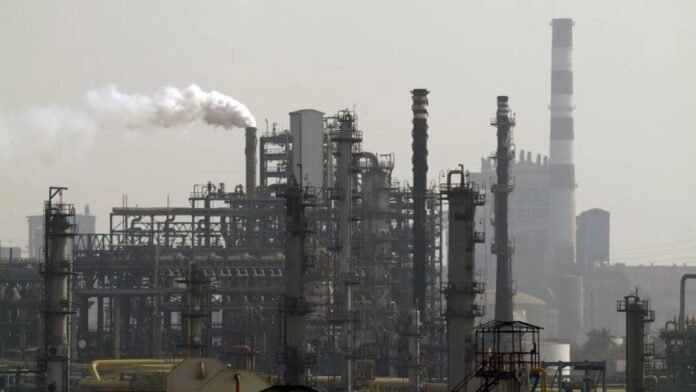
Pakistan: A boiler explosion at a glue-making factory in Faisalabad, eastern Pakistan, killed at least 15 workers and injured seven others Friday. Police arrested the factory manager while searching for the owner, who fled immediately after the blast.

Explosion Details and Response

The cause of the explosion at the industrial facility in Punjab province remains unknown. The blast severely damaged the factory building and nearby homes, ignited a fire at the facility, and spread panic throughout the area, according to local administrator Raja Jahangir.

Local police official Mohammad Aslam confirmed an investigation is underway. Punjab Chief Minister Maryam Nawaz Sharif expressed condolences and ordered authorities to ensure optimal medical care for the injured.

Pattern of Industrial Accidents

Poor safety standards frequently cause industrial accidents and factory fires in Pakistan. In 2024, a dozen workers were injured in a similar boiler explosion at a Faisalabad textile mill. Last week, a blast at a firecrackers factory in Karachi, Pakistan’s port city, killed four people.

Safety Crisis Context

The recurring industrial disasters highlight systemic safety deficiencies across Pakistan’s manufacturing sector. Faisalabad, known as Pakistan’s textile and industrial hub, has experienced multiple workplace accidents in recent years, raising questions about regulatory enforcement and factory compliance with safety protocols.

Legal Accountability

The factory manager’s arrest and authorities’ pursuit of the fleeing owner signal efforts toward legal accountability following the tragedy. However, Pakistan’s industrial safety enforcement has historically faced challenges, with factory owners often evading serious consequences despite fatal incidents.

Worker Vulnerability

The explosion underscores the precarious conditions facing Pakistan’s industrial workforce, where inadequate safety measures, aging equipment, and insufficient regulatory oversight create dangerous working environments. Factory workers, often from economically disadvantaged backgrounds, face disproportionate risks in facilities lacking proper safety infrastructure.

Investigation Priorities

Authorities are examining whether the boiler explosion resulted from equipment malfunction, maintenance negligence, or operational violations. The investigation’s findings could influence safety regulation enforcement across Punjab’s industrial sector.

Immediate Aftermath

Emergency responders worked to extinguish the factory fire and evacuate nearby residents affected by the blast. The seven injured workers received treatment at local medical facilities, though their conditions have not been disclosed.

The incident adds to Pakistan’s growing industrial safety crisis, where rapid industrialization has outpaced safety regulation development and enforcement, leaving workers vulnerable to preventable workplace disasters.

India Reactivates Air Cargo Corridor with Afghanistan, Marking Renewed Bilateral Engagement

0
India Reactivates Air Cargo Corridor with Afghanistan, Marking Renewed Bilateral Engagement

India will resume air cargo services with Afghanistan, marking a significant development in renewed engagement between the two nations. The announcement came Friday during Taliban Trade Minister Al-Haj Nooruddin Azizi’s visit to New Delhi.

Air Freight Corridor Reactivation

Anand Prakash, a Ministry of External Affairs official, confirmed the air freight corridor on Kabul-Delhi and Kabul-Amritsar routes has been reactivated. “I am pleased to announce that the air freight corridor on the Kabul-Delhi sector and Kabul-Amritsar routes have been activated and cargo flights on these sectors will come very soon,” he stated.

The move signals revival of direct trade connectivity that had stalled in recent years. The corridor reactivation is expected to facilitate smoother goods movement between countries and boost commercial ties.

High-Level Diplomatic Meeting

The announcement followed Taliban Minister Azizi’s meeting with External Affairs Minister S Jaishankar in the national capital during his five-day official visit. Both leaders discussed strengthening bilateral trade, connectivity, and people-to-people ties.

Jaishankar posted on X that the ministers explored ways to enhance economic cooperation and facilitate development initiatives, while reiterating “India’s continued support for the welfare and development of the Afghan people.”

Diplomatic Significance

The Afghan Minister arrived in India Wednesday for his official visit, with the Ministry of External Affairs extending a warm welcome. The visit aims at bolstering bilateral trade and investment ties between the nations.

This represents one of the highest-level visits from the Taliban government to India since their Kabul takeover in August 2021.

Recent Engagement Timeline

Afghanistan’s Foreign Affairs Minister Mawlawi Amir Khan Muttaqi previously concluded a six-day India visit in October 2025, marking the highest-level engagement between New Delhi and the Taliban regime since the 2021 takeover.

Strategic Implications

The air cargo corridor reactivation demonstrates India’s pragmatic approach to maintaining economic and humanitarian channels with Afghanistan despite the Taliban’s controversial governance.

The move allows India to continue supporting Afghan development and trade while navigating complex geopolitical considerations.

Trade Facilitation

The Kabul-Delhi and Kabul-Amritsar air freight routes will enable direct commercial transportation, reducing logistics costs and transit times for bilateral trade.

This connectivity is particularly significant for Afghan agricultural exports and Indian manufactured goods, potentially benefiting both economies while maintaining people-to-people connections.

Delhi Suspends School Sports and Outdoor Activities as Severe Air Pollution Engulfs Capital

0
Delhi
Delhi

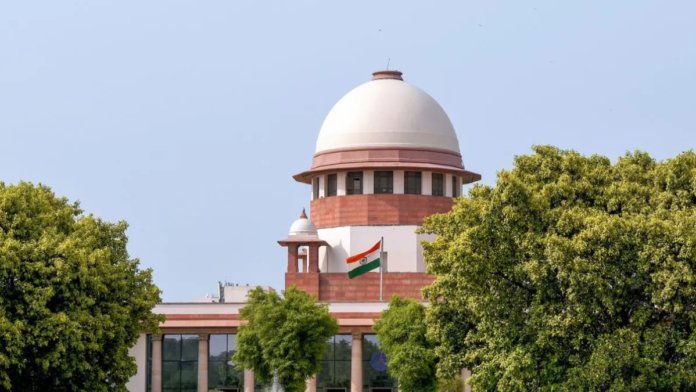
Delhi: The Delhi government has ordered schools to suspend all outdoor activities and sports following a sharp deterioration in air quality to the ‘severe’ category. The directive follows Supreme Court instructions asking the Commission for Air Quality Management (CAQM) to consider halting school sports scheduled for November and December.

Official Advisory and Health Warnings

In its advisory, the CAQM—the air pollution watchdog for Delhi-NCR—mandated postponement of all sports competitions due to severe pollution levels, stating current air quality poses “significant health risks to children.” The directive extends to all universities, colleges, and recognized sports associations across Delhi-NCR.

This week, Delhi’s air quality plunged to hazardous levels, fluctuating between ‘very poor’ and ‘severe’ categories. Friday’s average AQI reached 373, equivalent to smoking nearly 10-11 cigarettes daily.

Judicial Intervention

The Supreme Court expressed concern Wednesday, suggesting sports competitions be shifted to safer months before directing CAQM to issue school guidelines. The amicus curiae assisting the court argued that holding outdoor activities during November and December amounts to “virtually putting school-going children in a ‘gas chamber.'”

The Delhi High Court similarly addressed the issue Wednesday, stating the Delhi government was “shirking its responsibility” by permitting sports activities during this hazardous period.

Medical Evidence Supporting Action

Medical professionals have long warned children face greater vulnerability to polluted air than adults. Their developing lungs, faster breathing rates, increased outdoor time, and smaller bodies cause them to absorb more pollutants per breath.

Studies demonstrate prolonged PM2.5 and PM10 exposure reduces lung capacity, permanently alters respiratory development, triggers asthma, weakens immunity, and affects cognitive performance.

Ground Reality

For Delhi families, pollution has evolved from abstract health concern to seasonal crisis marked by inhalers, persistent coughs, cancelled playtime, and rising pediatric consultations. Paediatric pulmonologists report hospital visits spike sharply each November, often increasing 30-40%.

Public Health Emergency

The coordinated response from government, judiciary, and health authorities reflects growing recognition of Delhi’s air quality crisis as a public health emergency requiring immediate intervention. The suspension of outdoor school activities acknowledges that normal routines cannot continue during severe pollution episodes without endangering children’s long-term health.

Authorities continue monitoring air quality while evaluating additional protective measures for vulnerable populations during winter months when pollution traditionally peaks across the National Capital Region.

5.7-Magnitude Earthquake in Bangladesh Sends Tremors Across Eastern India

0
Earthquake
Earthquake

A 5.7-magnitude earthquake struck Bangladesh Friday morning, sending mild tremors across Kolkata and other parts of eastern India. The National Center for Seismology (NCS) reported the epicenter was located 10 kilometers east-southeast of Dhaka, with the quake occurring at 10:08 AM IST.

Widespread Impact Across Eastern States

Residents in Kolkata and adjoining areas reported feeling mild tremors, with fans and wall hangings swaying during the seismic event. Tremors were also detected in other West Bengal districts including Dakshin Dinajpur, Uttar Dinajpur, and Cooch Behar, as well as neighboring states Meghalaya, Tripura, and Mizoram.

Precautionary Evacuations

Social media videos showed residents evacuating homes and offices when tremors hit. Dr. Tapas Pramanick shared footage from Kolkata’s Salt Lake IT sector: “Strong tremors felt across parts of Kolkata, including the Salt Lake IT sector. Employees evacuated buildings as precaution. No major damage reported yet, but authorities urge people to stay alert and avoid using elevators. Stay safe, Kolkata.”

Other videos documented swinging fans and wall fixtures during the earthquake’s peak intensity.

No Casualties Reported

Authorities confirmed no injuries or casualties from the earthquake thus far, though details continue emerging. The relatively moderate magnitude and depth limited structural damage despite the wide geographical area affected.

Regional Seismic Context

The earthquake follows a separate 3.9-magnitude tremor that struck Pakistan Thursday at a shallow 10-kilometer depth, according to NCS. Shallow earthquakes pose greater dangers than deeper ones, as seismic waves travel shorter distances to the surface, producing stronger ground shaking with increased potential for structural damage and casualties.

Afghanistan, Pakistan, and northern India occupy one of the world’s most seismically active zones, where Indian and Eurasian tectonic plates converge. The region frequently experiences moderate to strong earthquakes, with tremors often felt across borders due to proximate fault lines.

Geological Vulnerability

The convergence of tectonic plates creates persistent seismic risks throughout South Asia. Friday’s Bangladesh earthquake underscores the region’s geological vulnerability, with densely populated urban centers like Kolkata and Dhaka particularly exposed to earthquake impacts.

Authorities continue monitoring seismic activity while advising residents in affected areas to remain alert for potential aftershocks, which commonly follow significant earthquake events in tectonically active regions.

OpenAI Launches Global ChatGPT Group Chat Feature Supporting Up to 20 Participants

0
OpenAI Launches Global ChatGPT Group Chat Feature Supporting Up to 20 Participants

OpenAI has launched its group chat feature worldwide, enabling up to 20 users to collaborate in shared conversations with AI assistance. The function, previously available only in Japan, New Zealand, South Korea, and Taiwan, represents the first shared ChatGPT experience for regular users.

How Group Chats Work

“With group chats, you can bring friends, family, or coworkers into a shared space to plan, make decisions, or work through ideas together,” OpenAI explained. The feature supports activities ranging from trip planning and work projects to casual discussions.

Starting groups is straightforward. A new people icon in the app’s top corner generates shareable links. Anyone with a ChatGPT account—free or paid—can join using these links, then send messages, share ideas, and tag ChatGPT for assistance.

Key Features and Capabilities

Each group accommodates up to 20 members, with new participants accessing complete chat history—unlike messaging platforms where latecomers miss context. All members except administrators can remove participants, rename groups, or add details helping ChatGPT customize responses.

The AI operates differently in group settings, listening before responding rather than replying to every message. It intervenes when sensing necessity or when directly tagged, functioning as an attentive but non-intrusive team member.

Behind the scenes, GPT-5.1 Auto powers the feature, intelligently selecting optimal models for each participant. ChatGPT Pro subscribers may receive richer responses than free-tier users within identical conversations, creating tiered experiences within shared spaces.

Privacy and Safety Protocols

OpenAI has implemented specific privacy measures. Private memory doesn’t apply to group chats, meaning the AI won’t retain shared information. Participants can leave groups anytime, with only creators immune from removal.

When minors join, ChatGPT automatically activates sensitive-content filters for all participants. Parents can disable the feature entirely for younger users.

Full Functionality Integration

All core ChatGPT tools—web search, image uploads, file sharing, dictation, and image generation—function within group chats. Users can simultaneously brainstorm projects, analyze budgets, design itineraries, and generate visual content without switching applications.

Collaborative AI Future

The global rollout positions ChatGPT group chats as digital collaboration spaces combining brainstorming rooms, study circles, and virtual meeting areas.

The feature represents OpenAI’s expansion from individual AI assistance toward collaborative intelligence platforms, potentially transforming how groups approach shared projects and decision-making processes in both personal and professional contexts.

YouTube Boosts India’s GDP by ₹16,000 Crore, Introduces New Creator AI.

0
YouTube Boosts India's GDP by ₹16,000 Crore, Introduces New Creator AI.

YouTube has unveiled a suite of artificial intelligence-powered tools and strategic institutional partnerships aimed at strengthening India’s rapidly expanding digital knowledge ecosystem. The initiatives focus on supporting content creators, expanding access to credible health information, and helping young professionals build careers in emerging creative technologies.

Economic Impact Findings

The announcements accompanied YouTube’s latest economic impact data, estimating the platform contributed over Rs 16,000 crore to India’s GDP in 2023 while supporting more than 9.3 lakh full-time equivalent jobs, according to Oxford Economics research.

“Our impact isn’t just about views; it’s about shared economic progress. Sixty-three percent of our monetising creators say YouTube is their primary income source. Our focus is to strengthen that foundation by building skills, collaborating with institutions, and deploying responsible AI tools,” said Gunjan Soni, Managing Director, YouTube India.

YouTube Educational Partnerships

YouTube will partner with the Indian Institute of Creative Technologies (IICT) to prepare students for careers in animation, gaming, visual effects, and related fields. The collaboration includes industry-led workshops, a “Create with AI” funding programme for experimental projects, and support developing IICT’s official YouTube presence.

“AI is reshaping the way stories are told. By giving students access to industry knowledge and cutting-edge tools, this initiative helps them compete on a global stage,” said IICT CEO Vishwas Deoskar.

Additionally, YouTube partnered with AIIMS College of Nursing to host specialized nursing courses covering wound care, infection control, and essential training for over 5,000 nursing students and professionals nationwide.

“This collaboration allows us to take AIIMS’ trusted curriculum nationwide and support nurses with high-quality learning resources,” said Dr. Latha Venkatesan, Principal of AIIMS College of Nursing.

AI-Powered Features

New launches include a conversational AI tool allowing viewers to ask questions and receive instant answers while watching videos, currently available in English with Hindi support expected soon.

The “Edit with AI” feature in YouTube Create app transforms raw footage into polished first drafts, reducing editing time. Expanded likeness-detection technology helps creators identify unauthorized AI-altered content using their facial features.

Health Information and Digital Well-Being

With health-related videos crossing 300 billion views in India by December 2024, YouTube introduced First Aid shelves in English and Hindi featuring verified videos. A new feature allows users to set daily scrolling limits within Shorts, with “take a break” prompts remaining default for users under 18.

Nepal Sees Fresh Gen-Z Uprising After Two Months as Authorities Enforce Curfew

0
Nepal
Nepal

Simara continued to witness unrest on Thursday as crowds returned to the streets and repeatedly clashed with police from the early hours of the morning.

With tensions rising, local authorities responded by enforcing a curfew from 1 pm to 8 pm. Assistant chief district officer Chhabiraman Subedi told ANI that the curfew had been reinstated in an effort to restore order after fresh confrontations broke out between demonstrators and police personnel.

The situation follows violent clashes a day earlier, during which six young protesters from the “Gen Z” movement were injured.

Reports from PTI indicate that political friction in the district intensified when leaders of the Unified Marxist-Leninist (UML) party prepared to visit the region ahead of the March 5, 2026 elections.

Police said trouble began when a Buddha Air aircraft, scheduled to fly UML general secretary Shankar Pokharel and youth leader Mahesh Basnet to Simara for an anti-government rally, became the focus of a confrontation. What started as a standoff quickly escalated, leading security forces to fire tear gas at demonstrators. Airport operations were suspended as the situation worsened.

Simara has seen deadly protests in recent months. In September, at least seventy-six people lost their lives during widespread demonstrations sparked by public outrage over a temporary government ban on social media. The movement, largely driven by young citizens rallying under the “Gen Z” banner, led to the resignation of then-Prime Minister KP Oli, who also headed the UML.

Following his departure, former Chief Justice Sushila Karki, aged seventy-three, was sworn in as Nepal’s first woman prime minister to lead an interim government.

Mann Government Implements Key Anti-Corruption Change, Making Electricity Connections Easier in Punjab

0
Punjab

Across the country, people often struggle with endless paperwork for even the smallest services, but Punjab has chosen a different path. The Mann government has finally delivered on a long standing public demand by making the process of getting a new electricity connection remarkably simple and transparent. What was once a frustrating and time consuming ordeal has now become easy and efficient.

For many years, residents faced repeated office visits, long queues, and piles of documents just to secure a basic power connection. The requirement of a No Objection Certificate caused the most trouble, dragging the process on for months and leaving families, farmers, and senior citizens helpless. That chapter now belongs to the past. Punjab has removed the NOC requirement completely, bringing genuine relief to thousands who were previously trapped in bureaucratic hurdles.

This reform is more than an administrative change. It reflects the joy of families finally seeing electricity reach their homes without unnecessary delays, the relief of farmers who can now power their fields without paperwork battles, and the comfort of elderly citizens who no longer need to navigate complicated formalities. The message from Punjab today is clear: processes have improved, and daily life has become easier.

The government has made it official that applying for a new electricity connection will no longer involve any kind of NOC. This decision was taken with the intention of making the system cleaner, quicker, and corruption free. It ensures that no office or agency can use paperwork as an excuse to slow down someone’s connection.

Under the new guidelines, applicants need only two essential documents. They must submit their Registry or Lease Deed to show ownership or occupancy, along with any valid proof of identity. Cabinet Minister Sanjeev Arora confirmed that these two documents are sufficient under the revised policy.

Minister Arora also highlighted an important concern behind this decision. Many people used to install illegal power connections because the legal process was too slow. These illegal setups often led to heavy penalties, creating further conflict between consumers and authorities. With the streamlined system now in place, the government aims to eliminate both illegal connections and the complications that came with them.

This major reform reflects a shift in governance, where convenience for the public is treated as a priority. Punjab’s administration has proven that work can move forward without recommendations, bribes, or endless visits to government offices. The new system ensures that electricity reaches every house, every farm, and every small business without delay, showing that visible change is underway in the state.

₹150 Crore Investment Flows Into Amritsar as Punjab Government’s Vision Takes Shape

0
Punjab
Punjab

At the CII Northern Region council gathering in Amritsar, industry leaders and government representatives held extensive discussions on Punjab’s economic direction. The session ended with optimism on both sides, especially after SUJAN confirmed a one hundred fifty crore rupee investment in the state’s hospitality sector, beginning with Amritsar. This commitment was viewed as a major signal of Punjab’s rising appeal for new projects, particularly in tourism.

During the meeting, CII Northern Region Chairperson Anjali Singh praised the growing confidence investors are placing in Punjab. She described the state as an increasingly attractive destination for high value investment and said that the government’s supportive reforms have created the right environment for tourism and related industries to expand. She urged Punjab to further promote its land banks, improve cold chain systems for agricultural produce, focus on heritage based tourism development, and even consider appointing brand ambassadors who can represent the state at national and global platforms.

Industry Minister Sanjeev Arora then outlined how the state is shaping a modern and responsive industrial landscape. He explained that Punjab is working with a detailed reform plan that includes the formation of twenty four sectoral committees and the preparation of a Master Industrial Policy. This policy will include specific guidelines and support structures for each major industry, ensuring investors have clarity and long term stability.

The Minister also mentioned that the state is drafting a comprehensive energy strategy that looks ahead to the year twenty thirty five. This plan examines a balanced mix of conventional and renewable sources to meet future demands. Alongside this, he updated the council about infrastructure developments. Land has already been earmarked for two new exhibition centres in Mohali and Ludhiana with tender processes underway. Work has started to identify a suitable location in Amritsar for a third such facility.

As part of the state’s efforts to streamline procedures, the Minister highlighted improvements brought under the Right to Business law. Units in the Green category and several in the Orange category will now receive approvals within five days, which is expected to reduce delays and encourage faster industrial growth.

Punjab’s logistics strength was also discussed. The state already has ten inland container depots, two freight stations, two international airports, and the Adampur airport in service. The upcoming Halwara airport is set to add further capacity and enhance connectivity for businesses and travellers.

The Punjab government used the platform to present its broader industrial reform vision, including major infrastructure projects and long term investment strategies. The approach aims to accelerate economic growth and create a forward moving industrial ecosystem that supports investors, businesses, and job creation across the state.

Nitish Kumar Sworn in as Bihar Chief Minister for Record 10th Term Following NDA Landslide

0
Nitish Kumar
Nitish Kumar

JD(U) chief Nitish Kumar took oath as Bihar Chief Minister for a record 10th time Thursday at Patana’s historic Gandhi Maidan, days after leading the NDA to a decisive Assembly election victory. The 74-year-old socialist leader, whose political relevance faced repeated questioning during the campaign, was sworn in alongside BJP’s Samrat Choudhary and Vijay Kumar Sinha as Deputy Chief Ministers.

Nitish Kumar Ministerial Oath-Taking Ceremony

Governor Arif Mohammad Khan administered oaths to the trio and 24 additional ministers in the presence of prominent BJP and NDA leaders, including Prime Minister Narendra Modi and Union Home Minister Amit Shah.

Pre-Ceremony Leadership Elections

Wednesday saw Kumar unanimously elected as leader of both the JD(U) Legislature Party during a meeting with newly elected MLAs at his official residence, and the NDA Legislature Party, solidifying his position as the alliance’s governmental head.

Simultaneously, Samrat Choudhary and Vijay Kumar Sinha were elected leader and deputy leader respectively of the BJP Legislature Party at the state headquarters. Uttar Pradesh Deputy Chief Minister Keshav Prasad Maurya, serving as central observer for the leadership election, proposed their names, receiving full MLA support.

Overwhelming Electoral Mandate

Nitish Kumar met Governor Khan on Wednesday, tendered his resignation from the previous government, and staked claim to form a new administration after the NDA secured 202 of 243 Assembly seats. This marked only the second time the alliance crossed 200 seats; in 2010, it captured 206. The opposition Mahagathbandhan managed merely 35 seats.

Seat Distribution

The NDA’s tally comprised BJP (89 seats), JD(U) (85), LJP Ram Vilas (19), HAMS (5), and Rashtriya Lok Morcha (4). Opposition results showed RJD (25), Congress (6), CPI(ML)(L) (2), IIP (1), and CPI(M) (1). AIMIM secured five seats while BSP won one.

Historic Voter Turnout

Elections conducted in two phases on November 6 and 11 recorded 67.13% voter turnout—the highest since 1951. Women voters demonstrated exceptional participation at 71.6% compared to 62.8% among men.

The swearing-in ceremony marks Kumar’s continued dominance in Bihar politics despite persistent challenges to his leadership, reinforcing his position as one of India’s most enduring regional political figures.