Home Blog Page 252

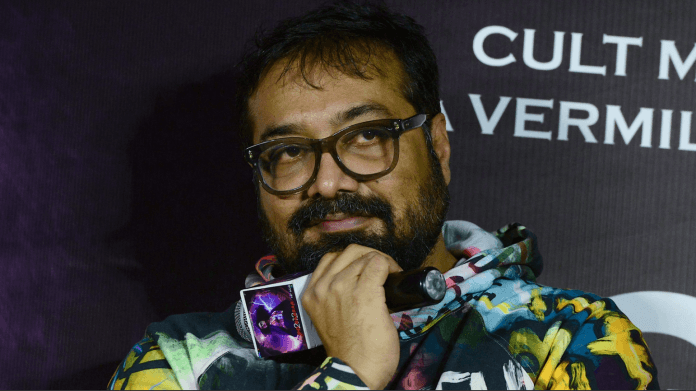
Anurag Kashyap Believes Bollywood Doesn’t Want to Make Films Anymore

0

Anurag Kashyap is known for his candid views on storytelling trends and the challenges faced by filmmakers and artists. In a recent interview with Humans of Cinema, he discussed the creative crisis in the Hindi film industry, attributing it to the obsession with earning ₹500-800 crore.

Kashyap highlighted how commercial success can stifle creativity, saying, “Success often destroys more than it breeds. When Sairat made ₹100 crore, I told my friend Nagraj Manjule that Marathi cinema was now finished. Now, everyone will want to make ₹100 crore rather than tell stories.”

He elaborated on the issue in the Hindi film industry: “The problem is that now they want to earn ₹500 to 800 crore, not make films. To do that, you have to dumb down your films and sacrifice your story. It’s not even original; everyone follows a formula and copies each other. Everyone is imitating the pan-India trend. If you watch 10 pan-India films, they all look the same. This harms the industry because it leads to a large number of flops. One or two might work, but then everyone copies, and everything flops.”

Anurag Kashyap has directed numerous Bollywood films and web shows, including Black Friday, Dev D, No Smoking, Gulaal, Gangs of Wasseypur, Mukkabaaz, Sacred Games, and Manmarziyaan. His upcoming film Kennedy was screened at the Cannes Film Festival in 2023. This neo-noir thriller stars Rahul Bhat, Sunny Leone, Abhilash Thapliyal, and Mohit Takalkar. Reflecting on the Cannes experience in an interview with Film Companion, Kashyap said, “It’s always special to show your film to the world at Cannes, and it’s a lifetime moment to play at the Grand Theatre Lumiere. Kennedy is a very special film to me, and extremely personal too. We put our heart and soul into making this film. The 7-minute standing ovation from the audience filled me with gratitude. I am very grateful and excited at the same time.”

Anurag Kashyap will next appear in a negative role in Vijay Sethupathi’s Tamil crime action-thriller Maharaja.

India is Behind 150 Countries In Women Representation in Lok Sabha

0

India ranks lower than 150 countries in the representation of women in parliament, according to data from IPU-Parline, a global database on national parliaments.

In the 2024 Lok Sabha elections, 74 women MPs were elected, making up 13.6 percent of the total members of parliament.

According to the Indian Express, 14 parties have women elected as MPs, with the BJP leading with 31 women MPs. Congress follows with 13 women MPs, and TMC has 11 women MPs.

The Inter-Parliamentary Union (IPU) -Parline, a free resource on national parliaments, published a ranking in May 2024 showing the representation of women in parliaments. In 2019, 14.7 percent of MPs were women, placing India at 145 on the global index.

The 2019 number of women MPs was the highest to date in India. As of May 2024, the number has dropped, causing India’s ranking to fall to 150.

India falls short of the global average of 26.5 percent and the South and Central Asian average of 19 percent women MPs.

India is outranked by countries like the UAE, South Africa, the USA, and the UK. Rwanda, with women MPs comprising 61.3 percent of parliament, ranks highest on the index. India’s neighbors in Asia also fare better, with Pakistan at 116, China at 89, and Nepal at 55.

In 2023, India passed the Women’s Reservation Bill (Nari Shakti Vandan Adhiniyam), which will provide 33 percent reservation for women in the Lok Sabha and assemblies. The bill will be enacted by 2029 at the earliest due to delimitation and census requirements.

According to Susan Ferguson, UN Women’s India representative, the quota is a step towards ensuring better participation of women in parliament. Rwanda, the country with the highest number of women MPs, also has a 30 percent reservation for women in elected positions.

Vladimir Putin Says Russia Can Provide Arms to Others to Take Down Western Targets

0

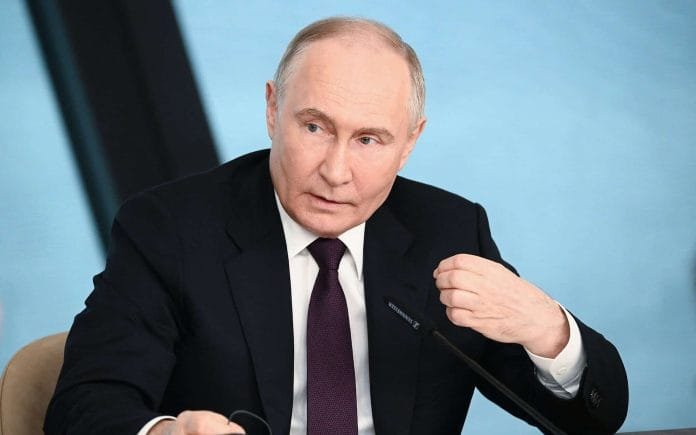
President Vladimir Putin warned on Wednesday that Russia might supply long-range weapons to others to target Western nations if NATO allies allow Ukraine to use their arms against Russian territory.

Putin also reiterated Moscow’s readiness to use nuclear weapons if it perceives a threat to its sovereignty.

The recent actions by the West could further destabilize international security and lead to “very serious problems,” he stated during a rare interaction with international journalists since Moscow’s invasion of Ukraine.

“That would mark their direct involvement in the war against the Russian Federation, and we reserve the right to act in the same way,” Putin added.

The United States and Germany recently authorized Ukraine to strike certain targets within Russia using the long-range weapons they have provided to Kyiv.

On Wednesday, a Western official and a U.S. senator revealed that Ukraine has used U.S. weapons to strike inside Russia under new guidelines approved by President Joe Biden, permitting American arms to be used for the limited defense of Kharkiv, Ukraine’s second-largest city. The official, who spoke anonymously due to the sensitivity of the matter, was not authorized to comment publicly.

Putin claimed that the use of some Western-supplied weapons involves military personnel from those countries controlling the missiles and selecting targets, suggesting that Moscow could take “asymmetrical” actions elsewhere in the world. However, the U.S. military maintains it does not control the missiles it supplies to Ukraine or the targeting decisions.

“If they consider it possible to deliver such weapons to the combat zone to launch strikes on our territory and create problems for us, why shouldn’t we have the right to supply weapons of the same type to regions where they can be used to strike sensitive facilities of the countries that are doing this to Russia?” he said.

“We will think about it,” he mentioned to journalists at the St. Petersburg International Economic Forum.

When asked about the potential use of nuclear arms, Putin pointed to Russia’s security doctrine, which clearly outlines the conditions for their use.

“For some reason, they believe in the West that Russia will never use it,” he remarked.

“Look at what is written there,” he said, referring to Russia’s nuclear doctrine. “If somebody’s actions threaten our sovereignty and territorial integrity, we consider it possible to use all means at our disposal.”

Even Russia’s battlefield nuclear weapons are significantly more powerful than those used by the U.S. against Japan in World War II, Putin noted.

Speaking to senior news leaders from international agencies, including The Associated Press, for over three hours, Putin also stated that Russia-U.S. relations would remain unchanged regardless of whether Joe Biden or Donald Trump wins the upcoming American presidential election.

“We will work with any president the American people elect,” Putin said.

“I say absolutely sincerely, I wouldn’t say that we believe that after the election something will change on the Russian track in American politics,” he added. “We don’t think so. We think nothing that serious will happen.”

Putin also commented on Trump’s recent felony conviction at his hush money trial, describing it as “the use of the court system as part of the internal political struggle.”

The Russian leader faced questions on various topics, but the conflict in Ukraine dominated the session.

Putin claimed the West had opportunities to end the fighting in Ukraine but did not act on them, citing a letter he allegedly wrote to Biden suggesting that hostilities could cease in two or three months if Washington stopped supplying Kyiv with weapons.

Asked about Russian military losses, Putin said no country would disclose such information during ongoing hostilities but asserted, without providing details, that Ukraine’s casualties are five times greater than Russia’s.

He also stated that Ukraine holds over 1,300 Russian troops in captivity, while Russia has more than 6,400 Ukrainian soldiers in custody.

These claims could not be independently verified, and some Western estimates suggest Russia’s losses are much higher than Ukraine’s.

NSA Jake Sullivan is Ready to Visit India to Maintain India-US Relations

0

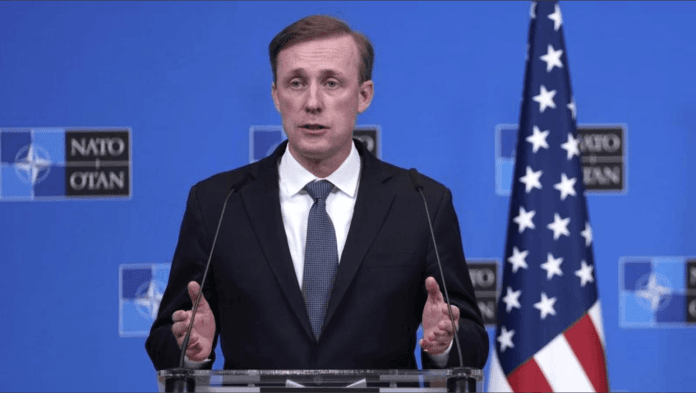
The White House has announced that U.S. National Security Advisor Jake Sullivan will visit India to engage with the newly formed government in New Delhi on shared U.S.-India priorities. This announcement coincides with Narendra Modi’s upcoming swearing-in as prime minister for a third consecutive term, according to PTI.

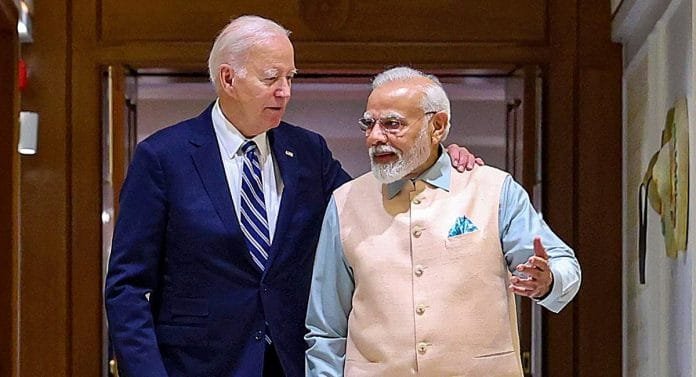
President Joe Biden highlighted Sullivan’s visit during a call with PM Modi on Wednesday to congratulate him on his re-election.

“President Joseph R. Biden, Jr. spoke today with Prime Minister Narendra Modi of India to congratulate him and the National Democratic Alliance on their historic victory in India’s general election,” the White House stated in a readout of the call, as quoted by PTI.

Biden also commended the Indian electorate for their participation, with nearly 650 million voters turning out for the elections.

The leaders reaffirmed their commitment to strengthening the U.S.-India Comprehensive and Global Strategic Partnership and advancing their shared vision for a free, open, and prosperous Indo-Pacific region.

“The two leaders also discussed National Security Advisor Jake Sullivan’s upcoming trip to New Delhi to engage with the new government on shared U.S.-India priorities, including the trusted strategic technology partnership,” the White House noted.

Although Sullivan’s travel dates have not been announced, his visit is expected shortly after Modi’s swearing-in ceremony.

Separately, Senator Ben Cardin, Chair of the Senate Foreign Relations Committee, congratulated the people of India for successfully conducting their elections, with voting at over a million polling stations nationwide over several weeks.

“The people of India have again demonstrated their commitment to the democratic process, casting their votes despite this year’s intense heatwaves,” he said.

“The U.S.-India partnership is, and will remain, crucial for regional and global prosperity for many years to come. I look forward to strengthening this relationship, which I believe will endure as long as it is based on mutual respect, trust, and a commitment to democratic values,” he added.

“As political leaders begin forming a new government, I reaffirm my support for the people of India in their continued efforts to strengthen justice and the rule of law, enhance transparent governance, and safeguard human rights,” Cardin stated.

John Chambers, Chairman Emeritus of Cisco, also congratulated Modi on his third term in a LinkedIn post.

“When I reflect on my first meeting with PM Modi, I was immediately struck by his humble yet courageous spirit and bold vision for India. His Digital India initiative is one of the best I have ever seen, and recent major partnerships in defense, technology, and more clearly indicate the country’s growth trajectory,” he said.

“As I mentioned at the Kennedy Center last June, I trust PM Modi with my life and believe India will become the #1 GDP in the world, largely due to his efforts. I look forward to further collaboration to make the U.S.-India partnership the strongest globally as Chairman of the U.S.-India Strategic Partnership Forum. Keep an eye on India – I, for one, will continue to be the biggest advocate for the country under his leadership,” Chambers added.

Centre is All Set to Procure Chana Dal to Replenish Buffer Stock

0

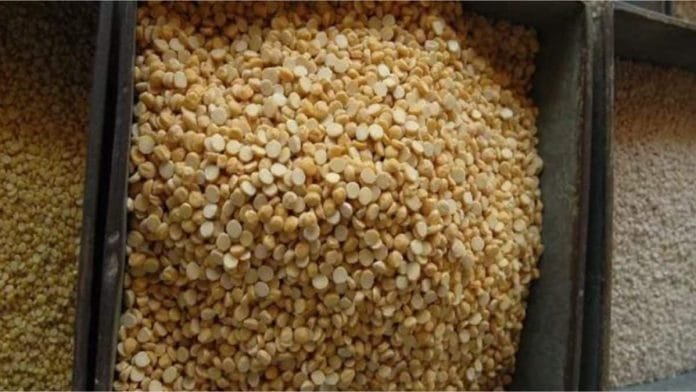
New Delhi: The Centre plans to purchase one million tonnes (mt) of chana (gram) under its price stabilization fund (PSF) at market prices or higher to replenish its buffer, a senior official said.

Pulse stocks are dwindling, and the government has struggled to procure the desired quantities due to high prices.

Chana prices in the wholesale markets of key producing states have surged significantly, ranging from ₹6,900 to ₹7,075 per quintal, well above the minimum support price of ₹5,440 per quintal, according to spot traders.

This increase has driven the retail price of chana up by 16.6% compared to the previous year, reaching nearly ₹87 per kg as of Wednesday, data from the consumer affairs ministry showed.

“Procurement of chana under the PSF began last month by our two agencies, NAFED and NCCF, at the prevailing market rate. This procurement involves the current rabi season’s crop from farmers, PACs (primary agricultural credit societies), cooperatives, FPOs (farmer producer organizations), FPCs (farmer producer companies), millers, and private players at the MAPP (minimum assured procurement price) listed daily on the Agmarknet and UPAG portals. If MAPP is not feasible, we have directed the agencies to purchase the crop at 10% above MAPP,” the official said.

“We estimate the operation’s cost to be about ₹600 crore, and we have already paid this amount in advance to both agencies to procure one million tonnes of chana,” the official added.

The government has managed to purchase around 300,000 tonnes of chana so far, less than a third of the buffer requirement. Overall, only 1.6 mt of pulses are available in the central pool, including 340,000 tonnes of chana, against the norm of 3.1 mt.

Chana prices began rising due to anticipated lower production this year caused by low rainfall and a prolonged dry spell last year. The agriculture ministry acknowledged this and revised its estimates downwards on Tuesday to 11.57 mt from the February estimate of 12.1 mt. Last year, the country produced an estimated 12.26 mt. The government will release its final estimates in October.

HC Rejects PIL Asking BCCI, Delhi Capitals to Pay For Security At IPL Games

0

In New Delhi, the Delhi High Court has dismissed a public interest litigation (PIL) seeking an order for the Board of Control for Cricket in India (BCCI) and Delhi Capitals to compensate the Delhi Police for the security services provided during Indian Premier League (IPL) matches.

The petitioner, a self-proclaimed social activist, argued that similar matters of police payment for security during IPL matches in Mumbai and Jaipur were previously addressed by their respective high courts.

A bench led by Acting Chief Justice Manmohan noted that both the Central Government and the Delhi Police decided not to charge a fee for security at IPL matches in the national capital, deeming it a policy decision that does not warrant judicial interference.

“We do not find any merit in the petitioner’s claim that a notional amount is due from Respondents 1 and 2 to the Union of India or the Delhi Police for past matches held until 2022. Therefore, the petition is dismissed,” stated the bench, which also included Justice Manmeet PS Arora, in an order dated May 28.

The court clarified that its ruling should not be interpreted as preventing the Delhi Police from imposing fees for past or future security services if they choose to do so.

The petitioner contended that the Delhi Police should have charged the BCCI and Delhi Capitals for security provided during IPL matches, asserting that since IPL matches have been held in Delhi since 2008, collecting fees for all past matches would amount to a significant sum.

The counsel for the Centre responded that there are no outstanding payments due from the BCCI and Delhi Capitals to the Delhi Police, as no security fee had been negotiated.

The court referenced cases where the Maharashtra Police had negotiated a security fee for IPL matches in Mumbai, leading to a PIL in the Bombay High Court over alleged non-payment, which was resolved after payment was made. Similarly, the Rajasthan High Court addressed the issue of unpaid dues for security services rendered by the Rajasthan Police during IPL matches.

“However, in this case, as acknowledged by the petitioner, the Union of India and Delhi Police chose not to charge any fee from Respondents 1 and 2 for the IPL matches held in Delhi. Thus, there are no outstanding dues,” the court said.

“We conclude that no directions, as requested in the current petition, are warranted,” the court declared.

Dollar Gains Strength As Traders Move Towards US Services

0

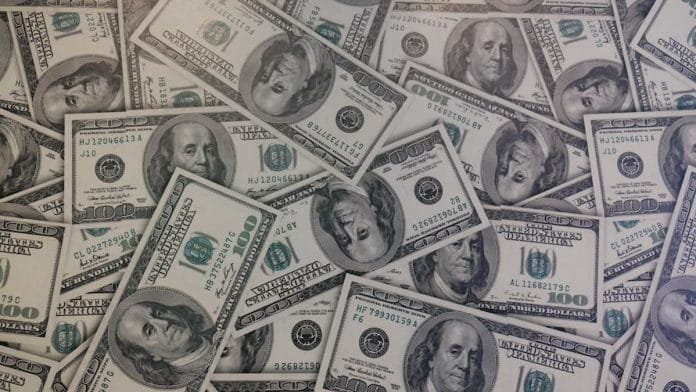
The dollar held steady on Wednesday as traders reduced riskier bets in emerging markets, awaiting an interest rate decision from Canada and U.S. services data.

The Swiss franc and yen also benefited from this sentiment, with the yen receiving an additional boost after Bloomberg News reported that the Bank of Japan might consider reducing bond buying at its policy meeting next week.

In early Asian trade, the yen eased 0.2% to 155.27 and was at 168.74 to the euro, after a 1% jump against the common currency overnight—its largest rise since Japan’s FX market intervention a month ago.

“We expect further yen short covering ahead of the BOJ’s June 14 policy decision,” said Rabobank strategist Jane Foley in a client note.

Data on Wednesday showed that Japanese real wages fell for the 25th consecutive month in April, as inflation outpaced nominal pay rises. The yen is the worst-performing G10 currency this year, and on Tuesday, BOJ Deputy Governor Ryozo Himino emphasized the need for vigilance regarding the yen’s weakness and its impact on the economy and inflation.

The Swiss franc rose for the fourth consecutive session against the dollar overnight and, at 0.8902 per dollar, is nearing its 200-day moving average. Other major currencies eased slightly against the dollar, despite falling U.S. bond yields.

The euro was steady in the Asia session at $1.0878, and sterling was at $1.2770, both slightly softer than the previous day. The Australian dollar was marginally weaker at $0.6443, with GDP data due and Westpac forecasting annual growth at just 1%, the slowest pace since 1991, excluding the pandemic years. Australia’s top central banker indicated that growth in the March quarter was expected to be weak due to high interest rates restraining demand.

The New Zealand dollar remained steady at $0.6173, while the Canadian dollar was stable at C$1.3678 per dollar.

Markets are pricing a 75% chance of a 25 basis point rate cut in Canada, which would be the first among G7 nations in this cycle. Traders will be looking for signals of further cuts. U.S. services ISM and partial jobs data are also due.

Emerging markets have experienced turbulence recently. India’s rupee fell to a seven-week low after Narendra Modi’s re-election with a slimmer margin than expected. South Africa’s rand wavered after the African National Congress lost its parliamentary majority for the first time in 30 years. The Mexican peso tumbled more than 4% against the dollar and nearly 6% against the yen since the ruling Morena party was re-elected and, in coalition, approached two-thirds majorities in both Congress chambers.

Heavy selling of the peso against the yen indicated investors pulling back from popular “carry” trades, said Pepperstone’s head of research Chris Weston, due to uncertainty over Mexico’s currency outlook. The Morena party’s congressional majority could lead to major structural reforms and increased government control over businesses, potentially reducing Mexico’s standing as an international hub.

Congress Gets Lok Sabha Seats in Violence-Affected Manipur Area

0

The Congress won both the Lok Sabha seats in violence-stricken Manipur—Inner and Outer Manipur—defeating the BJP-National People’s Party (NPP)-Naga People’s Front (NPF) alliance on Tuesday.

In the Inner Manipur constituency, Angomcha Bimol Akoijam emerged victorious, while Alfred Kan-Ngam Arthur triumphed in the Outer Manipur constituency. They defeated Thounaojam Basanta Kumar Singh and Kacchui Timothy Zimik of the BJP-NPP-NPF alliance.

Bimol, a professor at Jawaharlal Nehru University, was a popular choice for voters seeking an alternative to the ruling BJP. He garnered 374,017 out of 789,912 total votes. He was selected by senior Congress leaders during a period of state unrest, as no other party leaders were willing to run.

Arthur’s victory in the Outer Manipur constituency makes him the third Tangkhul Naga to secure a Lok Sabha seat, following Rungsung Suisa’s win in 1957. The 50-year-old former legislator defeated NPF’s Zimik by a margin of over 60,000 votes.

Other candidates for the Inner seat included Maheshwar Thounaojam of RPI (Athawale), independent candidate Moirangthem Totomsana, Rajkumar Somendra Singh, and Haorungbam Sarat.

In the Outer Manipur constituency, Arthur clinched victory by garnering 384,954 out of 789,793 total votes. Coinciding with his 51st birthday, Arthur triumphed over his closest competitor, NPF’s Kachui Timothy Zimik, who received 299,536 votes.

All four Naga candidates vied for the Outer Manipur seat, including independent contenders S Kho John and Alyson Abonmai.

Manipur has been embroiled in conflict since May of last year, sparked by ethnic tensions following a protest march by Kuki tribals in the hill districts. They were demonstrating against the demand for Scheduled Tribes status by the valley-dominant Meitei community.

Since the unrest began last year, more than 220 individuals from both communities, including security personnel, have lost their lives in the ongoing violence.

US President Biden Wishes Modi on Election Win

0

US President Joe Biden on Wednesday congratulated Prime Minister Narendra Modi and the National Democratic Alliance (NDA) on their victory in the recent Lok Sabha elections. He also praised the nearly 650 million voters who participated, calling it a “historic election.”

“Congratulations to Prime Minister Narendra Modi and the National Democratic Alliance on their victory, and to the nearly 650 million voters in this historic election. The friendship between our nations is only growing as we unlock a shared future of unlimited potential,” Biden posted on X.

The US State Department issued a statement congratulating Modi and the NDA, and commended Indian voters, poll workers, civil society, and journalists for “their commitment and vital contributions to India’s democratic processes and institutions.”

“We look forward to continuing to further our partnership with the Indian government to promote prosperity and innovation, address the climate crisis, and ensure a free and open Indo-Pacific region,” stated department spokesperson Matthew Miller.

Russian President Vladimir Putin also congratulated Prime Minister Modi on his party’s election success during a telephone call, the Kremlin announced on Wednesday.

“The Russian President warmly congratulated Narendra Modi on the success of the Bharatiya Janata Party in the recently concluded general parliamentary elections,” the Kremlin said.

Prime Minister Modi was formally named by the NDA to lead a new coalition government for a third consecutive term on Wednesday, a day after election results left the BJP below the majority. Modi, who has dominated Indian politics since 2014, will now head a government reliant on the support of regional allies, a dynamic that could complicate his cabinet’s reform agenda.

Following the election results, Modi submitted his resignation to President Droupadi Murmu, following the cabinet’s recommendation to dissolve parliament—a necessary formality before forming a new government. Subsequently, a meeting of 15 NDA parties at Modi’s residence formally named him as their leader.

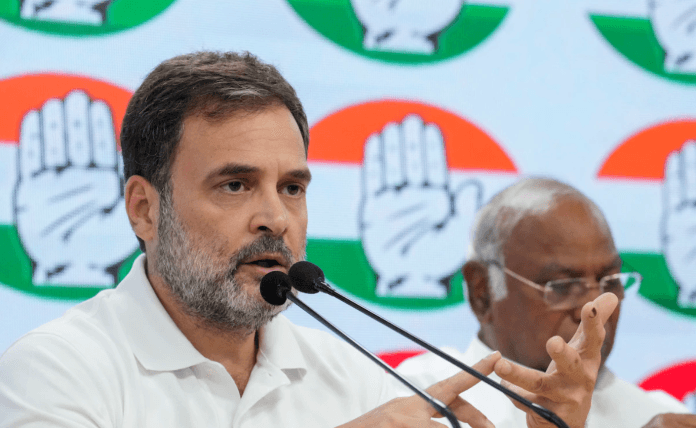
The NDA secured 293 seats in the 543-member lower house of parliament, surpassing the 272 needed to form a government. However, Modi’s Bharatiya Janata Party (BJP) won 240 seats on its own. The opposition INDIA alliance, led by Rahul Gandhi’s Congress party, exceeded expectations by winning 230 seats. Congress alone secured 99 seats, nearly doubling its tally from 2019, boosting Gandhi’s political standing.

Air India’s CEO Talks About Flight Delays and Blames Maintenance Provider AIESL

0

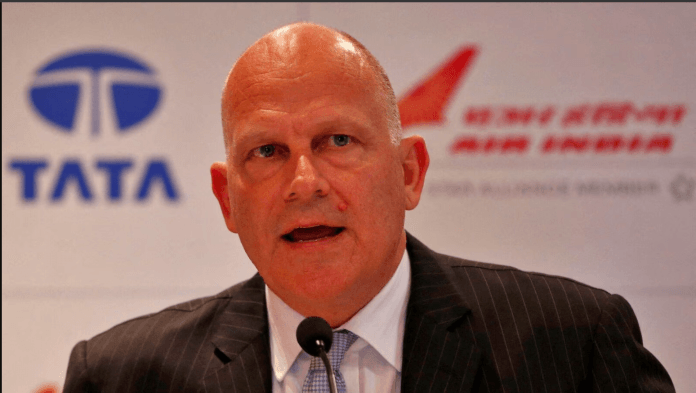
Addressing the recent delays and cancellations of multiple Air India flights, MD and CEO Campbell Wilson acknowledged that the airline could have better managed this “unusual combination of events,” according to a Mint report.

“A lot of factors contributed to this – technical issues with the aircraft, problems with third-party ground handling units, airport air conditioning capabilities, high temperatures in Delhi, and some passengers’ reluctance to travel,” Wilson told Mint at the 80th annual general meeting of the International Air Transport Association. “There are lessons to be learned, whether it’s improving compensation or communication.”

On May 31, the Directorate General of Civil Aviation (DGCA) issued a show-cause notice to Air India for significant delays in at least two international flights – AI 183 from Delhi to San Francisco on May 30 and AI 179 from Mumbai to San Francisco on May 24.

On June 2, an Air India flight from Delhi to Vancouver experienced nearly a 22-hour delay, prompting more than 50 passengers to protest inside the terminal.

Regarding the Delhi-San Francisco flight, Wilson explained that an auxiliary unit powering the plane’s air conditioning had failed. The backup jet starter unit couldn’t generate enough power to start the engines due to extreme heat in Delhi, where temperatures approached 50 degrees Celsius.

For the delayed Delhi-Vancouver flight, Wilson blamed state-run Air India Engineering Services Ltd (AIESL) for delivering an unfit aircraft. The flight was canceled after an inspection revealed the plane lacked a nozzle necessary for filling drinking water.

AIESL, a public sector undertaking, provides maintenance, repair, and overhaul (MRO) services for Air India and other airlines. AIESL technicians had issued a strike notice for April 23, demanding the CEO address grievances such as lack of promotions for seven years, extended notice periods, delayed salary hikes, and exclusion of dearness allowance from salaries within 90 days, according to Hindustan Times.

According to The Hindu Business Line, agreements requiring Air India to rely on AIESL for maintenance are set to expire by the end of this year.

Over the next 18 months, Air India plans to start its in-house line maintenance and establish base maintenance facilities for both narrow-body and wide-body aircraft in Bengaluru in partnership with Singapore Airlines Engineering Company Ltd, as reported by Mint.