Home Blog Page 102

Punjab Man Faces Backlash After Marrying Local Woman, Villagers Attack His Mother

0
Punjab
Punjab

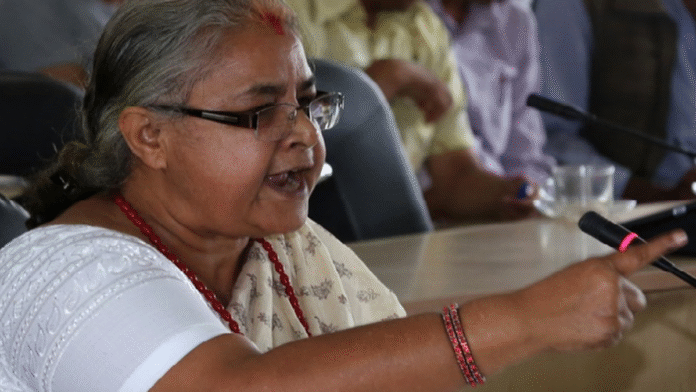
In Moga district’s Ghalkalan village, a woman was allegedly beaten and thrown out of her home after her son married a woman from the same village—an act that went against an unwritten rule enforced by the local panchayat.

The incident stems from a marriage that took place on May 5, when Melanath, the elder son of Tarsem Singh, wed a local woman in a court ceremony. Following their union, the couple began living elsewhere. Their decision, however, reportedly triggered hostility from the bride’s family and village leaders, including the panchayat, which had previously declared that love marriages within the village boundaries would not be tolerated.

The groom’s mother, Jasbir Kaur, was accused of supporting the couple’s decision. Fearing backlash, she had been staying at a relative’s house for nearly two months. When she returned home on July 21, she was allegedly confronted by Sukhchen Singh—husband of the village sarpanch—and members of the bride’s family. According to her family, she was physically assaulted in public, locked out of her house, and left to spend the night outside. The injured woman was later taken to a hospital.

Despite approaching local authorities, Jasbir Kaur claims no action was taken until she escalated the matter to a senior police official. She further stated that the attackers wrongly assumed she had encouraged the marriage, even though her son had not returned home since the wedding. Her husband and younger son are still living in the village home.

Kaur also alleged that on the night of the attack, a crowd of around 100 people was gathered by Sukhchen Singh, who orchestrated the public assault.

When questioned, Singh defended the village’s stance, stating that a resolution had been passed warning residents against facilitating love marriages, and promising consequences for those who defy it.

Police have yet to issue a formal statement on the incident.

Leading AI Scientist Reportedly Turns Down Meta’s Massive $1 Billion Proposal

0

After managing to attract top-tier AI minds from OpenAI, Mark Zuckerberg now appears to be setting his sights on another rising force in the AI world: Mira Murati’s Thinking Machines Lab, also known as TML. But this time, his efforts may be falling short.

According to Wired, not a single researcher at TML has accepted Meta’s offers to join its recently launched initiative, Meta Superintelligence Labs.

This rejection is particularly striking considering the eye-watering compensation packages reportedly offered. One source claims Meta offered an astounding $1 billion to a single individual, while others were presented with offers ranging from $200 million to $500 million over a four-year vesting period.

Despite the financial appeal, TML employees have so far turned down every offer.

What is Thinking Machines Lab?

Thinking Machines Lab was founded by Mira Murati, the former Chief Technology Officer of OpenAI. It is an artificial intelligence startup focused on pushing the boundaries of advanced AI research. The company achieved a $12 billion valuation in its seed round, despite not having launched a product yet.

Why Are They Saying No?

One major factor could be concerns about leadership. Meta’s new AI division is reportedly headed by Scale AI cofounder Alexandr Wang and former GitHub CEO Nat Friedman. Some employees at TML are reportedly uneasy about Wang’s limited experience and his approach to leadership.

Others have voiced concerns about Meta’s overall vision. While TML and OpenAI are focused on building toward artificial general intelligence, Meta is perceived by some as prioritizing algorithmic tools for platforms like Facebook and Instagram. This direction, according to Wired’s sources, fails to inspire many top researchers.

Supreme Court Declines Punjab’s Challenge to High Court Directive on Additional Water Supply to Haryana

0
Supreme Court
Supreme Court

On Monday, the Supreme Court declined to admit the Punjab government’s plea challenging a directive from the Punjab and Haryana High Court, which had instructed Punjab to adhere to a May 2 resolution recommending the release of an additional 4,500 cusecs of water to Haryana.

Representing the Punjab government, senior advocate Abhishek Manu Singhvi argued before Justices Vikram Nath and Sandeep Mehta that Haryana had already consumed more than its designated share of water, and that Punjab had voluntarily supplied an extra 4,000 cusecs on humanitarian grounds. Singhvi emphasized the emotional and political sensitivity of the issue for both states.

However, Solicitor General Tushar Mehta, appearing for the Bhakra Beas Management Board (BBMB), countered by stating that after consultations with all parties, the board had arrived at a collective decision. Despite this, Punjab authorities allegedly deployed police at the Bhakra Nangal dam to prevent the diversion of water — an action Mehta criticized as inappropriate, highlighting the shared national interest of both states.

Citing the High Court’s ruling, Mehta noted that Punjab and its officials had been barred from obstructing the normal operations of the BBMB-managed Bhakra Nangal dam and associated control rooms, emphasizing that administrative control must remain unhindered.

The apex court observed that the High Court’s remarks should not influence any decisions that may be taken in subsequent official proceedings. The May 2 meeting, chaired by the Union Home Secretary, had endorsed the BBMB’s recommendation to release the additional water for a limited eight-day period in order to help Haryana manage a critical water shortage.

Earlier, on April 23, the BBMB’s technical panel had proposed that Haryana receive a total of 8,500 cusecs of water. The High Court had further clarified that Punjab remained free to provide lawful security support at the dam site and BBMB facilities if required.

It was also noted that if Punjab disagreed with any BBMB decision, it could pursue remedy through Explanation II to Rule 7 of the 1974 Rules — by submitting a formal representation to the Central Government via the BBMB chairperson, with the assurance that such a request would be considered promptly.

Punjab, however, maintained that it had already exceeded its responsibilities by supplying 4,000 cusecs of water to Haryana, and resisted providing the additional 4,500 cusecs, citing that Haryana had already exhausted its quota by March.

Three Militants Behind Pahalgam Tragedy Neutralized in Operation Mahadev, Announces Amit Shah in Parliament

0
Amit Shah
Amit Shah

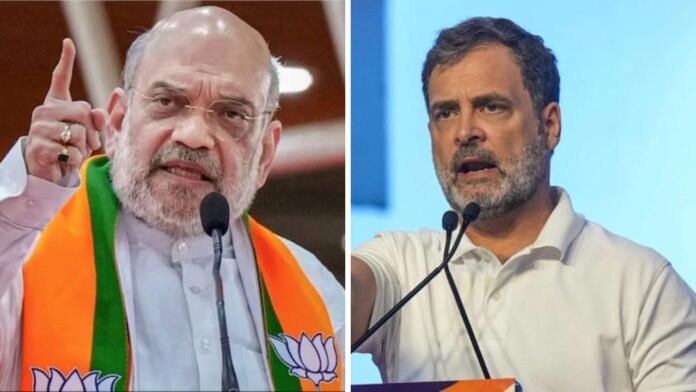
During a parliamentary address on Tuesday amid the ongoing discussion on Operation Sindoor, Union Home Minister Amit Shah informed the Lok Sabha that all three terrorists involved in the April Pahalgam massacre — which claimed 26 lives — were neutralized in a counter-terrorism mission titled Operation Mahadev, carried out on July 28.

According to Shah, the primary orchestrator of the assault was identified as Suleiman, while the other two operatives were named Afghan and Jibran. He stated that all three were senior operatives of the Pakistan-based banned terror outfit Lashkar-e-Taiba.

While initial reports of the trio being eliminated surfaced after an intense military operation near Srinagar on Monday, Shah provided the official confirmation in Parliament. He explained that their involvement in the Pahalgam attack had been corroborated by individuals in NIA custody who had previously provided shelter to the attackers. Upon being shown photographs of the deceased, they confirmed the identities.

However, Shah emphasized that the government did not rely solely on witness identification. Forensic analysis was conducted on shell casings collected from the Pahalgam attack site. These were matched with the weapons recovered from the militants killed during Operation Mahadev. The ballistic match, verified overnight at a Chandigarh laboratory, provided conclusive evidence linking the firearms to the earlier attack.

Shah also mentioned that the operation had been initiated on the very night of the Pahalgam incident.

The confrontation unfolded around 11 a.m. on Monday, when joint forces of the army, paramilitary units, and local police identified suspicious movement in the Mulnar region of Harwan. The operation escalated into a fierce gunfight in the dense Lidwas forests, located near Harwan on the outskirts of Srinagar, culminating in the elimination of all three armed terrorists.

Bihar set to form panel focused on improving the lives of sanitation workers.

0
Bihar Government's CM.
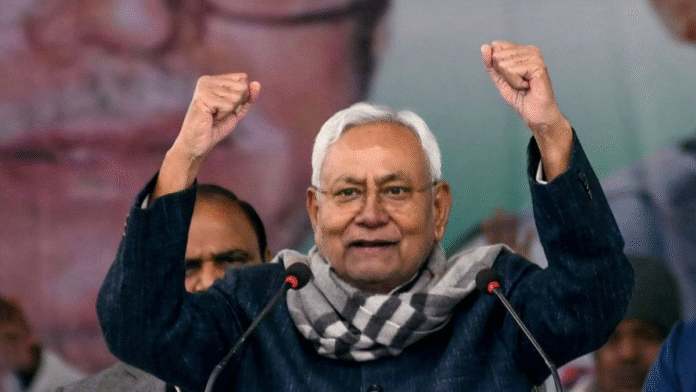
Bihar Government's CM Nitish kumar.

In a move aimed at improving the lives of sanitation workers, Bihar Chief Minister Nitish Kumar announced that the state will soon establish a dedicated commission focused on their welfare and development.

Sharing the update via a post on X, the Chief Minister stated that a new body—titled the Bihar State Safai Karmachari Commission—will be created to safeguard the rights of sanitation workers and oversee their overall well-being. The commission’s responsibilities will include recommending welfare measures, resolving grievances, supporting rehabilitation, and reviewing ongoing government schemes to better serve this workforce.

Kumar noted that the panel will feature a chairperson, a vice-chairperson, and five members, with at least one position reserved for a woman or transgender representative. This body, he emphasized, is envisioned as a critical step toward integrating marginalized sanitation workers into the social and economic mainstream of the state.

By offering strategic advice and policy input, the commission is expected to play a proactive role in promoting dignity, security, and sustainable livelihood opportunities for those engaged in essential sanitation services.

Punjab Crackdown: Cache of Arms with Suspected Foreign Ties Seized, Five Detained

0
Punjab weapons
Punjab weapons arrest.

In a major counter-smuggling operation, Amritsar Rural Police, alongside central intelligence units, intercepted a significant cache of illegal arms believed to be tied to cross-border networks. Acting on coordinated intelligence, authorities apprehended five individuals allegedly linked to an arms trafficking route facilitated through drone drops.

Senior police official Maninder Singh confirmed the arrests, noting that the recovered items included an AK-series assault rifle, 90 live rounds, two magazines, two Glock pistols with accompanying magazines, and ₹7.5 lakh believed to be proceeds from narcotics trade. The accused—identified as Joban, Gora, Jaspreet, Sunny, and Shenshan—were intercepted while traveling through Kaler village, where the weapons were seized during a vehicle search.

Preliminary interrogation revealed the arms were intended for delivery to Nav Pandori, reportedly a close aide of known gangster Jaggu Bhagwanpuria. Authorities believe the consignment was arranged by an individual named Rana, suspected of maintaining links with ISI-backed operatives and potentially associated with the Babbar Khalsa International (BKI) network. Rana allegedly used drones to transport the cache into Indian territory.

Separately, in a parallel crackdown, Amritsar police on Saturday arrested four key narcotics traffickers and confiscated over 6 kilograms of heroin. Commissioner Gurpreet Singh Bhullar identified one of the arrested, Sarabjeet Joban, as the central figure in the drug operation, reportedly coordinating repeated heroin drops within Indian borders through pre-mapped drop zones.

Both seizures reflect intensifying efforts by security agencies to dismantle transnational smuggling and terror-linked supply chains operating in the region.

More Than 1.5K Voters Were Tagged as Foreign Nationals in Bihar’s Last Voter List Review

0
Voters list
Voters list gets revised in Bihar.

A large-scale voter verification initiative currently underway in Bihar has stirred debate as it nears its conclusion this Friday. Known as the Special Intensive Revision (SIR), this exercise differs from the usual annual update, the Special Summary Revision (SSR), which was last carried out between October 29, 2024, and January 6, 2025.

During the SSR, officials reported that approximately 1,500 applications were submitted by residents seeking the removal of certain individuals from the electoral rolls, alleging they were “foreigners.” While some of these objections were later validated, the majority were dismissed after review, according to sources from the Election Commission of India (ECI).

Unlike SSR, which relies on voluntary public input and limited checks, the ongoing SIR is a far more exhaustive operation. Booth Level Officers (BLOs) are tasked with physically verifying each voter’s details through door-to-door surveys using pre-filled forms. A crucial part of this process involves mandatory verification of citizenship through official documentation—aimed at identifying and removing ineligible, duplicate, or non-citizen entries, including undocumented immigrants. Notably, this is the first time since 2003 that Bihar has undergone a full-fledged SIR.

During the previous SSR, objections were raised using Form 7—an official ECI document allowing registered voters to challenge names in the list. The form requires detailed identification information of both the complainant and the person being objected to, including the electoral roll part number, serial number, address, and the grounds for objection. Although documentary evidence is not mandatory at the time of submission, objectors are expected to provide a valid rationale for their claim.

Patna saw the highest number of objections (215), followed by Bhagalpur (145), Samastipur (140), and Siwan (93). Other districts such as Madhubani (89), Araria (70), Purnia (29), and East and West Champaran (23 and 21, respectively) also reported several such entries.

As per ECI protocol, each Form 7 submission must trigger a field inquiry and a mandatory seven-day notice to the individual whose name is being challenged. However, some BLOs claimed they received little to no guidance on how to proceed with complex cases, especially involving long-term residents lacking formal documents.

“In my region, only a tiny fraction—maybe 0.5%—would qualify as actual non-citizens,” said a BLO from Araria. “There were instances where people mistakenly objected to someone thinking they had moved, or where the wrong name got deleted entirely.”

The SSR is a standard annual process involving updates for new voters, deceased individuals, or those who’ve changed residence. It uses a combination of door-to-door verification and public notifications. Forms 6, 7, and 8 are used respectively for inclusion, deletion, and correction in the rolls. While Form 7 places the onus of proof on the voter whose citizenship is questioned, the initial burden lies with the person submitting the claim.

The ECI maintains that the SIR is focused on electoral integrity, not targeting any specific group. “We’re looking to ensure that only eligible voters remain on the list,” said a senior ECI official. “If someone has passed away, migrated, or lacks documentation proving citizenship, that will be evident during this exercise.”

Officials also expressed optimism about the upgraded digital systems supporting the current process. “This time, we’re equipped with better tools,” said the official. “Regardless of the number of objections, we aim to achieve a roll that is as accurate and complete as possible.”

Form 7 continues to be part of the current SIR protocol as well, reinforcing its role in flagging questionable entries—though the context and rigour of this revision are far more extensive than earlier exercises.

Party Notice Sent to JD(U) MP After Remarks on Bihar Voter List Changes

0
JDU
JDU issues notice.

The Janata Dal (United) has formally questioned its Banka MP, Girdhari Yadav, over his recent public objections to the ongoing Special Intensive Revision (SIR) of electoral rolls in Bihar. In a notice issued on Thursday, the party described Yadav’s remarks as a breach of internal discipline and inconsistent with the JD(U)’s official stance.

The letter, signed by JD(U) national general secretary Afaque Ahmed Khan, asked Yadav to clarify his position within 15 days, warning that failure to do so could invite disciplinary measures.

Yadav had sharply criticised the Election Commission of India (ECI) earlier this week, raising concerns that the current voter roll revision could cast doubts on the legitimacy of the recent Lok Sabha election outcome. He questioned the logic behind revising the electoral list so soon after the general elections, implying that either the previous roll was flawed or the present revision is unnecessary.

He also cautioned that the process, if rushed, could disenfranchise large sections of voters, especially those from vulnerable and marginalised communities. Additionally, he pointed out the impractical timing of the exercise, which coincides with severe flooding in parts of Bihar and peak agricultural activity.

Calling for more time, Yadav urged the Election Commission to extend the timeline by at least six months to ensure thoroughness and accessibility. “The Commission should safeguard voter participation, not rush a critical process so close to the assembly elections,” he asserted.

The JD(U), however, dismissed his concerns, noting that the revision is being carried out lawfully under the constitutional mandate of the ECI and the provisions of the Representation of the People Act, 1950. The notice accused Yadav of inadvertently aligning with the narrative of opposition parties that have been challenging the credibility of the ECI and electronic voting machines (EVMs).

“Our party has maintained unwavering support for the Election Commission and its practices, including the use of EVMs—whether during our tenure in the INDIA bloc or now with the NDA,” the letter stated. It emphasized that public dissent from party members on such a sensitive issue, especially during an election year, damages the party’s reputation and could bolster unfounded allegations promoted by rival groups.

Dalai Lama’s Ladakh Gathering Witnesses Presence of Arunachal CM Pema Khandu

0
Dalai Lama
Dalai Lama

On a visit to Ladakh, Arunachal Pradesh Chief Minister Pema Khandu joined a grand spiritual assembly at Karsha Photang Monastery in Zanskar, where thousands had gathered for the revered ‘Yarchos Chenmo’ summer dharma teachings. The event, hosted by Karsha Monastery, drew an estimated 30,000 attendees who came to receive spiritual wisdom from His Holiness the 14th Dalai Lama.

Sharing his reflections on social media, Khandu described the encounter as profoundly humbling—an experience that awakened a deeper connection to the principles of peace, compassion, and universal wisdom embodied by the Tibetan spiritual leader. He described the teachings under the open skies and mountain backdrop as a powerful moment of spiritual resonance.

During the gathering, the Dalai Lama delivered illuminating discourses on fundamental Buddhist philosophies, including compassion, interdependence, the Four Noble Truths, emptiness, and the Bodhisattva path. Khandu highlighted how these messages offered both serenity and strength in a world fraught with division.

“In moments like this,” he noted online, “we are reminded that peace is an active journey, and compassion is a true force—not a weakness, but a profound strength.”

The Chief Minister was also honored with a private audience at Karsha Photang, where he spent time in quiet reflection with the Dalai Lama. Describing the meeting, Khandu called it an encounter with “a smile that holds centuries of wisdom and a presence that radiates compassion beyond words.”

Through his presence at the event, Khandu reaffirmed Arunachal Pradesh’s longstanding spiritual connection with the greater Himalayan Buddhist heritage. His participation served as a reminder of the enduring unity that faith, shared values, and the teachings of the Dalai Lama continue to inspire across regions and generations.

Deadly Air Crash in Russia’s Far East: Nearly 50 Feared Dead in Amur Plane Disaster

0

A Russian passenger plane carrying 49 people—including six crew members—crashed in the eastern Amur region on Thursday, according to Reuters, citing local media.

All those on board are feared dead, Russian news agency TASS reported, referencing initial findings.

The aircraft, operated by the Siberian airline Angara, disappeared from radar while approaching its destination of Tynda, a town near the Chinese border in the Amur region. Regional governor Vasily Orlov stated that preliminary information confirmed the presence of 43 passengers, including five children, along with six crew members.

Russia’s emergencies ministry confirmed that the wreckage of the plane had been located by a rescue helicopter. “An Mi-8 helicopter operated by Rosaviatsiya (Russia’s civil aviation authority) spotted the burning fuselage of the aircraft,” the ministry announced on Telegram, as reported by Reuters.

According to AFP, the fuselage was found on a mountainside roughly 16 kilometers from Tynda. Rescuers said there were no visible signs of survivors from the air.

The region’s civil defense agency confirmed that response teams were en route to the crash site. “Currently, 25 personnel and five units of equipment have been dispatched, with four aircraft crews on standby,” the agency noted, as reported by AFP.

A rescue official told TASS that the mountainous forest terrain was hampering ground efforts. “Most search operations are being conducted from the air,” they added.

Possible Cause of the Crash

TASS reported that early findings suggest the crash was due to pilot error during landing in poor visibility conditions.

The aircraft involved, an Antonov An-24, is a Soviet-era twin turboprop developed in the 1950s. Over 1,000 of these planes were produced, and they continue to be used in Russia for both cargo and passenger transport.