Home Blog Page 66

Supreme Court Declines to Intervene in Bihar’s Electoral Roll Revision Process

0
Bihar
Bihar

The Supreme Court stated Tuesday that conducting the Special Intensive Revision of electoral rolls in poll-bound Bihar falls within the Election Commission’s exclusive jurisdiction, and any judicial directive would constitute interference in the poll body’s domain.

A bench comprising Justices Surya Kant and Joymalya Bagchi made this observation while hearing petitions challenging the SIR process, which resulted in significant deletions from Bihar’s voter lists.

“Why do you want us to take over all functions? Conducting SIR is the prerogative and exclusive domain of the Election Commission. If we come in between, this would be interfering,” the bench stated.

Petitioners Highlight Lack of Notification

Congress leader and senior advocate Abhishek Manu Singhvi, representing the petitioners, argued that millions whose names were deleted received no notification.

“None of the 3.66 lakh people whose names were deleted received any notice. No one was given any reason. While there is a provision for appeal, the question of appeal does not arise because there is no information,” Singhvi said.

Senior lawyer Prashant Bhushan, appearing for the Association for Democratic Reforms, claimed 4.7 million names were removed.

“After the final voter list was released, we were able to do some analysis. We received the 2003 directive for SIR, and another directive from 2016 that explained how to remove fake voters. SIR has exacerbated problems instead of solving them,” he said.

“There is a complete lack of transparency. Information about the 6.5 million deleted voters was provided only after a court order. The Commission did not upload the information as per the guidelines,” he added.

Election Commission’s Response

Advocate Rakesh Dwivedi, representing the Election Commission, countered that deleted voters were properly informed, and both draft and final lists were provided to political parties.

The court requested petitioners provide a list of approximately 100 individuals claiming they weren’t notified about deletions and couldn’t file appeals.

“We need to understand how the system works. They won’t provide information from the headquarters. They have to verify at ground level. The question is, who are we doing this for? Why aren’t people coming forward?” the bench said.

Electoral Roll Statistics

The Election Commission released final electoral rolls on September 30 containing approximately 7.42 crore names. During the SIR process, 68 lakh names were deleted, with 21 lakh subsequently restored following the claims and objections period.

The hearing continues Thursday. Bihar’s two-phase assembly elections are scheduled for November 6 and 11, with results on November 14.

BJP-JDU Preparing Equal Seat Share for Bihar Polls, 38 Seats for Smaller NDA Allies

0
Bihar
Bihar

As Bihar prepares for assembly elections, sources indicate the BJP and Janata Dal (United) are negotiating to contest approximately equal numbers of seats, dividing 205 of the 243 constituencies between the two major NDA partners, with some scenarios allowing slight variations.

Seat Distribution Among Allies in Bihar Polls

The remaining 38 seats are expected to be allocated among smaller NDA partners. Reports suggest the BJP has offered 25 seats to Lok Janshakti Party chief Chirag Paswan, seven seats to Hindustani Awam Morcha leader Jitan Ram Manjhi, and six seats to Rashtriya Lok Samata Party’s Upendra Kushwaha.

Negotiations with Paswan continue, with the LJP leader seeking preferred constituencies for party candidates. Sources indicate that if Paswan’s allocation increases, it may reduce shares for Manjhi and Kushwaha.

The BJP may compensate smaller allies with Rajya Sabha and Legislative Council seat offers if their assembly allocations decrease.

Election Schedule

The Election Commission announced Monday that Bihar’s 2025 assembly elections will occur in two phases: November 6 and November 11, with results declared November 14. The current assembly’s term expires November 22.

Over 7.4 crore voters, including approximately 14 lakh first-time voters, are eligible to participate. Phase 1 covers 121 constituencies in central Bihar, including rural and flood-prone areas, while Phase 2 encompasses 122 constituencies, primarily in border regions.

Political Landscape

The ruling NDA, led by Chief Minister Nitish Kumar’s JDU and supported by the BJP, seeks to retain power. The opposition Mahagathbandhan—comprising RJD, Congress, and Left parties—aims to challenge the alliance.

The Aam Aadmi Party will contest all 243 seats, marking its Bihar political debut.

Key Electoral Factors

Several elements are shaping campaign strategies: the 33 percent Extremely Backward Classes vote, traditionally supporting NDA but now targeted by opposition parties; rising female voter turnout; and improved infrastructure in north Bihar, which influenced the phase-wise election schedule design.

Strategic Significance

The seat-sharing arrangement reflects coalition management challenges within NDA, balancing major partners’ demands while accommodating smaller allies’ aspirations.

The equal division between BJP and JDU suggests continued political equilibrium within the alliance, crucial for maintaining coalition cohesion through the campaign period.

Maruti Suzuki e-Vitara Production Begins, India Launch Expected in December

0
Maruti Suzuki e-Vitara

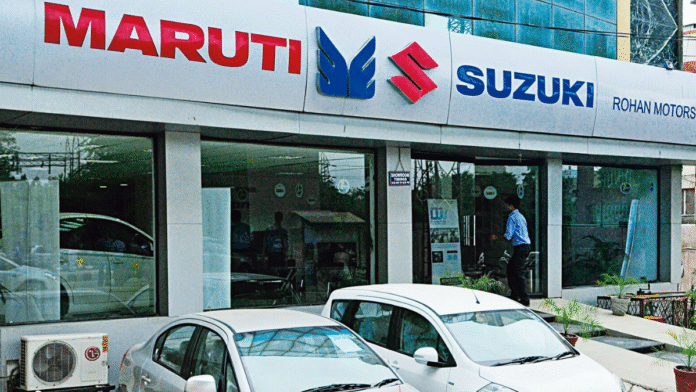
Maruti Suzuki e-Vitara: Prime Minister Narendra Modi officially flagged off the first production unit of the Maruti Suzuki e-Vitara on August 26, 2025, marking a significant milestone in India’s electric vehicle manufacturing landscape. The ceremony also inaugurated Maruti Suzuki’s first facility dedicated to producing hybrid battery electrodes.

Maruti Suzuki e-Vitara Export Operations Underway

Maruti Suzuki began exporting the e-Vitara, Suzuki’s inaugural battery electric vehicle, in August 2025. Over 2,900 units were shipped from Pipavav Port in Gujarat to twelve European nations: the United Kingdom, Germany, Norway, France, Denmark, Switzerland, Netherlands, Sweden, Hungary, Iceland, Austria, and Belgium.

The Maruti Suzuki e-Vitara is manufactured exclusively at Maruti Suzuki’s Gujarat facility, establishing India as Suzuki’s global production hub for this electric model. The commencement of exports represents a crucial step in this strategic positioning.

Global Debut and Platform Details

The e-Vitara received its global unveiling in Europe in late 2024 before being displayed at India’s Bharat Mobility Show 2025. The vehicle is built on the 40PL dedicated electric vehicle platform, developed jointly with Toyota. Toyota will manufacture its own variant called the Urban Cruiser EV using the same architecture.

The e-Vitara demonstrated strong safety credentials by achieving a four-star Euro NCAP rating. The electric SUV scored 77 percent in adult occupant protection and registered an 85 percent safety rating in child occupant safety tests.

Specifications and Launch Timeline

The e-Vitara will be available with two battery configurations: 49kWh and 61kWh capacity options. The larger battery pack will be offered with a dual-motor all-wheel-drive system branded as AllGrip-e.

Industry sources indicate the Indian launch is scheduled for December 2025, though Maruti Suzuki has not officially confirmed specific variant details, feature specifications, or the precise launch date. These details are anticipated to be disclosed in coming weeks as the launch window approaches.

The e-Vitara represents Maruti Suzuki’s entry into the electric SUV segment, positioning the company to compete in India’s expanding battery electric vehicle market while simultaneously serving as an export manufacturing base for global markets.

Bihar Grand Alliance Faces Seat-Sharing Deadlock as Polls Approach

0
Bihar
Bihar

Negotiations within Bihar’s Grand Alliance have reached a critical impasse as parties wrangle over seat distribution for the upcoming November assembly elections, with smaller allies demanding significantly larger shares than initially proposed.

The Rashtriya Janata Dal, heading the coalition, finds itself mediating between competing demands from Congress, the Vikassheel Insaan Party, and Left parties. Marathon discussions at Tejashwi Yadav’s Patna residence extended until 4 am Monday, with a third round scheduled for Tuesday evening.

Time pressures are mounting, with the first polling phase scheduled for November 6, followed by a second phase on November 11. Results will be announced on November 14.

VIP’s Aggressive Positioning in Bihar

Mukesh Sahani’s VIP, which switched from the National Democratic Alliance to the Grand Alliance before the 2024 Lok Sabha elections, has emerged as the most assertive negotiator. The party, which commands influence among boatmen and fishermen communities, is seeking 40 seats—substantially more than the 12 seats Tejashwi has offered, which exceeds their 2020 NDA allocation by just one.

Sahani has also reportedly requested designation as deputy chief ministerial candidate, though he publicly maintains loyalty. “Even if I don’t get a single seat, I will still be with you all,” Sahani stated, though sources indicate he maintains informal NDA contacts.

Alliance insiders suggest Sahani leveraged his visibility from the Voter Adhikar Yatra alongside Rahul Gandhi and Tejashwi Yadav. “He feels that since he has mobilised his base and been a visible part of the INDIA bloc optics, his seat share should be proportionately higher,” said one leader present at negotiations.

Congress and Left Demands

Congress seeks 60-65 seats but has been offered 50-55, revised upward from Lalu Prasad Yadav’s initial 40-seat proposal. Alliance partners questioned Congress’s ground presence, noting limited field impact despite yatra visibility.

The CPI(ML), capitalizing on winning 12 of 19 contested seats in 2020, has submitted a 40-seat demand, with leader Dipankar Bhattacharya requesting 35. “The focus is on winnable seats, not symbolic ones,” stated a party insider.

The RJD refuses to reduce its share below 130 seats, insisting Congress must accommodate smaller partners proportionally.

Trump’s H-1B Visa Crackdown Reshapes Indian Marriage Market – READ

0
Visa
Visa

Tighter US immigration policies under President Donald Trump are significantly impacting India’s marriage market, with families increasingly hesitant to arrange marriages with Indian citizens based in America due to visa uncertainty, according to matchmakers and prospective spouses.

Shifting Marriage Preferences

Sidhi Sharma, a 19-year-old medical student from Haryana, exemplifies the changing sentiment. “I had always dreamed of settling in the US after marriage,” she stated. “Trump has shut the door for me.”

Traditionally prized as marriage prospects, Non-Resident Indians in the US—numbering approximately 2.1 million—are facing declining interest from families concerned about potential job loss or immigration status changes.

Immigration Policy Impact

“Immigration policies may be written in Washington, but its ripple effects are seen at dinner tables of Indian families when they’re talking about marriages,” said Anuradha Gupta, founder of matchmaking service Vows For Eternity.

Trump’s H-1B visa overhaul particularly affects Indians, who accounted for 71 percent of those visas last year, with 75 percent issued to men in 2024, according to US Citizenship and Immigration Services data.

Matchmaker Observations

Vanaja Rao, managing director of Vanaja Rao Quick Marriages with nearly five decades of experience, noted the shift: “Up until last year, there was a lot of demand and craze for NRI suitors and men settled abroad. We’ve started to see a slowdown ever since Trump took over, and it intensified in the last six months.”

Some families are delaying weddings amid uncertainty. A 26-year-old Indian in Atlanta, Georgia, speaking anonymously, confirmed awareness of three postponed weddings due to policy changes.

“Every time there has been speculation about stopping or tightening the restrictions around H-1B visas and skilled-worker migration, there has always been a corresponding impact on the marriage market,” said Harshita Yalamarty, assistant professor at Toronto Metropolitan University.

Market Adaptations amid US VISA row

Premium platform Knot.dating introduced a ‘US visa filter’ in September. CEO Jasveer Singh explained: “Families want to see the visa status of the suitor or match from abroad before proceeding further.”

Of 1,000 NRIs who signed up, 60 percent hold H-1B visas, with 81 percent being men. The platform requires male users to earn at least ₹5 million ($56,332) annually.

Alternative Destinations

Nikita Anand, founder of Wedding Tales Matrimony, reported clients increasingly seeking matches in Canada, UK, Europe, and the Middle East as alternatives to the US.

Bengal Prepares for Kali Pujo 2025: Midnight Rituals and Sacred Offerings Mark Festival on October 20

0
Kali Pujo
Kali Pujo

Bengal will observe Kali Pujo on Monday, October 20, coinciding with Diwali, as devotees prepare to worship Goddess Kali during the sacred midnight hours of Dipannita Amavasya, the new moon night of Kartika.

The Amavasya Tithi begins at 1:14 PM on October 20 and ends at 3:24 PM on October 21. The most auspicious time for performing rituals, known as Nishita Kaal Muhurat, falls between 11:41 PM on October 20 and 12:31 AM on October 21—a 50-minute window considered most powerful for invoking the goddess’s blessings for protection and renewal, according to pujapurohit.in.

Historical and Cultural Context of Kali Pujo

The tradition of large-scale community celebrations dates to the 18th century when Raja Krishnachandra of Krishnanagar formalized the worship. While most of India celebrates Diwali by honoring Goddess Lakshmi, Bengal dedicates this night to Goddess Kali, the formidable deity representing both destruction of evil and restoration of balance.

Ritual Observances

Devotees observe fasts throughout the day, breaking them only after midnight puja. Rituals include offerings of red hibiscus flowers, fruits, sweets, and bhog. Animal sacrifice, once traditional, has been largely replaced by symbolic substitutes including pumpkins, ash gourds, and cucumbers.

Sacred Food Offerings

The bhog thali represents pure, sattvic offerings prepared without onion or garlic. Traditional dishes include:

  • Khichuri: Fragrant rice and moong dal preparation with Gobindobhog rice
  • Bhaja: Crisp fried vegetables served in odd numbers
  • Labra: Slow-cooked seasonal vegetable medley
  • Luchi: Golden puffed breads symbolizing celebration
  • Payesh: Rice pudding with milk, sugar, and dry fruits
  • Niramish Mangsho: In certain households, mutton curry prepared without onion or garlic

Food expert Poorna Banerjee notes: “The meat should ideally come from a non-halal Bengal goat, and the spice paste is traditionally made on a shil nora (grinding stone) for authenticity.”

Some temples offer 108 food items representing abundance and devotion in its most elaborate form.

Contemporary Celebrations

Kali Pujo transforms Bengal with homes, temples, and pandals illuminated with diyas and lights. The festival maintains its deeply spiritual character, focusing on meditation, prayer, and offerings rather than mere celebration, extending from Kolkata to Bengali communities in London and New Jersey.

World Bank Raises India’s Growth Forecast to 6.5% for FY26, Projects South Asia Slowdown

0
World Bank
World Bank

India is expected to maintain its position as the world’s fastest-growing major economy, with the World Bank revising its growth forecast upward to 6.5 percent for FY26 from the previous 6.3 percent projection, according to a report released Tuesday.

India’s Growth Drivers

The upgraded forecast cites resilient domestic demand, strong rural recovery, improved agricultural output, rural wage growth, and positive impacts from tax reforms. Strong consumption growth is expected to underpin economic expansion.

South Asia is projected to grow 6.6 percent this year but is expected to slow to 5.8 percent in 2026, representing a 0.6 percentage point downward revision from April forecasts.

Bangladesh’s growth is pegged at 4.8 percent for FY26, while Bhutan’s forecast has been downgraded to 7.3 percent due to hydropower construction delays, though recovery is expected in FY27. Maldives growth is projected at 3.9 percent for FY26.

Nepal faces challenges with growth expected to decline to 2.1 percent in FY26 due to recent unrest and heightened political and economic uncertainty. Sri Lanka’s forecast has been upgraded to 3.5 percent for FY26, driven by strong tourism and service exports growth.

Risk Factors and Recommendations

“South Asia has enormous economic potential and is still the fastest growing region in the world. But countries need to proactively address risks to growth,” stated Johannes Zutt, World Bank Vice President for South Asia.

Downside risks include global economic slowdown spillovers, trade policy uncertainty, regional sociopolitical unrest, and labor market disruptions from emerging technologies like artificial intelligence.

AI Impact on Labor Markets

The report examines AI’s transformative effects on regional employment. Since ChatGPT’s release, job listings in roles most exposed to AI replacement have fallen approximately 20 percent relative to other occupations.

However, AI presents opportunities for productivity gains, particularly in sectors where it complements human workers. Job listings data show rapidly growing demand for AI skills, with such positions commanding nearly 30 percent wage premiums compared to other professional roles.

Policy Recommendations

“Countries can boost productivity, spur private investment, and create jobs for the region’s rapidly expanding workforce by maximizing the benefits of AI and lowering trade barriers, especially for intermediate goods,” Zutt added.

The report recommends streamlining size-dependent regulations, improving transport and digital connectivity, enhancing housing search transparency, providing upskilling and job matching services, and establishing safety nets for affected workers.

Wolf Alice Members Reveal the Secret Behind Their Success

0
Wolf Alice
Wolf Alice

For Wolf Alice, the acclaimed British rock band behind tracks like “Don’t Delete the Kisses,” “Smile,” and “The Last Man on Earth,” success has always been rooted in a shared sense of purpose and connection among its members. Bassist Theo Ellis and drummer Joel Amey say that their musical chemistry is what keeps the band’s creative energy alive.

The pair, who form the rhythm backbone of Wolf Alice, believe their friendship off stage mirrors the trust they share while performing. Over the years, the London-based group—also featuring Ellie Rowsell and Joff Oddie—has built a distinctive sound that blends elements of grunge, folk, and pop, earning widespread praise and a passionate global following.

“I don’t think we consciously work at it. We all have a lot of reverence for what we do, and we know how lucky we are. If the chemistry started to deteriorate, that would probably be the end,” Ellis told PTI.

Amey agreed, adding that this creative bond comes naturally. “For us, it feels natural—we just keep making music and playing shows. We don’t have a ‘band therapist’ like Metallica! Over time, our approach will evolve. I look at artists like LCD Soundsystem, who do residencies rather than traditional tours, and think that could be interesting in the future,” he said.

Formed in 2010, Wolf Alice first captured attention with their 2015 debut album My Love Is Cool, which showcased their genre-defying range—from raw, guitar-driven tracks like “Bros” to lush, introspective songs such as “Silk.” They went on to release Visions of a Life and Blue Weekend, projects that solidified their reputation and earned them a Mercury Prize.

Their latest release, The Clearing, marks a new creative chapter. Produced by Grammy-winner Greg Kurstin and written in North London before being recorded in Los Angeles, the record has been described as a “classic pop/rock album” that draws inspiration from the 1970s while embracing a modern sensibility.

“I actually think The Clearing is our most experimental album. It might not sound radical to everyone, but for us it was about writing in a way we hadn’t before. In a modern setup, it’s too easy to rely on a laptop full of sounds. The real challenge was: here’s an acoustic guitar—does the song stand up? That was our experiment this time,” said Amey.

For Ellis, the most rewarding part of making an album is the creative exchange that happens when the band comes together. “Each one of us write songs on our own, and then we come together and share them. It’s fun. With this album, we realised we were reacting to earlier tracks like ‘Last Man on Earth,’ ‘Delicious Things,’ and also the Blue Lullaby EP, where we had deconstructed our songs to their fundamentals. That made us want to focus more on melodies, chords and harmonies, rather than leaning on computers or sonic techniques to fill in space.”

He added that this process required stepping out of familiar territory. “It’s always tempting to take the easy way out—throw loads of stuff in—but we really trusted our gut on what we wanted the record to sound like. That was probably the biggest challenge.”

Currently on a North American tour that runs through mid-October, the band is relishing the thrill of live performances. “This tour has been a roller coaster already for many reasons… Playing with my friends is always fun, but when the audience and band click, it’s a magical moment. I had that in Philadelphia recently,” Amey shared.

Wolf Alice made their India debut at the Backdoors music festival in Mumbai and Bengaluru in 2018, and the group says they’re eager to return. “It was an amazing experience, it was honestly wonderful for music to take us to somewhere like India, so I think if we can make it work in the touring setup, it’d be fantastic to come there,” Ellis said.

Amey added, “I’d love to collaborate as well. I just saw the new Gorillaz album has been recorded in India with musicians from over there, so I’m really excited to see what happens. I’d love to go over there and appreciate how beautiful the music and the musicianship is.”

Donald Trump Connects India-Pakistan Peace Efforts to Trade Tariffs, Calls US a ‘Peacekeeper’

0
Donald Trump
Donald Trump

US President Donald Trump once again asserted that his diplomatic efforts played a crucial role in preventing India and Pakistan from entering into an all-out conflict earlier this year. Speaking about the episode, Trump claimed that his administration’s strategic use of tariffs was instrumental in easing tensions between the two nuclear-armed nations.

He remarked that economic leverage had become one of his strongest tools in maintaining peace across regions. “If I didn’t have the power of tariffs, you would have at least four of the seven wars raging right now. If you look at India and Pakistan, they were ready to go at it. Seven planes were shot down,” Trump said, suggesting that his tariff policy helped avert potential wars.

Trump went on to add that his tariff strategy not only strengthened the US economy but also helped preserve global peace.

Speaking from the White House, he remarked, “I don’t want to say exactly what I said, but what I said was very effective. Not only did we make hundreds of billions of dollars, but we’re a peacekeeper because of tariffs,” again linking his economic policies to the India–Pakistan ceasefire earlier this year.

The two neighbouring nations had witnessed heightened tensions in May after India launched Operation Sindoor to eliminate terror camps inside Pakistan, following the killing of 26 civilians in the Pahalgam terror attack. The confrontation ended on May 10, when both sides agreed to a ceasefire—something India maintains was a bilateral decision, despite Trump’s repeated claims of having mediated.

A week earlier, Trump had stated that he directly called the leaders of India and Pakistan and warned them to end hostilities or risk losing trade ties with the US. “India and Pakistan were going at it. I called them both… They had just shot down seven planes… I said, if you do this, there’s not going to be any trade, and I stopped the war. It was raging for four days,” he said.

Trump also mentioned that Pakistan’s Army Chief General Asim Munir had commended his involvement in preventing the conflict from escalating. Recalling his meeting with Munir and Prime Minister Shehbaz Sharif, Trump said, “He (Munir) told a group of people that this man (Trump) saved millions of lives because he stopped the war from continuing. That war was going to get very bad. I loved the way he said it.”

Bihar Elections to Pioneer 17 New Initiatives, CEC Aims for Nationwide Model

0
BIhar
BIhar

Bihar: Chief Election Commissioner (CEC) Gyanesh Kumar today announced the implementation of 17 new initiatives for the upcoming Bihar Assembly elections, stating that these measures are intended to both streamline the state’s electoral process and serve as potential models for future nationwide implementation.

CEC Gyanesh Kumar launches 17 new reforms ahead of Bihar polls

Concluding his visit to Bihar, the CEC addressed the media, outlining the comprehensive reforms. “17 new initiatives have been successfully implemented in Bihar, some will be implemented in the conduct of elections, and some in counting,” CEC Kumar said.

Among the key measures is a new Standard Operating Procedure (SOP) guaranteeing the delivery of Elector Photo Identity Cards (EPIC) within 15 days of a voter’s registration. To simplify the voting experience, a facility for voters to deposit their mobile phones outside the polling booth will be made available. “Mobile phones can be deposited in a room outside the booth. This process will be implemented throughout Bihar,” the panel chief confirmed.

Major Reforms in Polling and Counting

Bihar is set to be the first state where every polling station will cater to fewer than 1,200 voters, a move aimed at reducing queues and easing access. This change, down from the previous cap of 1,500, has necessitated the addition of 12,817 new polling stations, raising the total count to 90,712.

Furthermore, the state will be the first to feature colour photographs of candidates on Electronic Voting Machine (EVM) ballots, replacing the current black-and-white images, alongside larger fonts for serial numbers. CEC Kumar explained the rationale: “When the ballot paper is inserted into the EVM, the photo on it is black and white, making it difficult to identify… So, starting with the Bihar elections, the serial number font will be larger across the country, and the candidates’ photographs will be colour photographs.”

Other initiatives include the introduction of official ID cards for all booth-level officials for easier recognition and the provision of 100 per cent webcasting coverage at every polling station to ensure transparency. Regarding vote counting, Kumar clarified a procedural change: “Previously, when votes were counted, if there was a mismatch in Form 17C… and in the EVM counting unit, all such VVPATs would be counted in full. Similarly, it will be compulsory that postal ballots be counted before the final two rounds of EVM counting.”

CEC Kumar confirmed that the elections, scheduled for November 6 and 11 with results on November 14, will be completed before the Assembly’s term ends on November 22. He concluded by urging public participation: “I appeal to all the voters of Bihar to celebrate this festival of democracy with the same enthusiasm as you celebrate Chhath. Everyone should vote and ensure their participation.”