The Ministry of Information and Broadcasting has decided to continue the suspension of television rating data for news channels, extending the restriction on TRP publication for another four weeks, according to officials familiar with the development.
This marks the third consecutive extension since the freeze was first introduced on March 6, 2026. The initial order halted the release of viewership ratings for a month, after which the ministry issued another directive on March 31 asking the Broadcast Audience Research Council to maintain the suspension until further notice or for an additional four weeks.
Officials now say a fresh communication dated May 6 has been sent to BARC, keeping the ratings blackout in place once again. While the latest letter reportedly does not directly mention the ongoing conflict in West Asia, government sources indicated that the situation remains the primary reason behind the decision.
TRPs play a major role in the television industry as they determine viewership patterns and directly affect advertising revenue and competition among news broadcasters. With ratings remaining unavailable, channels will continue operating without publicly released audience data for at least another month unless the government changes its position earlier.
The ministry had earlier justified the move by arguing that some news channels were airing excessive sensational and speculative coverage related to the conflict, which could create unnecessary panic among viewers, particularly those with relatives or connections in affected areas.
The conflict in West Asia has been ongoing since late February and has prompted heightened scrutiny of television coverage.
Responding to a question in the Lok Sabha in April, the ministry said that during Operation Sindoor, several broadcasters were found airing content considered overly sensational or speculative. According to the government, such coverage patterns tend to intensify during crises and can contribute to public anxiety.
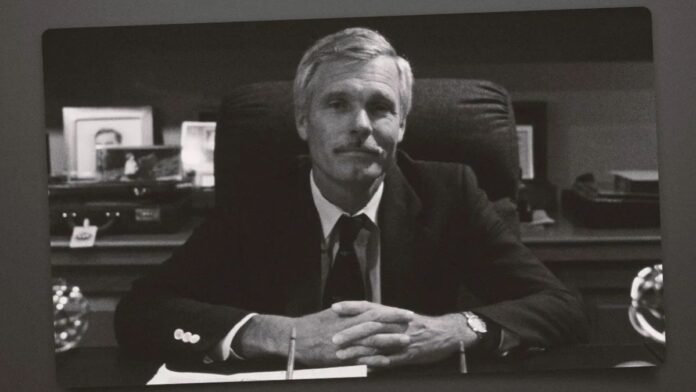
Ted Turner is survived by five children, 14 grandchildren, and two great grandchildren.
Turner transformed the television news industry with the launch of CNN in 1980, introducing the world’s first 24 hour news channel. The network reshaped broadcasting by delivering continuous breaking news coverage and gained worldwide prominence during its reporting of the Gulf War in 1990 and 1991.
Born in Ohio, Turner became known for his outspoken personality and earned the nickname “Mouth of the South.” Over the years, he built a vast media empire that included cable television’s first superstation along with major entertainment channels focused on movies and cartoons.
His influence extended beyond media into sports as well. Turner purchased the Atlanta Braves in 1976 and played a major role in shaping the franchise into its modern form.
Turner’s idea of delivering live news coverage to audiences around the globe established him as one of the most influential figures in modern media. His vision fundamentally changed how people consumed news in real time.
In 2018, shortly before his 80th birthday, Turner revealed that he had been diagnosed with Lewy body dementia, a progressive neurological disorder. He was also hospitalised in early 2025 with a mild case of pneumonia before later recovering at a rehabilitation centre.
CNN chairman and chief executive officer Mark Thompson paid tribute to Turner, describing him as fearless, decisive, and deeply committed to his vision. Thompson said Turner’s legacy would always remain central to CNN’s identity and called him the giant upon whose shoulders the network stands.
Outside of business, Turner was widely recognised for his philanthropic and environmental efforts. He founded the United Nations Foundation to support the work of the UN and was an outspoken advocate for nuclear disarmament and conservation.
A passionate environmentalist, Turner also became one of the largest private landowners in the United States. To help educate younger audiences about protecting the planet, he created the animated series Captain Planet and the Planeteers.
In 1991, Time named Turner its Man of the Year, recognising his impact on global events and journalism. Although he later sold his media networks to Time Warner and stepped away from the industry, he continued to describe CNN as the greatest achievement of his life.
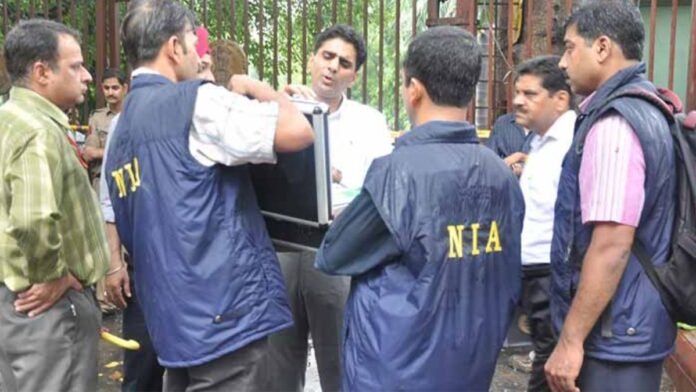
The National Investigation Agency has submitted a chargesheet against three individuals accused of links with the Islamic State, alleging their involvement in a bioterror plot aimed at poisoning people in crowded public areas across India.
According to the agency, the accused were acting on instructions from foreign-based ISIS handlers and worked together to recruit vulnerable youth who had been radicalized. Their plan involved spreading terror through banned weapons and biological means. Investigators said the group intended to use ricin, a highly toxic substance derived from castor seeds and classified under Schedule I of the Chemical Weapons Convention, as part of their plot.
The case was first registered by the Gujarat Anti-Terror Squad after the arrest of Dr. Mohiuddin, who had completed his MBBS in China. He was intercepted at a toll plaza in November 2025 while carrying illegal weapons, a container holding four liters of castor oil, and other suspicious materials.
Further investigation led to the arrest of two more accused on the same day. Authorities said Azad and Suhel had earlier collected cash and prohibited weapons from a dead drop location in Hanumangarh, Rajasthan, and transported them to Chhatral in Gujarat for Mohiuddin.
When the NIA took over the probe in January 2026, it found that Mohiuddin had been drawn into the conspiracy by promises from his handler that he would be made an ISIS Amir for South Asia. Investigators also discovered that he had set up a covert lab at his residence in Hyderabad to extract ricin from castor seeds.
The agency stated that the other two accused were aware of the conspiracy and played active roles. Their involvement included staying in contact with handlers, handling funds linked to terror activities, carrying out reconnaissance, pledging allegiance, and sourcing illegal arms and ammunition.
Suhel, in particular, was identified as a key operative who connected the handler with other members. Officials said he managed funds, coordinated logistics, transported weapons, conducted reconnaissance, and was involved in recording oaths of allegiance and preparing ISIS flags.
For much of the race, Lando Norris remained a constant presence behind Kimi Antonelli, applying relentless pressure as the McLaren showed strong pace on hard tyres. Fresh upgrades introduced by McLaren in Miami appeared to give Norris an edge, something he had already demonstrated with a Sprint victory a day earlier.
Even so, Antonelli refused to crack. The 19-year-old kept his composure lap after lap, holding Norris at bay without a single mistake. By the end of the race, he secured his third consecutive win, making history as the first Formula 1 driver to convert his first three pole positions into victories.
The result has shifted the early season narrative. Much of the pre season attention had centred on George Russell as Mercedes’ leading title contender after his opening race win in Melbourne. Since then, however, Antonelli has taken control, dominating both qualifying and race day, and building a 20 point lead in the championship despite his limited experience.
Despite the growing spotlight, Antonelli has remained measured in his response. He described the achievement as just the beginning, crediting his team and family for their support while emphasising the need to stay focused on the long season ahead.
The race itself did not begin smoothly for the young Italian. Starting from pole, he briefly dropped down the order after locking up heavily, but quickly regrouped and worked his way back into contention. His recovery included a sharp battle with Charles Leclerc before he settled into a rhythm.
A decisive moment came through strategy, as Mercedes called him in early for a pit stop, allowing him to jump ahead of Norris. Once in front, Antonelli combined smart race management with precise defensive driving, positioning his car perfectly to deny overtaking opportunities even as Norris repeatedly closed in.
Late in the race, Antonelli managed to pull clear, breaking the slipstream and extending his lead to over three seconds by the chequered flag. His drive stood out for its balance of control, awareness, and tactical execution under sustained pressure.
Mercedes team principal Toto Wolff praised the performance, calling it one of Antonelli’s finest and highlighting his ability to handle pressure without overthinking. At the same time, Wolff urged caution, noting that such rapid success at a young age will bring intense scrutiny, particularly from fans in Italy.
With three wins from three races, Antonelli has quickly established himself as more than just a promising rookie. He is already shaping up as a serious contender, capable of challenging even the most experienced drivers on the grid.
Donald Trump has congratulated Narendra Modi following the Bharatiya Janata Party’s sweeping win in West Bengal, with the White House calling it a historic and decisive mandate. Spokesperson Kush Desai conveyed the message, highlighting the scale of the victory.
According to the Election Commission of India, the BJP secured 206 seats in the 294 member Assembly. With polling in one constituency countermanded, the working majority mark stood at 147, which the party comfortably crossed.
The result marks a major political shift in the state. The All India Trinamool Congress led by Mamata Banerjee managed 80 seats, falling far behind the BJP’s tally. Smaller parties, including the Indian National Congress and the Aam Janata Unnayan Party, won two seats each, while the Communist Party of India (Marxist) and the All India Secular Front picked up one seat each.
Analysts attribute the outcome to a mix of anti incumbency sentiment and a focused campaign strategy by the BJP. The party worked to counter the outsider narrative pushed by the TMC and leaned heavily on local messaging, including cultural slogans and booth level mobilisation. It also avoided direct personal attacks on Mamata Banerjee during the campaign. The victory is especially symbolic, as West Bengal is the birthplace of Syama Prasad Mookerjee, a point highlighted by Prime Minister Modi in his address after the results.
Attention now turns to the formation of the new government. Mamata Banerjee has described the outcome as a conspiracy and indicated she will not step down. However, under Article 164 of the Constitution, a chief minister must retain the confidence of the Assembly, which her government no longer holds.
The BJP is expected to soon announce its chief ministerial choice. Suvendu Adhikari, who defeated Banerjee in Bhabanipur, is seen as a leading contender. At the same time, names such as state unit chief Samik Bhattacharya and vice president Agnimitra Paul are also being discussed within the party.
Methane emissions linked to fossil fuels showed no meaningful decline in 2025, holding at record levels worldwide despite oil, gas, and coal production also reaching historic highs, according to the latest Global Methane Tracker 2026 released by the International Energy Agency.
Drawing on satellite observations and field measurements, the report estimates that fossil fuel operations account for roughly 35 percent of human-driven methane emissions. Even with increasing global attention on climate goals, the agency found no clear evidence that emissions from the sector are falling.
Annual methane output from oil, gas, and coal production stood at 124 million tonnes. Oil contributed the largest share at 45 million tonnes, followed by coal at 43 million tonnes and natural gas at 36 million tonnes. An additional 20 million tonnes came from bioenergy use, largely due to incomplete combustion of traditional fuels used for cooking and heating in developing regions.
Although methane remains in the atmosphere for a much shorter period than carbon dioxide, roughly 12 years compared to centuries, it is far more effective at trapping heat during that time, making it a major driver of near term global warming.
Efforts to curb methane emissions have gained traction in recent years, with governments and companies announcing reduction targets. More than half of global oil and gas production is now covered by such commitments. In 2021, over 100 countries joined the European Union and the United States in launching the Global Methane Pledge, which aims to cut emissions by 30 percent by 2030.
Despite these commitments, the IEA noted that emissions from the energy sector remain close to record highs, highlighting a significant gap between pledges and implementation. Addressing methane leaks could also strengthen global energy security, especially in light of supply disruptions linked to tensions around the Strait of Hormuz, a key corridor for global energy trade.
The agency estimates that applying existing methane reduction measures across select exporting and importing countries could quickly free up nearly 15 billion cubic metres of gas. Over the longer term, cutting emissions from oil and gas operations could add close to 100 billion cubic metres annually to global supply, while eliminating routine gas flaring could unlock a similar volume. Together, these gains would exceed the supply losses caused by recent disruptions.
A significant share of emissions is concentrated among a small group of countries. The IEA estimates that more than 85 million tonnes of methane emissions in 2025 came from the ten largest emitters, led by China, primarily due to coal mining, followed by the United States and Russia.
IEA chief energy economist Tim Gould noted that while awareness and ambition have grown, translating commitments into concrete action remains the key challenge. He emphasised that tackling methane is not only critical for climate goals but also offers clear benefits for energy security at a time when global supply remains under pressure.
Among the most effective and affordable solutions are leak detection and repair programmes, which identify and fix emissions from equipment such as valves and pumps. Technologies like vapour recovery units can also capture gas that would otherwise be released into the atmosphere.
In South and Southeast Asia, methane emissions from fossil fuels reached around 13 million tonnes in 2025. More than 60 percent of this came from coal mining, with the remainder linked to oil and gas operations. India and Indonesia were the largest contributors in the region, where rising energy demand has driven both production and emissions higher. However, the IEA expects a gradual decline in the coming years as energy systems evolve.
Within the oil and gas industry, the majority of methane emissions originate from upstream activities, including exploration and extraction. Emissions also occur through equipment leaks and incomplete combustion processes, particularly at flaring sites, further contributing to the overall environmental impact.
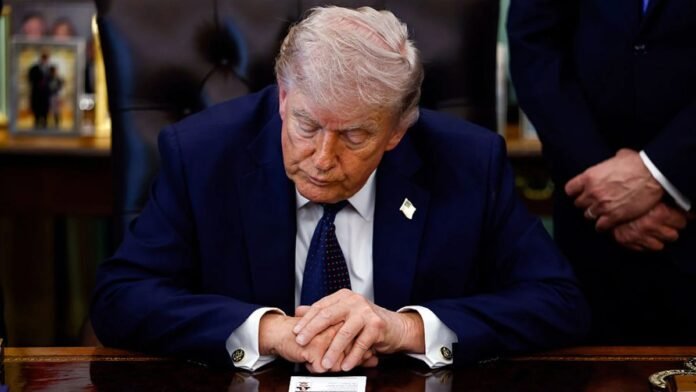
Following a recent visit by Donald Trump to a dentist in Florida, a cardiologist has questioned the White House’s transparency regarding the president’s health.
Trump had been spending the weekend golfing when he abruptly left a course in Jupiter, Florida, shortly after 1 pm local time on Saturday. The White House later informed reporters that the 79-year-old president had gone for a scheduled dental appointment at a local clinic. The visit, however, was not listed on his public schedule.
Questions raised over the visit
Dr. Jonathan Reiner, who served for decades as a cardiologist to former Vice President Dick Cheney, raised concerns about the explanation. He pointed out that routine dental care for US presidents is typically handled within the White House itself.
He noted that a dental facility has existed in the White House since the Hoover Administration and said standard check ups can be conducted there.
Reiner also referenced Joe Biden, who used the in-house dental unit during his presidency, and questioned why Trump’s appointment was scheduled externally in Florida.
He added that the lack of clarity around the president’s health has led to increased scrutiny, saying even a routine dental visit now raises questions. He suggested the choice of location may simply be a matter of preference, but noted the unusual nature of the situation.
Health concerns and political reactions
In recent months, Trump has been seen with noticeably swollen ankles and bruising on his right hand, prompting speculation about his health. The White House has repeatedly dismissed such concerns.
On Sunday, Nancy Mace posted a brief message on X urging people to pray for the president following the incident. She shared the message early in the morning, writing, “Pray for President Trump.”
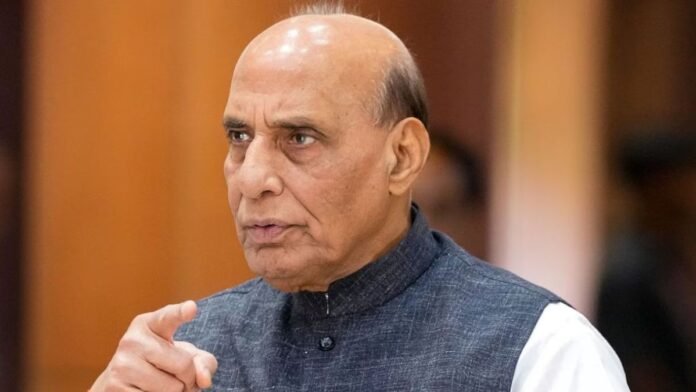
Rajnath Singh on Monday highlighted the importance of continued investment in research, while also underlining the role of maintaining an element of surprise to stay prepared in a time of fast-evolving technological change.
Rajnath Singh stressed that there is no alternative to research, noting that the nature of future warfare is increasingly being shaped in laboratories. Addressing defence personnel, industry leaders, innovators, start-ups and academia at the North Tech Symposium 2026 in Prayagraj, he highlighted the need for innovation-driven preparedness.
Referring to Operation Sindoor ahead of its first anniversary, Singh described it as a unique example of how the Indian military used advanced technology to deliver a decisive strike against terror groups and their backers. He said the armed forces showed restraint while acting with precision in targeting terrorist infrastructure, adding that the operation reinforced India’s capabilities on the global stage.
India had launched Operation Sindoor on May 7 last year, following the April 2025 Pahalgam terror attack, targeting terror infrastructure in Pakistan and Pakistan-occupied Kashmir.
Singh said the response by Indian forces made the nation proud, emphasizing that restraint was exercised while ensuring effective action. He added that indigenous systems such as the Akash missile system, Akashteer, and BrahMos played a key role in the operation.
Highlighting the changing nature of warfare, he pointed to Israel’s reported pager blasts in Lebanon and Syria during what he referred to as “Operation Grim Beeper,” noting that even ordinary devices can now be turned into weapons. He said such developments show how unpredictable modern warfare has become, where virtually anything can be weaponized.
He also cited the Russia-Ukraine conflict as an example of how quickly warfare is evolving, with a shift from traditional tanks and missiles to advanced drones and sensors within a short span of time.
Singh underlined the importance of developing capabilities that allow for unexpected and decisive responses, stating that history shows the element of surprise often determines the outcome of conflicts. He added that while India is moving in that direction, the pace of progress needs to increase.
He said defence research has been made a national priority, with the Defence Research and Development Organisation working closely with industry partners rather than operating in isolation.
According to Singh, 25 percent of the defence research and development budget has been allocated to industry, academia and start-ups, with over ₹4,500 crore already utilised. A revised Transfer of Technology policy has removed the earlier 20 percent fee for development and production partners, resulting in the transfer of more than 2,200 technologies to industry.
He also announced that Indian companies now have free access to DRDO patents. In addition, DRDO’s testing facilities have been opened to industry on a paid basis, benefiting hundreds of firms each year.
A fatal road accident claimed the life of Vakil Singh Kushwaha after his vehicle rammed into a roadside pillar near Ranwa at around 12:30 pm. Police said the crash likely occurred after the driver dozed off at the wheel. Three others traveling in the car were injured, with one reported to be in a critical state.
Talgram SHO Vinay confirmed that the force of the collision left the vehicle severely damaged, highlighting the intensity of the impact.
Kushwaha, 52, served as the Congress president of Bhagalpur district. He was en route from Delhi to Patna along with his sister-in-law Sapna, aged 23, and Vibhu Aryan, 20.
Authorities said Sapna sustained serious injuries, while the driver, Vinod Mandal, 40, and Vibhu Aryan escaped with minor wounds. Kushwaha’s body has been sent to Tirwa Medical College for further procedures.
Reacting to the incident, senior Congress leader Rahul Gandhi expressed grief over the loss, calling the news deeply distressing. He said Kushwaha’s dedication to the party and his service to the public would be remembered.
Gandhi also conveyed his condolences to the bereaved family and said he stands with them during this difficult time.
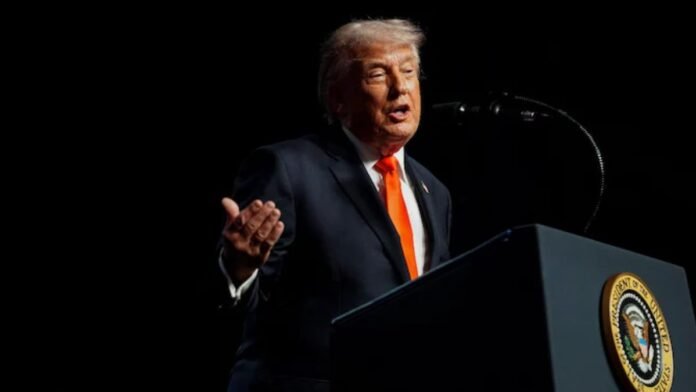
Donald Trump has expressed skepticism about reaching an agreement with Iran, stating that he is dissatisfied with the latest proposals from Tehran as negotiations continue.
While speaking to reporters at the White House, Trump said recent discussions had taken place but indicated uncertainty over whether they would lead to a breakthrough. He noted that although some progress had been made, the current terms being offered by Iran fall short of expectations.
Trump outlined two possible paths forward, suggesting either a military response or a negotiated settlement, though he indicated a preference for diplomacy if a suitable agreement can be reached. He also reiterated his belief that global oil and gas prices would decline once the conflict is resolved. When asked about the possibility of fresh military strikes, he declined to provide a direct answer.
Meanwhile, Iran has reportedly put forward a new proposal aimed at ending the conflict, according to Islamic Republic News Agency. The development comes at a time when the strategically vital Strait of Hormuz remains blocked, disrupting global petroleum trade.
Details of the latest proposal have not been disclosed. Earlier, Tehran had suggested reopening the Strait of Hormuz and de-escalating hostilities, while seeking to delay discussions on its nuclear programme. That proposal was rejected by Washington, which insisted that nuclear commitments remain part of any agreement, as reported by Axios.
One of the reported conditions includes preventing Iran from transferring enriched uranium from damaged nuclear facilities or resuming activity at those sites while talks are ongoing.
Responding to questions about the negotiations, White House spokesperson Anna Kelly reiterated that the United States remains firm on preventing Iran from acquiring nuclear weapons and continues to pursue both immediate and long-term security objectives. She declined to comment on specific diplomatic exchanges.
Tensions have remained high since Iran moved to effectively shut the Strait of Hormuz following the outbreak of conflict involving the United States and Israel in late February. Although a ceasefire was announced in early April, restrictions on shipping through the route have persisted.
Global oil markets have reacted sharply to the situation, with prices surging to as high as 114.70 dollars per barrel before easing slightly and stabilising above 110 dollars.