Home Blog Page 192

North Korea Showcases Images of Uranium Enrichment Facility

0

For the first time on Friday, North Korea revealed images of its uranium enrichment facility, featuring leader Kim Jong Un touring the site and urging the expansion of centrifuges to bolster the nation’s nuclear capabilities.

Although North Korea conducted its initial nuclear test in 2006 and has been subjected to numerous UN sanctions for its illicit weapons programs, it had never previously shown its uranium enrichment facility to the public.

These facilities are crucial in producing highly enriched uranium by using centrifuges to spin the raw material at high speeds, essential for creating nuclear warheads.

Kim Jong Un toured the Nuclear Weapons Institute and the “production base of weapon-grade nuclear materials,” according to a report by the official Korean Central News Agency (KCNA), which did not disclose the location or timing of his visit.

State media shared images of Kim inspecting the facility, where he emphasized the necessity of increasing the number of centrifuges to exponentially boost the nuclear arsenal for self-defense.

Kim also reviewed the production of nuclear warheads and the current status of nuclear materials, KCNA reported, noting that he was informed about the facility’s development of nuclear materials through advancements in systems like centrifugal separators.

He called for the implementation of new types of centrifuges to further solidify the nation’s ability to produce weapon-grade nuclear materials and urged the setting of long-term goals to increase production.

North Korea’s nuclear weapons programs are prohibited by UN sanctions, yet the country has repeatedly violated these restrictions, partially with backing from allies such as Russia and China.

Experts suggest that the public revelation of the enrichment facility may be intended to influence the upcoming U.S. presidential election. Hong Min, a senior analyst at the Korea Institute for National Unification, said the images send a message to the next U.S. administration that denuclearizing North Korea is not feasible and demand recognition of the country as a nuclear state.

However, Hong noted that another nuclear test is unlikely to occur immediately following this disclosure.

North Korea recently reported heavy flooding in its northern regions near China due to record rainfall in late July, which resulted in casualties, the flooding of homes, and widespread agricultural damage. A report from the Stimson Center’s 38 North program on Wednesday indicated that North Korea’s primary nuclear test site had also been damaged by floodwaters.

“The main nuclear test site is in poor condition, with roads and railways washed away, and the ground is severely weakened,” Hong stated.

Tensions between North and South Korea have worsened in recent years, with North Korea recently deploying 250 ballistic missile launchers near the southern border. The North has also been sending trash-laden balloons across the border, including a five-day campaign last week.

On Thursday, South Korea reported that the North had fired multiple short-range ballistic missiles into waters east of the Korean Peninsula. However, KCNA later clarified that this was a test of a “new-type 600mm multiple rocket launcher,” supervised by Kim Jong Un.

Huawei Teases Brand-New Folding Smartphone; Set to Compete with Apple

0

On Tuesday, China’s Huawei Technologies unveiled a three-way foldable smartphone as it aims to strengthen its lead over Apple in the world’s largest smartphone market with a unique form factor gaining traction in China.

Just hours after Apple introduced its latest iPhone model, Huawei hosted a launch event for its new Z-shaped foldable smartphone, the Mate XT, set to hit stores on September 20—the same day as Apple’s new iPhone release.

Huawei’s website revealed that it had already received over 3.6 million pre-orders for the Mate XT, though no deposit was required.

For comparison, the global market for foldable phones totaled around 4 million units in the second quarter, according to research firm IDC.

The launch follows a string of successful smartphone releases by Huawei over the past year, highlighting the company’s ability to navigate U.S. sanctions and solidifying its position against Apple in China. Some Chinese consumers have criticized Apple’s new iPhone 16 for its lack of AI features, a point of frustration as Apple has yet to announce an AI partner for China, and its AI software, Apple Intelligence, won’t be available in Chinese until next year.

“Why buy it if you can’t use AI?” a user commented on Weibo, China’s equivalent of X. Another remarked, “Without AI as its main selling point, it should be half the price.”

Huawei already offers two-way foldable phones, and their strong sales in China helped the company surpass Samsung as the world’s largest vendor of foldable phones this year.

However, analysts suggest the new Mate XT, likely to come with a hefty price tag, may be more of a symbol of Huawei’s technological capabilities than a major revenue driver. Limited availability and a high price are expected to restrict its market impact.

“The new Huawei products aren’t expected to significantly affect Samsung and Apple in terms of sales volume,” said Jene Park, an analyst at research firm Counterpoint. “However, there could be some effect on sales in certain Chinese markets.”

The foldable smartphone market grew 57% year-on-year in the second quarter, reaching 3.9 million units, largely driven by Chinese smartphone makers expanding into overseas markets, according to IDC. Despite this growth, foldables still make up just 1.3% of the wider smartphone market, which saw 292.2 million units shipped in the second quarter.

“The average consumer still lacks awareness of these devices, let alone understanding their benefits,” said IDC senior researcher Will Wong. High prices remain another challenge, with last year’s Mate X5 retailing for over 10,000 yuan domestically, almost double the cost of a new iPhone 15.

Addressing issues such as screen wrinkles and reduced durability from additional hinges will also be crucial for the wider adoption of foldables, Park added.

Huawei led the global foldable smartphone market in the second quarter with a 27.5% share, ahead of Samsung’s 16.4%, according to IDC. In China, Huawei’s market share climbs to 42%, surpassing rivals like Vivo and Honor, a former Huawei subsidiary spun off due to U.S. sanctions in 2020.

In the broader Chinese smartphone market, Apple dropped from third to sixth place in the second quarter, while Huawei became the third-largest vendor, buoyed by strong sales of its latest models.

Jennifer Lopez Ready to Takeover $55 Million LA Estate Amid Divorce

0

In early August, reports suggested that Jennifer Lopez was searching for a new home in Los Angeles after listing the Beverly Hills mansion she shared with Ben Affleck for sale. Now, months after resuming her house-hunting journey, a new report indicates that she is eyeing a famous LA property, though acquiring it could prove challenging.

According to a source speaking to TMZ, JLo is currently negotiating to purchase the coveted Azria Estate in Holmby Hills, which is listed at $55 million. The 14-bedroom estate, located at 10250 West Sunset Boulevard, boasts luxurious features such as a greenhouse, guest house, infinity pool with a sauna, home theater, and game room. Designed by renowned architect Paul R. Williams, the estate was once owned by Academy Award-winning writer and producer Sidney Sheldon.

However, buying the Azria Estate won’t be easy for Lopez. The late BCBG founder Max Azria’s former home spans 30,000 square feet, and while it’s listed for $55 million, Lopez is hoping to acquire it for between $30 and $39 million—far below the asking price.

Lopez, currently in the midst of a high-profile divorce from Ben Affleck, could face competition for the property. Earlier this year, billionaire investor Ron Burkle made a $30 million bid during an auction for the house, but he is now entangled in a legal dispute with Max Azria’s widow, Lubov Azria. Despite these hurdles, Lopez has reportedly taken multiple tours of the estate and is said to be in communication with both Burkle and Lubov regarding the property.

The Azria Estate is listed by Branden and Rayni Williams of The Beverly Hills Estates, who describe it as a “distinguished estate” offering “elegance and privacy” with a layout ideal for family, staff, and guests. The mansion is also familiar to Lopez, as she filmed her upcoming 2024 movie Atlas there.

Lopez had initially considered the Holmby Hills property during her house hunt with Affleck, but they ultimately chose a $60 million home in Beverly Hills, which they later sold for an $8 million profit. The sale of that property has since stalled amid their ongoing divorce.

This latest development follows reports that Lopez was never fond of the “ultra-modern” design of her marital home, which she felt was a compromise. The news also coincides with her ex-boyfriend, Sean “Diddy” Combs, listing his nearby Beverly Hills mansion for $61.5 million, just six months after federal agents raided the property.

HC Sends Notice to Puja Khedkar Over UPSC Plea

0

The Delhi High Court on Thursday issued a notice to former probationary Indian Administrative Service (IAS) officer Puja Khedkar in response to a plea by the Union Public Service Commission (UPSC) seeking perjury proceedings against her. The UPSC alleges that Khedkar made false statements regarding its press release on the cancellation of her candidature and filed a false affidavit in court.

Justice Jyoti Singh’s bench asked Khedkar to respond within three weeks, with the next hearing scheduled for November 26.

Khedkar was dismissed from service on September 7, following a July 31 UPSC press release that announced her disqualification after she failed to respond to a show-cause notice. The notice alleged that she had fraudulently exceeded the allowed number of attempts for the civil services exam by falsifying her identity.

In its application, UPSC stated that Khedkar, in her plea to quash the press release, argued she could not be disqualified as the decision had not been formally communicated to her, nor had she been given time to respond. UPSC countered this claim, stating that the decision was communicated to her via registered email on July 31. The commission further noted that Khedkar falsely cited the July 31 press release in a court affidavit dated July 28, when the press release had not yet been issued. UPSC argued that this false affidavit amounts to contempt and perjury, warranting legal action.

The UPSC contended that Khedkar’s false statements were made to obtain favorable court orders, stressing that making such false claims under oath is a serious offense that undermines the judicial system.

On Thursday, UPSC’s lawyer Naresh Kaushik urged the court to take a “serious view” of Khedkar’s conduct, noting that she had even misled her lawyer by claiming she had not received the cancellation order and had only learned of it through the press release. Khedkar’s lawyer maintained that she was unaware of the email.

Khedkar is also facing charges under several sections of the Indian Penal Code, including Section 420 (cheating), Section 468 (forgery for cheating), Section 471 (using a forged document), Section 120B (criminal conspiracy), along with charges under the Information Technology Act and the Rights of Persons with Disability Act.

Khedkar had exhausted all nine attempts permitted for candidates with benchmark disabilities and belonging to Other Backward Classes by 2020 and was ineligible for the 2021 exam. She is alleged to have changed her name in 2021 and fraudulently appeared for the civil services exams in 2021, 2022, and 2023 by providing false information regarding her previous attempts.

Brazil Demands EU to Halt ‘Punitive’ Anti-Deforestation Laws

0

Brazil has called on the European Union to halt the implementation of a ban on imports linked to deforestation, describing the new regulations as “punitive.”

The EU law, set to come into effect in December, will prohibit the import of a wide range of goods—including coffee, cocoa, soy, timber, palm oil, cattle, printing paper, and rubber—if they were produced on land deforested after December 2020.

The Brazilian government expressed “serious concern” over the legislation, as the country is a key supplier of many of the affected products.

“To avoid damaging our trade relations, we urge the EU to delay implementation beyond 2024 and urgently reconsider its approach,” Brazil stated in a letter to the European Commission, shared with AFP on Thursday.

The letter, signed by Brazil’s foreign affairs and agriculture ministers, echoes concerns raised by the U.S. and other nations in Latin America, Asia, and Africa about the burden the law places on farmers and the forestry sector.

Within the EU, agriculture ministers from around 20 member states, including Austria and Finland, warned in April that the law could impose bureaucratic obstacles, potentially harming investment and distorting competition. The largest bloc in the European Parliament has also called for a delay.

Brazil criticized the legislation as a “unilateral and punitive measure” that ignores national laws aimed at curbing deforestation, adding that it raises production and export costs, especially for small farmers.

The European Commission confirmed receipt of Brazil’s letter and said it would respond in due course. A spokesperson added that the EU is moving ahead with the regulation’s implementation, with no postponement planned.

The EU is the second-largest market for the products targeted by the law, after China. Under the regulation, companies importing these goods into the 27-member bloc will be required to track their supply chains to ensure they were not sourced from deforested areas, using geolocation and satellite data. Countries deemed high-risk could see at least nine percent of their exports to the EU subjected to checks.

The EU’s environment commissioner visited Paraguay, Bolivia, and Ecuador in March to address concerns about the new law. The bloc has also offered technical and financial support to help importers meet the required tracing standards.

According to WWF, EU imports account for 16 percent of global deforestation.

Delhi Court has Extended Kejriwal’s Custody

0
xr:d:DAFZyyzAdFc:89,j:44921410197,t:23041015

A Delhi court on Wednesday extended the judicial custody of Chief Minister Arvind Kejriwal until September 25 in a case filed by the Central Bureau of Investigation (CBI) over alleged irregularities in the formation and execution of the now-repealed 2021-22 Delhi excise policy.

Meanwhile, the Rouse Avenue court granted bail to Aam Aadmi Party (AAP) legislator Durgesh Pathak. Special judge Kaveri Baweja approved Pathak’s bail, who appeared in court in response to a summons issued on September 3, on a bond of ₹1 lakh.

Kejriwal participated in the hearing via video conference from Tihar Jail. He, along with Pathak and four others—Amit Arora, Vinod Chauhan, Ashish Mathur, and P Sarath Reddy—were named in the CBI’s fourth supplementary charge sheet submitted on July 30. However, aside from Kejriwal, the remaining five accused were not arrested despite being named in the charge sheet.

According to the CBI, Kejriwal is a key conspirator in the case and maintained contact with the “South Group,” which includes K Kavitha, Raghav Magunta, Arun Pillai, Butchibabu Gorantla, Reddy, Abhishek Boinpally, and Benoy Babu. The Delhi CM allegedly received kickbacks from this group in exchange for liquor licenses in Delhi, a portion of which was reportedly used to fund AAP’s campaign for the 2022 Goa Assembly elections.

The CBI also claims that Pathak oversaw election activities and directed the spending of the kickback funds. It stated that all election expenses were handled in cash, and Kejriwal allegedly promised ₹90 lakh to each candidate in Goa’s 40 constituencies.

Vijay Nair, AAP’s then media in-charge, was appointed by Kejriwal and, according to the CBI, held meetings and solicited bribes in return for favorable provisions in the excise policy. Magunta Sreenivasulu Reddy met Kejriwal in Delhi, allegedly requesting support for his liquor business, and Kejriwal is accused of asking for financial contributions to AAP during this meeting.

The CBI further alleged that Chauhan and Mathur were involved in transferring money, with Chauhan coordinating with K Kavitha’s assistant. Arora was reportedly pressuring Mahadev Liquors officials to shut down their operations in Delhi. Additionally, accused-turned-approver P Sarath Reddy is said to have given ₹14 crore to Kavitha under the guise of a land deal, securing five liquor outlets in Delhi as a result.

Kejriwal was initially arrested in another excise policy case by the Enforcement Directorate (ED) on March 21. He was later taken into CBI custody on June 26 and sent to judicial custody on June 29. Although the Supreme Court granted Kejriwal interim bail in the ED case on July 12, he remains in jail due to the ongoing CBI investigation.

The case revolves around the 2021-22 Delhi excise policy, which sought to overhaul the city’s liquor trade by shifting from a sales volume-based system to one focused on license fees for traders, offering modernized stores with better customer experiences. The policy also allowed discounts on liquor purchases, a first for Delhi. However, the policy was scrapped after Delhi’s Lieutenant Governor VK Saxena recommended an inquiry into alleged irregularities, leading to the reinstatement of the 2020-21 policy. The AAP contended that Saxena’s predecessor undermined the policy with last-minute changes that reduced anticipated revenue.

Chattisgarh All Set to Announce New Surrender Policy

0

The Chhattisgarh government is expected to announce a new surrender policy for Maoists within the next two months, focusing on establishing rehabilitation camps in Left-wing insurgency-affected districts. These camps will offer skill development training for a period of three years, according to officials familiar with the situation.

Union Home Minister Amit Shah, during his recent visit to Chhattisgarh, mentioned that the state government is working on this policy. He expressed confidence that India will be free from Maoist violence by March 2026, stating that the battle against Maoists is in its final stages.

An official revealed that the policy will include a provision for providing ₹10,000 in monthly financial assistance for three years. “While similar initiatives have been attempted before, this new plan will emphasize a more structured and rigorous rehabilitation process,” said the official, who requested anonymity. He added that district administrations would set up rehabilitation camps offering vocational and skill development training under this policy.

Beneficiaries are expected to stay in these camps for the full three-year term unless they find employment earlier. “Skill development centers already operate under a government of India scheme, providing training in practical skills like blacksmithing and barbering to ensure livelihood opportunities,” the official added.

A second official shared that the new surrender policy will also provide an immediate grant of ₹5 lakh for senior Maoist leaders, such as members of the State Committee, Regional Committee, Central Committee, and Politburo, and ₹2.5 lakh for middle and lower-ranked cadres. The money will be placed in fixed deposits, which can be withdrawn after completing the three-year training, provided the individual maintains good behavior as certified by designated authorities.

A committee comprising an Additional Director General-level officer, representatives from the state home department, police, and central armed police forces will oversee the screening and rehabilitation process.

According to a third official, the new policy will align with the Union Home Ministry’s guidelines issued in August 2022 to Maoist-affected states. These guidelines stipulate that the government of India will reimburse 60% of the rehabilitation costs for surrendered Maoists under the Security Related Expenditure (SRE) Scheme, with a ceiling of ₹5 lakh for higher-ranked cadres and ₹2.5 lakh for lower-ranked ones. A monthly stipend of ₹10,000 will also be provided for up to 36 months during the training period in rehabilitation camps.

Tensions Rise Between China and Philippines

0

Relations between Manila and Beijing have deteriorated under Philippine President Ferdinand Marcos Jr., as the country shifts back towards the United States, which supports the Philippines in its maritime disputes with China.

Here is a timeline of key events this year that have heightened tensions between the Philippines and China:

JAN 3 – The Philippines and the United States conduct their second joint patrol in the South China Sea, while China carries out similar naval and air operations in the disputed waters.

MARCH 5 – The Philippines criticizes China for the “reckless” and “illegal” actions of its coast guard, which led to a collision with a Philippine vessel, damaging the ship and injuring crew members during a resupply mission at Second Thomas Shoal. China claims the Philippine vessels entered waters near the shoal illegally.

MARCH 20 – China urges the U.S. to avoid “stirring up trouble” or taking sides on the South China Sea issue, following U.S. Secretary of State Antony Blinken’s statement that the security agreement with the Philippines includes protection for attacks on the Philippine coast guard.

MARCH 24 – China’s coast guard reports taking action against Philippine vessels on a resupply mission to Second Thomas Shoal. The Philippines condemns the use of water cannons, which damaged its ship and injured crew members, as “irresponsible and provocative.”

APRIL 7 – The U.S., Japan, and Australia conduct a “maritime cooperative activity” in the Philippines’ Exclusive Economic Zone (EEZ) in the South China Sea.

APRIL 11 – The U.S. Army deploys its ground-based Typhon missile system for the first time in the Indo-Pacific during joint military drills with the Philippines.

APRIL 16 – The Philippines sends its coast guard ship, Teresa Magbanua, to monitor potential small-scale reclamation activities by China at Sabina Shoal, which China denies.

APRIL 30 – The Philippines accuses China’s coast guard of harassing and damaging two Philippine vessels in a disputed area of the South China Sea. Manila rejects China’s claim that it expelled the vessels from Scarborough Shoal.

MAY 10 – The Philippines’ national security adviser calls for the expulsion of Chinese diplomats over an alleged leak of a phone conversation with a senior Filipino navy official.

MAY 15 – A civilian flotilla of Philippine vessels sails toward Scarborough Shoal to assert Manila’s maritime rights and deliver supplies to fishermen at the contested shoal.

MAY 20 – The Philippines challenges China to allow an independent third party to assess claims that Beijing has destroyed Scarborough Shoal’s marine environment.

MAY 22 – A Philippine navy admiral accuses the Chinese embassy of recording a phone conversation without his consent and denies making a deal with Beijing to ease South China Sea tensions.

JUNE 15 – The Philippines files a claim with the United Nations for an extended continental shelf in the South China Sea.

JUNE 17 – A Philippine sailor loses a finger after what the Philippines’ military calls an “intentional high-speed ramming” by the Chinese Coast Guard during a resupply mission to Second Thomas Shoal. China disputes the account, stating its actions were lawful and professional.

JULY 2 – The Philippines and China agree to “restore trust” and “rebuild confidence” during high-level talks in Manila aimed at managing maritime disputes.

JULY 8 – The Philippines and Japan sign a historic military pact allowing each other’s forces to be deployed on their respective territories in response to China’s assertive regional actions.

JULY 17 – The Philippines and China agree to establish new communication lines to better handle maritime disputes.

JULY 22 – The Philippines and China reach a “provisional arrangement” for resupply missions to a grounded Filipino naval vessel at Second Thomas Shoal.

JULY 27 – The Philippines successfully completes a resupply mission to its troops at a disputed South China Sea shoal, the first such operation under the new arrangement with China aimed at easing tensions.

JULY 30 – The United States pledges $500 million in funding for the Philippines’ military and coast guard, showing strong support as Manila confronts China’s actions in the South China Sea.

AUG 2 – The Philippines and Japan hold their first joint military exercises in the South China Sea.

AUG 9 – The Philippines and Vietnam, both with maritime disputes against China, conduct their first joint coast guard exercises.

AUG 10 – The Philippines accuses China’s Air Force of “dangerous maneuvers” after flares were dropped near a Philippine aircraft conducting a routine patrol over Scarborough Shoal.

AUG 19 – The Philippines and China accuse each other of ramming vessels and engaging in dangerous maneuvers near Sabina Shoal.

AUG 24 – The Philippines urges Beijing to “immediately cease all provocative and dangerous actions” after accusing China of deploying flares from the China-occupied Subi Reef during Philippine patrols on August 22.

Kylian Mbappe Rejects Offer in Financial Dispute with PSG

0

Kylian Mbappe’s representatives announced on Wednesday that they had declined the French football league’s (LFP) offer to mediate in his dispute with Paris Saint-Germain (PSG) over unpaid wages and bonuses.

Mbappe claims PSG owes him 55 million euros ($60.6 million), a sum the club says the player agreed to forgo in August 2023. The 25-year-old Real Madrid forward is seeking the amount, which includes a signing bonus due in February, three months of outstanding salary, and an “ethical bonus” for that period.

Lawyers for both sides met early Wednesday after Mbappe, who transferred to Real Madrid this summer, referred the matter to the LFP’s legal committee. The league then proposed mediation.

Mbappe’s representatives told AFP in a statement, “The possibility of mediation was raised this morning, but it was rejected by the player’s representative. Mediation is unnecessary to establish non-payment, which can be confirmed by a simple review of the player’s payslip.”

The LFP indicated it would announce its decision in the case on Friday. PSG had welcomed the idea of mediation earlier in the day.

“Paris Saint-Germain is very pleased with today’s two-hour hearing before the commission,” the club said. “The player has made repeated public and private commitments that must be respected, especially considering the exceptional benefits he received over seven remarkable years at the club. Given the club’s oral and written evidence, the commission urged mediation between the parties, which PSG has been advocating for months.”

Cabinet Decides to Approves PM-E Drive Scheme

0

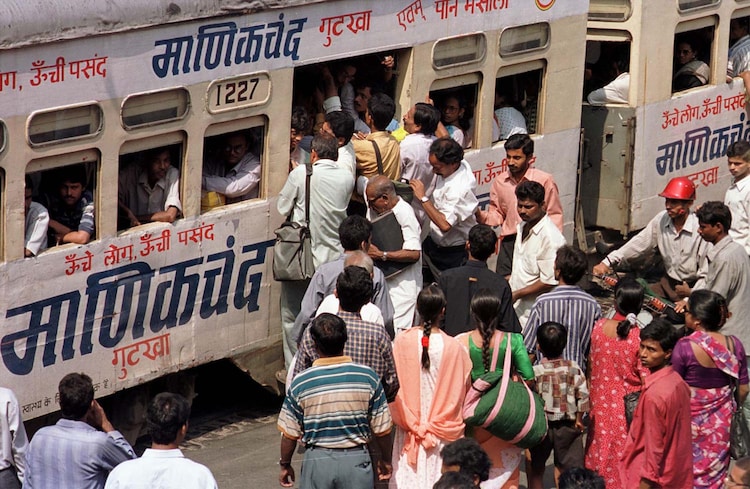
The Union Cabinet has approved the PM Electric Drive Revolution in Innovative Vehicle Enhancement (PM E-Drive) Scheme, with a budget of ₹10,900 crore for two years, along with a Payment Security Mechanism (PSM) of ₹3,435.33 crore under the PM-eBus Sewa initiative to promote vehicle electrification.

A total of ₹3,679 crore will be allocated as subsidies for purchasing electric two-wheelers, three-wheelers, ambulances, trucks, and other emerging electric vehicles (EVs) under the PM E-Drive Scheme. According to a government statement, this initiative aims to support the procurement of 2.479 million electric two-wheelers, 316,000 electric three-wheelers, and 14,028 electric buses.

States and cities will be prioritized for public buses based on their adherence to old vehicle scrapping guidelines. As part of the effort to alleviate EV range anxiety, ₹2,000 crore will be allocated to install 22,100 fast chargers for electric four-wheelers, 1,800 for electric buses, and 48,400 for electric two-wheelers and three-wheelers.

Additionally, the scheme will provide ₹500 crore to encourage the adoption of electric trucks, and ₹780 crore for upgrading testing agencies to support the EV ecosystem.

Pawan Mulukutla, WRI India’s executive program director for integrated transport, clean air, and hydrogen, noted that the Cabinet’s decision underscores India’s ambitious decarbonization goals in the transport sector, with plans to deploy 50,000–60,000 electric buses through initiatives like the National Electric Bus Programme and the PM-eBus Sewa. He highlighted that the PSM will help make the project more bankable, encouraging more participation from private players who were previously hesitant due to concerns about delayed payments or defaults. This increased competition could ultimately reduce operational costs.

Under the PM-eBus Sewa Scheme, 10,000 air-conditioned electric buses will be provided to tier-2 and tier-3 cities through a public-private partnership model. The government informed Parliament that, as of August, ₹541 crore had been allocated for bus operations and related infrastructure in 75 cities.

Industry experts and policy analysts have called for the implementation of the PSM to ensure timely payments to electric bus suppliers and operators, as many state government transport undertakings are financially strained and often delay payments to contractors. A similar mechanism is already in place for solar power projects, managed by the Solar Energy Corporation of India Limited.