Home Blog Page 151

Impeached South Korean President Gets Arrested Over Failed Martial Law

0

South Korea’s impeached President Yoon Suk Yeol was arrested on Wednesday following his failed attempt to impose martial law. The arrest occurred after hundreds of anti-corruption investigators and police stormed the Presidential compound, ending a weeks-long standoff.

Yoon, charged with insurrection for his brief effort to enforce martial law last month, has become the first sitting president in South Korean history to be arrested.

Before dawn on Wednesday, hundreds of officers from the Corruption Investigation Office advanced toward the presidential residence. Some scaled the compound’s walls and navigated back trails to access the main building.

This marked their second attempt to detain Yoon. The initial effort on January 3 was unsuccessful due to a tense standoff with the Presidential Security Service (PSS), who resisted investigators executing the arrest warrant.

Yoon’s lawyer, Seok Dong-hyeon, announced Wednesday morning that the president agreed to cooperate with investigators and would leave the residence to prevent a “serious incident.”

“President Yoon has decided to personally appear at the Corruption Investigation Office today,” Seok stated on Facebook, mentioning that Yoon would also deliver a public address.

However, investigators confirmed shortly after that Yoon had been officially arrested.

“The Joint Investigation Headquarters executed an arrest warrant for President Yoon Suk Yeol today (January 15) at 10:33 am (0130 GMT),” officials stated.

According to Reuters, Yoon’s arrest followed confrontations with his security guards, prompting investigators to use ladders to breach the residence in Seoul after being blocked at the main gate.

Investigators Arrest Presidential Security Chief Amid Yoon Suk Yeol Standoff

Kim Sung-hoon, the acting chief of the Presidential Security Service, was arrested for obstructing investigators during their initial attempt to detain President Yoon Suk Yeol, according to Yonhap News Agency.

Yoon had resisted arrest following his failed December 3 power grab, which triggered South Korea’s most severe political crisis in decades. He had ordered soldiers to storm Parliament to prevent lawmakers from voting against his actions.

Once a prominent prosecutor, Yoon had already been suspended by lawmakers. If the court-approved arrest warrant were enforced, he would become the first sitting president in South Korean history to be detained, AFP reported.

“The execution of the presidential arrest warrant has begun,” acting President Choi Sang-mok confirmed in a statement, emphasizing the importance of upholding law and order during this critical time.

Chaotic Scenes in Seoul

In a tense morning in Seoul, unarmed investigators from the Corruption Investigation Office (CIO) and police officers attempted to enter Yoon’s residence but were blocked by unidentified guards at the entrance, AFP reported.

Clashes broke out between investigators and those defending the compound. Approximately 20 investigators were later seen scaling ladders to breach the residence, according to TV footage cited by AFP.

Groups labeled “Police” and “CIO” were observed advancing up the roads toward Yoon’s hillside compound, carrying ladders and entering through multiple access points.

Ongoing Negotiations and Escalating Tension

Yoon’s lawyer, Seok Dong-hyeon, stated on Facebook that negotiations were in progress for the president to voluntarily surrender due to the “risk of a serious situation” between opposing forces.

At least one individual was injured during the standoff and was transported by emergency services.

Yoon’s legal team was seen outside the residence protesting the execution of the arrest warrant, while a white police van attempting to enter the premises was unsuccessful.

Security Tightens as Supporters Gather

Investigators also tried accessing the residence via a mountain hiking trail, Yonhap News TV reported. Amid the operation, police arrested Kim Seong-hun, the acting head of the presidential guard.

By early Wednesday, police had completely blocked the main road leading to Yoon’s residence with bus barricades as thousands of his staunch supporters gathered outside.
Kangana Ranaut Reveals Why She Didn’t Work with Salman Khan

0

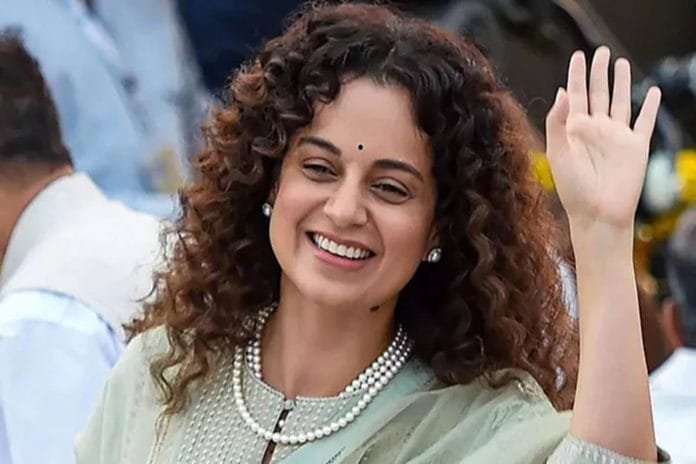
Actor Kangana Ranaut recently shared insights into her relationship with Bollywood superstar Salman Khan, calling him a “good friend.” She revealed that although they’ve had multiple opportunities to collaborate on projects, it hasn’t materialized yet.

Kangana on Her Bond with Salman Khan

In an interview with News18, Kangana spoke about her friendship with Salman and the possibility of working together. When asked if they might share screen space in the future, Kangana admitted that while several chances to collaborate had come up, none of them worked out.

“Salman is a good friend of mine, and we’ve had many opportunities to work together. But somehow, it just never happened. Let’s see what the future holds,” she remarked.

Earlier, during a film trailer launch, Kangana praised Salman, saying, “If you look at Salman ji, he has such a massive fan following and receives so much love. I believe he is currently the most loved and popular star in the country. Those who adore him will continue to do so. But those who are bothered by his success—be it competitors or others in the film industry—will naturally dislike him. People question why he holds such a position, and that makes him bothersome to some.”

Kangana Ranaut’s Upcoming Film

Kangana is now gearing up for the release of her first solo directorial film, Emergency. She portrays former Prime Minister Indira Gandhi, focusing on the final years of her rule, including the Emergency period and Operation Bluestar.

The film features a stellar cast, including:

  • Anupam Kher as Jayaprakash Narayan
  • Shreyas Talpade as a young Atal Bihari Vajpayee
  • Milind Soman as Field Marshal Sam Manekshaw
  • Mahima Chaudhry as Pupul Jayakar
  • Late Satish Kaushik as Jagjivan Ram

After several delays, Emergency is set to release in theaters on January 17.

PM Modi All Set to Inaugurate Z-Morh Tunnel; Security Tightened

0

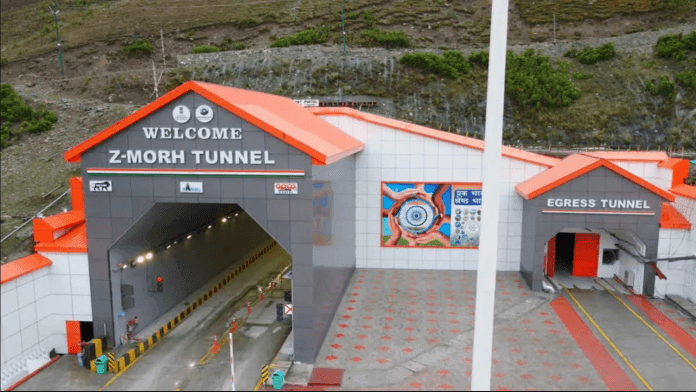
Prime Minister Narendra Modi is set to visit Jammu and Kashmir on Monday to inaugurate the strategically significant Z-Morh (Sonamarg) tunnel in Ganderbal district. Extensive security measures have been implemented, with the Prime Minister’s security team taking full control of the event venue.

PM Modi is scheduled to arrive at the Sonamarg Tunnel around 11:45 AM on Monday for the inauguration and is expected to deliver a speech during the event.

According to a PTI report, security arrangements involve the Jammu and Kashmir Police, paramilitary forces, and the Army. These agencies have been conducting widespread area domination exercises, searches, and patrols to ensure the event proceeds smoothly.

Sharpshooters have been stationed at key locations, while aerial and technical surveillance, including drone monitoring, is being conducted. Officials confirmed the area is under continuous watch.

“Security near the Z-Morh tunnel has been tightened with multi-layered arrangements, and the Prime Minister’s security team, including Special Protection Group (SPG) personnel, has secured the venue,” officials stated.

The SPG is a specialized agency responsible for safeguarding the Prime Minister of India and their immediate family members.

Authorities have also closed the Srinagar-Leh National Highway from Saturday to Monday, officially citing “icy road conditions due to inclement weather and maintenance work.” However, reports suggest the closure is primarily for the Prime Minister’s visit.

Z-Morh Tunnel Overview

Constructed at a cost of ₹2,400 crore on the Srinagar-Leh National Highway, the 6.5-kilometre Z-Morh tunnel will provide year-round road access to the Ladakh region.

Work on the project began in May 2015 and concluded last year, with a soft launch in February 2024.

This tunnel is crucial for national defense in the Ladakh region, close to the China border, and strengthens connectivity between the Union Territory and the rest of India.

Key Features of the Z-Morh Tunnel

  • Located at an altitude of 8,650 feet, the tunnel spans 12 km in total, including a 6.4 km main tunnel, an egress tunnel, and approach roads.
  • It features a two-lane road tunnel with a parallel 7.5-metre-wide escape passage for emergencies.
  • The tunnel ensures all-weather connectivity between Srinagar and Sonamarg, bypassing landslide and avalanche-prone zones, offering safer and uninterrupted access to Ladakh.
  • Previously, heavy snowfall made Sonamarg inaccessible in winter. The tunnel now plays a vital role in supporting tourism and regional economic growth.
  • Together with the under-construction Zojila Tunnel, Z-Morh will guarantee continuous civilian and military access to Baltal and Ladakh.
  • The tunnel is expected to turn Sonamarg into a year-round tourist destination, promoting winter tourism, adventure sports, and local livelihoods.

An ‘Engineering Marvel’

The National Highways and Infrastructure Development Corporation Limited (NHIDCL), overseeing the project, described the Z-Morh tunnel as an “engineering marvel” and a transformative development for the region.

In a post on X, NHIDCL highlighted that the Sonamarg Tunnel is more than just a connection between Gagangir and Sonamarg—it has the potential to revolutionize the region’s trade and tourism sectors.

Equipped with advanced technology for real-time updates and seamless connectivity, the tunnel enhances the user experience.

Once the Zojila Tunnel is completed by 2028, both tunnels will shorten the route from 49 km to 43 km and increase vehicle speeds from 30 km/h to 70 km/h, ensuring smooth NH-1 connectivity between Srinagar and Ladakh.

Zelensky Offers Exchange of All North Korean Soldiers for Ukrainians

0

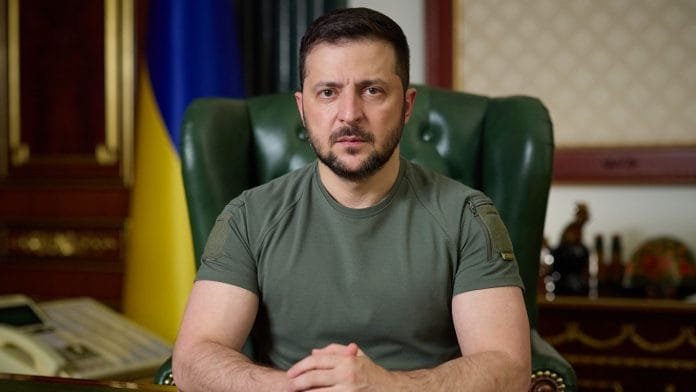
Ukrainian President Volodymyr Zelensky announced on Sunday that he is willing to return captured North Korean soldiers to Pyongyang in exchange for Ukrainian prisoners of war held by Russia.

This proposal followed Ukraine’s report of capturing two wounded North Korean soldiers fighting against Kyiv’s forces in Russia’s Kursk region, though no evidence of their nationality was provided.

On Sunday, South Korea’s National Intelligence Service supported Ukraine’s claim, confirming to AFP that Ukrainian forces had detained two North Korean soldiers on January 9 in the Kursk region.

“Ukraine is prepared to return Kim Jong Un’s soldiers if he agrees to exchange them for our soldiers held in Russian captivity,” Zelensky stated on X.

He also warned that Kyiv would likely capture more North Korean soldiers in the future.

For North Korean soldiers unwilling to return home, Zelensky mentioned that “alternative options may be available.” He further offered those seeking to “bring peace closer by spreading the truth about this war in Korean” an opportunity to do so.

Neither Russia nor North Korea has acknowledged the deployment of North Korean troops in Ukraine. However, military cooperation between Moscow and Pyongyang has intensified since Russia’s 2022 invasion of Ukraine.

Zelensky remarked that Russian President Vladimir Putin “cannot function without military aid from Pyongyang.”

He also shared a video showing the interrogation of the two North Korean POWs—one lying on a bunk bed and the other sitting up with a bandaged jaw.

In the footage, one soldier, speaking through an interpreter, claimed he was unaware he was being sent to fight in Ukraine, believing it was merely training.

One of the men expressed a desire to return to North Korea, while the other stated he would follow orders but would prefer to stay and live in Ukraine if given the chance.

Tamil Nadu House Demands Rollback of UGC Draft Regulations

0

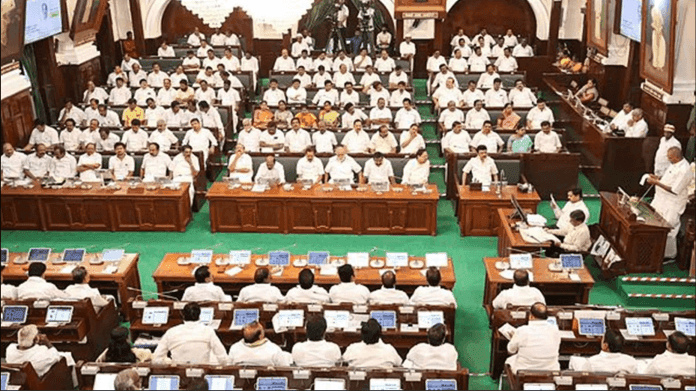
The Tamil Nadu Assembly on Thursday passed a resolution opposing the University Grants Commission (UGC) draft regulations that allegedly expand the governor’s authority in appointing vice-chancellors (VCs), intensifying the ongoing conflict between Governor RN Ravi and the state government.

Currently, five state-run universities in Tamil Nadu, including Anna University, the University of Madras, Bharathiar University, Madurai Kamaraj University, and Tamil Nadu Teacher Education University, remain without appointed VCs due to this standoff. The resolution, introduced by Chief Minister M.K. Stalin, received support from all political parties except the Bharatiya Janata Party (BJP).

Earlier this week, Union Education Minister Dharmendra Pradhan unveiled draft guidelines for faculty recruitment and promotions in higher education institutions, proposing that VC positions be opened to non-academics.

In response, the Tamil Nadu Assembly urged the Union Ministry of Education to withdraw the UGC draft. The resolution stated, “The House believes that the recent UGC regulations on the appointment of vice-chancellors should be revoked.”

Condemning the draft, the resolution further declared, “These regulations threaten the future of Tamil Nadu’s youth. This Assembly unanimously demands their withdrawal. It is unacceptable to arbitrarily increase the governor’s powers in appointing VCs.”

Chief Minister Stalin criticized the BJP-led central government for undermining state autonomy in education, warning that the new rules would harm Tamil Nadu’s socially just education model.

Notably, the main opposition party, AIADMK—despite its usual criticism of the DMK—backed the resolution. In contrast, BJP’s floor leader Nainar Nagendran staged a walkout, though the BJP’s regional ally, Pattali Makkal Katchi (PMK), supported the DMK.

Nagendran remarked, “The state government still has time to formally oppose the draft regulations.”

The conflict stems from the governor’s insistence on including a UGC nominee in search committees for VC appointments—a move the DMK government opposes. Stalin asserted, “We did not accept the governor’s recommendations as they are neither appropriate nor conventional.”

In 2022, the Tamil Nadu Assembly passed a bill seeking to limit the governor’s role in VC appointments. Reinforcing this stance, Stalin vowed in a social media post on Tuesday that the state would challenge the issue both legally and politically, calling the central government’s actions authoritarian and an attempt to centralize power.

Despite state funding for universities, the governor, serving as the chancellor, has the authority to appoint VCs. The conflict escalated in December 2024 when Governor Ravi asked the government to revoke its December 9 notification regarding the search committee for Annamalai University’s VC. The governor claimed the committee violated Supreme Court directives by excluding a UGC nominee.

Tamil Nadu’s Higher Education Minister Govi Chezhian defended the government’s actions, stating they adhered to state university laws. The governor’s recommended committee included representatives from the chancellor, the state government, the university syndicate, and the UGC chairman, with the chancellor’s nominee serving as convener.

Raj Bhavan declared the state’s December 9 notification void, citing its inconsistency with UGC regulations and Supreme Court rulings. In response, the state government accused the governor of unilaterally adding a fourth member to the search committee.

Minister Govi Chezhian emphasized that each university operates under its own bylaws and that communication from the UGC should come directly to the state. He criticized the governor for obstructing the government’s decisions, stating, “It is inappropriate for the governor-chancellor to interfere with the state government’s actions.”

Joe Biden Believes He Had the Best Chance to Defeat Donald Trump

0

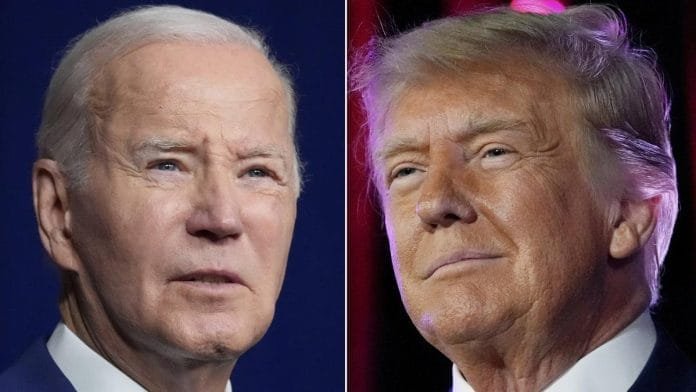
Former U.S. President Joe Biden stated that he believed he could have won the presidential election had he remained in the race. However, he admitted uncertainty about whether he could have completed another full term in office.

At 82, Biden withdrew from the presidential race after facing intense criticism from his own party following a disastrous televised debate against Donald Trump, where he appeared unable to effectively argue for a second term.

Vice President Kamala Harris went on to secure the Democratic nomination but ultimately lost the election to Trump.

When asked by USA Today if defeating Republican Donald Trump had been a realistic possibility last November, Biden referenced unspecified polling data, responding, “I think yes.”

“I genuinely believed I had the best shot at beating him,” Biden remarked. “But I wasn’t eager to still be president at 85 or 86 years old. That’s why I spoke about passing the baton.”

He added, “But honestly, who knows? So far, so good. But who can say what I’ll be like at 86?”

On Regrets
Reflecting on his presidency, Biden admitted he regretted not doing more to combat misinformation, particularly from Trump.

“With how information spreads today, there are no editors to step in and say, ‘That’s simply not true,’” Biden told USA Today.

He also expressed disappointment over delays in launching infrastructure projects.

“I think we would’ve been much better off if we had been able to push these projects forward more quickly,” he said.

In the election, Trump secured 312 electoral college votes compared to Kamala Harris’s 226. Trump is set to assume office in Washington, D.C., on January 20 following the certification of results on January 6.

Cancer Patient in Bengaluru Commits Suicide After Being Declined Ayushman Bharat Scheme Benefits

0

A 72-year-old Bengaluru resident, diagnosed with gastric cancer, reportedly died by suicide on December 25 after being denied benefits under the Ayushman Bharat Pradhan Mantri Jan Arogya Yojana (AB PM-JAY) for treatment.

The victim, a retired state government employee, passed away 15 days after being diagnosed with gastric cancer, according to The Times of India.

The report noted that the patient was deeply distressed after discovering that the hospital refused to provide the ₹5 lakh insurance coverage under the Ayushman Bharat Pradhan Mantri Jan Arogya Yojana (AB PM-JAY) senior citizen scheme, for which he had enrolled. A family member explained, “Although we had created an AB PM-JAY senior citizen card offering ₹5 lakh annual coverage, the Kidwai Memorial Institute of Oncology (KMIO) denied the benefit, citing pending state government orders. However, they did offer us a 50% discount.”

Dr. Ravi Arjunan, director in charge of KMIO, confirmed to the publication that the senior citizen scheme had not yet been implemented, as the necessary government orders were still awaited. The Karnataka government acknowledged the delay, stating it was seeking clarifications on funding aspects. The scheme is designed to provide ₹5 lakh in free insurance coverage for individuals aged 70 and above.

A family member recounted the financial strain, stating that initial scans alone cost ₹20,000, with further chemotherapy sessions required. “We planned to begin two rounds of chemo at Kidwai. We were prepared to pay, but we lost him to suicide within two days. While I wouldn’t say it was solely due to the denial of the benefit, he was already under significant stress knowing it hadn’t come through,” the family member told the publication.

Another beneficiary, Lalithamba BV, a tech professional and co-founder of Hasiru Mitra, as well as head of campaigns for the Bengaluru Navanirmana Party, shared her own struggles with the scheme. She recounted that although her 87-year-old father received his card in early November 2024, it was not processed when he was admitted to a private hospital on December 13. “We contacted the Ayushman Bharat helpline, but they informed us that the government had not yet issued instructions for using the card,” Lalithamba said, as quoted by The Times of India.

The Karnataka health and family welfare department acknowledged ongoing issues with the implementation of the AB PM-JAY senior citizen health assurance scheme.

Chinese Firm Forces Employees to Consume Fire to Boost Self Confidence

0

A Chinese company is facing intense backlash on social media after an employee exposed a controversial team-building activity imposed by the organization. The worker revealed that employees were coerced into eating fire as a method to boost self-confidence and overcome fears, sparking widespread criticism and outrage.

As reported by the South China Morning Post (SCMP), social media user Rongrong shared details of this practice on a prominent Chinese platform. She described her fear of placing a burning cotton bud in her mouth but said she complied out of fear of losing her job.

“Performers must control their breathing, keep their mouths moist, and time the closure precisely. Only trained professionals can perform this safely,” Rongrong wrote in her post. She further explained that the activity was meant to demonstrate employees’ determination and commitment to the company’s goals but later admitted she found the experience “degrading.”

This fire-eating exercise is not unique to Rongrong’s workplace. According to SCMP, a team-building company in eastern China, Renzhong, offers fire-eating training services, complete with on-site fire safety equipment.

Social Media Outrage

Rongrong’s revelation ignited a firestorm on the Chinese social media platform Douyin. One user commented, “Protecting workers under labor laws still has a long way to go.” Another called it “a disguised obedience test.”

Others shared similar experiences, including one individual who recalled a trust fall exercise at a previous job where some participants were not caught and hit the ground, leaving them traumatized. “I was so scared that I cried,” they wrote.

According to SCMP, such extreme team-building activities are not isolated incidents. In a previous case, employees were forced to crawl on the streets at night after losing a game. In another example, workers had to hug trash bins or strangers in public, purportedly to build confidence and camaraderie.

These practices have sparked ongoing debates about workplace ethics and the limits of team-building exercises.

Nitin Gadkari Announces New Scheme For Road Accident Survivors

0

To address the rising road fatalities in India, Union Minister for Road Transport and Highways, Nitin Gadkari, announced on Tuesday that the ongoing pilot scheme providing cashless treatment of up to ₹1.5 lakh for seven days to all crash survivors will be expanded nationwide by March 2025.

The minister also unveiled plans to introduce three mandatory technology-based systems in new buses and trucks. These include an audio warning system to alert drivers when they begin to fall asleep at the wheel. He referenced a ministry report highlighting that trucks were involved in 33,000 fatal crashes in 2022. The announcement came during a two-day workshop with transport secretaries and commissioners from all states.

Gadkari shared updates on the cashless insurance pilot, which has benefitted 6,840 individuals in states like Assam, Chandigarh, Punjab, Uttarakhand, Puducherry, and Haryana. “We hope the nationwide rollout of this scheme will save 50,000 lives by enabling treatment during the golden hour,” he said. Ministry officials confirmed that insights from the pilot states will be incorporated into the final scheme.

The minister noted that road fatalities rose to 1.72 lakh in 2023, a 4.2% increase from the previous year.

In addition to the audio warning system, Gadkari announced two other tech upgrades for heavy vehicles: electronic stability control and automatic emergency braking systems, which will activate when irregular steering patterns are detected. To enhance safety further, the ministry is exploring Aadhaar-based or similar technology to limit commercial drivers to a maximum of eight working hours per day.

The minister also revealed plans to increase the ₹5,000 reward for good Samaritans who assist crash victims. He is collaborating with the Ministry of Civil Aviation to enable air ambulance operations by establishing helipads at roadside amenities and ensuring hospitals are equipped to handle air ambulances.

Highlighting the acute shortage of skilled drivers in India, Gadkari stated that the country needs 22 lakh skilled drivers, with 75% of transport businesses affected by the shortfall. Currently, only 75 drivers are available for every 100 trucks, contributing to 30,000 deaths annually caused by unauthorized drivers. To address this, the government will set up 1,250 driving training centers with central funding.

Regarding environmental standards, the ministry plans to release a draft for Bharat Stage 7 (BS7) emission norms by the end of 2024, with stakeholder consultations beginning mid-2025. Standards for E-rickshaws will also be introduced to improve safety and durability, ensuring operators are not disadvantaged. Additionally, the government is developing a carbon credit-like system to promote a circular economy through its vehicle scrappage policy.

Donald Trump Puts Claim on Greenland, Panama Canal and Canada

0

Donald Trump, the President-elect of the United States, has made an unprecedented move by asserting territorial claims over Canada, Greenland, and the Panama Canal. If this stance persists beyond his inauguration on January 20, it will mark the first instance in over 75 years where the U.S. pursues territorial expansion. Trump has also proposed renaming the Gulf of Mexico to the Gulf of America.

Trump has cited national security concerns and the presence of Chinese and Russian activities in the Arctic as reasons for claiming Greenland. On the same day, Donald Trump Jr. and Sergio Gor, recently appointed to lead the White House personnel office, visited Greenland to rally local support. For the Panama Canal, Trump pointed to economic security and alleged Chinese control of the waterway. Regarding Canada, Trump highlighted America’s economic and military support for the country and a trade deficit as grounds for annexation, suggesting Canada become the 51st U.S. state. While he threatened military action for Greenland and Panama, Trump hinted at using economic pressure on Canada.

These announcements disrupt long-standing treaties and international norms, straining U.S. relationships with allies like Canada, Denmark (which oversees Greenland), and Panama. Both Canada and Denmark are NATO members, and the alliance has never experienced one member attacking another. The Panama Canal, transferred to Panama in 1999 after years of American control, has a contentious colonial history.

Canada’s Response

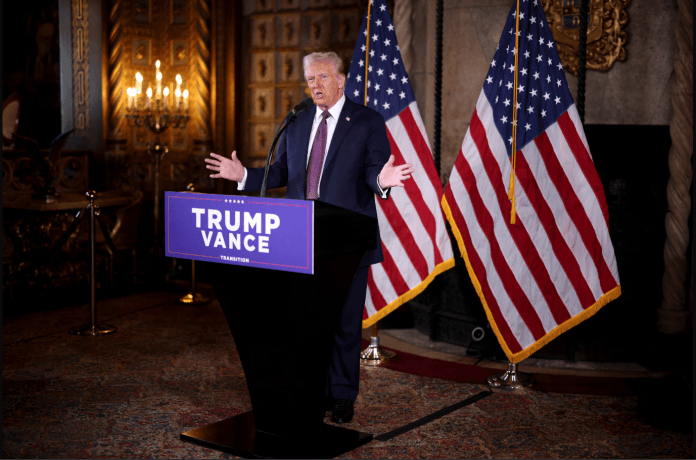
At a Mar-a-Lago press conference, Trump accused Canada of benefiting unfairly from U.S. subsidies and military protection while maintaining a trade deficit. He proposed removing the “artificially drawn line” between the two nations, emphasizing the economic and security benefits of such a move. While Trudeau dismissed Trump’s claims on X, calling them impossible, Canadian opposition leader Pierre Poilievre reaffirmed Canada’s independence, vowing to protect the nation’s sovereignty.

Trump criticized the late Jimmy Carter for transferring control of the Panama Canal to Panama, accusing the country of unfair treatment and allowing China to dominate its operations. He described the Canal as vital for U.S. security and accused Panama of violating agreements. Panama’s President firmly rejected these claims, reiterating the Canal’s independence and denying any Chinese interference.

Declaring Greenland crucial for U.S. national security, Trump argued that Denmark’s control was tenuous and threatened Copenhagen with tariffs if it resisted. He linked Greenland’s strategic importance to the growing presence of Chinese and Russian forces in the region. Meanwhile, Donald Trump Jr. and MAGA representatives visited Greenland, promoting U.S. annexation as beneficial to its people. Denmark and Greenland’s leaders categorically dismissed these overtures, reaffirming Greenland’s autonomy and ties to the EU.

A Western Hemisphere Focus

Trump’s territorial claims underscore his administration’s emphasis on asserting dominance in the Western Hemisphere. Immigration concerns and relations with neighboring nations like Mexico, Central America, and Canada appear central to his foreign policy. Secretary of State appointee Marco Rubio, a Cuban-American with expertise in Latin America, and Deputy Secretary Christopher Landau, a fluent Spanish speaker with ties to the region, signal a targeted approach to hemispheric diplomacy.

Trump’s actions evoke comparisons to the Monroe Doctrine of 1823, aimed at asserting U.S. primacy in the Americas. Whether driven by bargaining tactics, legacy ambitions, or genuine strategic intent, Trump’s claims rewrite the norms of global diplomacy, potentially reshaping international relations in unforeseen ways.