Home Blog Page 141

Donald Trump Changes Retaliatory Tariffs on India to 26%

0
Donald Trump
Trump reduces Indian tariffs

On Thursday, the Trump administration revised the retaliatory tariffs for 16 out of 57 countries, including India, lowering the additional “reciprocal tariff” from 27% to 26%, as per a comparative analysis of updated tariff tables. This revision follows the earlier announcement made on Wednesday in an official White House document.

India was included among the nations targeted for allegedly maintaining some of the most restrictive trade barriers against American goods. The reciprocal tariff will be levied in addition to existing import duties on most items.

Although President Donald Trump had mentioned a 26% additional tariff on Indian imports during Wednesday’s announcement in Washington DC, Annexure 1 of the White House’s document—titled “Regulating Imports with a Reciprocal Tariff to Rectify Trade Practices that Contribute to Large and Persistent Annual United States Goods Trade Deficits”—listed the tariff as 27%.

Indian government officials also initially confirmed on Thursday morning that the U.S. had imposed a 27% retaliatory tariff. However, Annexure 1 was subsequently updated, reducing India’s tariff by 100 basis points, along with similar revisions for 15 other countries.

As of Friday morning (India time), the updated White House document reflected the following tariff reductions: Bosnia and Herzegovina from 36% to 35%, Botswana 38% to 37%, Cameroon 12% to 11%, Falkland Islands 42% to 41%, Malawi 18% to 17%, Myanmar 45% to 44%, Nicaragua 19% to 18%, Norway 16% to 15%, Pakistan 30% to 29%, Philippines 18% to 17%, Serbia 38% to 37%, South Africa 31% to 30%, South Korea 26% to 25%, Switzerland 32% to 31%, Thailand 37% to 36%, and Vanuatu 23% to 22%.

Vladimir Putin Bets Big on Donald Trump to End Ukraine War

0
vladimir putin
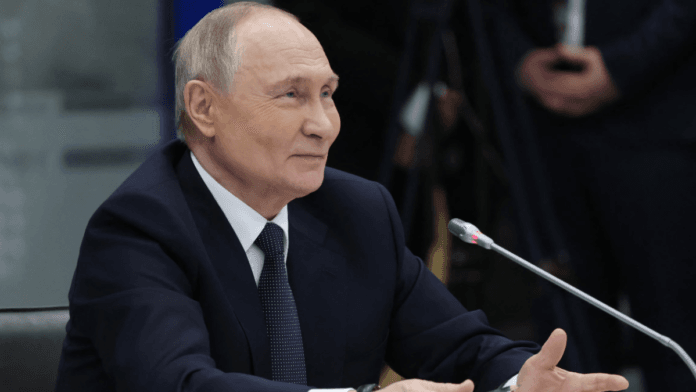
Vladimir Putin believes in Trump.

Russia continues to count on U.S. President Donald Trump to broker an acceptable peace deal in Ukraine, though it remains prepared to prolong the war if negotiations falter, according to sources in Moscow familiar with the situation.

The Kremlin is unfazed by Trump’s threat to impose punitive secondary sanctions on Russian oil due to stalled ceasefire talks, the sources said. However, President Vladimir Putin sees Trump as his best chance to bring the war to an end and is committed to maintaining diplomatic engagement, they added, speaking on condition of anonymity.

Despite pledging a swift resolution to Europe’s most significant conflict since World War II, Trump recently expressed frustration over the slow progress of talks, stating he was “pissed off” with Putin. However, he later softened his stance, saying he believes the Russian leader will “fulfill his part of the deal.”

Kremlin spokesperson Dmitry Peskov, when asked for comment, stated that Russia would “prefer to continue mutual efforts to find a settlement,” acknowledging that diplomacy requires both time and effort. “Everyone would rather talk than fight—not just talk, but be heard. This is the reality with the current U.S. administration,” he said.

Meanwhile, Putin’s economic envoy, Kirill Dmitriev—who is sanctioned by the U.S.—revealed that he has been holding meetings in Washington with government officials. “Opponents of rapprochement fear that Russia and the U.S. might find common ground, leading to better mutual understanding and cooperation in both international affairs and the economy,” Dmitriev said on Thursday.

Moscow is holding out for additional concessions from Washington, including partial sanctions relief and a halt to arms deliveries to Ukraine. During last month’s U.S.-Russia talks in Saudi Arabia, a deal was struck to pause attacks on Black Sea shipping. However, Russia later made the agreement contingent on reconnecting one of its major state banks to the SWIFT global messaging system.

Trump aides, including his special envoy Steve Witkoff, had expressed optimism about progress in negotiations with Russia. The White House had originally aimed for a truce agreement by April 20, though that now appears unlikely. Additionally, discussions of a potential Trump-Putin summit have recently quieted.

On Monday, Russia announced the conscription of 160,000 men in its largest spring draft in 14 years, though the Defense Ministry claimed they would not be sent to Ukraine. Meanwhile, Moscow and Kyiv have traded accusations over violations of an agreed-upon pause in attacks on energy infrastructure, brokered by Trump.

Although Putin has voiced interest in striking a deal with Trump, he has remained firm on his key conditions. He insists that Ukraine must abandon its NATO membership aspirations, limit the size of its military, and recognize Russia’s control over occupied territories in eastern and southern Ukraine following the February 2022 invasion.

Ukraine and its European allies—as well as the Biden administration—view Russia’s demands as an attempt to subjugate its neighbor.

While Trump has already made several concessions to Moscow, fully accepting Putin’s terms could expose him to accusations of weakness. Still, ending the war remains one of his signature campaign promises.

Russia has attempted to entice Washington with economic cooperation, particularly in the Arctic and rare earth mining, as part of a broader strategy to rebuild relations. Additionally, Trump has been pressuring Ukraine to accept an economic partnership that would grant the U.S. control over future investments in the country’s infrastructure and natural resources.

Notably, Russia was one of the few nations excluded from Trump’s tariff announcement on Wednesday. Treasury Secretary Scott Bessent later clarified to Fox News that this was due to existing sanctions having already cut trade ties, though the U.S. did impose a 10% tariff on Ukraine.

“The Kremlin is seeking a direct meeting between Putin and Trump to negotiate an end to the war in Ukraine—on Trump’s terms—while securing provisions that would leave Ukraine permanently weakened,” wrote Alexander Gabuev, director of the Carnegie Russia Eurasia Center, in an analysis with colleagues from the organization. However, he added that Moscow “was prepared to continue fighting before Trump took office and remains ready to do so today.”

Despite Russia’s incremental territorial gains and superior manpower and firepower, Western analysts estimate that Moscow is suffering significant losses, exceeding 1,000 soldiers per day.

Meanwhile, a bipartisan group of 50 U.S. senators has introduced a new sanctions package proposing a 500% tariff on any nation purchasing Russian oil, natural gas, petroleum products, or uranium—should Putin refuse to engage in meaningful ceasefire negotiations or violate any future agreement.

Yet, the Kremlin remains defiant, believing that after three years of sanctions, it can withstand further economic pressure. “These new sanctions won’t be any more effective than the previous ones,” insisted sources familiar with Kremlin strategy.

“These measures will hurt other nations more than they will affect Russia, particularly those that rely on our oil and gas,” Anatoly Aksakov, head of the State Duma’s financial market committee, said in a phone interview. “That includes China, East Asia, and other developing economies.”

Rahul Gandhi Reveals Congress’ Position on Waqf Bill

0
Waqf bill
Waqf Bill

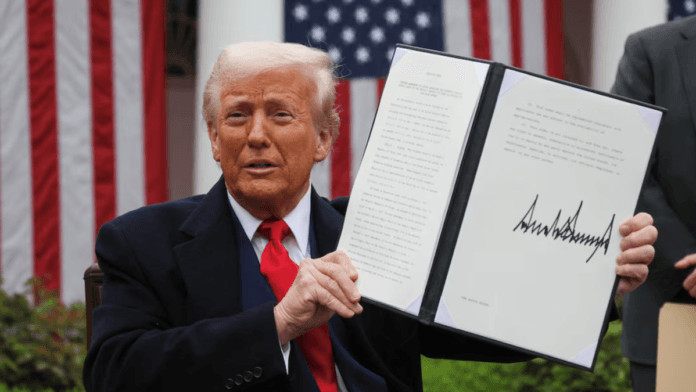
Congress leader and Lok Sabha Leader of Opposition (LoP) Rahul Gandhi held discussions on Wednesday with the party’s Lok Sabha MPs regarding the Congress Party’s position on the upcoming Waqf Amendment Bill.

The meeting was attended by Congress Deputy Leader in the Lok Sabha Gaurav Gogoi, Congress General Secretary KC Venugopal, and senior Congress MPs such as Shashi Tharoor, Manish Tewari, and K Suresh, among others. The primary focus was on formulating a strategy to strongly articulate the party’s stance on the bill.

Congress MP Karti Chidambaram emphasized the religious and voluntary nature of waqf properties, urging the government to respect sensitivities rather than push the bill solely based on its parliamentary majority. He criticized the ruling party’s approach, stating, “The government should be aware of and respect religious sensitivities. They should not pass the law just because they have the numbers or to send a signal to their core vote bank, which may not fully grasp the nuances of waqf land. The misconception that waqf can claim any land is incorrect… They will likely succeed because of their majority.”

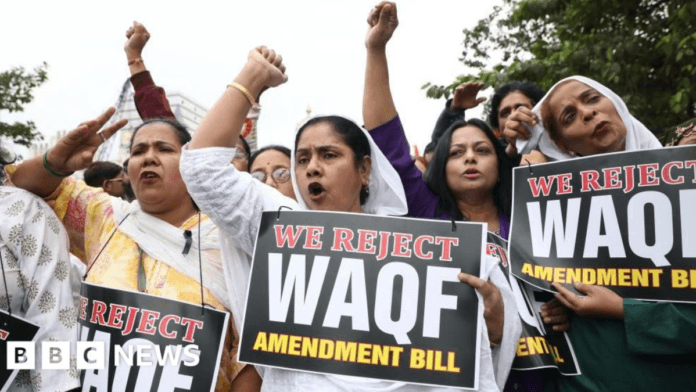
Earlier in the day, Congress MP Imran Pratapgarhi staged a protest against the Waqf Amendment Bill at Makar Dwar. Wearing a black kurta and holding a placard that read, “Reject Waqf Bill,” he expressed his opposition ahead of the bill’s scheduled tabling in Parliament.

Congress MP K Suresh reaffirmed the INDIA bloc’s collective opposition to the bill, stating, “The entire opposition stands against this bill. Our representatives in the Joint Parliamentary Committee have also decided to oppose it. Yesterday, INDIA bloc leaders unanimously resolved to reject the Waqf Amendment Bill.”

Congress’ Khaleequr Rahman accused the Union government of handling the matter in an unconstitutional manner. Meanwhile, Samajwadi Party MP Ram Gopal Yadav reiterated his party’s firm opposition to the proposed amendments, calling them “dictatorial and unconstitutional.”

“We have opposed this bill from the start. The amendments are dictatorial and unconstitutional. While the government may use its majority to push it through, we want discussions so that the country understands what is happening,” Yadav told ANI.

Vietnam Preparing to Host EU and China amid US Threat

0

China’s President Xi Jinping and European Union leaders are set to visit Vietnam in the coming weeks amid intensified diplomatic engagements, as concerns grow over U.S. trade tariffs, officials said.

China, the EU, and Vietnam all maintain substantial trade surpluses with the United States and have faced tariffs imposed by Donald Trump’s administration, with additional measures expected to be announced on Wednesday.

Xi Jinping is scheduled to meet Vietnamese leaders in Hanoi on April 14, according to two Vietnamese officials familiar with the plans. This would mark his second visit to Vietnam in under 18 months. His multi-day trip to Vietnam is part of a broader Southeast Asian tour, including stops in Cambodia and Malaysia, two diplomats confirmed.

When asked about the visit, China’s foreign ministry stated it had no information to share, while Vietnam’s foreign affairs ministry did not respond to requests for comment.

Among the key topics on the agenda will be railway projects connecting northern Vietnam with China, which both countries have agreed to develop to enhance trade and connectivity, according to both Vietnamese sources.

One source noted that Xi’s visit comes amid “strategic adjustments by major countries,” highlighting shifts in U.S. policy under Trump as a significant factor. Additionally, Vietnam is in the process of approving the use of China’s COMAC aircraft, with an industry source suggesting that formal approval could coincide with Xi’s visit. This could open the door for Vietnamese airlines to lease or purchase Chinese commercial jets.

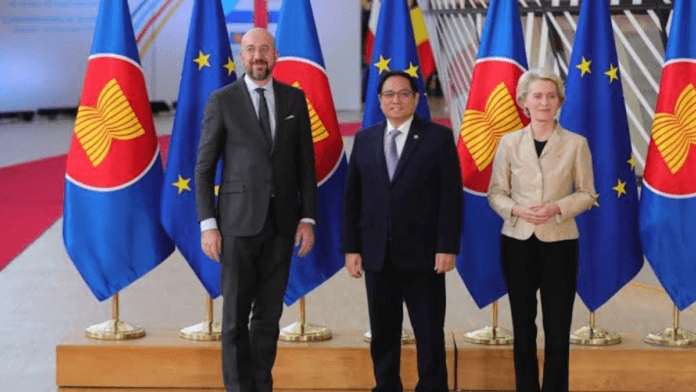
Just ahead of Xi’s visit, Spain’s Prime Minister Pedro Sanchez is set to meet Vietnamese leaders on April 9, followed by EU Trade Commissioner Maros Sefcovic, as per official schedules. Furthermore, French President Emmanuel Macron and European Commission President Ursula von der Leyen are also expected to visit Hanoi in the coming weeks, according to European officials and diplomats.

“The tide of tariffs and export controls is rising… We want to create new opportunities to trade and invest with trusted partners,” von der Leyen said in a video message to ASEAN leaders when they convened in Hanoi last month.

Govt Bashes X for Labelling ‘Sahyog’ Censorship Tool

0

In a detailed response to the Karnataka High Court, the Centre refuted the claims made by X Corp in its petition challenging India’s information-blocking framework.

The government argued that X Corp had misinterpreted the provisions of the Information Technology Act, particularly Sections 69A and 79.

X Corp contended that Section 79 does not grant the government the authority to issue content-blocking orders in a manner that circumvents the safeguards established under Section 69A, its associated blocking rules, and the Supreme Court’s ruling in the Shreya Singhal case.

However, the government maintained that Section 69A explicitly empowers the Centre to issue blocking orders under specific conditions while incorporating multiple safeguards for online content regulation. It further clarified that Section 69A differs significantly from Section 79, which merely mandates that intermediaries exercise due diligence upon receiving notices from authorised agencies.

“The framework under Section 79 does not authorize ‘blocking orders.’ Instead, it informs intermediaries of their obligations, and failure to comply could result in the loss of safe harbor protections and potential action under Rule 7 of the IT Rules, 2021,” the government stated.

Additionally, the Centre asserted that while Section 69A provides the legal basis for blocking access to content with enforceable consequences for non-compliance, Section 79 outlines the conditions under which intermediaries can claim safe harbor protection.

According to the government, X Corp wrongly equated the “blocking orders” issued under Section 69A with the “notices” under Section 79, despite the Supreme Court having previously distinguished between the two in the Shreya Singhal ruling.

Addressing concerns raised by X Corp, the government defended the Sahyog portal, describing it as a facilitative tool designed to streamline coordination between intermediaries and law enforcement agencies. The Centre emphasized that the portal ensures a structured mechanism for swift action against unlawful online content, benefiting both intermediaries and investigative authorities.

“It is misleading to portray Sahyog as a censorship tool. By doing so, the petitioner misrepresents itself as a content creator rather than an intermediary. Such a stance from a global platform like X is both regrettable and unacceptable,” the government asserted.

The Centre also highlighted that as a foreign commercial entity, X Corp has no inherent right to host or defend third-party content on its platform. It pointed out that in a previous case involving Twitter, the Karnataka High Court had explicitly ruled that Articles 19 and 21 of the Indian Constitution do not apply to the company.

With this submission, the government reinforced its position that the legal framework governing information blocking is well-defined and distinct, rejecting allegations of overreach.

According to its website, Sahyog was developed to automate the process of sending notices to intermediaries by the appropriate government or its agencies under the IT Act, 2000, facilitating the removal or restriction of access to information used for unlawful activities.

X Ownership Switches Hands From Elon Musk to xAI

0
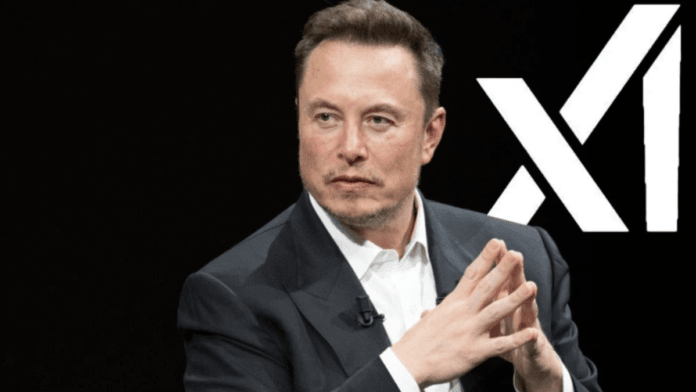
Elon Musk and xAI
Elon Musk switches ownership

The social media platform X (formerly Twitter) has undergone a significant ownership change in an all-stock transaction earlier today. Elon Musk is no longer the owner of X; instead, artificial intelligence startup xAI now holds full ownership. However, xAI itself is owned by Musk, making this transition more of a strategic restructuring than a complete change in control.

This deal values xAI at $80 billion and X at $33 billion—calculated from an initial $45 billion valuation, minus $12 billion in debt, as clarified by Musk. X currently boasts 600 million active users. Meanwhile, xAI, founded just two years ago, has quickly risen to prominence in the AI space, with its latest generative AI model, Grok 3, posing competition to industry giants like Google, Microsoft, OpenAI, and Meta.

“xAI and X’s futures are deeply connected. Today, we take a crucial step in merging data, models, computing power, distribution, and talent. This synergy will unlock tremendous potential by integrating xAI’s advanced AI expertise with X’s vast reach,” Musk shared in a post on X, his go-to communication platform.

A prime example of this integration is Grok 3’s deep involvement with X. The AI chatbot’s free-tier offering includes features like DeepSearch and Think, which remain limited in competing services such as Google Gemini, ChatGPT, and Microsoft Copilot. This provides xAI with access to X’s 600 million active users, enhancing its competitive standing against AI firms like Anthropic and Meta.

Musk envisions this merger as a way to create a smarter, more insightful digital ecosystem. “The combined company will deliver more meaningful experiences to billions while staying true to our mission of seeking truth and advancing knowledge. This platform won’t just reflect the world—it will actively accelerate human progress,” he stated.

X Becomes a Wholly Owned Subsidiary of xAI

With this shift, X is now a fully owned subsidiary of xAI, replacing X Corp as its parent entity. Previously, X Corp was established by Musk in March 2023 after acquiring Twitter, Inc.

Despite the restructuring, xAI remains a private company under Musk’s control. While its exact ownership details remain undisclosed, Musk is the majority stakeholder, with notable investors including Sequoia Capital, Andreessen Horowitz, Fidelity, and BlackRock. These firms have collectively invested over $12 billion in xAI, including a $6 billion funding round in December last year.

This move significantly strengthens Musk’s influence over both entities, consolidating AI development and social media operations under a single strategic vision.

Operationally, X continues to be led by CEO Linda Yaccarino, with Musk retaining his roles as Executive Chairman and CTO. The merger is expected to further integrate xAI’s AI capabilities within X’s ecosystem, particularly following the success of Grok’s integration.

Previously, X Corp investors reportedly held a 25% stake in xAI, but this acquisition has likely reshaped the ownership structure significantly.

Pakistan Finalizes Agreement to Detain and Deport Afghans

0
Pakistan
Pakistan takes a stand against Afghans.

Pakistani officials have announced that preparations have been completed to detain and deport a specific category of Afghan citizens following the March 31 deadline for their voluntary return.

A high-level meeting on Friday, chaired by Interior Minister Mohsin Naqvi, reviewed arrangements for the repatriation of Afghan Citizen Card (ACC) holders after the deadline.

In January, the Pakistani government instructed ACC holders to leave the country by the end of March or face deportation. Despite appeals from the Afghan government and human rights organizations, authorities have refused to extend the deadline.

During the meeting, officials confirmed that all necessary measures had been put in place to ensure the return of ACC holders. Detention centers have been established to house Afghan citizens before deportation, with food and healthcare facilities available, Dawn newspaper reported.

Naqvi emphasized that the federal government was coordinating with provincial authorities on the repatriation process and assured full support for its implementation. Minister of State for Interior Talal Chaudhry has been tasked with visiting provinces to address any issues that arise.

Naqvi also directed officials to treat foreign nationals with respect during the repatriation process. A door-to-door awareness campaign has been launched, and mapping of ACC holders has been completed.

According to the UN’s International Organization for Migration, the ACC provides temporary legal status to Afghan citizens in Pakistan, but its validity is determined by the federal government.

A government official, speaking to Dawn, stated that nationwide crackdowns would begin after the deadline, targeting ACC holders. Additionally, individuals renting properties to undocumented Afghan nationals will face legal consequences. Authorities will conduct search operations, maintain biometric records of illegal Afghan residents, and bar them from re-entering the country. Fraudulently obtained identity and travel documents will be revoked, and violators, along with their accomplices, will face fines and imprisonment.

The meeting also decided to form a committee to assess a proposal by Khyber Pakhtunkhwa Chief Minister Ali Amin Gandapur for negotiations with the Afghan Taliban on security issues. Gandapur has requested formal authorization from the federal government to engage in talks and has submitted a peace plan to the ministries of interior and foreign affairs.

The repatriation of ACC holders is part of the second phase of the Illegal Foreigners Repatriation Programme, which began in November 2023. The latest phase of the initiative was announced on January 29. Additionally, the government has ordered the relocation of Afghan nationals—including those holding UNHCR-issued Proof of Registration (PoR) cards—out of Islamabad and Rawalpindi by March 31.

The deportation plan has drawn sharp criticism from international human rights organizations. Earlier this week, Amnesty International condemned the treatment of Afghan migrants by Pakistani authorities, calling the March 31 deadline “unyielding and cruel.”

CID Begins Probe For ‘Honey-Trap’ Complaints

0
CID investigations
CID to look into honey trap complaints.

The Karnataka Police’s Criminal Investigation Department (CID) has initiated an inquiry into alleged honey-trapping attempts targeting multiple politicians across parties. The probe follows a complaint from state minister and Congress leader KN Rajanna, whose claims in the state assembly sparked a major uproar during the recently concluded budget session, a senior police officer said on Thursday.

Director General of Police (DGP) Alok Mohan ordered the investigation after Rajanna, the Minister for Cooperation in the Siddaramaiah-led cabinet, submitted a petition to state home minister G Parameshwara. In his petition, Rajanna detailed the issue and urged a thorough probe, prompting the home minister to refer the matter to the CID.

Confirming the development, CID DGP MA Saleem told Hindustan Times: “We have received a copy of the complaint from the DGP and have begun an inquiry. We are collecting details, and based on government directives, appropriate legal action will follow.”

As part of the probe, CID officers visited Rajanna’s government residence in Jayanagar, Bengaluru, on Thursday. They also inspected his guest house on Jayamahal Road and recorded statements from household staff. The state government has given the CID 14 days to gather evidence, after which a decision will be made on whether to set up a Special Investigation Team (SIT), sources familiar with the matter said.

On March 20, Rajanna informed the assembly that there had been attempts to honey-trap him and that at least 48 politicians across parties had fallen victim to similar schemes. His remarks triggered strong protests from opposition BJP and Janata Dal (Secular) legislators.

“There are claims that Karnataka has a CD and pen drive factory. I have learned that CDs and pen drives containing information on 48 individuals exist in the state. This network extends across India and has ensnared even some Union ministers,” Rajanna alleged in the assembly.

As tensions flared, with opposition members staging protests and displaying placards, the home minister announced a high-level probe, while the opposition demanded a judicial inquiry led by a sitting high court judge.

The controversy, which has shaken Karnataka’s political landscape, also reached the Supreme Court. However, on Wednesday, a three-judge bench dismissed a petition by a social activist seeking a CBI investigation into the honey-trap allegations.

Chinese Soldiers Get Sentenced by Taiwan For Spying

0
Taiwan-China
Taiwan's new play against China.

Four Taiwanese soldiers, including three assigned to the security detail of the president’s office, have been sentenced to prison for photographing and leaking classified information to China, a court announced.

The number of individuals prosecuted for espionage on behalf of Beijing has surged in recent years, with Taiwan’s military—both active and retired personnel—being the primary targets of Chinese infiltration, according to official data.

This development follows President Lai Ching-te’s recent announcement of plans to reinstate military judges to oversee cases of Chinese espionage and other offences involving Taiwanese service members. According to the Taipei District Court, three members of the Presidential Office’s security unit and a soldier from the defense ministry’s information and telecommunications command were found guilty of violating national security laws.

“Their actions constituted a betrayal of the country and posed a threat to national security,” the court stated.

The four received prison sentences ranging from five years and ten months to seven years for transmitting “internal military information that should have remained confidential” to Chinese intelligence agents over a period of several months. The offenses occurred between 2022 and 2024, with the soldiers receiving payments ranging from approximately NT$260,000 to NT$660,000. The court did not disclose specific details about the leaked information.

Despite holding positions in “highly sensitive and crucial units,” the defendants “violated their duties by accepting bribes and stealing secrets through unauthorized photography,” the court added.Prosecutors revealed that the soldiers used their mobile phones to capture classified military data.

Three of them had already been discharged from the military before an investigation was launched in August last year, following a tip-off to the defense ministry. The fourth soldier was suspended. Taiwan’s intelligence agency previously reported a sharp increase in espionage cases, with 64 individuals prosecuted for Chinese spying in 2024, compared to 48 in 2023 and just 10 in 2022.

Beijing claims Taiwan as its territory and has repeatedly threatened to use force to assert control over the self-governing island. Espionage between the two sides has persisted for decades, but analysts warn that Taiwan faces a greater threat, given the looming possibility of a Chinese invasion.

NASA Thanks Donald Trump For Sunita Williams and Butch Wilmore Rescue Mission

0
NASA
NASA's rescue mission.

NASA has attributed the return of astronauts Barry “Butch” Wilmore and Sunita “Suni” Williams to U.S. President Donald Trump. The two astronauts, who had been stranded in space for nine months, returned to Earth on March 18. Their initial week-long stay at the International Space Station (ISS) was unexpectedly extended due to technical issues with their Boeing Starliner spacecraft. When they finally splashed down off the Florida coast earlier this month, a NASA spokeswoman described the rescue mission as a “significant victory for the Trump administration.”

NASA Acknowledges Trump’s Role in Astronauts’ Safe Return

After the Boeing spacecraft encountered failures, Elon Musk’s SpaceX stepped in, using a Crew Dragon capsule to bring Wilmore and Williams safely back to Earth.

“This is a huge win for the Trump administration, and it would not have been possible without President Trump’s intervention,” NASA spokeswoman Bethany Stevens told Fox News. “Looking ahead, the next step in advancing President Trump’s ambitious space agenda—outlined in his inaugural address—is confirming his nominee for NASA administrator, Jared Isaacman.”

Stevens further noted, “President Trump was once seen as an outsider, yet the American people have reinstated him, recognizing the business acumen he brings to leadership. Similarly, Mr. Isaacman, a highly successful entrepreneur, is well-positioned to lead NASA.”

She added, “I, along with 30 astronauts and multiple GOP governors, believe that Mr. Isaacman is the right choice to head NASA and implement the president’s vision,” referring to Trump’s nomination of Isaacman in January 2025 to serve as NASA’s next administrator.