Home Blog Page 125

Supreme Court Adjourns Plea of Places of Worship Act; Lack of Quorum

0
Supreme Court
Supreme Court on Places of Worship.

The Supreme Court on Monday postponed the hearing on multiple petitions challenging the validity and enforcement of the Places of Worship (Special Provisions) Act, 1991, to the first week of April, citing a lack of quorum. Chief Justice of India (CJI) Sanjiv Khanna, presiding over a two-judge bench, emphasized that the case requires a three-judge bench, leading to its adjournment. He also noted the increasing number of petitions related to the Act.

At the start of the proceedings, senior advocate Indira Jaising, representing one of the petitioners, sought clarification on whether the matter would be addressed that day. CJI Khanna responded, “It won’t be taken today. It’s a three-judge bench matter. We are in a two-judge bench today.”

Jaising pointed out that the framing of issues in the case was still pending, to which CJI Khanna stated that this task would also be undertaken by a three-judge bench. Tentatively, he suggested that the case would be heard “sometime in March.”

When a lawyer mentioned filing a new petition, CJI Khanna remarked, “There’s a limit to how many new petitions can be admitted. We will see…” Later in the day, the court scheduled the next hearing for the week of April 1, citing the growing number of petitions making the case “unmanageable.” The bench clarified that all fresh petitions would be dismissed, but petitioners could file applications raising new grounds in the ongoing case.

Senior advocates Abhishek Manu Singhvi, Dushyant Dave, and MR Shamshad appeared for parties opposing advocate Ashwini Upadhyay’s petition. Upadhyay had originally challenged the Act in 2020, arguing that it discriminates against Hindu, Sikh, Jain, and Buddhist communities by freezing the religious character of places of worship as they stood on August 15, 1947, except for the Ram Janmabhoomi-Babri Masjid site in Ayodhya, which was already under litigation at the time. Solicitor General Tushar Mehta represented the Union government.

When it was pointed out that the government had yet to submit its affidavit, the court noted, “Everyone says they are not raising new grounds… Maybe that is why [the affidavit is yet to be filed].”

The 1991 Act has become a contentious issue in both legal and political debates. Hindu litigants argue that it violates fundamental rights by restricting their ability to reclaim places of worship allegedly altered during historical invasions. BJP leaders, including Subramanian Swamy and Ashwini Upadhyay, have been vocal critics, calling for its repeal. In contrast, AIMIM chief Asaduddin Owaisi and Muslim groups like Jamiat Ulama-i-Hind have defended the Act, arguing that it is essential for maintaining communal harmony and India’s secular fabric.

In January, Owaisi filed a petition advocating for the strict enforcement of the Act. The Congress, in a recent application, opposed challenges to the Act, describing it as a “cornerstone of secularism” and accusing petitioners of attempting to undermine constitutional principles. In November, RJD lawmaker Manoj Jha filed an intervention application, asserting that the Act does not violate fundamental rights.

On December 12, a special three-judge bench, led by CJI Khanna, along with Justices Sanjay Kumar and KV Viswanathan, issued an order barring lower courts from entertaining fresh lawsuits or conducting religious character surveys of places of worship. This ruling came amid increasing litigation by Hindu groups seeking surveys of mosques such as the Gyanvapi Mosque in Varanasi and the Shahi Idgah Masjid in Mathura. The Supreme Court’s directive effectively halted proceedings in nearly 18 cases, which had sparked communal and political tensions.

The Union government was granted four weeks to clarify its stance on the Act, but its response has been pending for over two years, even as petitions continue to grow. The Supreme Court admitted pleas challenging the Act in March 2021.

With the case now deferred to March, attention will focus on how the Supreme Court frames the legal issues and whether the Union government finally submits its response, which could significantly impact the future of the 1991 Act and the broader legal battle over places of worship in India.

UK Ready to Put Down Droops in Ukraine; Says PM Starmer

0
UK Starmer
Starmer UK PM

UK Prime Minister Keir Starmer stated on Monday that he was prepared to deploy troops to Ukraine “if necessary”, emphasizing the importance of European security. His remarks follow a significant shift in U.S. policy on the war since Donald Trump assumed the presidency.

Trump appeared to sideline Ukraine and its European allies by directly engaging with Russian President Vladimir Putin to discuss possible negotiations to end the conflict. With a Trump-Putin meeting expected soon, European leaders are accelerating discussions on regional security.

Describing the current situation as a “once-in-a-generation moment,” Starmer expressed willingness to deploy British troops if required, stating, “Any role in guaranteeing Ukraine’s security is also safeguarding Europe’s and the UK’s security,” as reported by The Daily Telegraph.

Leaders from major European nations, including the UK, Germany, Poland, Italy, Spain, the Netherlands, and Denmark, are set to attend a Paris meeting just a week before the third anniversary of Russia’s invasion of Ukraine (February 24).

Also attending are European Council President Antonio Costa, EU Chief Ursula von der Leyen, and NATO Secretary-General Mark Rutte. French President Emmanuel Macron’s office stated the meeting will focus on “the situation in Ukraine” and “security in Europe.”

An adviser from Macron’s office stated, “Given the acceleration of the Ukrainian issue and the statements from U.S. leaders, it’s crucial for Europeans to take more action, improve coordination, and contribute to our collective security.”

Meanwhile, the Kremlin has pushed for negotiations between U.S. and Russian officials in Saudi Arabia in the coming days, not only to discuss the war in Ukraine but also to address broader security concerns in Europe.

EU nations are concerned that Putin might reiterate demands he made before the 2022 invasion, particularly regarding limiting NATO forces in Eastern Europe and restricting American involvement in the region.

Donald Trump has expressed belief that Putin genuinely seeks to end the war in Ukraine, while his administration has warned that Europe will no longer be the U.S.’s top security priority. U.S. Defense Chief Pete Hegseth also suggested that Ukraine’s NATO membership or reclaiming lost territories from Russia were unlikely.

U.S. Secretary of State Marco Rubio minimized the significance of talks between Washington and Moscow, stating, “A process toward peace is not a one-meeting event.” He clarified that the aim was to create an opening for a broader conversation that would include Ukraine and work towards ending the war.

Trump’s Ukraine special envoy, Keith Kellogg, mentioned that Europe would not directly participate in talks about Kyiv, though it would still have input.

Ukrainian President Volodymyr Zelenskyy on Sunday called for the establishment of an European army, arguing that with such a force, Europe could no longer rely solely on Washington for its defense.

Donald Trump States U.S will Sell F-35 Fighter Jets to India

0
F-35 Jet
F-35 jets will be sold to India.

U.S. President Donald Trump announced on Thursday (local time) that the United States would sell F-35 stealth fighter jets to India, allowing the country to join an exclusive group of nations equipped with advanced stealth aircraft.

“Starting this year, we will significantly increase military sales to India, amounting to billions of dollars. Additionally, we are setting the stage to eventually provide India with F-35 stealth fighters,” Trump stated during a joint press conference with Indian Prime Minister Narendra Modi at the White House.

However, the sale could be complicated by India’s 2018 decision to acquire Russia’s S-400 missile defense system. The U.S. had previously terminated its F-35 co-production agreement with Turkey over concerns that purchasing the S-400 would expose critical fighter jet technology to Russia.

“In our meeting today, the prime minister and I reaffirmed that strong cooperation between the United States, India, Australia, and Japan is essential for maintaining peace and stability in the Indo-Pacific,” Trump added.

While Trump did not specify a timeline for the potential deal, military sales involving advanced technology, such as the F-35, typically take years to finalize, according to Reuters.

At the press conference, Trump also announced an agreement under which India would import more U.S. oil and gas, aiming to reduce the trade imbalance between the two nations. Additionally, he emphasized Washington and New Delhi’s joint efforts to combat what he described as “the threat of radical Islamic terrorism.”

Lockheed Martin, the manufacturer of the F-35, has not yet commented on Trump’s statement regarding potential sales to India. Foreign military sales of F-35s are typically conducted as government-to-government transactions, with the Pentagon acting as an intermediary between defense contractors and foreign buyers.

Since 2008, India has purchased over $20 billion in U.S. defense products. Last year, it agreed to acquire 31 MQ-9B SeaGuardian and SkyGuardian drones after more than six years of discussions. The U.S. Congressional Research Service estimates that India will spend over $200 billion in the next decade to modernize its military.

Lockheed Martin currently produces three variants of the F-35 for the U.S. military and allied nations, including the UK, Australia, Italy, Norway, the Netherlands, Israel, Japan, South Korea, and Belgium.

Trump’s announcement also signals continued confidence in the F-35 program, the most expensive weapons system in U.S. history. The aircraft, manufactured by Lockheed Martin, has faced criticism from figures like billionaire Elon Musk, a close Trump adviser.

In a move to strengthen U.S.-India defense ties, the Biden administration approved nearly $4 billion in military sales last year, including attack drones, Hellfire missiles, and laser-guided bombs, as part of ongoing efforts to reduce India’s reliance on Russian defense systems.

Joining Trump’s meeting with Modi was SpaceX and Tesla CEO Elon Musk, who has been actively working alongside Trump to reform the U.S. bureaucracy. Musk also met privately with Modi earlier in the day, raising questions about whether the meeting was official or business-related.

Supreme Court Bashes Freebies in Elections; ‘People not willing to work’

0
Supreme Court
Supreme Court on election freebies.

The Supreme Court on Wednesday strongly criticized the practice of announcing freebies before elections, stating that such measures discourage people from working as they receive free rations and financial aid, according to news agency PTI.

A bench comprising Justices BR Gavai and Augustine George Masih voiced its disapproval while hearing a case concerning the right to shelter for homeless individuals in urban areas.

Supreme Court’s Observations

Justice Gavai remarked that the distribution of freebies has led to a decline in willingness to work. “Unfortunately, because of these freebies, people are not willing to work. They are receiving free rations and financial assistance without any effort,” he stated.

The bench further emphasized the need to integrate homeless individuals into mainstream society, allowing them to contribute to the nation’s progress. “We appreciate your concern for them, but wouldn’t it be more beneficial to make them part of mainstream society and enable them to contribute to national development?” the judges noted.

Attorney General R. Venkataramani informed the court that the Centre is finalizing an urban poverty alleviation mission, which includes provisions for homeless shelters. In response, the bench asked the attorney general to specify the timeline for implementing the initiative. The matter is scheduled for further hearing in six weeks.

Additionally, the Supreme Court addressed a plea regarding Rohingya refugees’ access to public hospitals and schools. The court emphasized that no child should face discrimination in education and has scheduled a hearing on the matter for next week.

Apple and Google Maps Rename Gulf of Mexico as Gulf of America

0
gulf of america
Gulf of America

On Tuesday, Apple renamed the Gulf of Mexico to the Gulf of America on its maps, following an order by US President Donald Trump. The change was made official by the US Geographic Names Information System (GNIS).

This move follows Google’s announcement last month, in which the tech giant stated it would implement the name change once it was updated in the official records.

According to Bloomberg, the updated name on Apple Maps will first be rolled out to users in the US before expanding globally.

On Sunday, Google confirmed it had begun implementing the change. Notably, the Sundar Pichai-led company stated that users in the US would see the name Gulf of America, while those in Mexico would still see Gulf of Mexico. Users in other regions will have access to both names.

The US GNIS officially updated the renamed designation on maps late Sunday. Similarly, Microsoft has also reflected this change on its Bing Maps.

President Trump had previously ordered the renaming of the body of water bordered by the southern US, Mexico, and Cuba after assuming office.

In addition to the Gulf of Mexico, Alaska’s Denali will also revert to its former name, Mount McKinley. The mountain was renamed Denali in 2015 by former President Barack Obama.

During a speech in December, Trump expressed his dissatisfaction with the name change, stating, “They took his name off Mount McKinley. He was a great president.” His remarks referenced former President William McKinley, who served from 1897 until his assassination in 1901, as noted in a USA Today report.

Trump further asserted that his administration would reinstate the Mount McKinley name because he believed the former president deserved the honor.

Until Tuesday afternoon, both Google and Apple Maps displayed Denali, but Alphabet Inc. confirmed that it would “quickly” implement the update.

Govt Approves New Vaccine to Treat Major Cattle Disease

0

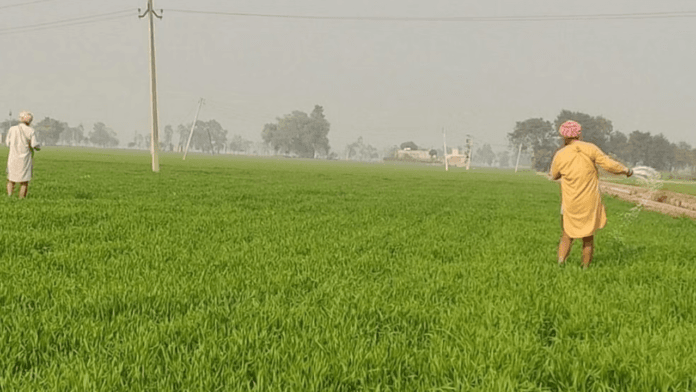
Biovet, a Bharat Biotech group company, has received approval from the national drug regulator to market a vaccine for lumpy skin disease (LSD) in dairy cattle and buffaloes. Announced on Monday, the company stated that this vaccine could help save hundreds of thousands of cattle across the country.

Over the past two years, LSD has led to the deaths of approximately 200,000 cattle, while millions more have suffered losses in milk production due to the viral infection.

Biolumpivaxin is the world’s first Differentiating Infected from Vaccinated Animals (DIVA) marker vaccine, allowing experts to distinguish between vaccinated and naturally infected dairy cattle, thus aiding in disease surveillance. “Biolumpivaxin, set to launch soon, is the only marker vaccine for LSD globally. It provides high safety and efficacy while enabling serological differentiation between infected and vaccinated animals using the DIVA concept,” the company said in a statement.

The vaccine has been approved by the Central Drugs Standard Control Organization (CDSCO) and has undergone extensive testing at the Indian Council of Agriculture Research-National Research Centre on Equines (ICAR-NRCE) and the Indian Veterinary Research Institute (IVRI). These tests confirmed its quality, safety, and efficacy, ensuring compliance with global standards.

Lumpy skin disease is a transboundary animal disease that has significantly impacted India’s cattle health and dairy sector. It manifests as skin nodules, fever, swollen lymph nodes, reduced milk production, and mobility issues. The LSD virus is primarily spread through vector bites from mosquitoes, ticks, and other biting insects.

During the 2022 LSD outbreak in India, morbidity rates reached up to 80%, with case fatality rates as high as 67% in states such as Gujarat, Rajasthan, Maharashtra, Uttar Pradesh, Punjab, and Jammu & Kashmir.

Krishna Ella, founder of Biovet, called the DIVA marker vaccine a breakthrough for veterinary medicine, particularly for disease surveillance and eradication efforts. “Epidemiologists and field workers can now determine whether an animal has received Biolumpivaxin or was previously infected with LSD,” he said.

The company also emphasized the vaccine’s safety profile, stating that it has been rigorously tested in a controlled BSL-3 animal facility. The vaccine was found to be free from extraneous agents, demonstrated strong immunogenicity, and provided protective efficacy against challenge infections. Importantly, tests confirmed that the vaccine virus did not revert to virulence and was not detected in milk, semen, or bodily excretions such as nasal, ocular, or fecal secretions from vaccinated animals.

Donald Trump Demands Treasury Department to Stop Pushing Pennies

0

Donald Trump has announced that he has directed the Treasury Department to halt the production of new pennies, citing the rising costs of minting the one-cent coin. This move is part of his administration’s broader push to implement sweeping changes on various fronts, including immigration, gender policies, and diversity.

In a Truth Social post, the U.S. president stated, “For far too long, the United States has minted pennies that cost us more than 2 cents each. This is incredibly wasteful! I have instructed my Secretary of the Treasury to stop producing new pennies. Let’s cut unnecessary spending from our great nation’s budget, even if it’s just a penny at a time.”

Trump had not previously indicated any plans to eliminate the penny during his campaign. However, last month, Elon Musk’s Department of Government Efficiency hinted at the idea in a post on X, stating, “The penny costs over 3 cents to produce, costing U.S. taxpayers more than $179 million in FY2023. The Mint produced over 4.5 billion pennies last year—around 40% of the 11.4 billion coins minted for circulation. Penny (or 3 cents!) for your thoughts.”

It remains uncertain whether Trump has the authority to discontinue the penny unilaterally, as currency specifications—including coin size and metal composition—are determined by Congress. Last month, Northeastern University economics professor Robert K. Triest told Yahoo that “the process of discontinuing the penny in the U.S. is somewhat unclear. It would likely require an act of Congress, though the Secretary of the Treasury might have the power to stop minting new pennies.”

Congress has repeatedly introduced legislation targeting the zinc-based coin with copper plating, with past proposals suggesting either a temporary halt in production or its complete removal from circulation. According to the Congressional Research Service, some lawmakers have also proposed rounding prices to the nearest five cents.

Supporters of eliminating the penny argue that doing so would save money and speed up transactions at cash registers. They also point to the fact that several other countries, including Canada, discontinued their one-cent coins—Canada having stopped penny production in 2012.

Rahul Gandhi Criticizes New UGC Draft Regulations; ‘RSS Hegemony’

0
Rahul Gandhi
Rahul Gandhi shares his views.

Leader of Opposition in the Lok Sabha, Rahul Gandhi, strongly opposed the University Grants Commission (UGC) draft regulations on Thursday, arguing that the proposed rules for appointing teachers and academic staff in universities and colleges were an effort to impose a singular narrative of history, tradition, and language across India.

Gandhi accused the Rashtriya Swayamsevak Sangh (RSS) of attempting to erase diverse histories, cultures, and traditions in the country.

“That is their starting point and ultimate goal. They attack the Constitution because they want to enforce one singular idea—one history, one tradition, one language—on this country,” the former Congress president stated while addressing a protest organized by the DMK’s student wing at Jantar Mantar in Delhi.

According to him, the changes in state education systems were yet another attempt to further the RSS agenda.

“Every state has its own traditions, history, and language. That is why the Constitution defines India as a ‘Union of States’—it signifies that these diverse elements come together to form India. We must respect and acknowledge all languages, cultures, traditions, and histories,” Gandhi added.

Referring specifically to Tamil Nadu, he emphasized that the Tamil people have their own distinct history, language, and struggles.

“Imposing such regulations is an insult to the Tamil people and to all other states where the RSS is attempting to establish its dominance,” he said.

The Congress party has denounced the draft UGC regulations as “draconian and anti-Constitutional,” demanding their immediate withdrawal.

Criticizing the central government, the party argued that the justification of aligning the regulations with the National Education Policy (NEP) 2020 was flawed and called for an immediate rollback.

Congress’ INDIA bloc ally, the Samajwadi Party, also criticized the central government and the RSS. Party chief Akhilesh Yadav accused them of attempting to centralize power at the expense of state governments.

“They want to turn politicians into mere servants of industrialists. We cannot support this new education policy. I stand with the students and their decision. I oppose NEP and the BJP,” Yadav asserted.

Meanwhile, Congress general secretary in charge of communications, Jairam Ramesh, highlighted that a conclave of State Higher Education Ministers was held in Bengaluru, hosted by Karnataka minister MC Sudhakar. Representatives from six opposition-ruled states—Karnataka, Telangana, Kerala, Tamil Nadu, Himachal Pradesh, and Jharkhand—adopted a 15-point resolution opposing the UGC’s proposed regulations, branding them “draconian.”

Sweden Faces the Worst Mass Shooting; 10 Dead

0
Sweden
Shootings in Sweden

OREBRO, Sweden – A decade after fleeing the Islamic State and war-torn Syria in search of a safer future in Sweden, 29-year-old Salim Iskef was tragically shot and killed this week in the deadliest mass shooting in the country’s history.

Iskef was among ten people murdered at an adult education center in Örebro by the gunman, identified by Reuters and Swedish media as Rickard Andersson, who later took his own life.

Authorities have confirmed that the victims came from diverse backgrounds in terms of age, gender, and nationality, though they have yet to release the full list of names.

The attack occurred at the Risbergska adult education center, which provides courses for adults and Swedish language classes for immigrants.

Iskef, a member of Örebro’s 5,000-strong Christian Assyrian community, had been preparing for his wedding this summer and had recently purchased a home with his fiancée.

“He had so many beautiful plans and so many beautiful dreams,” said Jacob Kaselia, a family friend and priest at St. Mary’s Church in Örebro, who led a memorial service attended by around 400 people. “All gone in a second.”

After being shot, Iskef managed to call his mother and fiancée to say he loved them—his final words to them.

“His fiancée is completely devastated,” Kaselia said. “We are trying to support her, but it is incredibly difficult.”

The shooting has sent shockwaves across Sweden. While the country has faced issues with gang-related violence, a school shooting of this magnitude is unprecedented.

“February 4 will forever be remembered as a dark day in Swedish history,” Prime Minister Ulf Kristersson said in a statement on Wednesday. “Together, we must support the injured and their loved ones in their grief.”

While the full list of victims has not been disclosed, it is clear that several members of the Assyrian community were among those affected.

Merwa, a close friend of Iskef who attended school with him daily, was fired at by the shooter but emerged unscathed. She used her friend’s scarf to try to stop the bleeding of another victim who was shot in front of her.

“We are still in shock. We never imagined this could happen in Sweden, let alone at school,” she told Reuters, adding that she does not think she will return to class. “I really don’t think so,” she said.

As of Thursday, police have yet to determine a motive for the attack, finding no manifesto or indication of ideological intent.

“Why did he do this? What was going through his mind? We don’t know,” said Kaselia. “I feel sorry for him. We must pray that the Lord forgives him.”

Magnus Carlsen Fights Against Match-Fixing Accusations

0
Magnus Carlsen
Magnus Carlsen on various chess issues.

The chess world has recently become a hotbed of controversies, with fans witnessing one incident after another in rapid succession. The latest in this series is the escalating feud between FIDE and Freestyle Chess, which has now reached a dramatic peak.

Meanwhile, fans are still buzzing over Magnus Carlsen’s controversies from the 2024 Rapid and Blitz Championship. The Norwegian first made headlines during the Rapid Championship when he withdrew from the tournament over a dispute involving his jeans. In the Blitz Championship, he reached the final but found himself at the center of another controversy when he shared the title with Russian GM Ian Nepomniachtchi. What truly enraged fans was a viral moment where Carlsen was caught on camera urging his opponent to play short draws if FIDE did not agree to their request for a shared title. The incident sparked a social media storm, with accusations of match-fixing flying from both fans and fellow grandmasters. Many pointed out that in most sports, a winner is always determined, and titles are never shared.

Speaking on the Take Take Take podcast, Carlsen shed more light on his decision to share the Blitz title. When asked if it was due to a lack of competitive drive, he responded candidly:

“I mean, it’s not a disrespectful question at all. I’m very open about the fact that I don’t have quite the same drive as I did before. At some point, I started feeling that after the comeback he made, it would be unfair if he didn’t get his first world championship title because of this. Apart from that, I had been confident of winning earlier—I won the first two games and was feeling good—but after his strong comeback, my confidence was shaken. We also played three high-quality draws in the tiebreak.”

Carlsen admitted that by the end of the match, he was no longer confident of winning outright, and the idea of sharing the title seemed like a reasonable solution. “It was partly that and also just wanting to leave with a world championship title. I honestly thought it would be a nice moment, and I still do. People need to understand that in these situations, you’re not always thinking clearly. There’s only a two-minute break between rounds, no time to rest, and you don’t have the luxury of fully processing everything,” he explained.

Carlsen Cites Tokyo Olympics as Precedent

To justify his decision, Carlsen referenced the high jump event at the Tokyo Olympics, where Italian athlete Gianmarco Tamberi and Qatari Mutaz Barshim chose to share the gold medal instead of competing in a jump-off after clearing the same height.

“Of course, it turned out that people didn’t react the way I expected—unlike the Olympics, where the high jump decision was well received. But that’s fine,” he said.

When asked if he regretted the decision, Carlsen was firm in his response: “No, no, no. I’m happy with how things concluded. The only thing is that I probably didn’t think through everything completely.”

In the Blitz final, Carlsen started strong with two wins and needed only a draw to clinch the title. However, his opponent staged a comeback, winning two consecutive games to level the score at 2-2. The tiebreak saw three consecutive draws, after which Carlsen proposed sharing the title—a suggestion that Nepomniachtchi accepted.