Home Blog Page 105

North Korea Strengthens Russia’s War Campaign with Continued Artillery Support

0
North Korea
North Korea

North Korea has consistently supplied millions of artillery shells and various munitions to Russia since the onset of Moscow’s invasion of Ukraine, according to military data provided to a South Korean lawmaker.

The South Korean Defense Intelligence Agency (DIA), responding to an inquiry by lawmaker Kang Daeshik, revealed that Pyongyang has dispatched over 28,000 containers filled with artillery rounds and other weaponry. When converted to 152-millimeter shells, these shipments are estimated to amount to more than 12 million rounds.

“North Korea continues to provide weapons to Russia,” the DIA stated, adding that the South Korean military is closely monitoring the situation in coordination with international allies.

Since the war began in February 2022, North Korea’s involvement has reportedly grown to include not just artillery shells, but also missiles, self-propelled guns, and even military personnel. Ukrainian military intelligence chief Kyrylo Budanov told Bloomberg News that North Korea may now be supplying up to 40% of Russia’s ammunition requirements.

Budanov also noted that North Korea is sending high-capability weapons such as ballistic missiles and artillery systems, calling them “good weapons” in terms of functionality and effectiveness.

Further strengthening this alliance, Russian Foreign Minister Sergei Lavrov recently visited Pyongyang, where North Korea reaffirmed its “clear support” for Russia’s war in Ukraine and for the Kremlin’s leadership. In return, Russia is believed to be supplying North Korea with financial resources and technological assistance, easing the country’s international isolation, Budanov added.

CM Urges Unity with Haryana, Seeks Fresh Water Reassessment

0
Punjab CM
Pubjab CM

Punjab Chief Minister Bhagwant Mann on Friday stressed the importance of strengthening bonds between Punjab and Haryana, referring to Haryana as Punjab’s “younger brother.” He appealed to the Centre, particularly Prime Minister Narendra Modi, to prioritize unity between the two states instead of deepening divisions.

While addressing the Punjab Assembly during a debate on the Centre’s decision to deploy CISF personnel at the Bhakra-Nangal dam, Mann criticised the ongoing political friction—especially over the long-standing water-sharing disputes between the two neighbouring states.

“Punjab and Haryana collectively contribute over 70% to India’s national food pool, yet political parties have continued to sow discord, particularly over water rights, despite shared interests,” Mann said. He urged both states to adopt a collaborative approach for regional development and prosperity.

Highlighting the decades-old disagreements regarding river water distribution, Mann called for a fresh assessment of river flows through Punjab—particularly the Ravi, Beas, and Sutlej—to re-evaluate allocations to Haryana and Rajasthan. “Water distribution reviews should be conducted every 25 years, but none have taken place for decades,” he noted.

Asserting that Punjab lacks surplus water, the CM underscored the emotional and practical importance of water rights for the people of the state. He also pointed to recent developments in the Indus Waters Treaty, suggesting that waters from the Indus, Jhelum, and Chenab could be considered to meet Punjab’s future needs. He advocated for constructing new storage dams upstream in Himachal Pradesh to bolster availability.

In a separate statement, Mann stood by popular Punjabi singer and actor Diljit Dosanjh, who faced criticism for his film Sardarji 3 featuring a Pakistani actress. Responding to backlash linked to the recent Pahalgam terror attack, Mann clarified that the film was shot months before the incident and condemned the unjust criticism.

He further decried the constant questioning of Punjabis’ patriotism, stating, “Despite our unmatched contributions to national security and food production, Punjabis continue to be unfairly targeted.”

Meanwhile, Leader of the Opposition Partap Singh Bajwa raised concerns over state land use, alleging that 40,000 acres of fertile agricultural land had been handed over to real estate developers, threatening the interests of Punjab’s farmers.

“This performance by the CM won’t mislead the public. The people of Punjab are aware of the truth,” Bajwa said, accusing the government of insincerity toward protecting farmers’ rights.

In response, Mann dismissed the opposition’s remarks as unfounded and criticised them for lacking commitment to Punjab’s core issues.

Punjab BJP Stages Protests Against CM Bhagwant Mann Over Comments on PM Modi

0
Punjab
Punjab CM

The Punjab unit of the Bharatiya Janata Party (BJP) held protests across the state on Saturday in response to Chief Minister Bhagwant Mann’s critical comments about Prime Minister Narendra Modi’s foreign visits.

BJP workers and leaders raised slogans against the CM and burned his effigies. Senior BJP leader Tarun Chugh condemned Mann’s remarks, calling them “vile and disgraceful.”

Chugh accused Mann of being “intoxicated by power and arrogance,” claiming that the CM has lost sense of propriety. “He’s attacking a three-time elected Prime Minister with an impeccable public record spanning 25 years — a leader whose global vision is widely acknowledged. Yet Mann chooses to mock him,” Chugh stated.

He further criticized Mann for dragging Union Home Minister Amit Shah into the matter, calling it a sign of desperation. “Amit Shah is the man who dismantled terror networks, broke the back of Naxalism, and strengthened the nation’s internal security. Under his leadership, the BJP has become the largest political party in the world,” Chugh added.

BJP leader Anil Sarin also lashed out at Mann, accusing him of disregarding the dignity and decorum expected of constitutional positions. “The language used by the CM against the Prime Minister, both inside and outside the House, is unacceptable,” Sarin said.

The controversy began on Thursday when CM Mann mocked Modi for celebrating a foreign award from a country with just 10,000 people while ignoring pressing domestic issues. The Ministry of External Affairs (MEA) responded by calling Mann’s remarks “irresponsible.”

Despite the MEA’s rebuke, Mann reiterated his stance in the state assembly on Friday, questioning whether he had no right to raise concerns about the Prime Minister’s foreign policy.

Mann had earlier remarked, “Has the Prime Minister gone to Ghana? Will he return today? He’s being felicitated in countries with populations of 10,000, while 140 crore Indians await his attention.”

He also criticized Modi’s perceived lack of engagement with domestic issues during a debate on the CISF deployment at the Bhakra-Nangal project. “Our PM has time to visit countries like ‘Magneshia, Tarveshia, Garveshia’—I don’t even know where these are—but not to address the concerns of 140 crore Indians,” Mann said sarcastically.

Later, while speaking to the media, Mann maintained his stance. “Don’t I have a right to question foreign policy? What has been achieved on these visits? What benefits have they brought us?” he asked.

He also took a jab at Union Home Minister Amit Shah during his remarks.

Elon Musk Unveils Grok 4: xAI’s Cutting-Edge AI Model and Its Key Features

0
Elon Musk
Elon Musk

Late on July 9, Elon Musk introduced Grok 4 and its more powerful counterpart, Grok 4 Heavy, positioning them as the dawn of what he calls the era of “Big Bang Intelligence.” A key motivation behind this launch was to overcome the shortcomings of earlier models, including their tendency to produce antisemitic remarks.

“Grok 4 is the first time, in my experience, that an AI has been able to solve difficult, real-world engineering questions where the answers cannot be found anywhere on the Internet or in books. And it will get much better,” Musk stated on social media shortly after the launch.

Since then, he has actively engaged with users, responding to feedback and sharing updates about the models.

What Are Grok 4 and Grok 4 Heavy?
These newly released AI models from xAI are designed to rival OpenAI’s GPT-5 and Google’s Gemini in terms of speed, precision, and creativity. While previous iterations drew criticism for circulating offensive and antisemitic outputs, the Grok 4 models aim to address such content moderation concerns while maintaining xAI’s commitment to open expression.

Key Features of Grok 4 and Grok 4 Heavy

  • Cultural Fluency:
    According to Tom’s Guide, the models are now better attuned to internet culture, memes, and humor, offering more relatable and accurate interpretations.
  • Real-Time Web Access (DeepSearch):
    With DeepSearch, Grok 4 can browse the internet in real-time, especially leveraging data from X (formerly Twitter), for the most current results.
  • Human-like Voice Output:
    The voice capabilities in Grok 4 mimic natural human speech with smoother flow and fewer interruptions.
  • Multimodal Processing:
    Capable of handling both text and images simultaneously, Grok 4 addresses prior limitations and is reportedly being developed to support video input as well.
  • Enhanced Coding Abilities:
    Developers will find Grok 4 particularly useful for programming, as it can write, debug, and explain code with a level of efficiency similar to GitHub Copilot and GPT-4 Code Interpreter.
  • Advanced Reasoning:
    Powered by xAI’s Colossus supercomputer, the model demonstrates strong scientific reasoning, logic, and coherent text generation.

As The Decider reports, Grok 4 is currently priced at $30/month, while the premium ‘SuperGrok Heavy’ subscription—granting access to Grok 4 Heavy and future upgrades—costs $300/month.

Supreme Court Questions EC on Voter List Revision, Urges Inclusion of Aadhaar for Verification

0
Supreme Court on Waqf
Supreme Court.
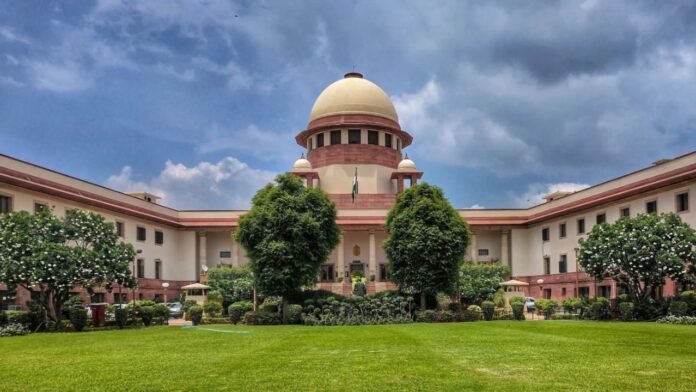
On Thursday, the Supreme Court scrutinized the Election Commission of India’s (ECI) Special Intensive Revision (SIR) of electoral rolls in Bihar, urging the poll panel to consider recognizing Aadhaar cards, voter IDs, and ration cards as valid documents for voter verification during the ongoing exercise.

The Court agreed to hear a series of petitions that challenge the timing and procedure of the SIR, with the next hearing set for July 28. Meanwhile, the ECI has been given until July 21 to submit its response. No interim relief has been granted at this stage.

A bench of Justices Sudhanshu Dhulia and Joymalya Bagchi questioned the decision to initiate the revision just months ahead of elections, calling it a move that “strikes at the root of democracy and the power to vote.”

Justice Dhulia remarked, “If the purpose of the SIR is to verify citizenship in Bihar’s electoral rolls, it should have been done earlier—it’s a bit late now,” highlighting concerns over the timing of such a significant revision.

However, the Court rejected the argument made by opposition leaders and civil society groups that the ECI lacked the authority to conduct the SIR. It affirmed that the revision of electoral rolls is a constitutional duty of the Commission and noted that the last major revision in Bihar occurred in 2003.

Defending the exercise, the ECI argued that the SIR is vital for ensuring the accuracy of electoral rolls by enrolling eligible voters and removing ineligible names. It maintained that Aadhaar is not proof of citizenship, reiterating that only Indian citizens have the right to vote as per Article 326 of the Constitution.

Senior advocate Dwivedi, representing the ECI, asked, “If not the Election Commission, then who is responsible for revising electoral rolls?”

He also assured the Court that no voter would be removed without due process and an opportunity to be heard.

The bench further questioned why Aadhaar was excluded from the SIR process, stating that matters related to citizenship fall under the jurisdiction of the Ministry of Home Affairs, not the ECI.

More than ten petitions have been filed against the ECI’s move, including one from the Association for Democratic Reforms. Other prominent petitioners include RJD MP Manoj Jha, TMC’s Mahua Moitra, Congress leader K.C. Venugopal, NCP (SP)’s Supriya Sule, CPI’s D. Raja, SP’s Harinder Singh Malik, Shiv Sena (UBT)’s Arvind Sawant, JMM’s Sarfraz Ahmed, and CPI (ML)’s Dipankar Bhattacharya.

Bill Gates Drops Out of World’s Top 10 Richest; Now Trails Ex-Microsoft CEO He Once Appointed

0
Bill Gates
Bill Gates

Bill Gates is no longer among the world’s ten richest individuals. According to the latest Bloomberg Billionaires Index, as of July 8, Gates now holds the 12th spot with an estimated net worth of $124 billion. Notably, he ranks below Michael Dell and his former Microsoft colleague Steve Ballmer, who now sits comfortably at number 5 with a fortune of $172 billion.

The sharp decline in Gates’s ranking is primarily due to a revised calculation of his net worth, which reflects a reduction of approximately $52 billion. Bloomberg adjusted its estimates to account more accurately for Gates’s extensive philanthropic efforts.

The updated valuation aligns with Gates’s long-standing public commitment to give away the majority of his wealth. As of last year, the Bill & Melinda Gates Foundation reported that the co-founders had donated over $60 billion to various causes. Furthermore, in May 2025, the foundation announced plans to significantly accelerate its mission by allocating $200 billion over the next two decades. This decision sets 2045 as the year to sunset the foundation’s operations.

Former Employee Overtakes Microsoft Founder

In a twist of irony, Steve Ballmer—who once served as CEO of Microsoft under Gates—has now surpassed his former boss in terms of wealth. Ballmer’s net worth of $172 billion places him just behind tech giants like Elon Musk ($253 billion), Mark Zuckerberg ($253 billion), Larry Ellison ($248 billion), and Jeff Bezos ($244 billion).

Gates also trails behind other high-profile billionaires including Sergey Brin, Warren Buffett, and Michael Dell. While Gates’s philanthropic pursuits may have reduced his ranking, they’ve undoubtedly increased his legacy in a different realm—global giving.

CBI Extradites Economic Offender from US After Over 25 Years on the Run

0
CBI
CBI

After evading Indian authorities for more than 25 years, Monika Kapoor—an accused in a high-value import-export fraud case—has been extradited from the United States by the Central Bureau of Investigation (CBI), the agency confirmed on Wednesday.

Kapoor, the proprietor of Monika Overseas, was taken into custody by a CBI team from US officials on Tuesday. She is expected to arrive in India aboard an American Airlines flight by Wednesday night.

“This extradition marks a significant milestone in the CBI’s efforts to ensure that fugitives face the law in India, regardless of geographical boundaries,” a CBI spokesperson said. “Monika Kapoor will be produced before the competent court and will now stand trial.”

Kapoor, along with her brothers Rajan Khanna and Rajiv Khanna, allegedly submitted forged documents—such as shipping bills, invoices, and bank certificates—to fraudulently obtain duty-free import licenses for raw materials under the guise of jewelry trade. These licenses were later sold to Deep Exports, an Ahmedabad-based firm, which used them to import duty-free gold, resulting in a ₹1.44 crore (approximately $679,000) loss to the Indian exchequer.

The CBI began investigating the case in 2002 and filed a charge sheet on March 31, 2004, citing criminal conspiracy, cheating, and forgery. While her brothers were convicted in 2017, Kapoor absconded in 1999 and was declared a proclaimed offender in February 2006 for failing to appear during the investigation and trial.

India formally requested Kapoor’s extradition in October 2010. In 2012, the request was approved by the United States District Court for the Eastern District of New York under the bilateral extradition treaty. Kapoor, however, resisted extradition, arguing that returning to India would violate her rights under the UN Convention Against Torture, as implemented by the Foreign Affairs Reform and Restructuring Act of 1998 (FARRA).

Her appeal to the US Secretary of State was rejected, and a surrender warrant was eventually signed. After years of litigation and multiple appeals in US courts, including administrative challenges, the United States Court of Appeals for the Second Circuit finally upheld her extradition in March 2025.

This case marks yet another successful extradition for Indian agencies. On July 4, Nehal Modi, brother of fugitive businessman Nirav Modi, was also arrested in the US following joint efforts by the CBI and the Enforcement Directorate (ED). The CBI has secured the return of over 120 fugitives through extradition or deportation in the last 3–4 years, with the help of Interpol and international cooperation.

High Court Urges Delay in Filing Chargesheet Against RCB

0
RCB
RCB

The Karnataka High Court on Tuesday directed the state police not to file the final investigation report (chargesheet) against Indian Premier League (IPL) franchise Royal Challengers Bengaluru (RCB) and event management firm DNA Entertainment without prior court approval. This directive relates to the June 4 stampede outside Chinnaswamy Stadium, which left 11 people dead and over 50 injured.

Justice S R Krishna Kumar passed the order after legal counsel for RCB and DNA informed the court that they have been fully cooperating with the investigation into the three suo motu FIRs registered against them and the Karnataka State Cricket Association (KSCA) following the incident. The petitioners argued that filing a final report or chargesheet at this stage would cause them “irreparable harm.”

Although the state government indicated that the police are expected to need at least a month to complete the investigation, the court emphasized that regardless of the timeline, no final report is to be submitted without its permission.

The court also extended interim relief granted earlier, which prevents the arrest of those named as accused in the case. The matter is scheduled to be heard next on August 5.

In a separate legal move, RCB approached the High Court on Tuesday challenging certain “prejudicial observations” made by the Central Administrative Tribunal (CAT) in its July 1 order. These remarks were made while CAT quashed the suspension of ACP Vikash Kumar Vikash, one of five police officers suspended for alleged crowd control lapses following the stampede.

The CAT, while reinstating the officer, stated that RCB appeared “prima facie responsible” for the incident. It noted that RCB and its event partner DNA Entertainment had not secured appropriate permissions and had unilaterally announced the victory event on Instagram without prior intimation to authorities.

RCB has now sought to have those comments struck from the CAT order, stating that it was neither a party to the proceedings nor given a chance to present its defense. The franchise argued that the remarks were in violation of natural justice and could prejudice ongoing and future legal matters.

RCB contended that the responsibility for obtaining police permissions and making related arrangements rested with KSCA and DNA, as per their agreement. The High Court is yet to schedule a hearing on this petition.

Meanwhile, the Karnataka government has filed its own appeal against CAT’s decision to reinstate ACP Vikash. That appeal is slated to be heard on July 9.

Tamil Nadu Renames Govt School and College Hostels as ‘Social Justice Hostels’ — Here’s the Reason

0
MK Stalin
MK Stalin

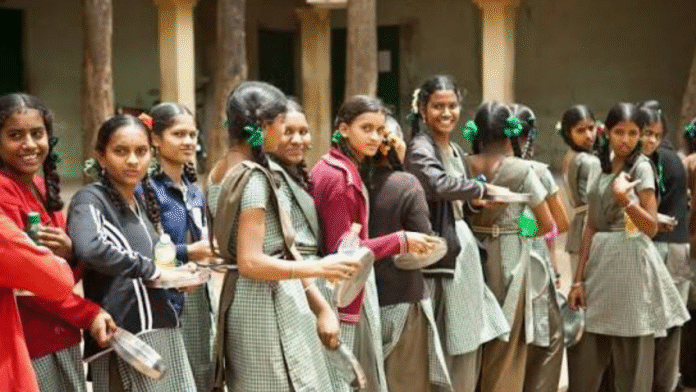
Tamil Nadu Chief Minister M.K. Stalin on Monday announced that all state-run school and college hostels across departments will now be renamed as ‘social justice hostels’. “Hostels for students operated by various departments in Tamil Nadu will henceforth be called ‘social justice hostels’,” he declared.

Stalin emphasized that under the DMK government, there would be zero tolerance for discrimination of any kind—be it based on caste, gender, or any other factor. Reaffirming the party’s core values, he noted that the DMK has always stood for social justice and inclusivity, and that all government schemes are aligned with these principles.

He also referenced an earlier announcement in the Tamil Nadu Legislative Assembly regarding the removal of the term ‘colony’ from official usage. Stalin explained that the word has historically symbolized “dominance” and “untouchability,” and the government is committed to eliminating such discriminatory language from public records and documents.

This renaming initiative comes alongside a broader set of reforms recommended by a panel headed by retired Justice K. Chandru, which was formed to address and prevent caste-based conflicts in schools. One key suggestion, which has been accepted by the state, includes removing caste prefixes and suffixes from school names.

Following this, a government order was issued on June 25 outlining measures to promote communal harmony and prevent caste-based discord among students.

Additionally, the CM urged Prime Minister Narendra Modi to amend SC/ST community surnames ending with ‘N’ and ‘A’ by replacing them with ‘R’, as part of ongoing efforts to foster social equity.

Currently, Tamil Nadu operates 2,739 government hostels, accommodating around 1,79,568 students, managed by the state’s tribal welfare and backward classes and minority welfare departments.

IndiGo CEO Says Expanding Airport Infrastructure Is Crucial for Indian Aviation’s Next Phase

0
Indigo CEO
Indigo CEO

New Delhi: As IndiGo begins long-haul operations to the United Kingdom (Manchester) and Europe (Amsterdam), Pieter Elbers, CEO of India’s largest airline, shares in an exclusive conversation that the next phase of Indian aviation should focus not on building more airports, but on enhancing the size, efficiency, and quality of existing ones. Edited excerpts:

How do you see the domestic market developing for IndiGo as you already have 65% market share? Don’t you think some of the routes are already at saturation level?

One of the key metrics I use is seats per capita, especially in comparison with markets like the US, Europe, or China. All these regions have significantly higher figures. Even China, which ranks relatively lower on this metric, offers four times the number of seats than India currently does. Based on projections suggesting that the Indian market will double between 2023 and 2030, a compound annual growth rate of 10–11% seems quite reasonable. We have aligned our strategy accordingly, committing to doubling our fleet over the same period.

Whether you consider seats per capita or GDP-aligned data, all indicators support strong growth potential. Naturally, there are seasonal dips—like last May, which was impacted by heatwaves and elections—but we don’t focus on monthly DGCA numbers. Our perspective is long-term. The historical trajectory already supports this outlook. For IndiGo, market share is the result of sustained effort, not a target in itself.

What is your game plan in terms of addressing the Indian market?

Our operations fall into four broad categories. First, we have our metro-to-metro flights, which are crucial given that metro cities contribute significantly to India’s GDP. Then, there’s the metro-to-non-metro segment, which is witnessing the highest growth currently. The third category includes non-metro to non-metro routes—connecting Tier-II and Tier-III cities directly. Lastly, we support the regional connectivity scheme using ATR aircraft. While this segment may be smaller in proportion, it plays a vital role in integrating remote communities into the broader aviation network.

Going forward, we intend to maintain our focus on all four segments, with special emphasis on the rapidly growing metro-to-non-metro routes.

Do you see scope for further expanding your regional aircraft fleet?

We constantly assess this. Presently, we operate around 46–47 ATRs out of the 50 we had planned, so nearly all are in use. In some instances, routes previously operated with ATRs have now matured to a level where we can switch to A320s, thereby freeing up ATRs for newer regional routes. Several airports still support only ATR operations, and we are actively evaluating our options in that context.

IndiGo now operates in 91 domestic airports. We’ve recently added four and plan to add four more this year, taking the number to 95. Notably, around 90% of the Indian population resides within 100 km of an airport served by IndiGo. While the actual accessibility differs—especially in hilly terrain—the overall coverage is quite comprehensive.

Therefore, I believe the next big step in Indian aviation is not necessarily the addition of new airports but upgrading existing ones—making them larger, more efficient, and passenger-friendly. The emphasis will likely shift towards enhancing the capacity of current infrastructure.

With international expansion enabling both better connectivity for Indian consumers and progress towards India becoming a global aviation hub, what policy changes would you like to see from the government, such as improved visa regimes or incentives for stopovers on Indian carriers to support this ambition?

Personally, I would be cautious about introducing stopover-related policies specific to Indian carriers. Aviation thrives on fairness and open competition. If we implement policies that benefit us locally, we may face reciprocal actions from other countries.

Our focus should be on ensuring a level playing field. I am confident that our cost structures and service quality give us a competitive edge. A more impactful move would be to improve transfer connectivity infrastructure at Indian airports, which would elevate India’s position as a global aviation hub.

IndiGo has been on a premiumisation journey — introducing Stretch class or the business class — for the past 7-8 months. How has been the response to the offering in terms of occupancy domestically?

I wouldn’t call it a complete premiumisation strategy because that implies an overall shift in our core product, which isn’t the case. Our foundation remains strong, with a vast domestic network of 500 routes across 130 destinations and over 100 international routes. The Stretch offering is limited to select routes.

Unlike certain US airlines that rolled out premium products system-wide, we have been more selective. This offering is aimed at a niche group of Indian travellers looking for a slightly upgraded experience, and it also serves as a preparation for long-haul services.

The response has been mixed—some days see excellent load factors, while others are more modest. Part of the issue is that customers aren’t always sure if a given flight will include Stretch seating. Overall, India remains a highly price-sensitive market, with many passengers booking at the last minute.