

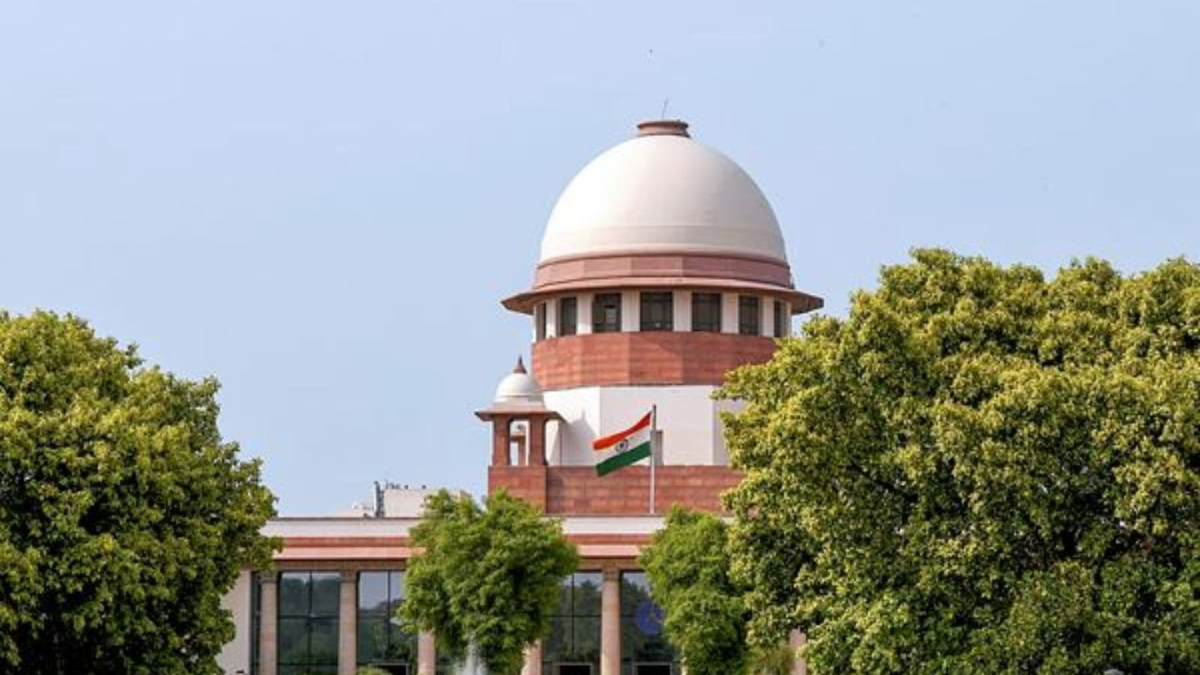
The Supreme Court has intervened sharply in a cheating case worth ₹1.9 crore, cancelling the bail granted to two accused and criticising both trial and sessions judges for ignoring binding precedents. The court also ordered the judges to undergo a week of special judicial training to ensure they properly evaluate superior court rulings in the future.
A bench of Justices Ahsanuddin Amanullah and SVN Bhatti noted that Additional Chief Metropolitan Magistrate and a sessions judge at Karkardooma courts had overlooked vital facts and past findings when they allowed Dharam Pal Singh Rathore and his wife, Shiksha Rathore, to secure bail in November 2023 and August 2024. The accused couple, charged with defrauding Netsity Systems Pvt Ltd in a bogus land deal, had earlier been denied anticipatory bail by the Delhi high court. That court had recorded their history of misleading undertakings and castigated them for suppressing material facts.
“We would be failing in our duty if we turned a blind eye to the manner in which the ACMM granted bail to the accused and the sessions judge refused to interfere…In the facts herein, we deem it appropriate that the judicial officers… shall undergo special judicial training for a period of at least seven days,” the bench observed.
The Supreme Court directed the chief justice of the Delhi high court to arrange training at the Delhi Judicial Academy. The sessions will focus on how to handle precedents and assess the conduct of accused persons. It also asked the chairperson of the Judicial Education & Training Programme Committee to take note of these lapses while preparing future training modules.
The rebuke was not confined to the judiciary. The bench also criticised the investigating officers, who had claimed custodial interrogation was unnecessary after the filing of the charge sheet. Taking strong exception, the court asked the Delhi police commissioner to personally probe the conduct of these officers and ensure swift corrective action.
The order pointedly described the ACMM’s reasoning as bordering on perversity. The judges noted that despite the Delhi high court’s detailed February 2023 findings about repeated false promises and earlier cheating cases, the magistrate assumed custody was unnecessary simply because a charge sheet had been filed. The sessions judge, the bench said, only examined the couple’s behaviour after bail was granted rather than testing the validity of the original bail order.
Irregularities in procedure also caught the bench’s attention. The accused had surrendered before the ACMM in October 2023 while moving bail pleas, which placed them in court custody. Yet no interim release order was issued, and they continued to walk free until November, when bail was granted on bonds of ₹3 lakh each. “We are unable to comprehend how, having formally surrendered before the court, the accused were permitted to leave the court without any formal order of release,” the judges remarked.
The Supreme Court further faulted the Delhi high court for treating the case as a mere matter of cancellation of bail. It stressed that the high court should have considered the accused’s prior conduct and background facts before upholding the orders.
Ultimately, the bench set aside the bail orders of the magistrate, the sessions judge, and the Delhi high court, and ordered the Rathores to surrender within two weeks. It clarified that the decision was not an attack on the principle of liberty. “Our observations herein are not whittling down pro-liberty principles but merely reiterating that courts need to apply them to the facts of the specific case before them. No precedent operates in a vacuum,” the bench held.


