

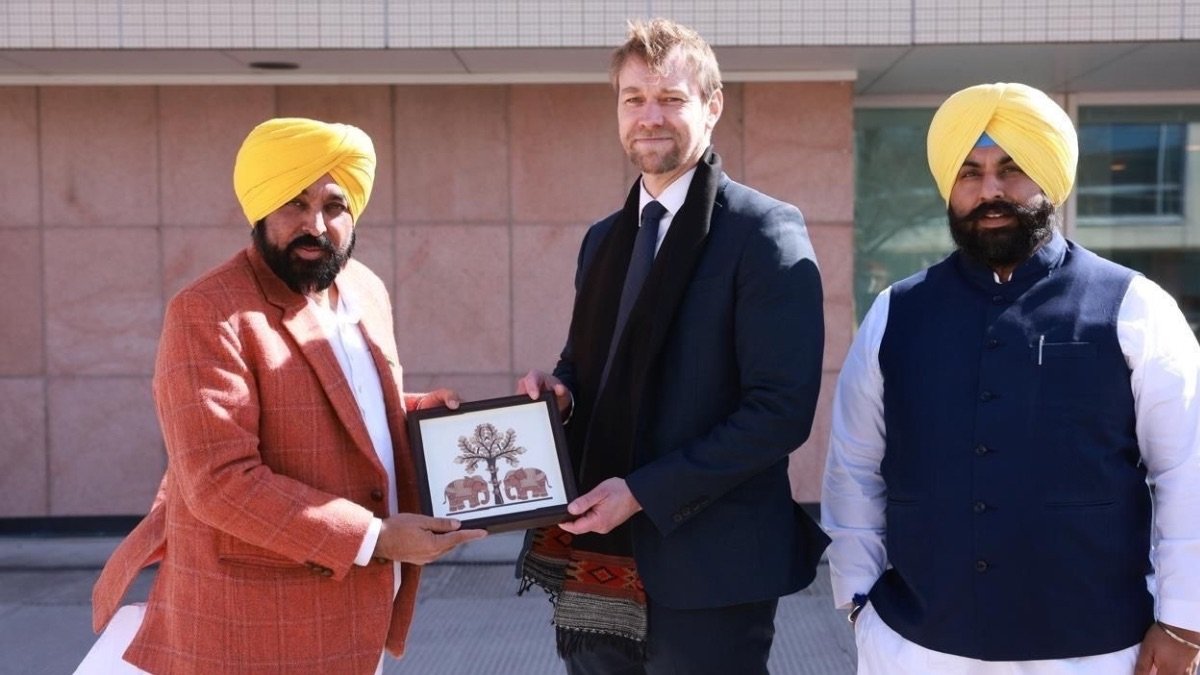
A partnership between the Punjab Government, led by Chief Minister Bhagwant Singh Mann, and Finland’s University of Turku is beginning to show tangible impact in classrooms, with teaching methods becoming more engaging and early improvements in student participation already visible.
This initiative marks a shift away from traditional rote learning toward more interactive and joyful classroom experiences. As part of Punjab’s broader Sikhya Kranti, the programme focuses on blending international expertise with local classroom needs while expanding its reach through a structured training model. Nearly 300 teachers are expected to be trained by May, strengthening foundational learning across the state.
During his visit to Finland, Bhagwant Singh Mann toured the Kukulo Moikoinen Early Childhood Education and Care Centre and noted that the collaboration is already delivering results by aligning global teaching practices with ground realities in Punjab’s schools.
He explained that the partnership, implemented through the State Council of Educational Research and Training under the Department of School Education, is aimed at long term transformation rather than a short term effort. The focus is on building teacher capacity in early childhood and foundational education while introducing child centred, play based and inclusive teaching practices into the system.
According to the Chief Minister, the programme equips educators with research backed methods while ensuring these approaches are adapted to Punjab’s socio cultural context. Training sessions have been conducted both in Chandigarh and in Finnish cities such as Turku and Rauma, combining workshops, mentoring and school visits to give teachers practical exposure to innovative classroom techniques. By May 2026, close to 300 teachers across four groups will have completed this training, benefiting students across the state.
Mann highlighted that the emphasis has been on making learning more participatory and engaging. Teachers are being encouraged to design projects tailored to their classroom environments, with ongoing mentoring support. Initial feedback indicates higher levels of student interest, better participation and more inclusive classroom settings.
He also noted that teachers are gaining confidence in experimenting with new approaches and adapting lessons to suit diverse learning needs. A key aspect of the initiative is its focus on adapting global practices rather than directly replicating them. Continuous guidance from Finnish experts has helped ensure that these methods are effectively integrated into Punjab’s education system.
During his visit, the Chief Minister also interacted with faculty at the University of Turku and the Turku Teacher Training School. He said the next phase of the programme will focus on scaling its impact through a train the trainers approach, creating a network of master trainers to expand its reach across Punjab. Digital platforms and blended learning models are also being developed to support ongoing teacher development and wider accessibility.
Mann said that with a clear expansion strategy and a growing pool of trained educators, the collaboration is set to become a key pillar of Punjab’s education reforms. He reaffirmed the government’s commitment to strengthening public education and ensuring that students are better prepared for future opportunities, while continuing to explore similar initiatives to maintain progress in the sector.


