

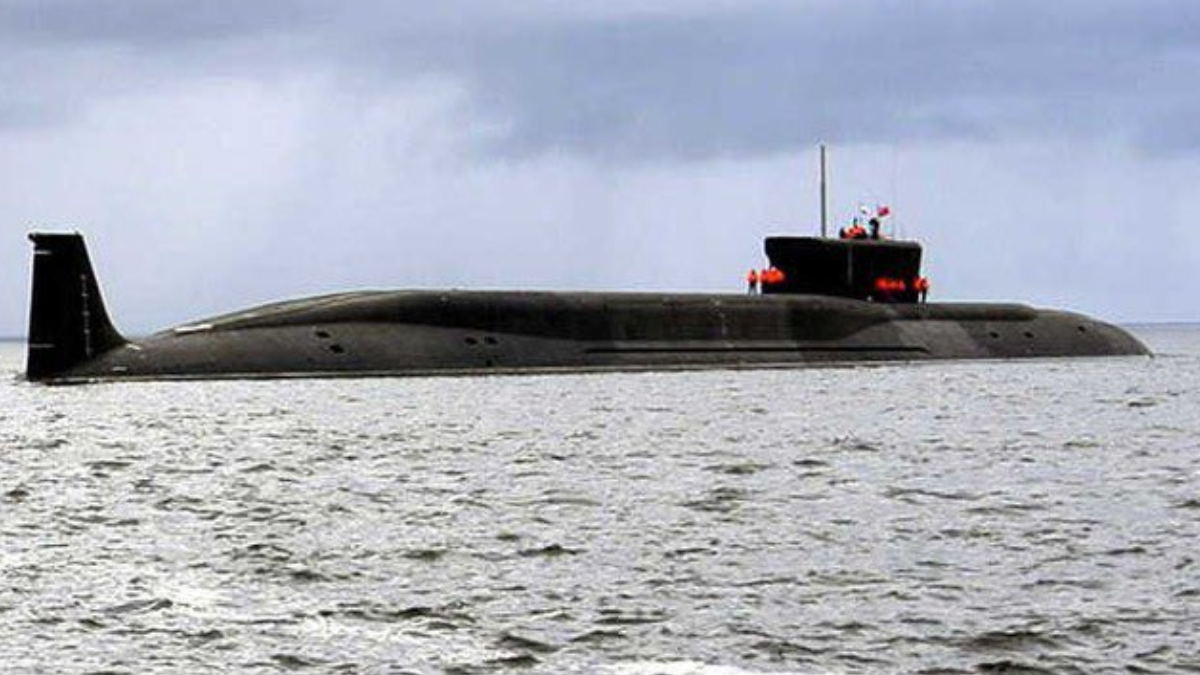
The fourth and final submarine of India’s Arihant class, a nuclear-powered vessel equipped with long-range ballistic missiles and currently designated as S4*, is expected to be named INS Arisudan. The submarine was launched on October 16 last year by Defence Minister Rajnath Singh. Arihant, which means destroyer of enemies, serves as the shared class name for all of India’s nuclear submarines.
Sources indicate that the proposed name for S4* will first be reviewed by the ship naming committee of the Indian Navy. It will then require clearance from the Defence Ministry before receiving final approval from the President of India. INS Arisudan is expected to be formally commissioned into service in 2027.
Its immediate predecessor, INS Aridhaman, is likely to enter service in the first half of 2026. At the same time, progress has accelerated on the design and construction of two indigenous nuclear-powered attack submarines armed with conventional weapons. This development gained momentum after the government led by Narendra Modi approved the P77 attack submarine programme on October 9, 2024. India is also expected to lease an Akula-class nuclear-powered submarine from Russia by 2028. Sources further suggest that Moscow had offered to lease an additional blue water submarine ahead of the visit of Russian President Vladimir Putin to India on December 5, 2025.
Submarine-based nuclear deterrence remains the strongest pillar of the nuclear triad, as these platforms ensure a credible second strike capability. This is especially critical for India, which follows a no-first-use nuclear doctrine. While China also adheres to a similar policy, Pakistan maintains a first use nuclear doctrine, making undersea deterrence even more significant for India’s strategic posture.
INS Arihant, the first submarine of the class, is armed with K 15 nuclear missiles that have a range of 750 kilometres. The remaining submarines in the class, which are approximately 1000 tonnes heavier, are expected to be fitted with K 4 missiles capable of striking targets up to 3500 kilometres away. These missiles are currently undergoing trials under the supervision of the Defence Research and Development Organisation and the Strategic Forces Command. For sustained deterrence patrols and access denial missions across the Indo Pacific, India requires submarines with virtually unlimited operational range.
Traditionally, Indian warships follow a naming pattern linked to the lead vessel of their class, with the entire class deriving its name from the first ship commissioned. In line with this practice, all Indian SSBNs carry names that signify the destruction of enemies. Conventional diesel powered attack submarines are typically named after earlier vessels that have been decommissioned, while Kalvari class submarines inherit names from former Russian Foxtrot class boats.
The Indian Navy’s guided missile destroyers usually take their names from Indian cities such as INS Delhi, INS Surat, INS Imphal, INS Kolkata, INS Mumbai, and INS Visakhapatnam. Frigates, on the other hand, are named after major rivers and mountain ranges, including classes like Ganga, Brahmaputra, and Shivalik, reflecting a long standing naval tradition.


