

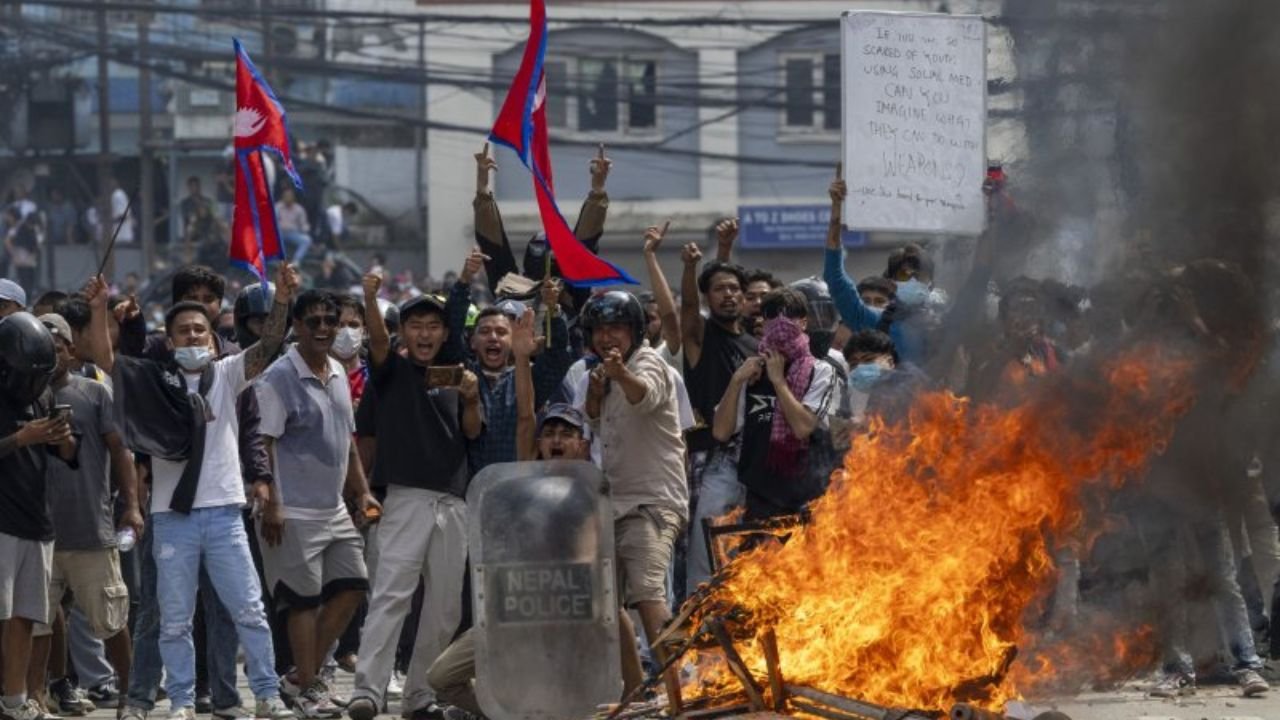
Nepal Prime Minister KP Sharma Oli resigned Tuesday afternoon following two days of violent anti-corruption demonstrations that claimed 19 lives and injured over 400 people. Visuals showed Oli departing Kathmandu in what appeared to be a military helicopter as protesters celebrated achieving their core demand.
Nepal Government in Limbo
While KP Sharma Oli’s resignation represents a significant victory for Gen Z demonstrators, Nepal’s government structure means his departure doesn’t automatically trigger a complete governmental collapse. President Ram Chandra Poudel remains head of state, though sources told media it’s “only a matter of time” before Poudel also steps down, leading to full governmental overthrow.
Reports suggest the Army may intervene to restore order and facilitate a new government installation, mirroring recent events in Sri Lanka (2022) and Bangladesh (2024), where anti-corruption protests toppled the Mahinda Rajapaksa and Sheikh Hasina governments respectively, with military involvement in both cases.
Unprecedented Violence Erupted in Nepal
Oli’s resignation came hours after protesters invaded government buildings, including Parliament and the private residences of both the Prime Minister and President, setting them ablaze. War-like scenes engulfed Kathmandu as small armies of young demonstrators occupied public spaces, engaging in pitched battles with police.
Acrid black smoke blanketed the cityscape, with burning vehicles dotting streets and protesters swarming over gates of high-profile residences. Tribhuvan International Airport effectively shut down both domestic and international services due to the chaos.
From Social Media to Systemic Corruption
What began as protests against social media bans on Facebook, X, and YouTube quickly evolved into broader anti-corruption demonstrations. Despite Oli’s government lifting the ban, protesters continued demanding systemic change.
“Stop the ban on social media. Stop corruption, not social media,” demonstrators chanted, carrying placards reading “shut down corruption and not social media” and “youths against corruption.”
The movement specifically targeted nepotism within Nepal’s political establishment, with hashtags like #NepoBabies and #PoliticiansNepoBabyNepal flooding social media, condemning unfair advantages for politicians’ children.
As police struggled to contain the violence, Army deployment became necessary, with The Kathmandu Post reporting evacuations of remaining government officials who hadn’t already resigned or distanced themselves from the corruption-accused administration.


