

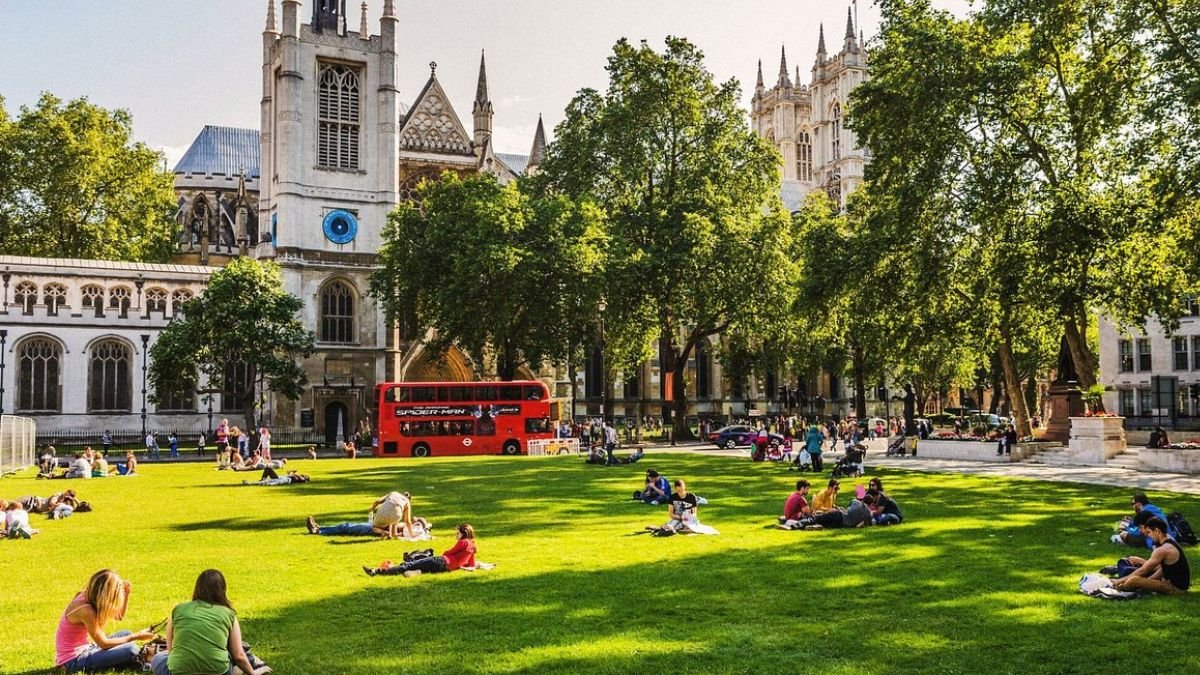
Large parts of Europe continued to reel under an intense heatwave on Tuesday, with temperatures climbing to unusually high levels for May and several countries witnessing record breaking conditions.
The extreme weather followed historic highs recorded in both United Kingdom and France earlier this week. In the UK, temperatures touched 35.1 degrees Celsius at Kew Gardens in southwest London, surpassing the previous May record of 34.8 degrees Celsius that had been set at the same location just a day earlier.
France also registered its hottest May day on record for a second consecutive day. Weather authorities warned that the heatwave is expected to continue through the rest of the week, with temperatures in some regions likely to approach 39 degrees Celsius.
Across western Europe, people crowded beaches and public fountains in an attempt to escape the soaring temperatures. In Rome, visitors gathered around the Barcaccia fountain, while in Paris, many sought relief near the water bubblers at Jardin du Palais Royal. Others were seen carrying handheld fans and umbrellas through city streets as the heat intensified.
What is causing the heatwave?
Meteorologists say Europe is currently being affected by a powerful “heat dome” carrying hot air from northern Africa. A high pressure system has trapped this warm air mass over western Europe, causing temperatures to rise far beyond seasonal averages.
French Health Minister Stephanie Rist said the situation had not yet reached emergency levels but cautioned people against underestimating the risks associated with prolonged heat exposure.
Climate scientists have also pointed to human driven climate change as a major factor worsening heatwaves, droughts and other extreme weather events around the world.
Bob Ward from the Grantham Research Institute on Climate Change and the Environment said many parts of Europe are now experiencing Mediterranean style summers without having infrastructure designed to handle such conditions.
Heat linked to deaths and safety concerns
Authorities in France reported at least seven deaths linked to the heatwave, including five drowning incidents. Officials said large numbers of people rushed to lakes, rivers and beaches to cool off, even though lifeguard services in many areas are not scheduled to begin operations until July.
In the United Kingdom, officials confirmed that at least four teenagers had drowned since Sunday amid the hot weather.
The prolonged heat has also prompted some Europeans to reconsider installing air conditioning systems, which have traditionally been less common across the continent.
One London resident, Gurjit Gill, said the nighttime temperatures had become increasingly difficult to manage and that he was now seriously considering purchasing an air conditioning unit for his home.


