

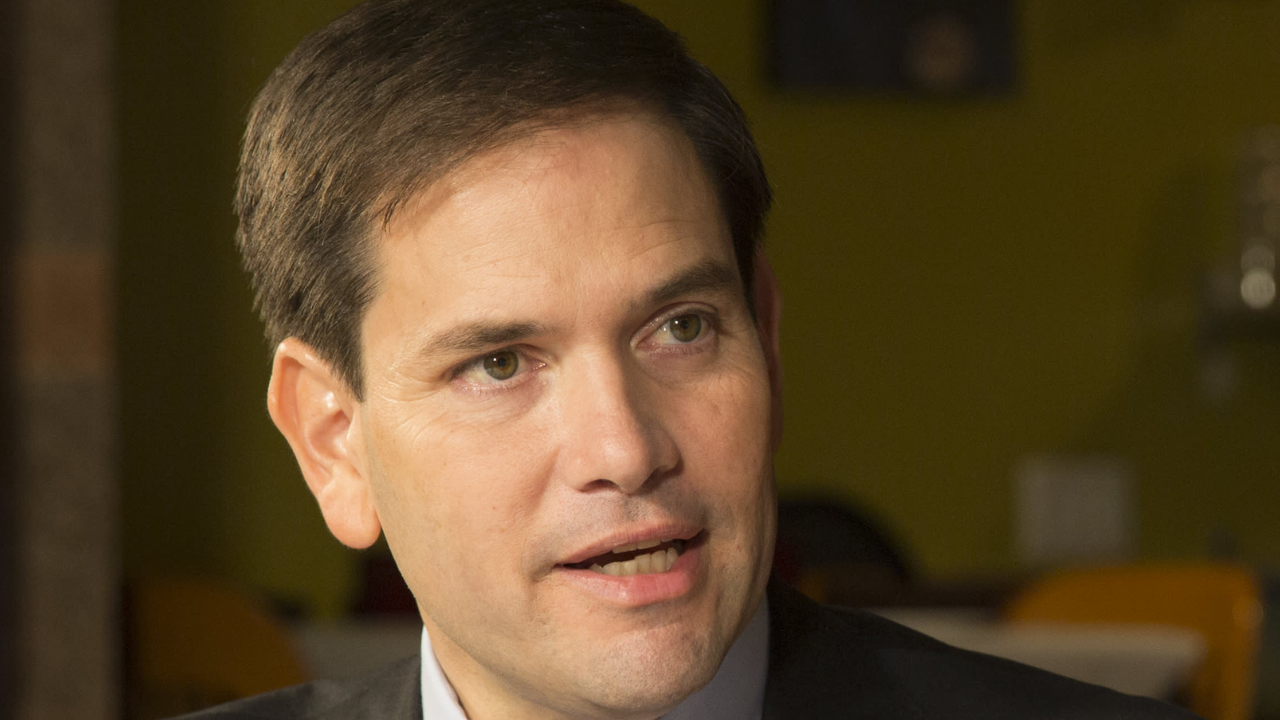
US Secretary of State Marco Rubio on Wednesday strongly defended President Donald Trump’s military operation that led to the capture of then Venezuelan president Nicolas Maduro, while also outlining the administration’s broader foreign policy stance on issues ranging from Greenland and NATO to Iran and China during a hearing before US lawmakers.
As members of the Senate Foreign Relations Committee offered sharply contrasting views on the administration’s approach to global affairs, Rubio sought to clarify Trump’s objectives and temper concerns sparked by the president’s forceful rhetoric, which has unsettled allies, particularly in Europe, over matters such as the proposal to take control of Greenland.
Speaking at the first public hearing since the January 3 operation that removed Maduro, Rubio said Trump acted decisively to neutralise what he described as a major national security threat in the Western Hemisphere. He argued that the move had made the United States safer and said Washington was now working with interim authorities to stabilise Venezuela.
“This isn’t something that fixes itself overnight, but we are making real progress,” Rubio said. “The situation in Venezuela today is better than it was four weeks ago, and I believe it will continue to improve in the coming months compared to where we would have been if Maduro had remained in power.”
The former Florida senator said Venezuela’s current leadership was cooperating with the United States and would soon begin to see tangible benefits. However, he stepped back from earlier prepared remarks that suggested Washington might consider additional military action if Trump’s demands were not fully met.
“I can say with complete certainty that we are not positioned for, nor do we expect, any military action in Venezuela,” Rubio said. “That would only be considered if an imminent threat emerged, and we do not foresee that at this time.”
Rubio added that Venezuela would soon be permitted to sell oil currently restricted by US sanctions, with the proceeds earmarked for essential public services such as law enforcement and healthcare. The revenue, he explained, would be deposited into an account controlled by the US Treasury and released only after Washington approved monthly budgets submitted by Venezuelan authorities.
Most Republican senators praised the operation, while Democrats expressed deep reservations. They raised concerns about the broader implications of Trump’s policies, warning that they could embolden China in relation to Taiwan, encourage Russian aggression in Ukraine, strain relations with NATO allies and destabilise Europe through threats involving Greenland.
Rubio sought to downplay these concerns. He said tensions within NATO over Greenland were easing and that discussions were ongoing to address Trump’s demands. While Trump has argued that Greenland is strategically vital to counter threats from Russia and China, he has recently softened his stance by backing away from proposed tariffs on European countries that sent troops to the territory in support of Denmark.
“I think something constructive will come out of this,” Rubio said.
He rejected claims that Trump was weakening NATO, instead reiterating the long-standing US position that member states must increase their defence spending. “NATO needs to be rethought,” Rubio said, adding that Trump simply voices frustrations more bluntly than previous presidents.
On China, Rubio said Beijing’s long-term goal of reunifying Taiwan with the mainland would remain unchanged regardless of global developments, including the events in Venezuela. “Taiwan is a legacy issue for China,” he said, noting that President Xi Jinping has made his intentions clear.
Addressing Iran, Rubio said there was no current plan for military action, despite Trump’s renewed warnings. He noted that any effort to bring about a change in government in Tehran would be far more complex than the operation in Venezuela and would require careful consideration. The recent deployment of additional US military assets to the Middle East, he said, was aimed at protecting American personnel against potential Iranian threats.
Republican committee chairman Senator Jim Risch provided further details on the Venezuela operation, saying it involved around 200 troops and a brief firefight lasting less than half an hour. He described the mission as swift, precise and effective, while suggesting that international oversight might be needed to help Venezuela restore democratic elections.
Democratic Senator Jeanne Shaheen questioned whether the operation had delivered meaningful results, noting that many of Maduro’s allies remained influential and that Venezuela’s economic situation was still dire. She argued that the administration was spending significant resources abroad while neglecting domestic economic concerns.
Rubio responded by reaffirming his support for democratic governance in Venezuela, saying the ultimate goal was free and fair elections. He later met Venezuelan opposition leader Maria Corina Machado at the State Department.
He also faced pointed questions about working with interim leaders who had been part of Maduro’s government. Maduro’s former vice president, Delcy Rodriguez, is now serving as acting president. The US has demanded that her administration open Venezuela’s energy sector to American companies, prioritise US access to production, use oil revenues to buy US goods and end subsidised oil shipments to Cuba.
Rodriguez and her office did not immediately respond to Rubio’s remarks, though she said earlier that her government and Washington had established respectful lines of communication. So far, she has appeared to comply with several US demands, including releasing prisoners detained under the previous regime.
In a significant step toward restoring diplomatic relations, the State Department said it plans to send additional diplomatic and support staff to Caracas to prepare for a potential reopening of the US Embassy, which has been closed since 2019. Fully normalising ties, however, would require Washington to reverse its recognition of the Venezuelan parliament elected in 2015 as the country’s legitimate governing body.


