

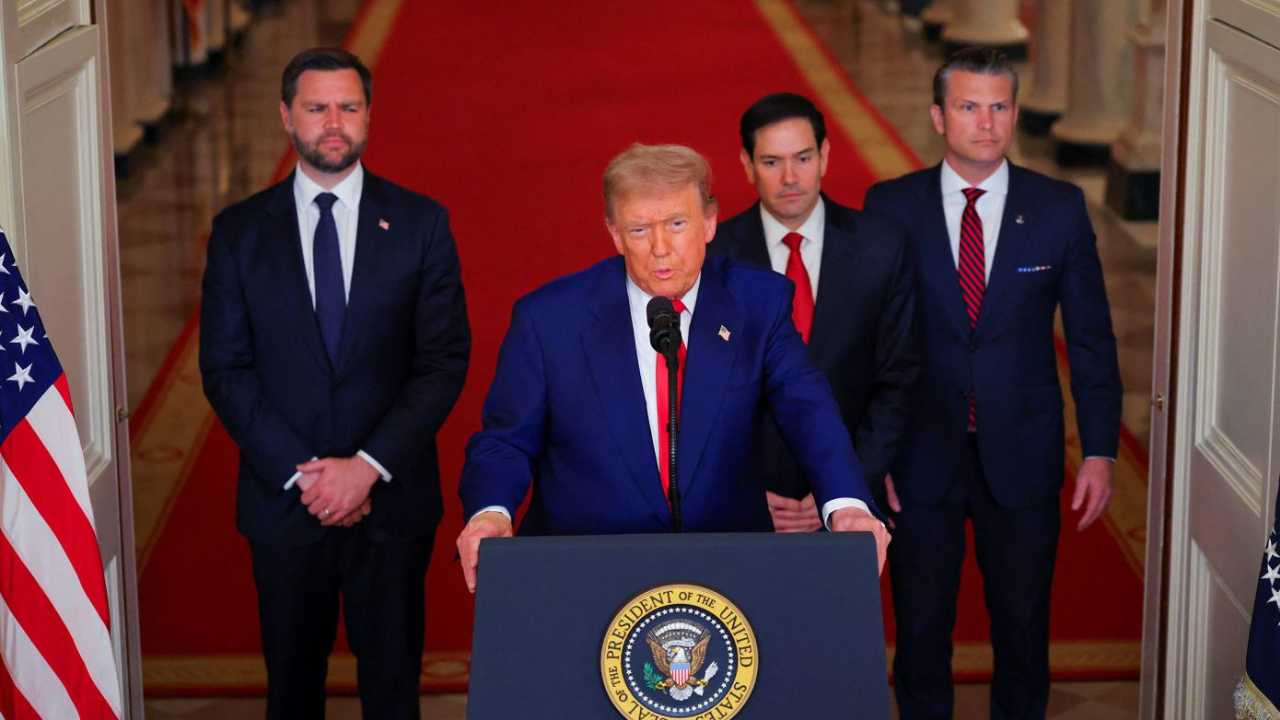
US President Donald Trump said Monday that he is not ruling out sending ground troops into Iran if it becomes necessary. Speaking to the New York Post in one of several brief interviews, he said that while many presidents promise there will be no boots on the ground, he does not make that commitment. He added that troops probably would not be needed, but they could be used if required, AFP reported.
He also spoke to CNN about what he described as a big wave, saying the United States had not yet begun hitting Iran hard and that a major escalation could be coming soon. Trump said Washington does not know who Iran’s next leader would be after the killing of Ayatollah Ali Khamenei and that officials are unsure who might be chosen.
Reuters reported that many senior US officials remain skeptical that military action against Iran would lead to regime change anytime soon. They reportedly noted that Iran is not comparable to Venezuela, where President Nicolas Maduro was removed by the US military and replaced by an interim leader from within the regime with apparent American backing.
Trump’s comments came hours after US Defense Secretary Pete Hegseth addressed concerns that US Israeli strikes could expand into a prolonged regional conflict. He said this is not Iraq and would not become an endless war, referring to the 2003 US invasion that toppled Saddam Hussein.
Hegseth, alongside US Air Force General Dan Caine, chairman of the Joint Chiefs of Staff, delivered the administration’s first news briefing since Saturday’s strikes. Trump himself has only given a few phone interviews and released two videos since the operation began, without taking questions on camera.
Hegseth said the mission was clear, devastating and decisive, aimed at destroying Iran’s missile threat, dismantling its navy and ensuring it has no nuclear weapons. He added that there would be no restrictive rules of engagement, no nation building effort, no democracy building campaign and no politically correct wars, saying the United States fights to win without wasting time or lives.
When asked whether there are currently American troops on the ground in Iran, Hegseth said there are not, but declined to discuss what actions might or might not be taken, calling it foolish to expect officials to reveal such details publicly.
He also suggested the United States is not pursuing regime change despite Khamenei’s killing, saying this is not a regime change war but that the regime itself has changed and the world is better off for it.
The briefing came as the conflict widened across the region, with Iran and allied armed groups launching missiles at Israel, Arab states and US military targets in the Middle East. Four American troops have been killed and more than 500 people in Iran have died, according to the Red Crescent. Trump said Sunday that more US casualties are likely.
Meanwhile, US ally Kuwait mistakenly shot down three American fighter jets during a combat mission as Iranian aircraft, ballistic missiles and drones were attacking Monday. US Central Command said all six pilots ejected safely from the F 15E Strike Eagles and are in stable condition.
US officials have not outlined any exit plan or indicated when the conflict might end. Khamenei’s death has also raised uncertainty about the future leadership of the Islamic Republic and increased fears of broader regional instability.
Hegseth did not point to any imminent nuclear threat from Iran and repeated that last June’s US and Israeli strikes destroyed its nuclear program. Instead, he warned that Iran had been developing powerful missiles and drones to create a conventional shield for what he described as nuclear blackmail ambitions, and said Iranian officials had been stalling during negotiations before the attack.
He declined to give a timetable for the conflict, saying Trump has full latitude to decide how long it could take and that the timeline could shift forward or backward, whether weeks or longer.


