

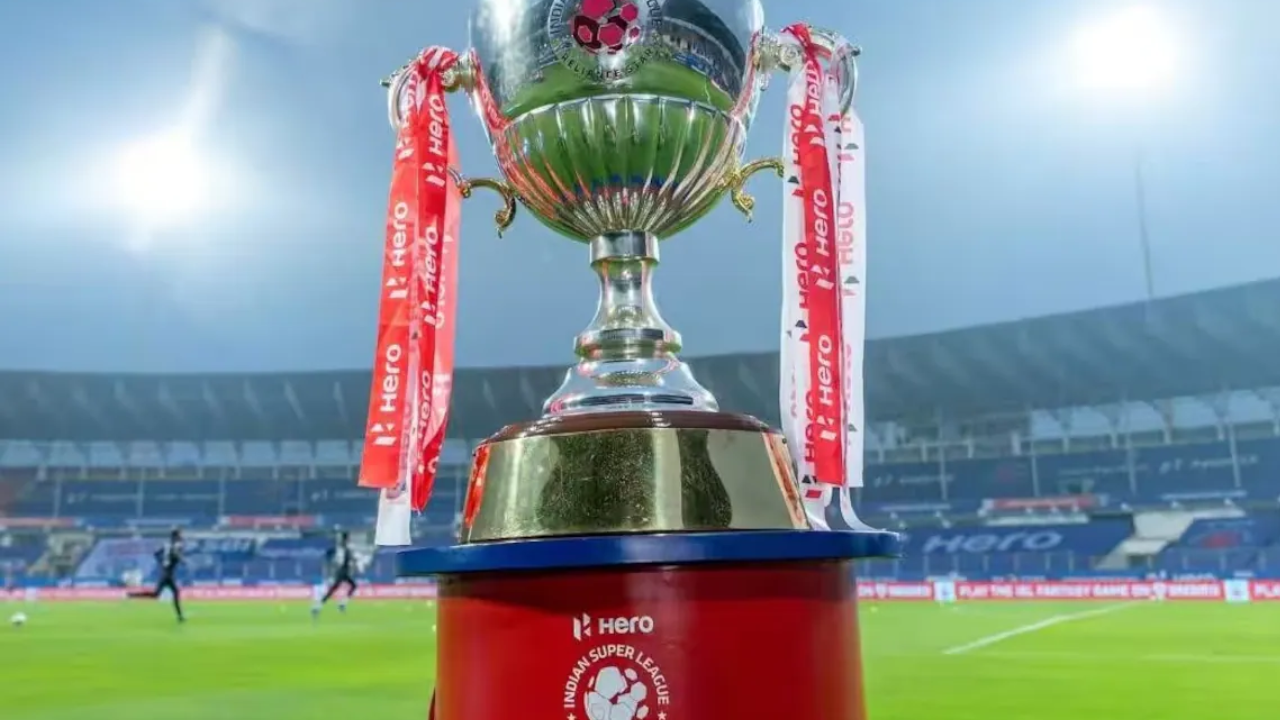
The long postponed 2025–26 Indian Super League season is now set to kick off on February 14 after the All India Football Federation reached an understanding with 13 of the league’s 14 clubs. The delay had earlier been attributed to the absence of a commercial partner, a point highlighted by Sports Minister Mansukh Mandaviya, who had said that all clubs were expected to take part despite the late start. However, recent reports suggest that Odisha FC is yet to formally confirm its participation.
In the lead up to the agreement, ISL clubs had reportedly asked the All India Football Federation to waive the ₹1 crore participation fee. Financial pressure has been mounting on teams due to the prolonged uncertainty around the season, forcing some clubs to release or loan out foreign players. To ease the burden, the federation is said to have persuaded clubs to pay the fee in instalments spread out until June 2026 instead of making the full payment upfront.
Call for a draft or auction system
Speaking to The Indian Express, Parth Jindal, owner of Bengaluru FC, argued that the ISL needs a structural overhaul to ensure long term stability. He said the league should adopt a player draft or auction system similar to the Indian Premier League. According to Jindal, a centrally controlled budget cannot function effectively in a completely free market environment.
He pointed out that nearly every successful Indian sports league operates through auctions, including the IPL, Women’s Premier League, Pro Kabaddi, and leagues in hockey, badminton, table tennis, wrestling, and volleyball. Jindal noted that the ISL itself began with a draft system and said returning to that model would help restore balance. He suggested that clubs be allowed to retain a limited number of under 23 domestic players from their academies, with such retentions reducing their draft purse, similar to systems used in the IPL and Pro Kabaddi. Foreign players, he added, could be signed outside the auction within a salary cap, with limited exceptions for marquee signings. In the first season, clubs could also retain a small number of senior Indian players at a fixed cost deducted from their budget.
No relegation and an MLS style structure
Jindal also addressed the ongoing debate around promotion and relegation in the ISL. He said the proposed reforms would only work if relegation was removed entirely. Instead, he advocated for a structure inspired by Major League Soccer, which operates as a closed, franchise based competition. Under this system, teams do not move between divisions based on results. New clubs enter by paying an expansion fee, which in MLS has risen sharply over the years.
He explained that in such a model, teams finishing at the bottom are not punished with relegation but are instead given advantages like higher draft picks and additional resources to improve competitiveness. The focus, he said, should be on maintaining parity across the league rather than penalising poor performance.
Meanwhile, the AIFF is expected to finalise a commercial partner for the 2025–26 ISL season by January 31, a development that could bring much needed stability ahead of the delayed kickoff.


