

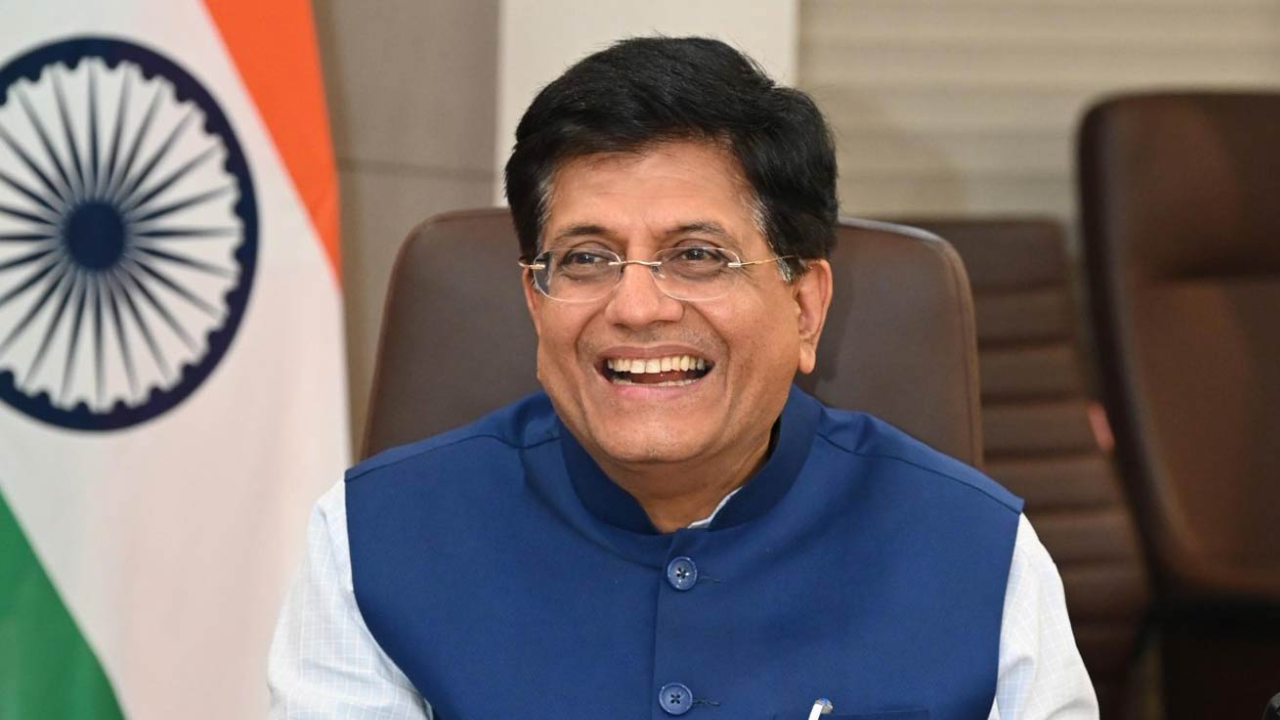
Commerce Minister Piyush Goyal has said that negotiations for a trade agreement between India and the United States are now approaching the final stages. In an interview with Hindustan Times conducted three days after India signed a Free Trade Agreement with the European Union, Goyal also explained how the EU deal was reached and outlined India’s broader trade strategy.
On India-US trade talks nearing completion
Goyal described the proposed agreement with Washington as both constructive and beneficial, though he refrained from committing to a specific timeline. He said India does not negotiate trade deals with deadlines in mind and that an announcement would come only when both sides are satisfied with the terms.
At the same time, he indicated that most contentious issues had already been resolved, suggesting that discussions are now focused on wrapping up remaining formalities.
Trade negotiations between India and the United States have been ongoing since early last year. Progress slowed in August after US President Donald Trump imposed a 50 percent tariff on Indian goods, partly citing India’s continued purchase of Russian oil. Since then, however, negotiations have resumed quietly, with recent signals suggesting renewed momentum.
Possible trade deal with Canada
With Canadian Prime Minister Mark Carney expected to visit India in March, Goyal was also asked about prospects for a deal with Canada. He said Ottawa is keen to move quickly, but discussions are still at an early stage and must begin afresh.
Asked whether recent agreements with the UK and EU could serve as templates, Goyal said each trade deal is unique. While he called the UK agreement “fantastic” and described the EU deal as equally strong, he noted that economic size, national interests and conditions vary from country to country, making replication difficult.
Next steps after the India-EU agreement
Goyal dismissed suggestions that the European Union became more flexible only after global trade disruptions intensified due to US tariff policies. According to him, the EU has consistently worked towards a deal with India since negotiations began in 2022.
He explained that election cycles in both India and the EU slowed progress last year, but commitment from European partners remained intact. He added that EU negotiators were attentive to India’s concerns and that ratification by the European Parliament is expected to take place in 2026.
To illustrate European support for the agreement, he pointed to recent remarks by the German Chancellor, who stressed the importance of completing the deal swiftly to create one of the world’s largest internal markets outside China.
India’s evolving approach to global negotiations
Reflecting on India’s recent trade successes, Goyal said the country now negotiates from a stronger position compared with the past. According to him, India is viewed internationally as politically stable, economically resilient and guided by decisive leadership.
He added that global partners now actively seek economic engagement with India because of its talent pool and growth prospects.
Goyal also credited Prime Minister Narendra Modi with shifting India’s negotiating approach to focus on future potential rather than present conditions. He said discussions are increasingly based on India’s projected economic scale in 2047 rather than today’s $4 trillion economy, which he believes makes India a more attractive partner.
According to him, India now approaches negotiations either as an equal partner or as a country offering more than it seeks to gain, resulting in stronger agreements.
Manufacturing gains from EU deal
Discussing the expected impact of the EU deal on manufacturing, Goyal said the benefits would be substantial. He noted that duties on most sectors have been reduced to zero from day one, significantly boosting competitiveness for Indian exports.
He compared India’s current textile exports to the EU with Bangladesh’s much larger shipments, explaining that Bangladesh previously enjoyed tariff advantages as a least developed country. With duties now eliminated for Indian goods, he said exports could grow dramatically.
Addressing concerns about meeting increased demand while maintaining quality, Goyal said rising demand itself drives improvements in standards. He added that improving quality has been a long-term focus under Modi’s leadership.
He concluded by saying India will continue promoting manufacturing and services while investing heavily in innovation, research, startups and logistics. He also emphasised that India would maintain strong economic partnerships with like-minded countries, especially developed economies.


