

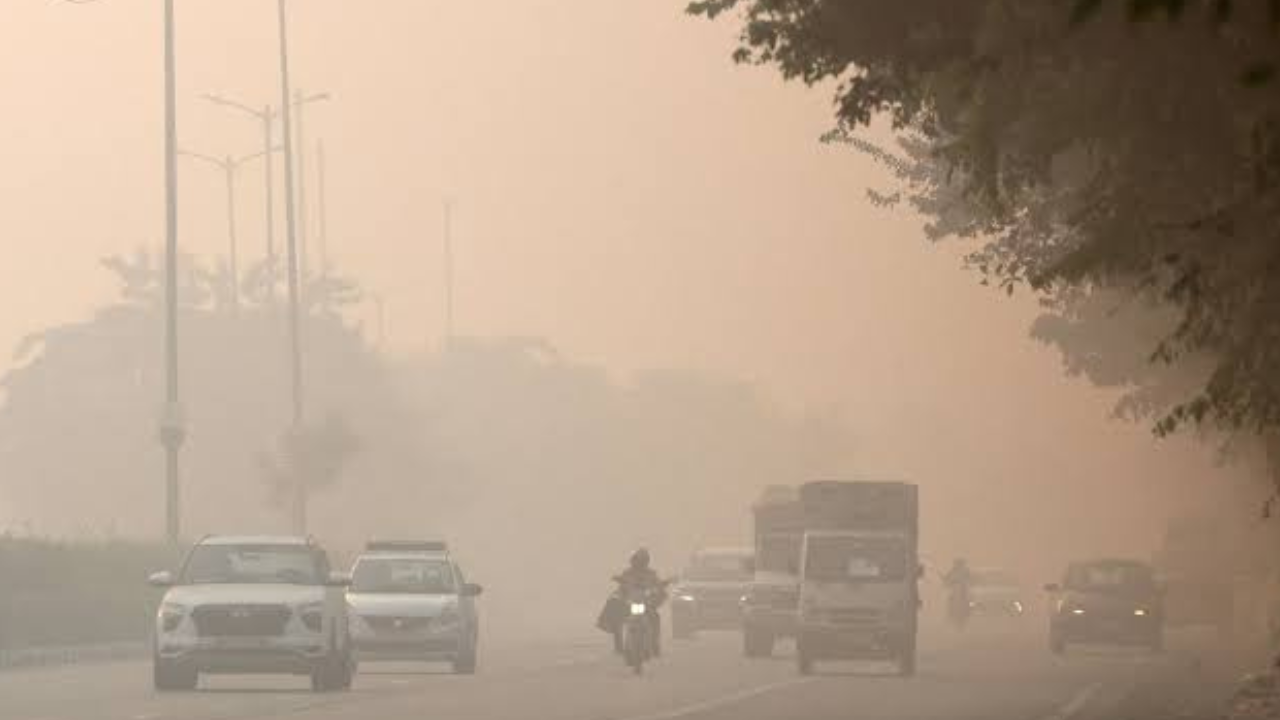
Delhi continued to grapple with dangerously high pollution levels on Monday, with air quality remaining in the severe category. In response, the Singapore High Commission in India issued a public advisory for its citizens living in the Delhi NCR region, urging them to follow official health guidelines, remain indoors as much as possible and wear protective masks when stepping outside.
According to data from the Central Pollution Control Board’s Sameer app, the city’s overall Air Quality Index stood at 437 at 2 pm. Every monitoring station across the capital recorded readings of 400 or higher, underscoring the seriousness of the situation.
In a post shared on its official X account, the Singapore High Commission said that on December 13, 2025, the CPCB activated Stage 4 of the Graded Response Action Plan, the most stringent level under the anti pollution framework. Under this stage, construction and industrial activities face strict curbs, while schools and offices are encouraged to adopt hybrid or remote working models.
The advisory also highlighted the Delhi government’s appeal to residents, particularly children and individuals suffering from respiratory or heart related conditions, to stay indoors and use masks when outdoors. The High Commission urged Singapore nationals in the region to strictly follow this guidance.
The mission further warned that poor visibility caused by dense smog could disrupt air travel. It noted that Indira Gandhi International Airport and multiple airlines have already issued alerts, advising passengers to stay updated with their respective carriers. Singapore nationals were also provided with contact details in case consular assistance is required.
For the third straight day, thick smog has blanketed the capital, leading to widespread disruption in flight operations. Both domestic and international services have been affected at Delhi airport.
Under CPCB norms, air quality is classified as moderate when AQI ranges between 101 and 200, poor between 201 and 300, and very poor between 301 and 400. Readings above 400 fall in the severe category, while levels of 450 and higher are termed severe plus, with 500 considered extremely hazardous. So far, more than 400 flights at Delhi airport have faced delays, with 61 cancellations and five diversions reported.
Later in the afternoon, Delhi airport authorities issued an operational update stating that runway visibility had improved and flight movements were gradually stabilising. However, they cautioned that some arrivals and departures could still face delays. Passengers were advised to stay in touch with airlines for the latest information, while the airport said it is coordinating with all stakeholders to reduce inconvenience.


