

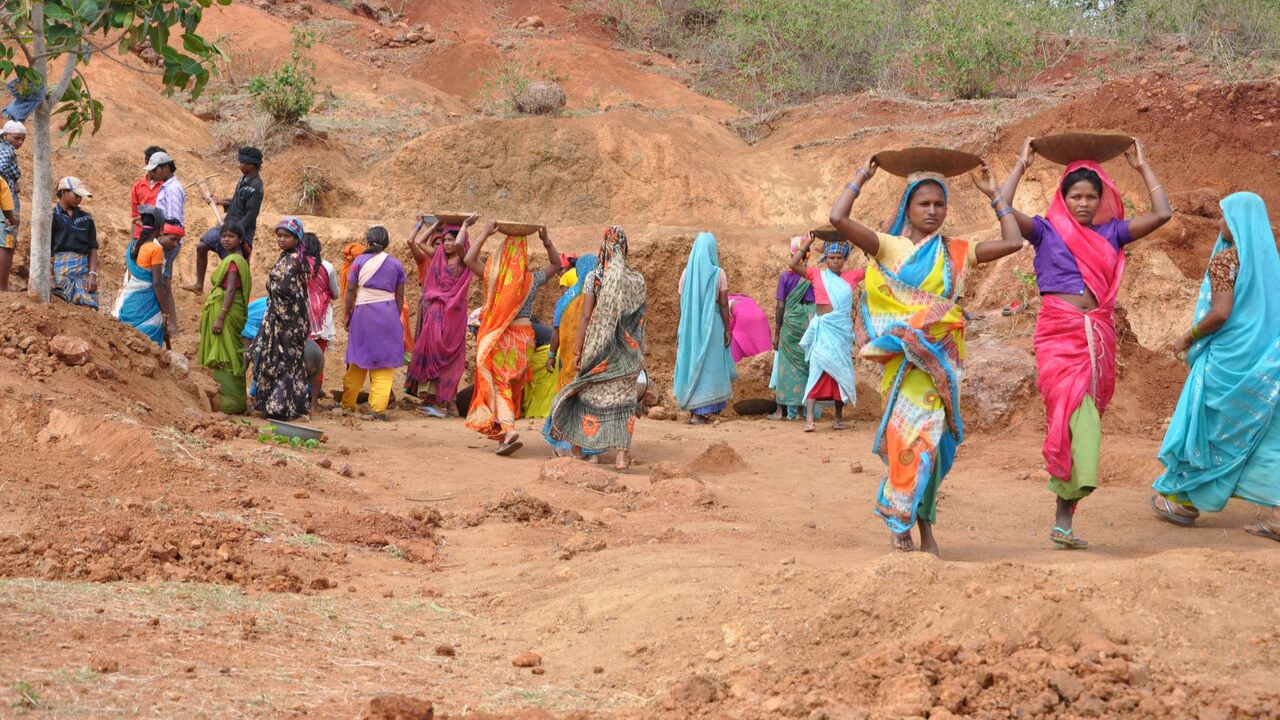
The Union government led by Prime Minister Narendra Modi is preparing to introduce a new rural employment law that will replace the Mahatma Gandhi National Rural Employment Guarantee Act of 2005. The proposed legislation is titled the Viksit Bharat Guarantee for Rozgar and Ajeevika Mission Gramin Bill 2025 and is designed to align rural employment with the long term national vision of Viksit Bharat 2047.
At the heart of the new law is a statutory assurance of up to one hundred and twenty five days of wage employment each financial year for every rural household whose adult members are willing to undertake unskilled manual work. The objective is to create a comprehensive rural development framework that strengthens livelihoods, supports economic growth and builds resilience across villages through structured public works.
Unlike the earlier programme, the new mission places a strong emphasis on convergence and saturation. Employment generated under the scheme will contribute to the creation of a Viksit Bharat National Rural Infrastructure Stack. Priority areas include water conservation and water related projects, essential rural infrastructure, livelihood supporting assets and special works aimed at reducing the impact of extreme weather events.
A major structural shift under the new law is the funding pattern. While the scheme will continue as a Centrally Sponsored initiative, state governments will now shoulder a larger share of the cost. For northeastern and Himalayan states and certain Union territories such as Uttarakhand, Himachal Pradesh and Jammu and Kashmir, the Centre and states will share expenses in a ninety ten ratio. For all other states and Union territories with legislatures, the funding split will be sixty forty. Under MGNREGA, the Centre bore the entire cost of the programme.
The proposed law also introduces restrictions on the timing of works. To ensure sufficient availability of farm labour during crucial agricultural periods, employment under the scheme will not be permitted during notified peak farming seasons. This marks a significant departure from earlier practice. At the same time, the Bill retains a safeguard for workers by guaranteeing an unemployment allowance if work is not provided within fifteen days of applying for employment.
Governance of the scheme will also change substantially. A Central Gramin Rozgar Guarantee Council will be constituted by the Union government to oversee implementation. This body will include a chairperson, representatives from the Centre and states, and up to fifteen non official members drawn from Panchayati Raj institutions, workers’ organisations and vulnerable sections of society. A senior official of at least Joint Secretary rank will serve as Member Secretary. Previously, the programme was administered directly by the rural development ministry without a dedicated council.
At the state level, governments will be required to set up their own State Gramin Rozgar Guarantee Councils to regularly monitor and review implementation. In addition, both the Centre and the states will form steering committees. The national level steering committee will advise on fund allocations, inter ministerial coordination and convergence across departments, while also providing high level oversight.
The Bill continues to place Panchayati Raj institutions at the core of execution. District, block and village panchayats will remain the primary authorities responsible for planning, carrying out and supervising works under the scheme. District Programme Coordinators will be appointed to manage implementation on the ground.
Finally, the proposed legislation gives itself overriding authority. Its provisions will prevail over any other existing law or instrument in case of inconsistency, ensuring that the new rural employment framework operates without legal बाधा.
Together, these changes signal a comprehensive redesign of rural employment policy, shifting the focus from standalone wage support to integrated infrastructure creation and long term rural transformation.


