

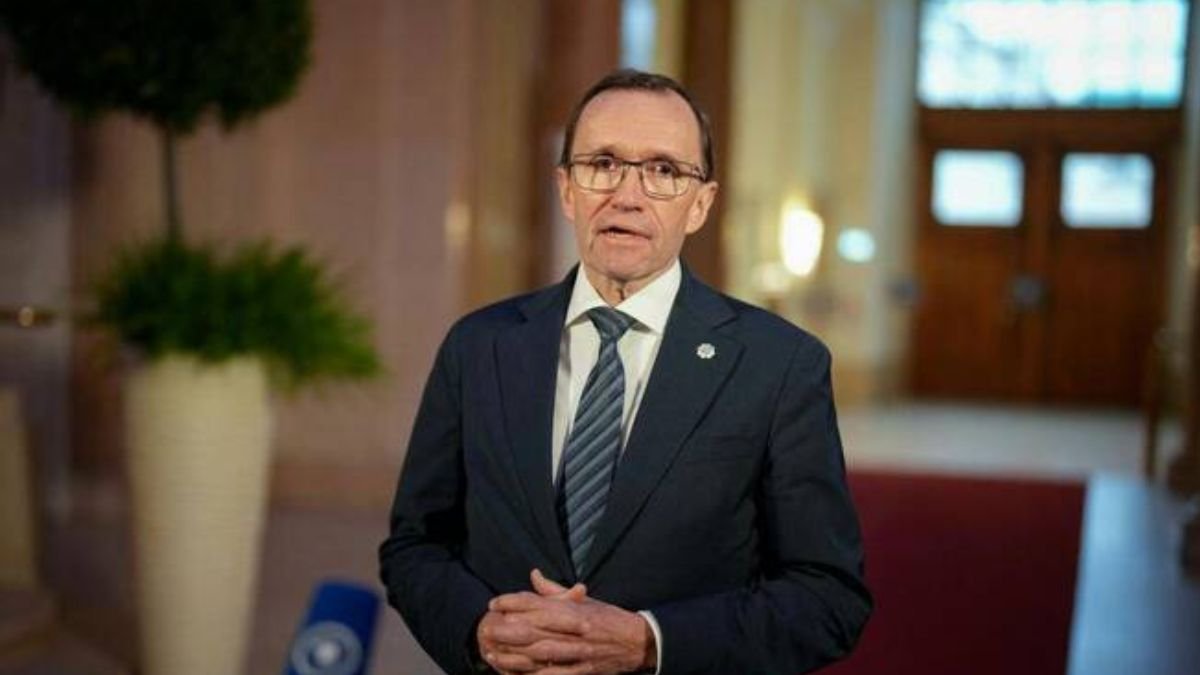
The proposed free trade agreements between the European Free Trade Association and the European Union with India are not competing arrangements but complementary partnerships that can help reduce excessive dependence on a limited number of countries, Norwegian foreign minister Espen Barth Eide has said.
Speaking in an interview with HT, Eide highlighted India’s growing global importance, describing it as a rapidly expanding economic and technological power with a major role in sectors such as information technology and artificial intelligence.
Norway sees India as crucial long term partner
Eide said Norway and India already share strong political and economic ties, adding that both countries are working together through a green strategic partnership focused on sustainable growth and better use of global resources.
According to him, future economic development must balance prosperity with environmental sustainability while helping expand the middle class and reduce poverty.
The Norwegian minister also pointed to the wider geopolitical challenges affecting both countries, particularly the wars in Ukraine and West Asia.
As maritime trading nations, Norway and India have both been impacted by disruptions to global trade and energy flows, especially around the Strait of Hormuz.
Eide said both countries share an interest in preserving a stable rules based international trading system that allows countries to export, import and maintain economic connectivity.
Norway urges India to support international law on Ukraine
When asked about continued Russian energy exports to countries including India, Eide said Norway would like India to strongly emphasise the importance of international law and state sovereignty.
Referring to Russia’s invasion of Ukraine, he described attempts to occupy another sovereign country’s territory as a violation of fundamental international principles.
He said India, because of its strong commitment to the United Nations and its ties with BRICS nations, could play an important role in conveying that message to Russia.
Eide added that Norway remains open to maintaining relations with Russia after the war, provided Moscow acts in accordance with international law.
He also defended continued sanctions on Russia, saying they remain effective and should stay in place.
According to Eide, neither Russia nor Ukraine appears close to achieving a full military victory, meaning a political settlement will eventually become necessary. He stressed that any future agreement must preserve Ukraine as a sovereign and independent state.
Concerns over hybrid threats and instability
The Norwegian minister also spoke about hybrid threats allegedly linked to Russia, including attempts to destabilise societies through non military means.
While Norway has faced fewer such incidents than Baltic and Central European countries, Eide said these tactics are increasingly being discussed across Europe.
He described modern conflicts as involving not only direct military attacks but also efforts to increase political polarisation and weaken social cohesion.
Eide suggested India has experienced similar challenges, making it an important area for future dialogue between the two countries.
India seen as vital in digital cooperation
On digital cooperation, Eide said working with India is unavoidable because of the country’s dominant role in global technology development and software programming.
He noted that nearly every major international IT company has a presence in Bengaluru, including Norwegian firms.
The new digital partnership between Norway and India will focus not only on business and technology but also on improving governance and public services through digital systems.
Norway welcomes both EFTA and EU trade deals with India
Eide also welcomed the possibility of both EFTA and EU free trade agreements with India moving forward simultaneously.
He jokingly described EFTA reaching a deal with India ahead of the EU as a diplomatic victory for Norway before adding that Europe ultimately benefits from stronger economic ties with India regardless of which bloc signs first.
Although Norway is not part of the EU, Eide said the country remains deeply integrated into the broader European economy and supply chains.
He added that Europe’s broader strategy now involves maintaining global interdependence while avoiding excessive reliance on specific countries.
Strengthening ties with India, which he described as the world’s most populous country and one of the fastest growing economies, is therefore seen as strategically important for both Norway and Europe.


