

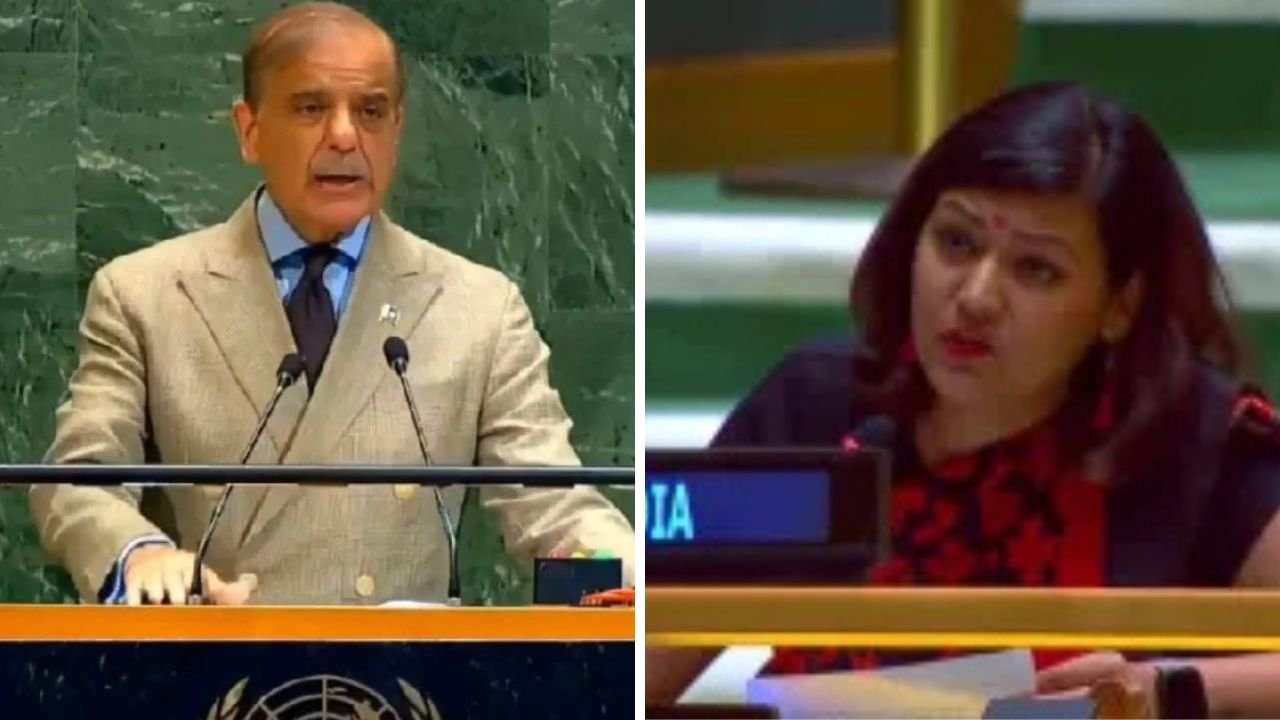
India delivered a sharp rebuke to Pakistan Prime Minister Shehbaz Sharif’s United Nations address on Saturday, accusing Islamabad of glorifying terrorism and engaging in diplomatic deception while raising familiar disputes over Kashmir and the Indus Waters Treaty.
India refutes Pak PM Shehbaz Sharif’s UN Address
Indian diplomat Petal Gahlot responded forcefully to Sharif’s speech, dismissing his remarks as theatrical performance masking Pakistan’s alleged support for terrorism. “Mr President, this assembly witnessed absurd theatrics in the morning from the Prime Minister of Pakistan, who once again glorified terrorism that is so central to their foreign policy. However, no degree of drama and no level of lies can conceal the facts,” Gahlot told the UN General Assembly.
Terrorism Allegations Take Center Stage
Gahlot accused Pakistan of shielding terrorist organizations at the UN Security Council, specifically referencing an April 2025 incident. “This is the very same Pakistan which, at the UN Security Council on April 25, 2025, shielded the resistance front, a Pakistani-sponsored terror outfit from the responsibility of carrying out the barbaric massacre of tourists in the Indian Union territory of Jammu and Kashmir,” she stated.
The Indian diplomat drew historical parallels to strengthen her argument about Pakistan’s alleged duplicity in counter-terrorism efforts. “Let us recall that it sheltered Osama bin Laden for a decade, even while pretending to partner in the war against terrorism. Its ministers have just recently acknowledged that they have been operating terrorist camps for decades,” Gahlot said.
Kashmir Dispute Resurfaces
Following annual tradition, Sharif addressed the Kashmir issue in his UN speech, reaffirming Pakistan’s support for the region’s disputed status. “I wish to assure Kashmiri people that I stand with them, Pakistan stands with them, and one day soon India’s tyranny in Kashmir will come to a halt,” he declared.
The Pakistani Prime Minister advocated for Kashmir’s “fundamental right to self-determination through an impartial plebiscite under the auspices of the United Nations,” echoing longstanding Pakistani positions on the territorial dispute.
Shehbaz Sharif attempted to position Pakistan as opposing terrorism, claiming his country “condemns terrorism in all its forms and manifestations.” He accused foreign-backed groups including Tehreek-e-Taliban Pakistan and Balochistan Liberation Army of targeting Pakistan, while asserting “there must be no space for hate speech, discrimination or violence against any person, or against any religion.”
Indus Waters Treaty Controversy
The dispute extended to water rights, with Sharif criticizing India’s suspension of the Indus Waters Treaty following the April Pahalgam terror attack. “To us, any violation of this Indus Treaty represents an act of war,” he told the Assembly, escalating rhetoric around the 1960 World Bank-brokered agreement.
India suspended participation in the treaty after 26 civilians died in the Pahalgam attack, directly linking the decision to Pakistan’s alleged continued support for cross-border terrorism. New Delhi has indicated the treaty’s reinstatement depends on Pakistan taking verifiable steps to end cross-border violence.
The exchange reflects enduring tensions between the nuclear-armed neighbors, with both countries using international forums to advance competing narratives about regional security, terrorism, and territorial disputes that have defined their relationship for decades.


