

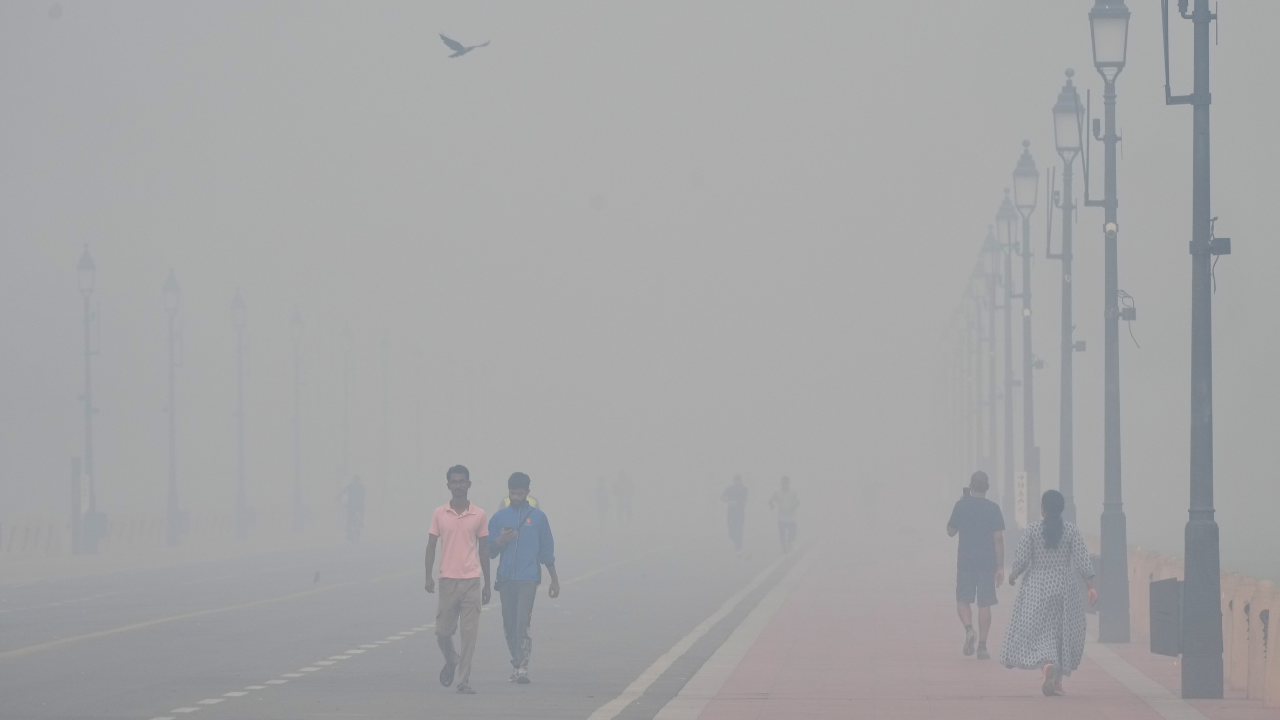
Tighter pollution restrictions under Stage 4 of the Graded Response Action Plan were enforced across Delhi NCR after air quality slipped into the “severe” range on the evening of January 17.
The Commission for Air Quality Management decided to activate the toughest curbs a day after bringing in Stage 3 measures. Delhi’s 24 hour average Air Quality Index stood at 354 on Saturday, placing it in the “very poor” category, but conditions worsened through the day, with AQI touching 416 by 6 pm, which falls under “severe”. Under GRAP norms, AQI readings between 201 and 300 are classified as poor, 301 to 400 as very poor, 401 to 450 as severe, and anything above 450 as severe plus.
The deterioration comes as the region battles dense fog that often turns into smog due to trapped pollutants, along with intense winter cold. A senior official had warned on Friday that forecasts showed slow wind speeds, a stable atmosphere and unfavourable weather conditions, all of which were preventing the dispersal of pollutants and pushing Delhi’s average AQI beyond the 400 mark. Earlier, Stage 3 restrictions had been lifted on January 2 after a brief improvement, while Stages 1 and 2 remained in place, before air quality declined again by Friday and Saturday.
Adding to the discomfort, the national capital recorded a minimum temperature of 4.4 degrees Celsius on Saturday, which was 3.2 degrees below the seasonal average, according to the India Meteorological Department. Mahesh Palawat of Skymet Weather said minimum temperatures are likely to rise gradually between January 17 and 20, with the possibility of light winter rainfall during this period. He also cautioned that another cold spell is expected between January 23 and 26, when temperatures could dip once more.
Dense fog dominated the early hours of Saturday, although the maximum temperature climbed to 24.6 degrees Celsius, around five degrees higher than normal.


