

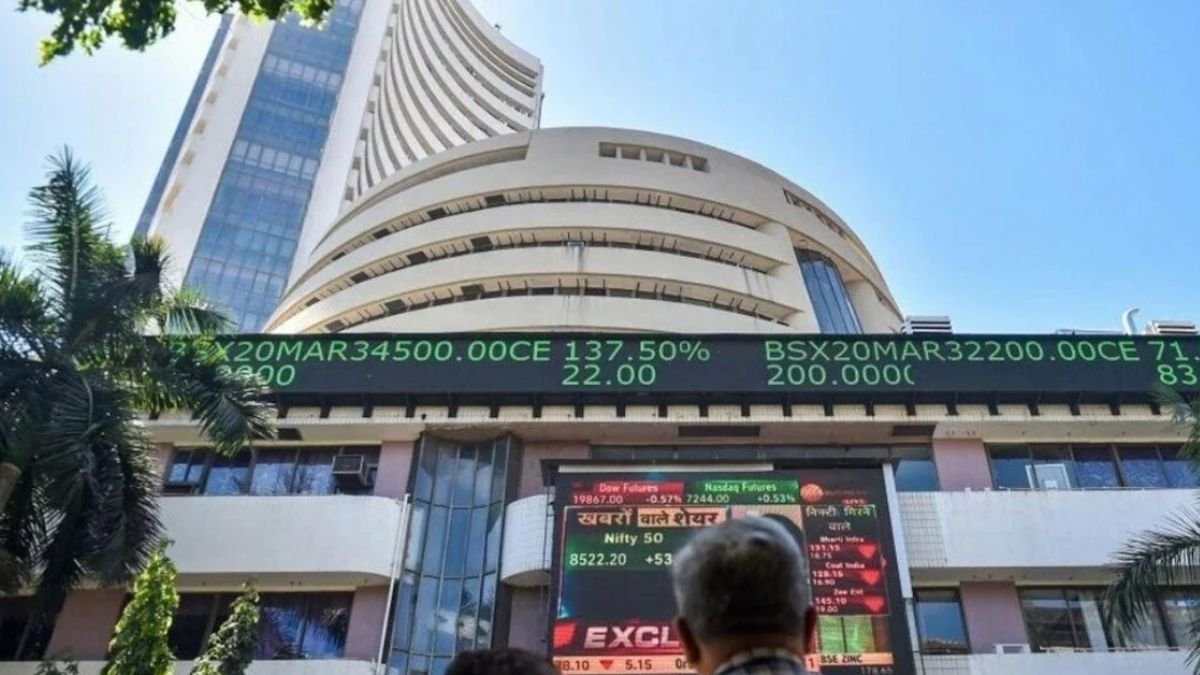
Indian equity markets ended the week on a high, with the Sensex and Nifty posting strong gains on Friday after optimism grew around a possible peace agreement between the United States and Iran. The prospect of easing geopolitical tensions sparked a sharp fall in crude oil prices and boosted investor confidence.
The BSE Sensex climbed 1,695.40 points, or 2.3 per cent, to finish at 75,527.95, while the NSE Nifty 50 rose 461.30 points, or 1.99 per cent, to close at 23,622.90.
The rally began at the opening bell, with the Sensex surging more than 900 points and the Nifty gaining over 250 points before extending its upward momentum throughout the trading session.
Optimism grows around US-Iran negotiations
Market sentiment received a lift after US President Donald Trump indicated that negotiations aimed at ending the conflict with Iran were moving forward.
According to Iran’s semi-official Mehr news agency, a draft agreement includes 14 provisions, such as reopening the Strait of Hormuz within 30 days, releasing $24 billion in frozen Iranian assets, and beginning a 60-day framework for discussions on nuclear issues. A G7 official suggested that a formal agreement could be signed as early as Sunday.
The potential breakthrough has raised hopes of an end to the conflict that began on February 28 and has disrupted global energy markets for more than three months.
Crude oil prices decline sharply
Oil prices registered significant losses amid expectations that the Strait of Hormuz, one of the world’s most important energy corridors, could soon reopen.
Brent crude futures fell 4.5 per cent to $86.31 per barrel, while US crude dropped 4.3 per cent to $83.90 per barrel. Meanwhile, spot gold edged up 0.2 per cent to $4,221.46 an ounce, according to Bloomberg.
What drove the rally?
The primary catalyst behind the market surge was the sharp correction in crude oil prices.
Since the closure of the Strait of Hormuz earlier this year, oil prices had remained elevated, fuelling inflation concerns and increasing pressure on economies dependent on energy imports. Any indication that the route could reopen has been welcomed by investors because it reduces fears of supply disruptions.
For India, which relies heavily on imported crude oil, lower energy prices can significantly reduce import costs, help contain inflation and improve the outlook for corporate earnings. These factors combined to fuel buying across sectors and drive the benchmarks higher.


